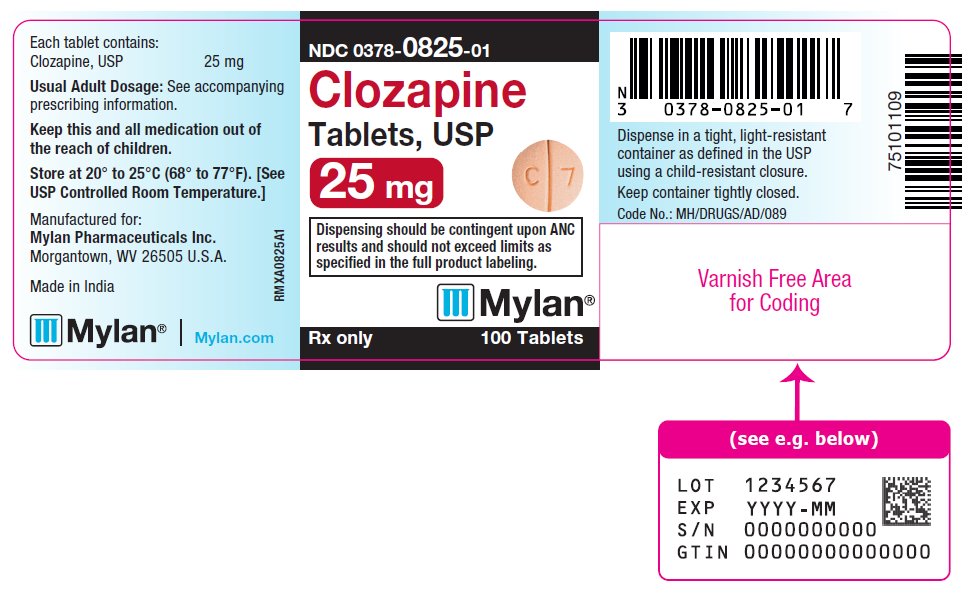
clozapine 150 MG Disintegrating Oral Tablet — Diazepines, oxazepines, thiazepines and oxepines. INDICATIONS AND USAGE CLOZARIL is an atypical antipsychotic indicated for: • Treatment of severely ill patients with schizophrenia who fail to…
Boxed warning
WARNING: SEVERE NEUTROPENIA; ORTHOSTATIC HYPOTENSION, BRADYCARDIA, AND SYNCOPE; SEIZURE; MYOCARDITIS, PERICARDITIS, AND CARDIOMYOPATHY; INCREASED MORTALITY IN ELDERLY PATIENTS WITH DEMENTIA-RELATED PSYCHOSIS Severe Neutropenia Clozapine treatment has caused severe neutropenia, defined as an absolute neutrophil count (ANC) less than 500/μL. Severe neutropenia can lead to serious infection and death. Prior to initiating treatment with clozapine orally disintegrating tablets, a baseline ANC must be at least 1500/μL for the general population; and must be at least 1000/μL for patients with documented Benign Ethnic Neutropenia (BEN). During treatment, patients must have regular ANC monitoring. Advise patients to immediately report symptoms consistent with severe neutropenia or infection (e.g., fever, weakness, lethargy, or sore throat) [see Dosage and Administration (2.1) and Warnings and Precautions (5.1) ] . Because of the risk of severe neutropenia, clozapine orally disintegrating tablets are available only through a restricted program under a Risk Evaluation Mitigation Strategy (REMS) called the Clozapine REMS Program [see Warnings and Precautions (5.2) ] . Orthostatic Hypotension, Bradycardia, Syncope Orthostatic hypotension, bradycardia, syncope, and cardiac arrest have occurred with clozapine treatment. The risk is highest during the initial titration period, particularly with rapid dose escalation. These reactions can occur with the first dose, with doses as low as 12.5 mg per day, or when restarting patients who have had even a brief interruption in treatment with clozapine orally disintegrating tablets. Initiate treatment at 12.5 mg once or twice daily; titrate slowly; and use divided dosages to minimize risk. Use clozapine orally disintegrating tablets cautiously in patients with cardiovascular or cerebrovascular disease or conditions predisposing to hypotension (e.g., dehydration, use of antihypertensive medications) [see Dosage and Administration (2.3 , 2.6) , Warnings and Precautions (5.3) ] . Seizures Seizures have occurred with clozapine treatment. The risk is dose-related. Initiate treatment at 12.5 mg, titrate gradually, and use divided dosing. Use caution when administering clozapine orally disintegrating tablets to patients with a history of seizures or other predisposing risk factors for seizure (CNS pathology, medications that lower the seizure threshold, alcohol abuse). Caution patients about engaging in any activity where sudden loss of consciousness could cause serious risk to themselves or others [see Dosage and Administration (2.3) and Warnings and Precautions (5.5) ] . Myocarditis, Pericarditis, Cardiomyopathy and Mitral Valve Incompetence Fatal myocarditis and cardiomyopathy have occurred with clozapine treatment. Discontinue clozapine orally disintegrating tablets and obtain a cardiac evaluation upon suspicion of these reactions. Generally, patients with clozapine orally disintegrating tablets-related myocarditis or cardiomyopathy should not be rechallenged with clozapine orally disintegrating tablets. Consider the possibility of myocarditis, pericarditis, or cardiomyopathy if chest pain, tachycardia, palpitations, dyspnea, fever, flu-like symptoms, hypotension, or ECG changes occur [see Warnings and Precautions (5.6) ] . Increased Mortality in Elderly Patients with Dementia-Related Psychosis Elderly patients with dementia-related psychosis treated with antipsychotic drugs are at an increased risk of death. Clozapine orally disintegrating tablets are not approved for use in patients with dementia-related psychosis [see Warnings and Precautions (5.7) ] . WARNING: SEVERE NEUTROPENIA; ORTHOSTATIC HYPOTENSION, BRADYCARDIA, AND SYNCOPE; SEIZURE; MYOCARDITIS, PERICARDITIS, AND CARDIOMYOPATHY; INCREASED MORTALITY IN ELDERLY PATIENTS WITH DEMENTIA-RELATED PSYCHOSIS See full prescribing information for complete boxed warning. Severe Neutropenia: Clozapine can cause severe neutropenia, which can lead to serious and fatal infections. Patients initiating and continuing treatment with clozapine orally disintegrating tablets must have a baseline blood absolute neutrophil count (ANC) measured before treatment initiation and regular ANC monitoring during treatment ( 2.1 , 5.1 ). Clozapine orally disintegrating tablets are available only through a restricted program called the Clozapine REMS ( 5.2 ). Orthostatic Hypotension, Bradycardia, and Syncope: Risk is dose-related. Starting dose is 12.5 mg. Titrate gradually and use divided dosages ( 2.3 , 2.6 , 5.3 ). Seizure: Risk is dose-related. Titrate gradually and use divided doses. Use with caution in patients with history of seizure or risk factors for seizure ( 2.3 , 5.5 ). Myocarditis, Pericarditis, Cardiomyopathy and Mitral Valve Incompetence: Can be fatal. Discontinue and obtain cardiac evaluation if findings suggest these cardiac reactions ( 5.6 ). Increased Mortality in Elderly Patients with Dementia-Related Psychosis: Clozapine orally disintegrating tablets are not approved for this condition ( 5.7 ).
majordrugs that prolong the QT interval (e.g., specific antipsychotics, specific antibiotics, Class 1A and Class III antiarrhythmics) — potential for QT interval prolongation
Indications
INDICATIONS AND USAGE CLOZARIL is an atypical antipsychotic indicated for: • Treatment of severely ill patients with schizophrenia who fail to respond adequately to standard antipsychotic treatment. Because of the risks of severe neutropenia and of seizure associated with its use, CLOZARIL should be used only in patients who have failed to respond adequately to standard antipsychotic treatment ( 1.1 ) • Reducing the risk of recurrent suicidal behavior in patients with schizophrenia or schizoaffective disorder who are judged to be at chronic risk for re-experiencing suicidal behavior. ( 1.2 ) 1.1 Treatment-Resistant Schizophrenia CLOZARIL is indicated for the treatment of severely ill patients with schizophrenia who fail to respond adequately to standard antipsychotic treatment. Because of the risks of severe neutropenia and of seizure associated with its use, CLOZARIL should be used only in patients who have failed to respond adequately to standard antipsychotic treatment [see Warnings and Precautions ( 5.1 , 5.4 )]. The effectiveness of CLOZARIL in treatment-resistant schizophrenia was demonstrated in a 6-week, randomized, double-blind, active-controlled study comparing CLOZARIL and chlorpromazine in patients who had failed other antipsychotics [see Clinical Studies ( 14.1 )] . 1.2 Reduction in the Risk of Recurrent Suicidal Behavior in Schizophrenia or Schizoaffective Disorder CLOZARIL is indicated for reducing the risk of recurrent suicidal behavior in patients with schizophrenia or schizoaffective disorder who are judged to be at chronic risk for re-experiencing suicidal behavior, based on history and recent clinical state. Suicidal behavior refers to actions by a patient that put him/herself at risk for death. The effectiveness of CLOZARIL in reducing the risk of recurrent suicidal behavior was demonstrated over a two-year treatment period in the InterSePT™ trial [see Clinical Studies ( 14.2 )] . 1.1 Treatment-Resistant Schizophrenia CLOZARIL is indicated for the treatment of severely ill patients with schizophrenia who fail to respond adequately to standard antipsychotic treatment. Because of the risks of severe neutropenia and of seizure associated with its use, CLOZARIL should be used only in patients who have failed to respond adequately to standard antipsychotic treatment [see Warnings and Precautions ( 5.1 , 5.4 )]. The effectiveness of CLOZARIL in treatment-resistant schizophrenia was demonstrated in a 6-week, randomized, double-blind, active-controlled study comparing CLOZARIL and chlorpromazine in patients who had failed other antipsychotics [see Clinical Studies ( 14.1 )] . 1.2 Reduction in the Risk of Recurrent Suicidal Behavior in Schizophrenia or Schizoaffective Disorder CLOZARIL is indicated for reducing the risk of recurrent suicidal behavior in patients with schizophrenia or schizoaffective disorder who are judged to be at chronic risk for re-experiencing suicidal behavior, based on history and recent clinical state. Suicidal behavior refers to actions by a patient that put him/herself at risk for death. The effectiveness of CLOZARIL in reducing the risk of recurrent suicidal behavior was demonstrated over a two-year treatment period in the InterSePT™ trial [see Clinical Studies ( 14.2 )] .
Dosage
DOSAGE AND ADMINISTRATION Recommended starting oral dosage is 12.5 mg once daily or twice daily. ( 2.2 ) If well-tolerated, increase the total daily dosage in increments of 25 mg to 50 mg per day at target dosage of 150 mg to 225 mg twice per day by the end of two weeks. ( 2.2 ) Subsequently may increase the doage in increments up to 100 mg, once or twice weekly. ( 2.2 ) Maximum daily dosage is 450 mg twice daily. ( 2.2 ) Administer with or without food. Clozapine ODT may be allowed to disintegrate or chewed, and may be taken with or without water. See additional administration instructions in the full prescribing information. ( 2.2 ) See dosage modification based on ANC results. ( 2.3 , 2.4 ) See recommendations for discontinuing Clozapine ODT treatment ( 2.5 ), restarting Clozapine ODT after interrupting dosing (2.6), dosage modifications for drug interactions ( 2.7 ), dosage recommendations in patients with renal or hepatic impairment and CYP2D6 poor metabolizers ( 2.8 ) in the full prescribing information. Tablets rapidly disintegrate after placement in the mouth and may be chewed if desired. No water is needed. ( 2.2 ) 2.1 Absolute Neutrophil Count Testing Prior to Clozapine ODT Initiation Prior to initiating Clozapine ODT treatment, obtain a baseline absolute neutrophil count (ANC). Clozapine ODT initiation is not recommended in patients with an ANC less than 1500/µL [see Warnings and Precautions (5.1) ] . For patients with documented Benign Ethnic Neutropenia (BEN) (also known as Duffy-null associated neutrophil count)), obtain at least two baseline ANC levels. Clozapine ODT initiation is not recommended in patients with BEN with an ANC less than 1000/µL [see Warnings and Precautions (5.1) ] . For dosage modifications based on ANC results, see Dosage and Administration (2.3 , 2.4) . 2.2 Recommended Dosage and Administration Recommended Dosage To reduce the risk of orthostatic hypotension, bradycardia, and syncope, the recommended starting dosage is much lower than the target dosage [see Warnings and Precautions (5.2) ] . The recommended starting oral dosage of Clozapine ODT is 12.5 mg once or twice daily. If well-tolerated, increase the total daily dose in increments of 25 mg to 50 mg per day to achieve a target dosage of 150 mg to 225 mg twice per day by the end of two weeks. Subsequently, may increase the dosage in increments of up to 100 mg once weekly or twice weekly. The maximum recommended Clozapine ODT oral dosage is 450 mg twice daily. Administration Instructions Clozapine ODT can be taken with or without food, may be allowed to disintegrate or chewed, and may be taken with or without water [see Clinical Pharmacology (12.3) ] . After removing Clozapine ODT from the bottle, immediately place in the mouth. 2.3 Dosage Modifications Based on ANC Results Table 1 provides recommended Clozapine ODT dosage modifications based on ANC results [see Warnings and Precautions (5.1) ] . For dosage modifications based on ANC results for patients with Benign Ethnic Neutropenia (BEN) (also known as Duffy-null associated neutrophil count), see Table 2 [see Dosage and Administration (2.4) ] . Table 1: Clozapine ODT Dosage Modifications Based on ANC Results and Frequency of ANC Testing Recommended Dosage Modification Recommended Frequency of ANC Testing During Clozapine ODT Treatment ANC Within Normal Range (≥ 1500/µL) No dosage modification; continue treatment Day 1 to Month 6: Weekly Month 7 to Month 12: Every 2 weeks Month 13 and thereafter: Every month If Clozapine ODT treatment is reinitiated after a dosage interruption (e.g., patient had neutropenia which required dosage interruption and now has a normal ANC level) for: < 30 days, continue the previous ANC testing frequency ≥ 30 days, obtain ANC tests according to the frequency for patients who initiate treatment Mild Neutropenia (ANC between 1000 to 1499/µL) Confirm all initial reports of ANC less than 1500/µL with a repeat ANC measurement within 24 hours No dosage modification; continue treatment Three times weekly Once ANC ≥ 1500/µL, recommend returning to the patient’s last Normal Range ANC testing frequency Moderate Neutropenia (ANC between 500 to 999/µL) Interrupt treatment and recommend hematology consultation Resume treatment once ANC ≥ 1000/µL Daily Once ANC ≥ 1000/µL, three times weekly Once ANC ≥ 1500/µL, test weekly for 4 weeks. If ANC ≥ 1500/µL after monitoring weekly for 4 weeks, return to the patient’s last Normal Range ANC testing frequency Severe Neutropenia (ANC less than 500/µL) Discontinue treatment and recommend hematology consultation Daily Once ANC ≥ 1000/µL, three times weekly Once ANC ≥ 1500/µL, if the benefits outweigh the risks of restarting treatment, resume treatment and obtain ANC tests according to the frequency for patients who initiate treatment 2.4 Dosage Modifications Based on ANC Results for Patients with Benign Ethnic Neutropenia Table 2 provides recommended Clozapine ODT dosage modifications based on ANC results for patients with Benign Ethnic Neutropenia (BEN) (also known as Duffy-null associated neutrophil count) [see Warnings and Precautions (5.1) ] . For dosage modifications based on ANC results for patients without BEN, see Table 1 [see Dosage and Administration (2.3) ] . Table 2: Clozapine ODT Dosage Modifications Based on ANC Results and Frequency of ANC Testing in Patients with Benign Ethnic Neutropenia Benign Ethnic Neutropenia (BEN) is also known as Duffy-null associated neutrophil count. Recommended Dosage Modification Recommended Frequency of ANC Testing During Clozapine ODT Treatment in Patients with BEN ANC Within the Normal Range for Patients with BEN (≥ 1000/µL ) No dosage modification; continue treatment Day 1 to Month 6: Weekly Month 7 to Month 12: Every 2 weeks Month 13 and thereafter: Monthly If Clozapine ODT treatment is reinitiated after a dosage interruption (e.g., patient had neutropenia which required dosage interruption and now their ANC (≥ 1000/µL and ≥ the patient’s ANC baseline prior to treatment) for: < 30 days, continue previous ANC testing frequency ≥ 30 days, obtain ANC tests according to the frequency for patients with BEN who initiate treatment Neutropenia in Patients with BEN (ANC level between 500 to 999/µL) Confirm all initial reports of ANC less than 1500/µL with a repeat ANC measurement within 24 hours Recommend hematology consultation No dosage modification; continue treatment Three times weekly Once ANC ≥ 1000/µL and ≥ the patient’s ANC baseline, obtain ANC tests weekly for 4 weeks If ANC ≥ 1000/µL and ≥ the patient’s baseline after monitoring for 4 weeks, return to the patient’s last Normal ANC Range testing frequency for patients with BEN. Severe Neutropenia in Patients with BEN (ANC level less than 500/µL) Discontinue treatment and recommend hematology consultation Daily Once ANC ≥ 500/µL, obtain ANC three times weekly Once ANC ≥ 1000/µL and ≥ the patient’s baseline, if the benefits outweigh the risks of restarting treatment, resume treatment and obtain ANC tests according to the frequency for patients with BEN who initiate treatment 2.5 Discontinuation of Clozapine ODT Treatment If discontinuing Clozapine ODT in patients with: Moderate or severe neutropenia, see Table 1 [see Dosage and Administration (2.4) ] . Normal or mild neutropenia, reduce the dosage gradually over a period of 1 to 2 weeks, and continue monitoring ANC levels until their ANC is ≥ 1500/µL. If discontinuing Clozapine ODT in patients with Benign Ethnic Neutropenia (BEN) (also known as Duffy-null associated neutrophil count) with: Neutropenia, see Table 2 [see Dosage and Administration (2.5) ] . ANC within their normal range of ANC reduce the dosage gradually over a period of 1 to 2 weeks. When discontinuing Clozapine ODT, monitor patients for the symptoms related to psychotic recurrence and cholinergic rebound (e.g., profuse sweating, headache, nausea, vomiting, diarrhea). 2.6 Restarting Clozapine ODT Treatment After Interrupting Clozapine ODT When
Warnings
WARNINGS AND PRECAUTIONS Severe neutropenia: See ( 5.1 ) Gastrointestinal Hypomotility with Severe Complications: Severe gastrointestinal adverse reactions have occurred with the use of clozapine. If constipation is identified, close monitoring and prompt treatment is advised. ( 5.7 ) Eosinophilia: Assess for organ involvement (e.g., myocarditis, pancreatitis, hepatitis, colitis, nephritis). Discontinue if these occur. ( 5.8 ) QT Interval Prolongation: Can be fatal. Consider additional risk factors for prolonged QT interval (disorders and drugs). ( 5.9 ) Metabolic Changes: Atypical antipsychotic drugs have been associated with metabolic changes that may increase cardiovascular/cerebrovascular risk. These metabolic changes include ( 5.10 ): Hyperglycemia and Diabetes Mellitus: Monitor for symptoms of hyperglycemia including polydipsia, polyuria, polyphagia, and weakness. Monitor glucose regularly in patients with diabetes or at risk for diabetes. Dyslipidemia: Undesirable alterations in lipids have occurred in patients treated with atypical antipsychotics. Weight Gain: Significant weight gain has occurred. Monitor weight gain. Neuroleptic Malignant Syndrome (NMS): Immediately discontinue and monitor closely. Assess for co-morbid conditions. ( 5.11 ) Hepatotoxicity: Can be fatal. Monitor for hepatotoxicity. Discontinue treatment if hepatitis or transaminase elevations combined with other symptoms occur. ( 5.12 ) Fever: Evaluate for infection and for neutropenia, NMS. ( 5.13 ) Pulmonary Embolism (PE): Consider PE if respiratory distress, chest pain, or deep vein thrombosis occurs. ( 5.14 ) Anticholinergic Toxicity: When possible, avoid use with other anticholinergic drugs and use with caution in patients with a current diagnosis or prior history of constipation, urinary retention, clinically significant prostatic hypertrophy, or other conditions in which anticholinergic effects can lead to significant adverse reactions. ( 5.15 , 7.1 ) Interference with Cognitive and Motor Performance: Advise caution when operating machinery, including automobiles. ( 5.16 ) 5.1 Severe Neutropenia Clozapine has caused severe neutropenia (absolute neutrophil count (ANC) less than 500/µL) [see Adverse Reactions (6.1 , 6.2) ] and is associated with an increased risk of serious and potentially fatal infections. Severe neutropenia occurred in a small percentage of clozapine-treated patients. The risk of severe neutropenia appears greatest during the first 18 weeks of Clozapine ODT treatment. The mechanism by which Clozapine ODT causes neutropenia is unknown. Neutropenia is not dose-dependent. Consider a hematology consultation before initiating Clozapine ODT treatment or during treatment. ANC Monitoring and Dosage Modifications Prior to initiating Clozapine ODT treatment, obtain a baseline ANC. Clozapine ODT initiation is not recommended in patients with a baseline ANC less than 1500/µL. Throughout Clozapine ODT treatment, regularly monitor ANC. Table 1 provides recommendations for dosage modifications (dosage interruption and treatment discontinuation), based on ANC levels, during Clozapine ODT treatment and frequency of ANC monitoring [see Dosage and Administration (2.4) ] . ANC Monitoring and Dosage Modification in Patients with Benign Ethnic Neutropenia Patients with Benign Ethnic Neutropenia (BEN) (also known as Duffy-null associated neutrophil count) generally have lower baseline neutrophil counts but they are not at higher risk for developing infections, and they are not at increased risk for developing Clozapine ODT-induced neutropenia. For patients with documented BEN, obtain at least two baseline ANC levels prior to Clozapine ODT initiation. Clozapine ODT initiation is not recommended in patients with BEN with an ANC less than 1000/µL. There are different ANC dosage modification recommendations in Clozapine ODT-treated patients with BEN due to their lower baseline ANC levels. Table 2 provides recommendations on dosage modifications (dosage interruption and treatment discontinuation), based on ANC monitoring, during Clozapine ODT treatment in patients with BEN and recommended frequency of ANC testing [see Dosage and Administration (2.4) ] . Management of Clozapine ODT-Treated Patients Who Develop a Fever For patients who develop a fever during Clozapine ODT treatment: Interrupt Clozapine ODT in those who develop a temperature of 101.3 °F (38.5 °C) or greater and obtain an ANC level. If the ANC is less than 1000/µL in patients without BEN, initiate appropriate workup and treatment for infection. Refer to Table 1 or Table 2 for dosage modifications based on ANC monitoring [see Dosage and Administration (2.3) ] . In patients with fever and a normal neutrophil count, see Warnings and Precautions (5.11) for neuroleptic malignant syndrome and Warnings and Precautions (5.13) for fever. Restarting Clozapine ODT in Patients Who Recovered from Severe Neutropenia Generally, do not rechallenge patients with Clozapine ODT in those who experienced severe neutropenia. However, for some patients who had resolution of their Clozapine ODT-related severe neutropenia after stopping Clozapine ODT, the risk of schizophrenia exacerbation from not restarting Clozapine ODT treatment may be greater than the risk of neutropenia reoccurrence from restarting Clozapine ODT (e.g., patients who have no treatment options other than Clozapine ODT). Concomitant Use of Clozapine ODT with Other Drugs Known to Cause Neutropenia If Clozapine ODT is used concomitantly with another drug known to cause neutropenia, consider more frequently ANC monitoring than the recommendations provided in Tables 1 and 2. 5.2 Orthostatic Hypotension, Bradycardia, and Syncope Hypotension, bradycardia, syncope, and cardiac arrest have occurred with clozapine treatment. The risk is highest during the initial titration period, particularly with rapid dose-escalation. These reactions can occur with the first dose, at doses as low as 12.5 mg. These reactions can be fatal. The syndrome is consistent with neurally mediated reflex bradycardia (NMRB). Clozapine ODT treatment must begin at a maximum dose of 12.5 mg once daily or twice daily. The total daily dose can be increased in increments of 25 mg to 50 mg per day, if well-tolerated, to a target dose of 300 mg to 450 mg per day (administered in divided doses) by the end of 2 weeks. Subsequently, the dose can be increased weekly or twice weekly, in increments of up to 100 mg. The maximum Clozapine ODT dosage is 900 mg per day. Use cautious titration and a divided dosage schedule to minimize the risk of serious cardiovascular reactions [see Dosage and Administration (2.2) ] . Consider reducing the dose if hypotension occurs. When restarting Clozapine ODT in patients who have had even a brief interruption in treatment with Clozapine ODT, the dosage must be reduced. This is necessary to minimize the risk of hypotension, bradycardia, and syncope [see Dosage and Administration (2.6) ] . Use Clozapine ODT cautiously in patients with cardiovascular disease (history of myocardial infarction or ischemia, heart failure, or conduction abnormalities), cerebrovascular disease, and conditions which would predispose patients to hypotension (e.g., concomitant use of antihypertensives, dehydration and hypovolemia). 5.3 Falls Clozapine ODT may cause somnolence, postural hypotension, and motor and sensory instability, which may lead to falls and, consequently, fractures or other injuries. For patients with diseases, conditions, or medications that could exacerbate these effects, complete fall risk assessments when initiating antipsychotic treatment and recurrently for patients on long-term antipsychotic treatment. 5.4 Seizures Seizure has been estimated to occur in association with clozapine use at a cumulative incidence at one year of approximately 5%, based on the occurrence of one or more seizures in 61 of 1743 patients exposed to clozapine during its clinical testing prior to domestic marketing
Contraindications
CONTRAINDICATIONS Clozapine orally disintegrating tablets are contraindicated in patients with a history of serious hypersensitivity to clozapine (e.g., photosensitivity, vasculitis, erythema multiforme, or Stevens-Johnson Syndrome) or any other component of clozapine orally disintegrating tablets [see Adverse Reactions (6.2) ] . Known serious hypersensitivity to clozapine or any other component of clozapine orally disintegrating tablets ( 4 ).
Mechanism of action
Mechanism of Action The mechanism of action of clozapine is unknown. However, it has been proposed that the therapeutic efficacy of clozapine in schizophrenia is mediated through antagonism of the dopamine type 2 (D 2 ) and the serotonin type 2A (5-HT 2A ) receptors. Clozapine orally disintegrating tablets also act as an antagonist at adrenergic, cholinergic, histaminergic and other dopaminergic and serotonergic receptors.
A drug lookup is just the start. Eleplan keeps the whole care plan in one place.
Medications, diagnoses, documents, appointments, and the whole care team — organized and always in sync, with Ellie, your AI care assistant, on top of it. Free to start.