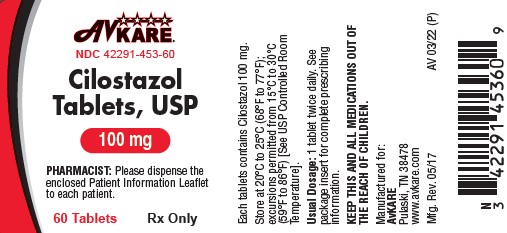
cilostazol 50 MG Oral Tablet — Platelet aggregation inhibitors excl. heparin. INDICATIONS AND USAGE Cilostazol tablets are indicated for the reduction of symptoms of intermittent claudication, as demonstrated by an increased…
Boxed warning
WARNING: CONTRAINDICATED IN HEART FAILURE PATIENTS Cilostazol tablets are contraindicated in patients with heart failure of any severity. Cilostazol and several of its metabolites are inhibitors of phosphodiesterase III. Several drugs with this pharmacologic effect have caused decreased survival compared to placebo in patients with class III-IV heart failure [see Contraindications ( 4 )]. WARNING: CONTRAINDICATED IN HEART FAILURE PATIENTS See full prescribing information for complete boxed warning. Cilostazol tablets is contraindicated in patients with heart failure of any severity. Cilostazol and several of its metabolites are inhibitors of phosphodiesterase III. Several drugs with the pharmacologic effect have caused decreased survival compared to placebo patients with class III-IV heart failure. ( 4 )
INDICATIONS AND USAGE Cilostazol tablets are indicated for the reduction of symptoms of intermittent claudication, as demonstrated by an increased walking distance. Cilostazol tablets are a phosphodiesterase III inhibitor (PDE III inhibitor) indicated for the reduction of symptoms of intermittent claudication, as demonstrated by an increased walking distance ( 1 )
Dosage
DOSAGE AND ADMINISTRATION The recommended dosage of cilostazol tablets is 100 mg twice daily taken at least half an hour before or two hours after breakfast and dinner ( 2.1 ) Reduce the dose to 50 mg twice daily when coadministered with CYP3A4 inhibitors such as ketoconazole, itraconazole, erythromycin, and diltiazem, or CYP2C19 inhibitors such as ticlopidine, fluconazole, and omeprazole ( 2.2 ) 2.1 Recommended Dosage The recommended dosage of cilostazol tablets is 100 mg twice daily taken at least half an hour before or two hours after breakfast and dinner. Patients may respond as early as 2 to 4 weeks after the initiation of therapy, but treatment for up to 12 weeks may be needed before a beneficial effect is experienced. If symptoms are unimproved after 3 months, discontinue cilostazol tablets. 2.2 Dose Reduction with CYP3A4 and CYP2C19 Inhibitors Reduce dose to 50 mg twice daily when coadministered with strong or moderate inhibitors of CYP3A4 (e.g., ketoconazole, itraconazole, erythromycin, and diltiazem) or inhibitors of CYP2C19 (e.g., ticlopidine, fluconazole, and omeprazole) [see Drug Interactions ( 7.1 )] .
Warnings
WARNINGS AND PRECAUTIONS Risks of tachycardia, palpitation, tachyarrhythmia or hypotension. Risks of exacerbations of angina pectoris or myocardial infarction in patients with a history of ischemic heart disease ( 5.2 ) Left ventricular outflow tract obstruction has been reported in patients with sigmoid shaped interventricular septum ( 5.1 ) Risks of thrombocytopenia or leukopenia progressing to agranulocytosis-monitor platelets and white blood cell counts ( 5.3 ) Avoid use in patients with hemostatic disorders or active pathologic bleeding ( 5.4 ) 5.1 Tachycardia Cilostazol may induce tachycardia, palpitation, tachyarrhythmia or hypotension. The increase in heart rate associated with cilostazol is approximately 5 to 7 bpm. Patients with a history of ischemic heart disease may be at risk for exacerbations of angina pectoris or myocardial infarction. 5.2 Left Ventricular Outflow Tract Obstruction Left ventricular outflow tract obstruction has been reported in patients with sigmoid shaped interventricular septum. Monitor patients for the development of a new systolic murmur or cardiac symptoms after starting cilostazol. 5.3 Hematologic Adverse Reactions Cases of thrombocytopenia or leukopenia progressing to agranulocytosis when cilostazol was not immediately discontinued have been reported. Agranulocytosis is reversible on discontinuation of cilostazol. Monitor platelets and white blood cell counts periodically. 5.4 Hemostatic Disorders or Active Pathologic Bleeding Cilostazol inhibits platelet aggregation in a reversible manner. Cilostazol has not been studied in patients with hemostatic disorders or active pathologic bleeding. Avoid use of cilostazol tablets in these patients.
Contraindications
CONTRAINDICATIONS Cilostazol tablets are contraindicated in patients with: Heart failure of any severity: Cilostazol and several of its metabolites are inhibitors of phosphodiesterase III. Several drugs with this pharmacologic effect have caused decreased survival compared to placebo in patients with class III-IV heart failure. Hypersensitivity to cilostazol or any components of cilostazol tablets (e.g., anaphylaxis, angioedema) Heart failure of any severity ( 4 ) Hypersensitivity to cilostazol or any components of cilostazol tablets ( 4 )
Mechanism of action
CLINICAL PHARMACOLOGY 12.1 Mechanism of Action Cilostazol and several of its metabolites inhibit phosphodiesterase III activity and suppress cAMP degradation with a resultant increase in cAMP in platelets and blood vessels, leading to inhibition of platelet aggregation and vasodilation, respectively. Cilostazol reversibly inhibits platelet aggregation induced by a variety of stimuli, including thrombin, ADP, collagen, arachidonic acid, epinephrine, and shear stress. Cardiovascular effects: Cilostazol affects both vascular beds and cardiovascular function. It produces heterogeneous dilation of vascular beds, with greater dilation in femoral beds than in vertebral, carotid or superior mesenteric arteries. Renal arteries were not responsive to the effects of cilostazol. In dogs or cynomolgus monkeys, cilostazol increased heart rate, myocardial contractile force, and coronary blood flow as well as ventricular automaticity, as would be expected for a PDE III inhibitor. Left ventricular contractility was increased at doses required to inhibit platelet aggregation. A-V conduction was accelerated. In humans, heart rate increased in a dose-proportional manner by a mean of 5.1 and 7.4 beats per minute in patients treated with 50 and 100 mg twice daily, respectively. 12.2 Pharmacodynamics Cilostazol’s effects on platelet aggregation were evaluated in both healthy subjects and in patients with stable symptoms of cerebral thrombosis, cerebral embolism, transient ischemic attack, or cerebral arteriosclerosis over a range of doses from 50 mg every day to 100 mg three times a day. Cilostazol significantly inhibited platelet aggregation in a dose-dependent manner. The effects were observed as early as 3 hours post-dose and lasted up to 12 hours following a single dose. Following chronic administration and withdrawal of cilostazol, the effects on platelet aggregation began to subside 48 hours after withdrawal and returned to baseline by 96 hours with no rebound effect. A cilostazol dosage of 100 mg twice daily consistently inhibited platelet aggregation induced with arachidonic acid, collagen and adenosine diphosphate (ADP). Bleeding time was not affected by cilostazol administration. Effects on circulating plasma lipids have been examined in patients taking cilostazol. After 12 weeks, as compared to placebo, cilostazol 100 mg twice daily produced a reduction in triglycerides of 29.3 mg/dL (15%) and an increase in HDL-cholesterol of 4.0 mg/dL (≅ 10%). Drug Interactions Aspirin Short-term (less than or equal to 4 days) coadministration of aspirin with cilostazol increased the inhibition of ADP- induced ex vivo platelet aggregation by 22% to 37% when compared to either aspirin or cilostazol alone. Short-term (less than or equal to 4 days) coadministration of aspirin with cilostazol increased the inhibition of arachidonic acid-induced ex vivo platelet aggregation by 20% compared to cilostazol alone and by 48% compared to aspirin alone. However, short- term coadministration of aspirin with cilostazol had no clinically significant impact on PT, aPTT, or bleeding time compared to aspirin alone. Effects of long-term coadministration in the general population are unknown. In eight randomized, placebo-controlled, double-blind clinical trials, aspirin was coadministered with cilostazol to 201 patients. The most frequent doses and mean durations of aspirin therapy were 75 to 81 mg daily for 137 days (107 patients) and 325 mg daily for 54 days (85 patients). There was no apparent increase in frequency of hemorrhagic adverse effects in patients taking cilostazol and aspirin compared to patients taking placebo and equivalent doses of aspirin. Warfarin Cilostazol did not inhibit the pharmacologic effects (PT, aPTT, bleeding time, or platelet aggregation) of R- and S- warfarin after a single 25-mg dose of warfarin. The effect of concomitant multiple dosing of warfarin and cilostazol on the pharmacodynamics of both drugs is unknown. 12.3 Pharmacokinetics Cilostazol is absorbed after oral administration. A high fat meal increases absorption, with an approximately 90% increase in C max and a 25% increase in AUC. Absolute bioavailability is not known. Cilostazol is extensively metabolized by hepatic cytochrome P-450 enzymes, mainly 3A4, and, to a lesser extent, 2C19, with metabolites largely excreted in urine. Two metabolites are active, with one metabolite appearing to account for at least 50% of the pharmacologic (PDE III inhibition) activity after administration of cilostazol. Pharmacokinetics are approximately dose proportional. Cilostazol and its active metabolites have apparent elimination half-lives of about 11 to 13 hours. Cilostazol and its active metabolites accumulate about 2-fold with chronic administration and reach steady state blood levels within a few days. The pharmacokinetics of cilostazol and its two major active metabolites were similar in healthy subjects and patients with intermittent claudication due to peripheral arterial disease (PAD). Figure 1 shows the mean plasma concentration-time profile at steady state after multiple dosing of cilostazol 100 mg twice daily. Figure 1: Mean Plasma Concentration-time Profile at Steady State after Multiple Dosing of cilostazol 100 mg Twice Daily Distribution Cilostazol is 95 to 98% protein bound, predominantly to albumin. The binding for 3,4-dehydro-cilostazol is 97.4% and for 4´-trans-hydroxy-cilostazol is 66%. Mild hepatic impairment did not affect protein binding. The free fraction of cilostazol was 27% higher in subjects with renal impairment than in healthy volunteers. The displacement of cilostazol from plasma proteins by erythromycin, quinidine, warfarin, and omeprazole was not clinically significant. Metabolism Cilostazol is eliminated predominantly by metabolism and subsequent urinary excretion of metabolites. Based on in vitro studies, the primary isoenzymes involved in cilostazol’s metabolism are CYP3A4 and, to a lesser extent, CYP2C19. The enzyme responsible for metabolism of 3,4-dehydro-cilostazol, the most active of the metabolites, is unknown. Following oral administration of 100 mg radiolabeled cilostazol, 56% of the total analytes in plasma was cilostazol, 15% was 3,4-dehydro-cilostazol (4 to 7 times as active as cilostazol), and 4% was 4´-trans-hydroxy-cilostazol (20% as active as cilostazol). Elimination The primary route of elimination was via the urine (74%), with the remainder excreted in feces (20%). No measurable amount of unchanged cilostazol was excreted in the urine, and less than 2% of the dose was excreted as 3,4-dehydro- cilostazol. About 30% of the dose was excreted in urine as 4´-trans-hydroxy-cilostazol. The remainder was excreted as other metabolites, none of which exceeded 5%. There was no evidence of induction of hepatic microenzymes. Special Populations Age and Gender The total and unbound oral clearances, adjusted for body weight, of cilostazol and its metabolites were not significantly different with respect to age (50 to 80 years) or gender. Smokers Population pharmacokinetic analysis suggests that smoking decreased cilostazol exposure by about 20%. Hepatic Impairment The pharmacokinetics of cilostazol and its metabolites were similar in subjects with mild hepatic disease as compared to healthy subjects. Patients with moderate or severe hepatic impairment have not been studied. Renal Impairment The total pharmacologic activity of cilostazol and its metabolites was similar in subjects with mild to moderate renal impairment and in healthy subjects. Severe renal impairment increases metabolite levels and alters protein binding of the parent. The expected pharmacologic activity, however, based on plasma concentrations and relative PDE III inhibiting potency of parent drug and metabolites, appeared little changed. Patients on dialysis have not been studied, but, it is unlikely that cilostazol can be removed efficiently by dialysis because of its high protein binding (95 to 98%). Drug Interac
A drug lookup is just the start. Eleplan keeps the whole care plan in one place.
Medications, diagnoses, documents, appointments, and the whole care team — organized and always in sync, with Ellie, your AI care assistant, on top of it. Free to start.