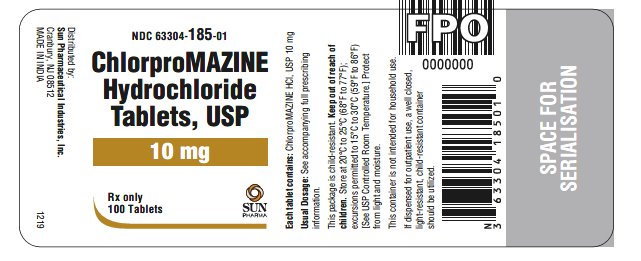
chlorpromazine hydrochloride 100 MG/ML Oral Solution — Phenothiazines with aliphatic side-chain. INDICATIONS AND USAGE For the management of manifestations of psychotic disorders. For the treatment of schizophrenia. To control nausea and…
Boxed warning
BOXED WARNING WARNING Increased Mortality in Elderly Patients with Dementia-Related Psychosis Elderly patients with dementia-related psychosis treated with antipsychotic drugs are at an increased risk of death. Analyses of seventeen placebo-controlled trials (modal duration of 10 weeks), largely in patients taking atypical antipsychotic drugs, revealed a risk of death in drug-treated patients of between 1.6 to 1.7 times the risk of death in placebo-treated patients. Over the course of a typical 10-week controlled trial, the rate of death in drug-treated patients was about 4.5%, compared to a rate of about 2.6% in the placebo group. Although the causes of death were varied, most of the deaths appeared to be either cardiovascular (e.g., heart failure, sudden death) or infectious (e.g., pneumonia) in nature. Observational studies suggest that, similar to atypical antipsychotic drugs, treatment with conventional antipsychotic drugs may increase mortality. The extent to which the findings of increased mortality in observational studies may be attributed to the antipsychotic drug as opposed to some characteristic(s) of the patients is not clear. Chlorpromazine Hydrochloride Injection, USP is not approved for the treatment of patients with dementia-related psychosis (see WARNINGS ).
Phenothiazines with aliphatic side-chainPhenothiazine
Indications
INDICATIONS AND USAGE For the management of manifestations of psychotic disorders. For the treatment of schizophrenia. To control nausea and vomiting. For relief of restlessness and apprehension before surgery. For acute intermittent porphyria. As an adjunct in the treatment of tetanus. To control the manifestations of the manic type of manic-depressive illness. For relief of intractable hiccups. For the treatment of severe behavioral problems in children (1 to 12 years of age) marked by combativeness and/or explosive hyperexcitable behavior (out of proportion to immediate provocations), and in the short-term treatment of hyperactive children who show excessive motor activity with accompanying conduct disorders consisting of some or all of the following symptoms: impulsivity, difficulty sustaining attention, aggressivity, mood lability and poor frustration tolerance.
Dosage
DOSAGE AND ADMINISTRATION Adults Adjust dosage to individual and the severity of his condition, recognizing that the milligram for milligram potency relationship among all dosage forms has not been precisely established clinically. It is important to increase dosage until symptoms are controlled. Dosage should be increased more gradually in debilitated or emaciated patients. In continued therapy, gradually reduce dosage to the lowest effective maintenance level, after symptoms have been controlled for a reasonable period. Increase parenteral dosage only if hypotension has not occurred. Before using intramuscularly, see Important Notes on Injection . ELDERLY PATIENTS In general, dosages in the lower range are sufficient for most elderly patients. Since they appear to be more susceptible to hypotension and neuromuscular reactions, such patients should be observed closely. Dosage should be tailored to the individual, response carefully monitored, and dosage adjusted accordingly. Dosage should be increased more gradually in elderly patients. PSYCHOTIC DISORDERS Increase dosage gradually until symptoms are controlled. Maximum improvement may not be seen for weeks or even months. Continue optimum dosage for 2 weeks; then gradually reduce dosage to the lowest effective maintenance level. Daily dosage of 200 mg is not unusual. Some patients require higher dosages (e.g., 800 mg daily is not uncommon in discharged mental patients). Hospitalized Patients: Acute Schizophrenic or Manic States Intramuscular: 25 mg (1 mL). If necessary, give additional 25 to 50 mg injection in 1 hour. Increase subsequent intramuscular doses gradually over several days–up to 400 mg q4 to 6h in exceptionally severe cases–until patient is controlled. Usually the patient becomes quiet and cooperative within 24 to 48 hours and oral doses may be substituted. Prompt Control of Severe Symptoms Intramuscular: 25 mg (1 mL). If necessary, repeat in 1 hour. Subsequent doses should be oral, 25 to 50 mg tid. NAUSEA AND VOMITING Intramuscular: 25 mg (1 mL). If no hypotension occurs, give 25 to 50 mg q3 to 4h prn, until vomiting stops. Then switch to oral dosage. During Surgery Intramuscular: 12.5 mg (0.5 mL). Repeat in 1 / 2 hour if necessary and if no hypotension occurs. Intravenous: 2 mg per fractional injection, at 2-minute intervals. Do not exceed 25 mg. Dilute to 1 mg / mL, i.e., 1 mL (25 mg) mixed with 24 mL of saline. PRESURGICAL APPREHENSION Intramuscular : 12.5 to 25 mg (0.5 to 1 mL), 1 to 2 hours before operation. INTRACTABLE HICCUPS If symptoms persist for 2 to 3 days after trial with oral therapy, give 25 to 50 mg (1 to 2 mL) intramuscularly. Should symptoms persist, use slow intravenous infusion with patient flat in bed: 25 to 50 mg (1 to 2 mL) in 500 to 1,000 mL of saline. Follow blood pressure closely. ACUTE INTERMITTENT PORPHYRIA Intramuscular : 25 mg (1 mL) tid or qid until patient can take oral therapy. TETANUS Intramuscular : 25 to 50 mg (1 to 2 mL) given 3 or 4 times daily, usually in conjunction with barbiturates. Total doses and frequency of administration must be determined by the patient’s response, starting with low doses and increasing gradually. Intravenous: 25 to 50 mg (1 to 2 mL). Dilute to at least 1 mg per mL and administer at a rate of 1 mg per minute. Pediatric Patients (6 months to 12 years of age) Chlorpromazine should generally not be used in pediatric patients under 6 months of age except where potentially lifesaving. It should not be used in conditions for which specific pediatric dosages have not been established. SEVERE BEHAVIORAL PROBLEMS Outpatients Select route of administration according to severity of patient’s condition and increase dosage gradually as required. Intramuscular: 1 / 4 mg / lb body weight q6 to 8h, prn. Hospitalized Patients As with outpatients, start with low doses and increase dosage gradually. In severe behavior disorders, higher dosages (50 to 100 mg daily, and in older children, 200 mg daily or more) may be necessary. There is little evidence that behavior improvement in severely disturbed mentally retarded patients is further enhanced by doses beyond 500 mg per day. Maximum Intramuscular Dosage: Patients up to 5 years (or 50 lbs.), not over 40 mg / day; 5 to 12 years (or 50 to 100 lbs.), not over 75 mg / day except in unmanageable cases. NAUSEA AND VOMITING Dosage and frequency of administration should be adjusted according to the severity of the symptoms and response of the patient. The duration of activity following intramuscular administration may last up to 12 hours. Subsequent doses may be given by the same route if necessary. Intramuscular: 1 / 4 mg / lb body weight q6 to 8h, prn. Maximum Intramuscular Dosage: Pediatric patients 6 months to 5 years (or 50 lbs.), not over 40 mg / day; 5 to 12 years (or 50 to 100 lbs.), not over 75 mg / day except in severe cases. During Surgery Intramuscular: 1 / 8 mg / lb body weight. Repeat in 1 / 2 hour if necessary and if no hypotension occurs. Intravenous: 1 mg per fractional injection at 2-minute intervals and not exceeding recommended intramuscular dosage. Always dilute to 1 mg / mL, i.e., 1 mL (25 mg) mixed with 24 mL of saline. PRESURGICAL APPREHENSION 1 / 4 mg / lb body weight Intramuscular 1 to 2 hours before operation. TETANUS Intramuscular or Intravenous: 1 / 4 mg / lb body weight q6 to 8h. When given intravenously, dilute to at least 1 mg / mL and administer at a rate of 1 mg per 2 minutes. In patients up to 50 lbs., do not exceed 40 mg daily; 50 to 100 lbs., do not exceed 75 mg except in severe cases. Important Notes on Injection Inject slowly, deep into upper outer quadrant of buttock. Because of possible hypotensive effects, reserve parenteral administration for bedfast patients or for acute ambulatory cases, and keep patient lying down for at least 1 / 2 hour after injection. If irritation is a problem, dilute injection with saline or 2% procaine; mixing with other agents in the syringe is not recommended. Subcutaneous injection is not advised. AVOID INJECTING UNDILUTED CHLORPROMAZINE HYDROCHLORIDE INJECTION INTO VEIN. INTRAVENOUS ROUTE IS ONLY FOR SEVERE HICCUPS, SURGERY AND TETANUS. Because of the possibility of contact dermatitis, avoid getting solution on hands or clothing. Parenteral drug products should be inspected visually for particulate matter and discoloration prior to administration, whenever solution and container permit.
Warnings
WARNINGS Increased Mortality in Elderly Patients with Dementia-Related Psychosis Elderly patients with dementia-related psychosis treated with antipsychotic drugs are at an increased risk of death. Chlorpromazine hydrochloride is not approved for the treatment of patients with dementia-related psychosis (see BOXED WARNING ). The extrapyramidal symptoms which can occur secondary to chlorpromazine hydrochloride may be confused with the central nervous system signs of an undiagnosed primary disease responsible for the vomiting, e.g., Reye's syndrome or other encephalopathy. The use of chlorpromazine hydrochloride and other potential hepatotoxins should be avoided in children and adolescents whose signs and symptoms suggest Reye's syndrome. Tardive Dyskinesia Tardive dyskinesia, a syndrome consisting of potentially irreversible, involuntary, dyskinetic movements, may develop in patients treated with antipsychotic drugs. Although the prevalence of the syndrome appears to be highest among the elderly, especially elderly women, it is impossible to rely upon prevalence estimates to predict, at the inception of antipsychotic treatment, which patients are likely to develop the syndrome. Whether antipsychotic drug products differ in their potential to cause tardive dyskinesia is unknown. Both the risk of developing the syndrome and the likelihood that it will become irreversible are believed to increase as the duration of treatment and the total cumulative dose of antipsychotic drugs administered to the patient increase. However, the syndrome can develop, although much less commonly, after relatively brief treatment periods at low doses. There is no known treatment for established cases of tardive dyskinesia, although the syndrome may remit, partially or completely, if antipsychotic treatment is withdrawn. Antipsychotic treatment itself, however, may suppress (or partially suppress) the signs and symptoms of the syndrome and thereby may possibly mask the underlying disease process. The effect that symptomatic suppression has upon the long-term course of the syndrome is unknown. Given these considerations, antipsychotics should be prescribed in a manner that is most likely to minimize the occurrence of tardive dyskinesia. Chronic antipsychotic treatment should generally be reserved for patients who suffer from a chronic illness that, 1) is known to respond to antipsychotic drugs, and, 2) for whom alternative, equally effective, but potentially less harmful treatments are not available or appropriate. In patients who do require chronic treatment, the smallest dose and the shortest duration of treatment producing a satisfactory clinical response should be sought. The need for continued treatment should be reassessed periodically. If signs and symptoms of tardive dyskinesia appear in a patient on antipsychotics, drug discontinuation should be considered. However, some patients may require treatment despite the presence of the syndrome. For further information about the description of tardive dyskinesia and its clinical detection, please refer to the sections on PRECAUTIONS and ADVERSE REACTIONS . Neuroleptic Malignant Syndrome (NMS) A potentially fatal symptom complex sometimes referred to as Neuroleptic Malignant Syndrome (NMS) has been reported in association with antipsychotic drugs. Clinical manifestations of NMS are hyperpyrexia, muscle rigidity, altered mental status and evidence of autonomic instability (irregular pulse or blood pressure, tachycardia, diaphoresis and cardiac dysrhythmias). The diagnostic evaluation of patients with this syndrome is complicated. In arriving at a diagnosis, it is important to identify cases where the clinical presentation includes both serious medical illness (e.g., pneumonia, systemic infection, etc.) and untreated or inadequately treated extrapyramidal signs and symptoms (EPS). Other important considerations in the differential diagnosis include central anticholinergic toxicity, heat stroke, drug fever and primary central nervous system (CNS) pathology. The management of NMS should include 1) immediate discontinuation of antipsychotic drugs and other drugs not essential to concurrent therapy, 2) intensive symptomatic treatment and medical monitoring, and 3) treatment of any concomitant serious medical problems for which specific treatments are available. There is no general agreement about specific pharmacological treatment regimens for uncomplicated NMS. If a patient requires antipsychotic drug treatment after recovery from NMS, the potential reintroduction of drug therapy should be carefully considered. The patient should be carefully monitored, since recurrences of NMS have been reported. An encephalopathic syndrome (characterized by weakness, lethargy, fever, tremulousness and confusion, extrapyramidal symptoms, leukocytosis, elevated serum enzymes, BUN and FBS) has occurred in a few patients treated with lithium plus an antipsychotic. In some instances, the syndrome was followed by irreversible brain damage. Because of a possible causal relationship between these events and the concomitant administration of lithium and antipsychotics, patients receiving such combined therapy should be monitored closely for early evidence of neurologic toxicity and treatment discontinued promptly if such signs appear. This encephalopathic syndrome may be similar to or the same as neuroleptic malignant syndrome (NMS). Patients with bone marrow depression or who have previously demonstrated a hypersensitivity reaction (e.g., blood dyscrasias, jaundice) with a phenothiazine should not receive any phenothiazine, including chlorpromazine hydrochloride, unless in the judgment of the physician the potential benefits of treatment outweigh the possible hazard. Chlorpromazine hydrochloride may impair mental and/or physical abilities, especially during the first few days of therapy. Therefore, caution patients about activities requiring alertness (e.g., operating vehicles or machinery). The use of alcohol with this drug should be avoided due to possible additive effects and hypotension. Chlorpromazine hydrochloride may counteract the antihypertensive effect of guanethidine and related compounds. Falls Chlorpromazine hydrochloride may cause somnolence, postural hypotension, motor and sensory instability, which may lead to falls and, consequently, fractures or other injuries. For patients with diseases, conditions, or medications that could exacerbate these effects, complete fall risk assessments when initiating antipsychotic treatment and recurrently for patients on long-term antipsychotic therapy. Usage in Pregnancy Safety for the use of chlorpromazine hydrochloride during pregnancy has not been established. Therefore, it is not recommended that the drug be given to pregnant patients except when, in the judgment of the physician, it is essential. The potential benefits should clearly outweigh possible hazards. There are reported instances of prolonged jaundice, extrapyramidal signs, hyperreflexia or hyporeflexia in newborn infants whose mothers received phenothiazines. Reproductive studies in rodents have demonstrated potential for embryotoxicity, increased neonatal mortality and nursing transfer of the drug. Tests in the offspring of the drug-treated rodents demonstrate decreased performance. The possibility of permanent neurological damage cannot be excluded. Non-teratogenic Effects Neonates exposed to antipsychotic drugs, during the third trimester of pregnancy are at risk for extrapyramidal and/or withdrawal symptoms following delivery. There have been reports of agitation, hypertonia, hypotonia, tremor, somnolence, respiratory distress and feeding disorder in these neonates. These complications have varied in severity; while in some cases symptoms have been self-limited, in other cases neonates have required intensive care unit support and prolonged hospitalization. Chlorpromazine hydrochloride should be used during pregnancy only if the pot
Contraindications
CONTRAINDICATIONS Do not use in patients with known hypersensitivity to phenothiazines. Do not use in comatose states or in the presence of large amounts of central nervous system depressants (alcohol, barbiturates, narcotics, etc.).
Mechanism of action
CLINICAL PHARMACOLOGY The precise mechanism whereby the therapeutic effects of chlorpromazine hydrochloride are produced is not known. The principal pharmacological actions are psychotropic. It also exerts sedative and antiemetic activity. Chlorpromazine hydrochloride has actions at all levels of the central nervous system-primarily at subcortical levels-as well as on multiple organ systems. Chlorpromazine hydrochloride has strong antiadrenergic and weaker peripheral anticholinergic activity; ganglionic blocking action is relatively slight. It also possesses slight antihistaminic and antiserotonin activity.
A drug lookup is just the start. Eleplan keeps the whole care plan in one place.
Medications, diagnoses, documents, appointments, and the whole care team — organized and always in sync, with Ellie, your AI care assistant, on top of it. Free to start.