cefoxitin 1000 MG Injection
Managing this medication for someone you care for? Eleplan keeps diagnoses, medications and appointments in one plan.
Start free with EleplanClinical drug
cefoxitin 1000 MG Injection
1000 MG · Injection · injection
A form of cefoxitin →
cefoxitin 1000 MG Injection — Second-generation cephalosporins. INDICATIONS AND USAGE Cefoxitin for Injection and Dextrose Injection is a cephalosporin antibacterial indicated for the treatment of the following…
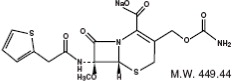
Boxed warning
PHARMACY BULK PACKAGE – NOT FOR DIRECT INFUSION
Active ingredient
Classification
Second-generation cephalosporinsCephalosporin Antibacterial
Drug interactions
Cefoxitin may interact with aminoglycoside antibiotics, leading to increased nephrotoxicity.
- majoraminoglycoside antibiotics — increased nephrotoxicity
Real-world adverse events (FAERS)
Off Label Use91Drug Resistance89Nausea80Drug Reaction with Eosinophilia and Systemic Symptoms78Rash74Drug Ineffective63Product Use in Unapproved Indication62Thrombocytopenia62
Indications
INDICATIONS AND USAGE Cefoxitin for Injection and Dextrose Injection is a cephalosporin antibacterial indicated for the treatment of the following infections caused by susceptible isolates of the designated bacteria ( 1 ): Lower respiratory tract infections ( 1.1 ); Urinary tract infections ( 1.2 ); Intra-abdominal infections ( 1.3 ); Gynecological infections ( 1.4 ); Septicemia ( 1.5 ); Bone and joint infections ( 1.6 ); Skin and skin structure infections ( 1.7 ); Prophylaxis ( 1.8 ). To reduce the development of drug-resistant bacteria and maintain the effectiveness of Cefoxitin for Injection and Dextrose Injection and other antibacterial drugs, Cefoxitin for Injection and Dextrose Injection should be used only to treat or prevent infections that are proven or strongly suspected to be caused by bacteria ( 1.9 ). 1.1 Lower Respiratory Tract Infections Cefoxitin for Injection and Dextrose Injection is indicated for the treatment of lower respiratory tract infections, including pneumonia and lung abscess, caused by Streptococcus pneumoniae , other streptococci (excluding enterococci, e.g., Enterococcus faecalis [formerly Streptococcus faecalis ]), Staphylococcus aureus (including penicillinase-producing strains), Escherichia coli , Klebsiella species, Haemophilus influenzae , and Bacteroides species. 1.2 Urinary Tract Infections Cefoxitin for Injection and Dextrose Injection is indicated for the treatment of urinary tract infections caused by Escherichia coli , Klebsiella species, Proteus mirabilis , Morganella morganii , Proteus vulgaris and Providencia species (including P. rettgeri ). 1.3 Intra-abdominal Infections Cefoxitin for Injection and Dextrose Injection is indicated for the treatment of intra-abdominal infections , including peritonitis and intra-abdominal abscess, caused by Escherichia coli, Klebsiella species, Bacteroides species including Bacteroides fragilis , and Clostridium species. 1.4 Gynecological Infections Cefoxitin for Injection and Dextrose Injection is indicated for the treatment of gynecological infections , including endometritis, pelvic cellulitis, and pelvic inflammatory disease caused by Escherichia coli , Neisseria gonorrhoeae (including penicillinase-producing strains), Bacteroides species including B. fragilis , Clostridium species, Peptococcus niger , Peptostreptococcus species, and Streptococcus agalactiae . Cefoxitin has no activity against Chlamydia trachomatis . Therefore, when cefoxitin is used in the treatment of patients with pelvic inflammatory disease and C. trachomatis is one of the suspected pathogens, appropriate anti-chlamydial coverage should be added. 1.5 Septicemia Cefoxitin for Injection and Dextrose Injection is indicated for the treatment of Septicemia caused by Streptococcus pneumoniae , Staphylococcus aureus (including penicillinase-producing strains), Escherichia coli , Klebsiella species, and Bacteroides species including B. fragilis . 1.6 Bone and Joint Infections Cefoxitin for Injection and Dextrose Injection is indicated for the treatment of bone and joint infections caused by Staphylococcus aureus (including penicillinase-producing strains). 1.7 Skin and Skin Structure Infections Cefoxitin for Injection and Dextrose Injection is indicated for the treatment of skin and skin structure infections caused by Staphylococcus aureus (including penicillinase-producing strains), Staphylococcus epidermidis , Streptococcus pyogenes and other streptococci (excluding enterococci, e.g., Enterococcus faecalis [formerly Streptococcus faecalis ]), Escherichia coli , Proteus mirabilis , Klebsiella species, Bacteroides species including B. fragilis , Clostridium species, Peptococcus niger , and Peptostreptococcus species. 1.8 Prophylaxis Cefoxitin for Injection and Dextrose Injection is indicated for the prophylaxis of infection in patients undergoing uncontaminated gastrointestinal surgery, vaginal hysterectomy, abdominal hysterectomy, or cesarean section. If there are signs of infection, specimens for culture should be obtained for identification of the causative organism so that appropriate treatment may be instituted. 1.9 Usage To reduce the development of drug-resistant bacteria and maintain the effectiveness of Cefoxitin for Injection and Dextrose Injection and other antibacterial drugs, Cefoxitin for Injection and Dextrose Injection should be used only to treat or prevent infections that are proven or strongly suspected to be caused by susceptible bacteria. When culture and susceptibility information are available, they should be considered in selecting or modifying antibacterial therapy. In the absence of such data, local epidemiology and susceptibility patterns may contribute to the empiric selection of therapy.
Dosage
DOSAGE AND ADMINISTRATION For intravenous use only. ( 2 ) Use this formulation of cefoxitin only in patients who require the entire 1 or 2 gram dose and not any fraction thereof. ( 2.3 ) See full prescribing information for dose adjustment in patients with impaired renal function. ( 2.3 ) Recommended dosing schedule in patients with normal renal function. ( 2.1 ) 2.1 Dosage in Adults for Treatment The usual adult dosage range is 1 gram to 2 grams every six to eight hours. Dosage should be determined by susceptibility of the causative organisms, severity of infection, and the condition of the patient (see Table 1 for dosage guidelines). Administer Cefoxitin for Injection and Dextrose Injection intravenously over approximately 30 minutes. If C. trachomatis is a suspected pathogen, appropriate anti-chlamydial coverage should be added, because cefoxitin sodium has no activity against this organism [see Indications and Usage (1.4) ] . Antibacterial therapy for group A beta-hemolytic streptococcal infections should be maintained for at least 10 days to guard against the risk of rheumatic fever or glomerulonephritis. In staphylococcal and other infections involving a collection of pus, surgical drainage should be carried out where indicated. Use this formulation of cefoxitin only in patients who require the entire 1 or 2 gram dose and not any fraction thereof. Table 1: Guidelines for Dosage of Cefoxitin for Injection Type of Infection Daily Dosage Frequency and Route Uncomplicated forms Including patients in whom bacteremia is absent or unlikely. of infections such as pneumonia, urinary tract infection, cutaneous infection 3-4 grams 1 gram every 6-8 hours IV Moderately severe or severe infections 6-8 grams 1 gram every 4 hours or 2 grams every 6-8 hours IV Infections commonly needing antibacterial drugs in higher dosage (e.g., gas gangrene) 12 grams 2 grams every 4 hours or 3 grams every 6 hours IV 2.2 Dosage in Adults for Prophylaxis Effective prophylactic use depends on the time of administration. Cefoxitin for Injection and Dextrose Injection usually should be given one-half to one hour before the operation, which is sufficient time to achieve effective levels in the wound during the procedure. Prophylactic administration should usually be stopped within 24 hours since continuing administration of any antibacterial increases the possibility of adverse reactions but, in the majority of surgical procedures, does not reduce the incidence of subsequent infection. For prophylactic use in uncontaminated gastrointestinal surgery, vaginal hysterectomy, or abdominal hysterectomy, the following doses are recommended: • 2 grams administered intravenously just prior to surgery (approximately one-half to one hour before the initial incision) followed by • 2 grams every 6 hours after the first dose for no more than 24 hours. For patients undergoing cesarean section, either a single 2 gram dose administered intravenously as soon as the umbilical cord is clamped OR a 3-dose regimen consisting of 2 grams given intravenously as soon as the umbilical cord is clamped followed by 2 grams 4 and 8 hours after the initial dose is recommended [see Clinical Studies (14.1) ]. 2.3 Dosage in Patients with Renal Impairment In adults with renal impairment, an initial loading dose of 1 gram to 2 grams may be given. After a loading dose, the recommendations for maintenance dosage (Table 2) may be used as a guide. When only the serum creatinine level is available, the following formula (based on sex, weight, and age of the patient) may be used to convert this value into creatinine clearance. The serum creatinine should represent a steady state of renal function. Males: Weight (kg) x (140 - age) 72 x serum creatinine (mg/100 mL) Females: 0.85 x above value In patients undergoing hemodialysis, the loading dose of 1 to 2 grams should be given after each hemodialysis, and the maintenance dose should be given as indicated in Table 2. Table 2: Maintenance Dosage of Cefoxitin for Injection in Adults with Renal Impairment Renal Function Creatinine Clearance (mL/min) Dose (grams) Frequency Mild impairment Moderate impairment Severe impairment Essentially no function 50-30 29-10 9-5 <5 1-2 1-2 0.5-1 0.5-1 every 8-12 hours every 12-24 hours every 12-24 hours every 24-48 hours 2.4 Preparation and Administration of Cefoxitin for Injection and Dextrose Injection in DUPLEX® Container Important Administration Instructions • This reconstituted solution is for intravenous use only. • Administer Cefoxitin for Injection and Dextrose Injection intravenously over approximately 30 minutes. • Do not use in series connections. Such use would result in air embolism due to residual air being drawn from the primary container before administration of the fluid from the secondary container is complete. If administration is controlled by a pumping device, care must be taken to discontinue pumping action before the container runs dry or air embolism may result. • Do not introduce additives into the DUPLEX® Container. • Cefoxitin for Injection and Dextrose Injection may be administered through the tubing system by which the patient may be receiving other intravenous solutions. However, during infusion of the solution containing Cefoxitin for Injection and Dextrose Injection, it is advisable to temporarily discontinue administration of any other solutions at the same site. • Cefoxitin for Injection and Dextrose Injection, like most beta-lactam antibiotics, should not be added to aminoglycoside solutions (e.g., gentamicin sulfate, tobramycin sulfate, amikacin sulfate) because of potential interaction. However, Cefoxitin for Injection and Dextrose Injection and aminoglycosides may be administered separately to the same patient. Parenteral drug products should be inspected visually for particulate matter and discoloration prior to administration, whenever solution and container permit. Use only if solution is clear and free from particulate matter and container and seals are intact. As with other cephalosporins, reconstituted Cefoxitin for Injection and Dextrose Injection tends to darken depending on storage conditions, within the stated recommendations. However, product potency is not adversely affected. DUPLEX® Container Storage • To avoid inadvertent activation, DUPLEX® Container should remain in the folded position until activation is intended. Patient Labeling and Drug Powder/Diluent Inspection • Apply patient-specific label on foil side of container. Use care to avoid activation. Do not cover any portion of foil strip with patient label. • Unlatch side tab and unfold DUPLEX® Container ( see Diagram 1 ). • Visually inspect diluent chamber for particulate matter. • Use only if container and seals are intact. • To inspect the drug powder for foreign matter or discoloration, peel foil strip from drug chamber ( see Diagram 2 ). • Protect from light after removal of foil strip. • Note: If foil strip is removed, the container should be re-folded and the side tab latched until ready to activate. The product must then be used within 7 days, but not beyond the labeled expiration date. Reconstitution (Activation) • Do not use directly after storage by refrigeration, allow the product to equilibrate to room temperature before patient use. • Unfold the DUPLEX® Container and point the set port in a downward direction. Starting at the hanger tab end, fold the DUPLEX® Container just below the diluent meniscus trapping all air above the fold. To activate, squeeze the folded diluent chamber until the seal between the diluent and powder opens, releasing diluent into the drug powder chamber ( see Diagram 3 ). • Agitate the liquid-powder mixture until the drug powder is completely dissolved. Note: Following reconstitution (activation), product must be used within 12 hours if stored at room temperature or within 7 days if stored under refrigeration. Administration • Visually inspect the reconstituted solution for particulate matter. • Po
Warnings
WARNINGS AND PRECAUTIONS Hypersensitivity reactions including anaphylaxis and serious skin reactions. If an allergic reaction occurs, discontinue the drug. ( 5.1 ) Use in patients with renal impairment: Dosage adjustment required for patients with impaired renal function. ( 2.3 ) Clostridium difficile -associated diarrhea: May range from mild diarrhea to fatal colitis. Evaluate if diarrhea occurs. ( 5.2 ) 5.1 Hypersensitivity Reactions to Cefoxitin or other Beta-lactam Antibacterial Drugs Serious and occasionally fatal hypersensitivity reactions (e.g., anaphylaxis) have been reported in patients on β-lactam antibacterials, including cefoxitin [see Adverse Reactions (6.1) ] . These reactions are more likely to occur in individuals with a history of β-lactam hypersensitivity and/or a history of sensitivity to multiple allergens. There have been reports of individuals with a history of penicillin hypersensitivity who have experienced severe reactions when treated with cephalosporins. Cefoxitin for Injection and Dextrose Injection is contraindicated in patients with a known hypersensitivity to Cefoxitin for Injection and Dextrose Injection or other β-lactam antibacterial drugs [see Contraindications (4) ] . Before initiating therapy with Cefoxitin for Injection and Dextrose Injection, inquire about previous hypersensitivity reactions to penicillins, cephalosporins, or other allergens. If an allergic reaction occurs, discontinue Cefoxitin for Injection and Dextrose Injection and institute appropriate therapy. 5.2 Clostridium difficile -associated Diarrhea Clostridium difficile associated diarrhea (CDAD) has been reported with use of nearly all antibacterial agents, including Cefoxitin for Injection and Dextrose Injection, and may range in severity from mild diarrhea to fatal colitis. Treatment with antibacterial agents alters the normal flora of the colon leading to overgrowth of C. difficile . C. difficile produces toxins A and B which contribute to the development of CDAD. Hypertoxin producing strains of C. difficile cause increased morbidity and mortality, as these infections can be refractory to antimicrobial therapy and may require colectomy. CDAD must be considered in all patients who present with diarrhea following antibiotic use. Careful medical history is necessary since CDAD has been reported to occur over two months after the administration of antibacterial agents. If CDAD is suspected or confirmed, ongoing antibiotic use not directed against C. difficile may need to be discontinued. Appropriate fluid and electrolyte management, protein supplementation, antibiotic treatment of C. difficile , and surgical evaluation should be instituted as clinically indicated. 5.3 Risk of Development of Drug-resistant Bacteria Prescribing Cefoxitin for Injection and Dextrose Injection in the absence of a proven or strongly suspected bacterial infection or a prophylactic indication is unlikely to provide benefit to the patient and increases the risk of the development of drug-resistant bacteria. Prolonged use of Cefoxitin for Injection and Dextrose Injection may result in overgrowth of non-susceptible microorganisms. Repeated evaluation of the patient's condition is essential. Should superinfection occur during therapy, appropriate measures should be taken. 5.4 Drug/Laboratory Test Interactions As with cephalothin, high concentrations of cefoxitin (>100 mcg/mL) may interfere with measurement of serum and urine creatinine levels by Jaffé reaction, and produce false increases of modest degree in the levels of creatinine reported. Serum samples from patients treated with cefoxitin should not be analyzed for creatinine if withdrawn within 2 hours of drug administration. High concentrations of cefoxitin in the urine may interfere with measurement of urinary 17-hydroxy-corticosteroids by the Porter-Silber reaction, and produce false increases of modest degree in the levels reported. A false-positive reaction for glucose in the urine may occur. This has been observed with CLINITEST® reagent tablets. 5.5 Patients with a History of Gastrointestinal Disease Cefoxitin for Injection and Dextrose Injection is not recommended in individuals with a history of gastrointestinal disease, particularly colitis. 5.6 Patients with Overt or Known Subclinical Diabetes Mellitus or Carbohydrate Intolerance As with other dextrose-containing solutions, Cefoxitin for Injection and Dextrose Injection should be monitored if Cefoxitin for Injection and Dextrose Injection is prescribed in patients with overt or known subclinical diabetes mellitus or carbohydrate intolerance for any reason.
Contraindications
CONTRAINDICATIONS Hypersensitivity to cefoxitin or other beta-lactam antibacterial drugs. ( 4.1 ) Hypersensitivity to corn products. ( 4.2 ) 4.1 Hypersensitivity to Cefoxitin or other Beta-lactam Antibacterial Drugs Cefoxitin for Injection and Dextrose Injection is contraindicated in patients who have shown hypersensitivity to cefoxitin or to other β-lactam antibacterial drugs (e.g., penicillins and cephalosporins). 4.2 Hypersensitivity to Corn Products Solutions containing dextrose may be contraindicated in patients with hypersensitivity to corn products.
Mechanism of action
CLINICAL PHARMACOLOGY: Clinical Pharmacology: Following an intravenous dose of 1 gram, serum concentrations were 110 mcg/mL at 5 minutes, declining to less than 1 mcg/mL at 4 hours. The half-life after an intravenous dose is 41 to 59 minutes. Approximately 85 percent of cefoxitin is excreted unchanged by the kidneys over a 6-hour period, resulting in high urinary concentrations. Probenecid slows tubular excretion and produces higher serum levels and increases the duration of measurable serum concentrations. Cefoxitin passes into pleural and joint fluids and is detectable in antibacterial concentrations in bile. In a published study of geriatric patients ranging in age from 64 to 88 years with normal renal function for their age (creatinine clearance ranging from 31.5 to 174.0 mL/min), the half-life for cefoxitin ranged from 51 to 90 minutes, resulting in higher plasma concentrations than in younger adults. These changes were attributed to decreased renal function associated with the aging process. Microbiology: Mechanism of Action: Cefoxitin is a bactericidal agent that acts by inhibition of bacterial cell wall synthesis. Cefoxitin has activity in the presence of some beta-lactamases, both penicillinases and cephalosporinases, of Gram-negative and Gram-positive bacteria. Mechanism of Resistance: Resistance to cefoxitin is primarily through hydrolysis by beta-lactamase, alteration of penicillin-binding proteins (PBPs), and decreased permeability. Cefoxitin has been shown to be active against most isolates of the following bacteria, both in vitro and in clinical infections as described in the INDICATIONS AND USAGE section: Gram-positive bacteria Staphylococcus aureus (methicillin-susceptible isolates only) Staphylococcus epidermidis (methicillin-susceptible isolates only) Streptococcus agalactiae Streptococcus pneumoniae Streptococcus pyogenes Gram-negative bacteria Escherichia coli Haemophilus influenzae Klebsiella spp. Morganella morganii Neisseria gonorrhoeae Proteus mirabilis Proteus vulgaris Providencia spp. Anaerobic bacteria Clostridium spp. Peptococcus niger Peptostreptococcus spp. Bacteroides spp. The following in vitro data are available, but their clinical significance is unknown. At least 90 percent of the following microorganisms exhibit an in vitro minimum inhibitory concentration (MIC) less than or equal to the susceptible breakpoint for cefoxitin. However, the efficacy of cefoxitin in treating clinical infections due to these microorganisms has not been established in adequate and well-controlled clinical trials. Gram-negative bacteria Eikenella corrodens (non-β-lactamase producers) Anaerobic bacteria Clostridium perfringen s Prevotella bivia Susceptibility Testing For specific information regarding susceptibility test interpretive criteria and associated test methods and quality control standards recognized by FDA for this drug, please see: https://www.fda.gov/STIC. Clinical Pharmacology: Following an intravenous dose of 1 gram, serum concentrations were 110 mcg/mL at 5 minutes, declining to less than 1 mcg/mL at 4 hours. The half-life after an intravenous dose is 41 to 59 minutes. Approximately 85 percent of cefoxitin is excreted unchanged by the kidneys over a 6-hour period, resulting in high urinary concentrations. Probenecid slows tubular excretion and produces higher serum levels and increases the duration of measurable serum concentrations. Cefoxitin passes into pleural and joint fluids and is detectable in antibacterial concentrations in bile. In a published study of geriatric patients ranging in age from 64 to 88 years with normal renal function for their age (creatinine clearance ranging from 31.5 to 174.0 mL/min), the half-life for cefoxitin ranged from 51 to 90 minutes, resulting in higher plasma concentrations than in younger adults. These changes were attributed to decreased renal function associated with the aging process. Microbiology: Mechanism of Action: Cefoxitin is a bactericidal agent that acts by inhibition of bacterial cell wall synthesis. Cefoxitin has activity in the presence of some beta-lactamases, both penicillinases and cephalosporinases, of Gram-negative and Gram-positive bacteria. Mechanism of Resistance: Resistance to cefoxitin is primarily through hydrolysis by beta-lactamase, alteration of penicillin-binding proteins (PBPs), and decreased permeability. Cefoxitin has been shown to be active against most isolates of the following bacteria, both in vitro and in clinical infections as described in the INDICATIONS AND USAGE section: Gram-positive bacteria Staphylococcus aureus (methicillin-susceptible isolates only) Staphylococcus epidermidis (methicillin-susceptible isolates only) Streptococcus agalactiae Streptococcus pneumoniae Streptococcus pyogenes Gram-negative bacteria Escherichia coli Haemophilus influenzae Klebsiella spp. Morganella morganii Neisseria gonorrhoeae Proteus mirabilis Proteus vulgaris Providencia spp. Anaerobic bacteria Clostridium spp. Peptococcus niger Peptostreptococcus spp. Bacteroides spp. The following in vitro data are available, but their clinical significance is unknown. At least 90 percent of the following microorganisms exhibit an in vitro minimum inhibitory concentration (MIC) less than or equal to the susceptible breakpoint for cefoxitin. However, the efficacy of cefoxitin in treating clinical infections due to these microorganisms has not been established in adequate and well-controlled clinical trials. Gram-negative bacteria Eikenella corrodens (non-β-lactamase producers) Anaerobic bacteria Clostridium perfringen s Prevotella bivia Susceptibility Testing For specific information regarding susceptibility test interpretive criteria and associated test methods and quality control standards recognized by FDA for this drug, please see: https://www.fda.gov/STIC.
Source: RxNorm + openFDA + RxClass + FAERS · 2026
Look up another medication