belinostat 500 MG Injection
Managing this medication for someone you care for? Eleplan keeps diagnoses, medications and appointments in one plan.
Start free with EleplanClinical drug
belinostat 500 MG Injection
500 MG · Injection · injection
A form of belinostat →
belinostat 500 MG Injection — Histone deacetylase (HDAC) inhibitors. INDICATIONS AND USAGE Beleodaq is indicated for the treatment of adult patients with relapsed or refractory peripheral T-cell lymphoma (PTCL). This…
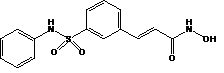
Active ingredient
Classification
Histone deacetylase (HDAC) inhibitorsHistone Deacetylase Inhibitor
Drug interactions
Belinostat should not be used with UGT1A1 inhibitors due to increased exposure and risk of adverse reactions.
- majorUGT1A1 inhibitors — increased risk of adverse reactions
Indications
INDICATIONS AND USAGE Beleodaq is indicated for the treatment of adult patients with relapsed or refractory peripheral T-cell lymphoma (PTCL). This indication is approved under accelerated approval based on tumor response rate and duration of response [ see Clinical Studies ( 14 )]. An improvement in survival or disease-related symptoms has not been established. Continued approval for this indication may be contingent upon verification and description of clinical benefit in the confirmatory trial. Beleodaq is a histone deacetylase inhibitor indicated for the treatment of adult patients with relapsed or refractory peripheral T-cell lymphoma (PTCL). This indication is approved under accelerated approval based on tumor response rate and duration of response. An improvement in survival or disease-related symptoms has not been established. Continued approval for this indication may be contingent upon verification and description of clinical benefit in the confirmatory trial.( 1 )
Dosage
DOSAGE AND ADMINISTRATION Recommended dosage of Beleodaq is 1,000 mg/m 2 administered over 30 minutes by intravenous infusion once daily on days 1 through 5 of a 21-day cycle. Cycles can be repeated until disease progression or unacceptable toxicity. ( 2.1 ) Treatment discontinuation or interruption with or without dosage reductions by 25% may be needed to manage adverse reactions ( 2.2 ) Reduce dosage in patients with moderate hepatic or renal impairment. ( 2.3 , 2.4 , 8.6 , 8.7 ) Avoid use in patients with severe hepatic or renal impairment. ( 2.3 , 2.4 , 8.6 , 8.7 ) Modify dosage in patients known to be homozygous for the UGT1A1*28 allele. ( 2.5 ) See the full prescribing information for preparation and administration instructions. ( 2.7 ) 2.1 Recommended Dosage The recommended dosage of Beleodaq is 1,000 mg/m 2 administered over 30 minutes by intravenous infusion once daily on Days 1 through 5 of a 21-day cycle. Cycles can be repeated every 21 days until disease progression or unacceptable toxicity. 2.2 Dosage Modification for Hematologic and Non-Hematologic Toxicities Table 1 displays the recommended Beleodaq dosage modifications for hematologic and non-hematologic toxicities. Base dosage adjustments for thrombocytopenia and neutropenia on platelet and absolute neutrophil nadir (lowest value) counts in the preceding cycle of therapy. • Absolute neutrophil count (ANC) should be greater than or equal to 1 x 10 9 /L and the platelet count should be greater than or equal to 50 x 10 9 /L prior to the start of each cycle and prior to resuming treatment following toxicity. Resume subsequent treatment with Beleodaq according to the guidelines described in Table 1 below. Discontinue Beleodaq in patients who have recurrent ANC nadirs less than 0.5 x 10 9 /L and/or recurrent platelet count nadirs less than 25 x 10 9 /L after two dosage reductions. • Other toxicities must be NCI-CTCAE Grade 2 or less prior to re-treatment. Monitor complete blood counts at baseline and weekly. Perform serum chemistry tests, including renal and hepatic functions prior to the start of the first dose of each cycle. Table 1: Dosage Modifications for Hematologic and Non-Hematologic Toxicities Dosage Modification Dosage Modifications due to Hematologic Toxicities Platelet count ≥ 25 x 10 9 /L and nadir ANC ≥ 0.5 x 10 9 /L No Change Nadir ANC < 0.5 x 10 9 /L (any platelet count) Decrease dosage by 25% (750 mg/m 2 ) Platelet count < 25 x 10 9 /L (any nadir ANC) Dosage Modifications due to Non-Hematologic Toxicities Any CTCAE Grade 3 or 4 adverse reaction ª Decrease dosage by 25% (750 mg/m 2 ) Recurrence of CTCAE Grade 3 or 4 adverse reaction after two dosage reductions Discontinue Beleodaq ªFor nausea, vomiting, and diarrhea, dose modification may not be necessary if the duration is less than 7 days with supportive management 2.3 Recommended Dosage in Patients with Hepatic Impairment Beleodaq dosage in patients with moderate hepatic impairment (total bilirubin > 1.5 to 3 x ULN, any aspartate aminotransferase (AST)) is 500 mg/m 2 administered over 30 minutes by intravenous infusion once daily on Days 1 through 5 of a 21-day cycle. Avoid use of Beleodaq in patients with severe hepatic impairment (total bilirubin > 3 x ULN, any AST). No dosage adjustment is recommended for patients with mild hepatic impairment (total bilirubin ≤ 1.5 x ULN, any AST). Hepatic impairment is defined per the National Cancer Institute Organ Dysfunction Working Group. 2.4 Recommended Dosage in Patients with Renal Impairment Beleodaq dosage in patients with moderate renal impairment (creatinine clearance [CLcr] 30 to <60 mL/min) is 500 mg/m 2 administered over 30 minutes by intravenous infusion once daily on Days 1 through 5 of a 21-day cycle. Avoid use of Beleodaq in patients with severe renal impairment (CLcr < 30 mL/min). No dosage adjustment is recommended for patients with mild renal impairment (CLcr 60 to < 90 mL/min). 2.5 Dosage Modification for Patients with Reduced UGT1A1 Activity Reduce the starting dose of Beleodaq to 750 mg/m 2 in patients known to be homozygous for the UGT1A1*28 allele [see Clinical Pharmacology ( 12.5 )] . 2.6 Dosage Modification for Concomitant Use with UGT1A1 Inhibitors Avoid concomitant use of Beleodaq with UGT1A1 inhibitors. If concomitant use of a UGT1A1 inhibitor is unavoidable, reduce the Beleodaq dosage by 25% as shown in Table 2 . Table 2: Dosage Modifications for Concomitant Use with a UGT1A1 Inhibitor Beleodaq Starting Dosage Beleodaq Modified Dosage 1,000 mg/m 2 750 mg/m 2 750 mg/m 2 562.5 mg/m 2 500 mg/m 2 Interrupt Beleodaq treatment for the duration of UGT1A1 inhibitor use. After discontinuation of a UGT1A1 inhibitor of 5 half-lives, resume the Beleodaq dosage that was taken prior to initiating the UGT1A1 inhibitor. 2.7 Preparation and Administration Beleodaq is a hazardous drug. Follow applicable special handling and disposal procedures. 1 Preparation: Aseptically reconstitute each vial of Beleodaq by adding 9 mL of Sterile Water for Injection into the Beleodaq vial with a suitable syringe to achieve a concentration of 50 mg of belinostat per mL. Swirl the contents of the vial until there are no visible particles in the resulting solution. If not used immediately, the reconstituted product may be stored for up to 12 hours at room temperature (15°C to 25°C; 59°F to 77°F). Aseptically withdraw the volume needed for the required dosage (based on the 50 mg/mL concentration and the patient’s BSA [m 2 ]) and transfer to an infusion bag containing 250 mL of 0.9 % Sodium Chloride Injection. If not used immediately, the infusion bag with drug solution may be stored at room temperature (15°C to 25°C; 59°F to 77°F) for up to 36 hours including infusion time. Visually inspect the solution for particulate matter. Do not use if cloudiness or particulates are observed. Administration: Connect the infusion bag containing drug solution to an infusion set with a 0.22 micron in-line filter for administration. Infuse intravenously over 30 minutes. If infusion site pain or other symptoms potentially attributable to the infusion occur, the infusion time may be extended to 45 minutes. 2.1 Recommended Dosage The recommended dosage of Beleodaq is 1,000 mg/m 2 administered over 30 minutes by intravenous infusion once daily on Days 1 through 5 of a 21-day cycle. Cycles can be repeated every 21 days until disease progression or unacceptable toxicity. 2.2 Dosage Modification for Hematologic and Non-Hematologic Toxicities Table 1 displays the recommended Beleodaq dosage modifications for hematologic and non-hematologic toxicities. Base dosage adjustments for thrombocytopenia and neutropenia on platelet and absolute neutrophil nadir (lowest value) counts in the preceding cycle of therapy. • Absolute neutrophil count (ANC) should be greater than or equal to 1 x 10 9 /L and the platelet count should be greater than or equal to 50 x 10 9 /L prior to the start of each cycle and prior to resuming treatment following toxicity. Resume subsequent treatment with Beleodaq according to the guidelines described in Table 1 below. Discontinue Beleodaq in patients who have recurrent ANC nadirs less than 0.5 x 10 9 /L and/or recurrent platelet count nadirs less than 25 x 10 9 /L after two dosage reductions. • Other toxicities must be NCI-CTCAE Grade 2 or less prior to re-treatment. Monitor complete blood counts at baseline and weekly. Perform serum chemistry tests, including renal and hepatic functions prior to the start of the first dose of each cycle. Table 1: Dosage Modifications for Hematologic and Non-Hematologic Toxicities Dosage Modification Dosage Modifications due to Hematologic Toxicities Platelet count ≥ 25 x 10 9 /L and nadir ANC ≥ 0.5 x 10 9 /L No Change Nadir ANC < 0.5 x 10 9 /L (any platelet count) Decrease dosage by 25% (750 mg/m 2 ) Platelet count < 25 x 10 9 /L (any nadir ANC) Dosage Modifications due to Non-Hematologic Toxicities Any CTCAE Grade 3 or 4 adverse reaction ª Decrease dosage by
Warnings
WARNINGS AND PRECAUTIONS Hematologic Toxicity : Thrombocytopenia, leukopenia (neutropenia and lymphopenia), and anemia: Monitor blood counts and modify dosage for hematologic toxicities. ( 2.2 , 5.1 ) Infection : Serious and fatal infections (e.g., pneumonia and sepsis) ( 5.2 ) Hepatotoxicity : Beleodaq may cause hepatic toxicity and liver function test abnormalities. Monitor liver function tests and omit or modify dosage for hepatic toxicities. ( 2.2 , 5.3 ) Tumor lysis syndrome : Monitor patients with advanced stage disease and/or high tumor burden and take appropriate precautions ( 5.4 ) Gastrointestinal Toxicity : Nausea, vomiting and diarrhea occur with Beleodaq and may require antiemetic and antidiarrheal medications ( 5.5 ). Embryo-Fetal Toxicity : Can cause fetal harm. ( 5.6 ) 5.1 Hematologic Toxicity Beleodaq can cause thrombocytopenia, leukopenia (neutropenia and lymphopenia), and/or anemia; monitor blood counts weekly during treatment, and modify dosage as necessary [see Dosage and Administration ( 2.2 ) and Adverse Reactions( 6.1 )] . 5.2 Infections Serious and sometimes fatal infections, including pneumonia and sepsis, have occurred with Beleodaq. Do not administer Beleodaq to patients with an active infection. Patients with a history of extensive or intensive chemotherapy may be at higher risk of life threatening infections [see Adverse Reactions ( 6.1 )]. 5.3 Hepatotoxicity Beleodaq can cause fatal hepatotoxicity and liver function test abnormalities [see Adverse Reactions ( 6.1 )] . Monitor liver function tests before treatment and before the start of each cycle. Interrupt or adjust dosage until recovery, or permanently discontinue Beleodaq based on the severity of the hepatic toxicity [see Dosage and Administration ( 2.2) and Clinical Pharmacology ( 12.3 )]. 5.4 Tumor Lysis Syndrome Tumor lysis syndrome has occurred in Beleodaq-treated patients in the clinical trial of patients with relapsed or refractory PTCL [see Clinical Studies ( 14 ) ] . Monitor patients with advanced stage disease and/or high tumor burden and take appropriate precautions [see Adverse Reactions ( 6.1 ) ] . 5.5 Gastrointestinal Toxicity Nausea, vomiting and diarrhea occur with Beleodaq [see Adverse Reactions ( 6.1 )] and may require the use of antiemetic and antidiarrheal medications. 5.6 Embryo-fetal Toxicity Based on its mechanism of action and findings of genotoxicity, Beleodaq can cause fetal harm when administered to a pregnant woman [see Clinical Pharmacology ( 12.1 ) and Nonclinical Toxicology ( 13.1 )] . Advise pregnant women of the risk to a fetus. Advise females of reproductive potential to use an effective method of contraception during treatment with Beleodaq and for 6 months after the last dose [see Use in Specific Populations ( 8.1 , 8.3 ) . Advise males with female partners of reproductive potential to use effective contraception during treatment with Beleodaq and for 3 months after the last dose. 5.1 Hematologic Toxicity Beleodaq can cause thrombocytopenia, leukopenia (neutropenia and lymphopenia), and/or anemia; monitor blood counts weekly during treatment, and modify dosage as necessary [see Dosage and Administration ( 2.2 ) and Adverse Reactions( 6.1 )] . 5.2 Infections Serious and sometimes fatal infections, including pneumonia and sepsis, have occurred with Beleodaq. Do not administer Beleodaq to patients with an active infection. Patients with a history of extensive or intensive chemotherapy may be at higher risk of life threatening infections [see Adverse Reactions ( 6.1 )]. 5.3 Hepatotoxicity Beleodaq can cause fatal hepatotoxicity and liver function test abnormalities [see Adverse Reactions ( 6.1 )] . Monitor liver function tests before treatment and before the start of each cycle. Interrupt or adjust dosage until recovery, or permanently discontinue Beleodaq based on the severity of the hepatic toxicity [see Dosage and Administration ( 2.2) and Clinical Pharmacology ( 12.3 )]. 5.4 Tumor Lysis Syndrome Tumor lysis syndrome has occurred in Beleodaq-treated patients in the clinical trial of patients with relapsed or refractory PTCL [see Clinical Studies ( 14 ) ] . Monitor patients with advanced stage disease and/or high tumor burden and take appropriate precautions [see Adverse Reactions ( 6.1 ) ] . 5.5 Gastrointestinal Toxicity Nausea, vomiting and diarrhea occur with Beleodaq [see Adverse Reactions ( 6.1 )] and may require the use of antiemetic and antidiarrheal medications. 5.6 Embryo-fetal Toxicity Based on its mechanism of action and findings of genotoxicity, Beleodaq can cause fetal harm when administered to a pregnant woman [see Clinical Pharmacology ( 12.1 ) and Nonclinical Toxicology ( 13.1 )] . Advise pregnant women of the risk to a fetus. Advise females of reproductive potential to use an effective method of contraception during treatment with Beleodaq and for 6 months after the last dose [see Use in Specific Populations ( 8.1 , 8.3 ) . Advise males with female partners of reproductive potential to use effective contraception during treatment with Beleodaq and for 3 months after the last dose.
Contraindications
CONTRAINDICATIONS None None. ( 4 )
Mechanism of action
Mechanism of Action Beleodaq is a histone deacetylase (HDAC) inhibitor. HDACs catalyze the removal of acetyl groups from the lysine residues of histones and some non-histone proteins. In vitro , belinostat caused the accumulation of acetylated histones and other proteins, inducing cell cycle arrest and/or apoptosis of some transformed cells. Belinostat shows preferential cytotoxicity towards tumor cells compared to normal cells. Belinostat inhibited the enzymatic activity of histone deacetylases at nanomolar concentrations (<250 nM).
Indicated ICD-10 codes
Source: RxNorm + openFDA + RxClass + FAERS · 2026
Look up another medication