avapritinib 100 MG Oral Tablet
Managing this medication for someone you care for? Eleplan keeps diagnoses, medications and appointments in one plan.
Start free with EleplanClinical drug
avapritinib 100 MG Oral Tablet
100 MG · Oral Tablet · oral
A form of avapritinib →
avapritinib 100 MG Oral Tablet — Other protein kinase inhibitors. INDICATIONS AND USAGE AYVAKIT is a kinase inhibitor indicated for: Gastrointestinal Stromal Tumor (GIST) the treatment of adults with unresectable…
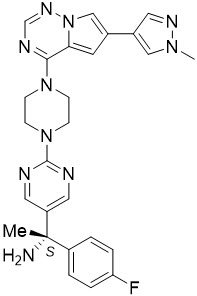
Active ingredient
Classification
Other protein kinase inhibitorsKinase Inhibitor
Drug interactions
Avapritinib has several significant drug interactions, particularly with CYP3A inhibitors and inducers, as well as with hormonal contraceptives containing ethinyl estradiol.
- majorstrong and moderate CYP3A inhibitors — increases avapritinib plasma concentrations, which may increase the incidence and severity of adverse reactions
- majorstrong and moderate CYP3A inducers — decreases avapritinib plasma concentrations, which may decrease efficacy
- moderateethinyl estradiol-containing contraceptives — may increase the exposure of ethinyl estradiol, leading to increased risk of adverse reactions
Indications
INDICATIONS AND USAGE AYVAKIT is a kinase inhibitor indicated for: Gastrointestinal Stromal Tumor (GIST) the treatment of adults with unresectable or metastatic GIST harboring a platelet-derived growth factor receptor alpha (PDGFRA) exon 18 mutation, including PDGFRA D842V mutations. ( 1.1 , 2.2 ) Advanced Systemic Mastocytosis (AdvSM) the treatment of adult patients with AdvSM. AdvSM includes patients with aggressive systemic mastocytosis (ASM), systemic mastocytosis with an associated hematological neoplasm (SM-AHN), and mast cell leukemia (MCL). ( 1.2 ) Limitations of Use: AYVAKIT is not recommended for the treatment of patients with AdvSM with platelet counts of less than 50 × 10 9 /L ( 1.2 ) Indolent Systemic Mastocytosis (ISM) the treatment of adult patients with ISM. ( 1.3 ) Limitations of Use: AYVAKIT is not recommended for the treatment of patients with ISM with platelet counts of less than 50 × 10 9 /L ( 1.2 ) 1.1 PDGFRA Exon 18 Mutation-Positive Unresectable or Metastatic Gastrointestinal Stromal Tumor (GIST) AYVAKIT ® is indicated for the treatment of adults with unresectable or metastatic GIST harboring a platelet-derived growth factor receptor alpha (PDGFRA) exon 18 mutation, including PDGFRA D842V mutations [see Dosage and Administration (2.2) ] . 1.2 Advanced Systemic Mastocytosis (AdvSM) AYVAKIT is indicated for the treatment of adult patients with advanced systemic mastocytosis (AdvSM). AdvSM includes patients with aggressive systemic mastocytosis (ASM), systemic mastocytosis with an associated hematological neoplasm (SM-AHN), and mast cell leukemia (MCL). Limitations of Use : AYVAKIT is not recommended for the treatment of patients with AdvSM with platelet counts of less than 50 × 10 9 /L [see Warnings and Precautions (5.1) ] . 1.3 Indolent Systemic Mastocytosis (ISM) AYVAKIT is indicated for the treatment of adult patients with indolent systemic mastocytosis (ISM). Limitations of Use : AYVAKIT is not recommended for the treatment of patients with ISM with platelet counts of less than 50 × 10 9 /L [see Warnings and Precautions (5.1) ] .
Dosage
DOSAGE AND ADMINISTRATION GIST: Select patients for treatment with AYVAKIT based on the presence of a PDGFRA exon 18 mutation. ( 2.2 ) GIST: The recommended dosage is 300 mg orally once daily. ( 2.2 ) AdvSM: The recommended dosage is 200 mg orally once daily. ( 2.3 ) ISM: The recommended dosage is 25 mg orally once daily. ( 2.4 ) Patients with severe hepatic impairment (Child-Pugh Class C): reduce dose of AYVAKIT. ( 2.7 ) 2.1 Recommended Administration Administer AYVAKIT orally on an empty stomach, at least 1 hour before or 2 hours after a meal [see Clinical Pharmacology (12.3) ] . Do not make up for a missed dose within 8 hours of the next scheduled dose. Do not repeat dose if vomiting occurs after AYVAKIT but continue with the next scheduled dose. 2.2 GIST Harboring PDGFRA Exon 18 Mutations Select patients for treatment with AYVAKIT based on the presence of a PDGFRA exon 18 mutation [see Clinical Studies (14.1) ] . An FDA-approved test for the detection of exon 18 mutations is not currently available. The recommended dosage of AYVAKIT is 300 mg orally once daily in patients with GIST . Continue treatment until disease progression or unacceptable toxicity. 2.3 Advanced Systemic Mastocytosis The recommended dosage of AYVAKIT is 200 mg orally once daily in patients with AdvSM. Continue treatment until disease progression or unacceptable toxicity. 2.4 Indolent Systemic Mastocytosis The recommended dosage of AYVAKIT is 25 mg orally once daily in patients with ISM. 2.5 Dosage Modifications for Adverse Reactions The recommended dosage reductions and modifications for adverse reactions are provided in Tables 1 and 2. Table 1: Recommended Dosage Reductions for AYVAKIT for Adverse Reactions Dose Reduction Level Dosage in patients with GIST Permanently discontinue AYVAKIT in patients with GIST who are unable to tolerate a dose of 100 mg once daily. Dosage in patients with AdvSM Permanently discontinue AYVAKIT in patients with AdvSM who are unable to tolerate a dose of 25 mg once daily. First dose reduction 200 mg once daily 100 mg once daily Second dose reduction 100 mg once daily 50 mg once daily Third dose reduction - 25 mg once daily Table 2: Recommended Dosage Modifications for AYVAKIT for Adverse Reactions Adverse Reaction Severity Severity as defined by the National Cancer Institute Common Terminology Criteria for Adverse Events version 5.0 Dosage Modification Patients with GIST or AdvSM Intracranial Hemorrhage [see Warnings and Precautions (5.1) ] Any grade Permanently discontinue AYVAKIT. Cognitive Effects [see Warnings and Precautions (5.2) ] Grade 1 Continue AYVAKIT at same dose or reduced dose or withhold until improvement to baseline or resolution. Resume at same dose or reduced dose. Grade 2 or Grade 3 Withhold AYVAKIT until improvement to baseline, Grade 1, or resolution. Resume at same dose or reduced dose. Grade 4 Permanently discontinue AYVAKIT. Other [see Adverse Reactions (6.1) ] Grade 3 or Grade 4 Withhold AYVAKIT until improvement to less than or equal to Grade 2. Resume at same dose or reduced dose, as clinically appropriate. Patients with AdvSM Thrombocytopenia [see Warnings and Precautions (5.1) ] <50 × 10 9 /L Interrupt AYVAKIT until platelet count is ≥ 50 × 10 9 /L, then resume at reduced dose (per Table 1). If platelet counts do not recover above 50 × 10 9 /L, consider platelet support. 2.6 Concomitant Use of Strong and Moderate CYP3A Inhibitors Avoid concomitant use of AYVAKIT with strong or moderate CYP3A inhibitors. If concomitant use with a moderate CYP3A inhibitor cannot be avoided, the starting dosage of AYVAKIT is as follows [see Drug Interactions (7.1) ] : GIST: 100 mg orally once daily AdvSM: 50 mg orally once daily For ISM, avoid concomitant use of AYVAKIT with strong or moderate CYP3A inhibitors. 2.7 Dosage Modifications for Severe Hepatic Impairment A modified starting dosage of AYVAKIT is recommended for patients with severe hepatic impairment (Child-Pugh Class C) [see Use in Specific Populations (8.7) ]: GIST: 200 mg orally once daily AdvSM: 100 mg orally once daily ISM: 25 mg orally every other day
Warnings
WARNINGS AND PRECAUTIONS Intracranial Hemorrhage : Permanently discontinue for any occurrence of any grade. ( 2.5 , 5.1 ) Cognitive Effects : A broad spectrum of cognitive adverse reactions can occur in patients receiving AYVAKIT. In patients with GIST, AdvSM, or ISM depending on the severity, continue AYVAKIT at same dose, withhold and then resume at same or reduced dose upon improvement, or permanently discontinue. ( 2.5 , 5.2 ) Photosensitivity: May cause photosensitivity reactions. Advise patients to limit direct ultraviolet exposure. ( 5.3 ) Embryo-Fetal Toxicity : Can cause fetal harm. Advise females and males of reproductive potential of the potential risk to a fetus and to use effective contraception. ( 5.4 , 8.1 , 8.3 ) 5.1 Intracranial Hemorrhage Serious intracranial hemorrhage may occur with AYVAKIT treatment; fatal events occurred in less than 1% of patients. Overall, intracranial hemorrhage (e.g., subdural hematoma, intracranial hemorrhage, and cerebral hemorrhage) occurred in 2.9% of the 749 patients with GIST or AdvSM who received AYVAKIT in clinical trials. No events of intracranial hemorrhage occurred in the 246 patients with ISM who received any dose of AYVAKIT in the PIONEER study . Monitor patients closely for risk factors of intracranial hemorrhage which may include history of vascular aneurysm, intracranial hemorrhage or cerebrovascular accident within the prior year, concomitant use of anticoagulant drugs, or thrombocytopenia. Symptoms of intracranial hemorrhage may include headache, nausea, vomiting, vision changes, or altered mental status. Advise patients to seek immediate medical attention for signs or symptoms of intracranial hemorrhage. Permanently discontinue AYVAKIT if intracranial hemorrhage of any grade occurs [see Dosage and Administration (2.5) ] . Gastrointestinal Stromal Tumors Intracranial hemorrhage occurred in 3 of 267 patients (1.1%). Two (0.7%) of the events were Grade ≥ 3 and resulted in discontinuation of study drug. Events of intracranial hemorrhage occurred in a range from 1.7 months to 19.3 months after initiating AYVAKIT. Advanced Systemic Mastocytosis In patients with AdvSM who received AYVAKIT at 200 mg daily, intracranial hemorrhage occurred in 2 of 75 patients (2.7%) who had platelet counts ≥ 50 × 10 9 /L prior to initiation of therapy and in 3 of 80 patients (3.8%) regardless of platelet counts. In patients with AdvSM, a platelet count must be performed prior to initiating therapy; AYVAKIT is not recommended in patients with AdvSM with platelet counts < 50 × 10 9 /L. Following treatment initiation, platelet counts must be performed every 2 weeks for the first 8 weeks regardless of baseline platelet count. After 8 weeks of treatment, monitor platelet counts every 2 weeks (or more frequently as clinically indicated) if values are less than 75 × 10 9 /L, every 4 weeks if values are between 75 and 100 × 10 9 /L, and as clinically indicated if values are greater than 100 × 10 9 /L. Manage platelet counts of < 50 × 10 9 /L by treatment interruption or dose-reduction of AYVAKIT. Platelet support may be necessary [see Dosage and Administration (2.5) ] . Dose-interruptions and dose-reductions for thrombocytopenia occurred in 20% and 22% of AYVAKIT-treated patients, respectively. Thrombocytopenia was generally reversible by reducing or interrupting AYVAKIT. 5.2 Cognitive Effects Cognitive adverse reactions can occur in patients receiving AYVAKIT. These cognitive adverse reactions occurred in 33% of the 995 patients with GIST, AdvSM or ISM who received AYVAKIT in clinical trials. These adverse reactions were managed with dose interruption and/or reduction when needed. Overall, 10% led to dose interruptions, 7% led to dose reductions and 2.2% led to permanent discontinuation of AYVAKIT treatment in patients with GIST, AdvSM or ISM. Depending on the severity and indication, withhold AYVAKIT and then resume at the same dose or at a reduced dose upon improvement, or permanently discontinue AYVAKIT [see Dosage and Administration (2.5) ] . Indolent Systemic Mastocytosis Cognitive adverse reactions occurred in 7.8% of patients with ISM who received AYVAKIT + best supportive care versus 7% of patients who received placebo + best supportive care in the PIONEER study; <1% were Grade 3. The median time to onset of the first cognitive adverse reaction was 2.3 months (range: 0 to 5.4 months). Median time to improvement to Grade 1 or complete resolution was 2.1 months (range: 0.4 to 2.1 months). Gastrointestinal Stromal Tumors Cognitive adverse reactions occurred in 41% of 601 patients with GIST who received AYVAKIT; 5% were Grade ≥ 3. Memory impairment occurred in 21% of patients; <1% of these events were Grade 3. Cognitive disorder occurred in 12% of patients; 1.2% of these events were Grade 3. Confusional state occurred in 6% of patients; <1% of these events were Grade 3. Amnesia occurred in 3% of patients; <1% of these events were Grade 3. Somnolence and speech disorder occurred in 2% of patients; none of these events were Grade 3. Other events occurred in less than 2% of patients. The median time to onset of the first cognitive adverse reaction was 8.4 weeks (range: 1 day to 4 years). Among patients who experienced a cognitive effect of Grade 2 or worse (impacting activities of daily living), the median time to improvement to Grade 1 or complete resolution was 7.9 weeks. Overall, 2.7% of all patients who received AYVAKIT required permanent discontinuation for a cognitive adverse reaction, 13.5% required a dosage interruption, and 8.5% required dose reduction. Advanced Systemic Mastocytosis Cognitive adverse reactions occurred in 28% of 148 patients with AdvSM who received AYVAKIT; 3% were Grade ≥ 3. Memory impairment occurred in 16% of patients; all events were Grade 1 or 2. Cognitive disorder occurred in 10% of patients; <1% of these events were Grade 3. Confusional state occurred in 6% of patients; <1% of these events were Grade 3. Other events occurred in less than 2% of patients. The median time to onset of the first cognitive adverse reaction was 13.3 weeks (range: 1 day to 1.8 years). Among patients who experienced a cognitive effect of Grade 2 or worse (impacting activities of daily living), the median time to improvement to Grade 1 or complete resolution was 8.1 weeks. Overall, 2% of all patients who received AYVAKIT required permanent discontinuation for a cognitive adverse reaction, 8.1% required a dosage interruption, and 8.8% required dose reduction. 5. 3 Photosensitivity AYVAKIT may cause photosensitivity reactions. In all patients treated with AYVAKIT in clinical trials (n=1049), photosensitivity reactions occurred in 2.5% of patients. Advise patients to limit direct ultraviolet exposure during treatment with AYVAKIT and for one week after discontinuation of treatment. 5.4 Embryo-Fetal Toxicity Based on findings from animal studies and its mechanism of action, AYVAKIT can cause fetal harm when administered to pregnant women. Oral administration of avapritinib during the period of organogenesis was teratogenic and embryotoxic in rats at exposures approximately 31.4, 6.3 and 2.7 times the human exposure based on area under the curve (AUC) at the 25 mg, 200 mg, and 300 mg dose, respectively. Advise pregnant women of the potential risk to a fetus. Advise females and males of reproductive potential to use effective contraception during treatment with AYVAKIT and for 6 weeks after the final dose [see Use in Specific Populations (8.1 , 8.3) ] .
Contraindications
CONTRAINDICATIONS None. None. ( 4 )
Mechanism of action
Mechanism of Action Avapritinib is a tyrosine kinase inhibitor that targets KIT D816V, PDGFRA and PDGFRA D842 mutants as well as multiple KIT exon 11, 11/17 and 17 mutants with half maximal inhibitory concentrations (IC 50s ) less than 25 nM in biochemical assays. Certain mutations in PDGFRA and KIT can result in the autophosphorylation and constitutive activation of these receptors which can contribute to tumor and mast cell proliferation. Other potential targets for avapritinib include wild type KIT, PDGFRB, and CSFR1. In cellular assays, avapritinib inhibited the autophosphorylation of KIT D816V with an IC 50 of 4 nM, approximately 48-fold lower concentration than wild-type KIT. In cellular assays, avapritinib inhibited the proliferation in KIT mutant cell lines, including a murine mastocytoma cell line and a human mast cell leukemia cell line. Avapritinib also showed growth inhibitory activity in a xenograft model of murine mastocytoma with KIT exon 17 mutation. Avapritinib inhibited the autophosphorylation of PDGFRA D842V, a mutation associated with resistance to approved kinase inhibitors, with an IC 50 of 30 nM. Avapritinib also had anti-tumor activity in mice implanted with an imatinib-resistant patient-derived xenograft model of human GIST with activating KIT exon 11/17 mutations.
Source: RxNorm + openFDA + RxClass + FAERS · 2026
Look up another medication