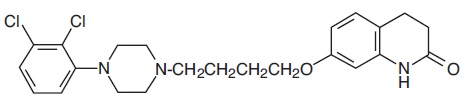
aripiprazole 10 MG Oral Tablet — Other antipsychotics. INDICATIONS AND USAGE Aripiprazole Oral Solution is indicated for the treatment of: Schizophrenia [see Clinical Studies (14.1) ] Acute Treatment of…
Boxed warning
BOXED WARNING WARNING: INCREASED MORTALITY IN ELDERLY PATIENTS WITH DEMENTIA-RELATED PSYCHOSIS and SUICIDAL THOUGHTS AND BEHAVIORS WITH ANTIDEPRESSANT DRUGS Elderly patients with dementia-related psychosis treated with antipsychotic drugs are at an increased risk of death. Aripiprazole tablets are not approved for the treatment of patients with dementia-related psychosis [see WARNINGS AND PRECAUTIONS ( 5.1 )]. Antidepressants increased the risk of suicidal thoughts and behavior in children, adolescents, and young adults in short-term studies. These studies did not show an increase in the risk of suicidal thoughts and behavior with antidepressant use in patients over age 24; there was a reduction in risk with antidepressant use in patients aged 65 and older [see WARNINGS AND PRECAUTIONS ( 5.3 )] . In patients of all ages who are started on antidepressant therapy, monitor closely for worsening, and for emergence of suicidal thoughts and behaviors. Advise families and caregivers of the need for close observation and communication with the prescriber [see WARNINGS AND PRECAUTIONS ( 5. 3 )]. WARNING: INCREASED MORTALITY IN ELDERLY PATIENTS WITH DEMENTIA-RELATED PSYCHOSIS and SUICIDAL THOUGHTS AND BEHAVIORS WITH ANTIDEPRESSANT DRUGS See full prescribing information for complete boxed warning. • Elderly patients with dementia-related psychosis treated with antipsychotic drugs are at an increased risk of death. Aripiprazole tablets are not approved for the treatment of patients with dementia-related psychosis. ( 5.1 ) • Increased risk of suicidal thinking and behavior in children, adolescents, and young adults taking antidepressants. Monitor for worsening and emergence of suicidal thoughts and behaviors. ( 5.2 )
Aripiprazole has several clinically important drug interactions that require dosage adjustments based on the concomitant medications.
majorstrong CYP3A4 inhibitors — increased exposure of aripiprazole
majorstrong CYP2D6 inhibitors — increased exposure of aripiprazole
majorstrong CYP3A4 inducers — decreased exposure of aripiprazole
moderateantihypertensive drugs — enhanced effect of antihypertensive agents
moderatebenzodiazepines — greater intensity of sedation and orthostatic hypotension
Real-world adverse events (FAERS)
Off Label Use8,428Drug Ineffective8,413Weight Increased7,930Product Use in Unapproved Indication5,301Anxiety5,176Fatigue4,366Depression4,092Suicidal Ideation4,083
Indications
INDICATIONS AND USAGE Aripiprazole Oral Solution is indicated for the treatment of: Schizophrenia [see Clinical Studies (14.1) ] Acute Treatment of Manic and Mixed Episodes associated with Bipolar I Disorder [see Clinical Studies (14.2) ] Adjunctive Treatment of Major Depressive Disorder [see Clinical Studies (14.3) ] Irritability Associated with Autistic Disorder [see Clinical Studies (14.4) ] Treatment of Tourette’s Disorder [see Clinical Studies (14.5) ] Aripiprazole oral solution is an atypical antipsychotic. The oral formulations are indicated for: Schizophrenia ( 14.1 ) Acute Treatment of Manic and Mixed Episodes associated with Bipolar I ( 14.2 ) Adjunctive Treatment of Major Depressive Disorder ( 14.3 ) Irritability Associated with Autistic Disorder ( 14.4 ) Treatment of Tourette’s disorder ( 14.5 )
Dosage
DOSAGE AND ADMINISTRATION Initial Dose Recommended Dose Maximum Dose Schizophrenia – adults (2.1) 10 to 15 mg/day 10 to 15 mg/day 30 mg/day Schizophrenia – adolescents (2.1) 2 mg/day 10 mg/day 30 mg/day Bipolar mania – adults: monotherapy (2.2) 15 mg/day 15 mg/day 30 mg/day Bipolar mania – adults: adjunct to lithium or valproate (2.2) 10 to 15 mg/day 15 mg/day 30 mg/day Bipolar mania – pediatric patients: monotherapy or as an adjunct to lithium or valproate (2.2) 2 mg/day 10 mg/day 30 mg/day Major Depressive Disorder – Adults adjunct to antidepressants ( 2.3 ) 2 to 5 mg/day 5 to 10 mg/day 15 mg/day Irritability associated with autistic disorder – pediatric patients ( 2.4 ) 2 mg/day 5 to 10 mg/day 15 mg/day Tourette’s – ( 2.5 ) Patients < 50 kg 2 mg/day 5 mg/day 10 mg/day Patients ≥ 50 kg 2 mg/day 10 mg/day 20 mg/day Oral formulations: Administer once daily without regard to meals (2) Known CYP2D6 poor metabolizers: Half of the usual dose (2.7) 2.1 Schizophrenia Adults The recommended starting and target dose for aripiprazole oral solution is 10 or 15 mg/day administered on a once-a-day schedule without regard to meals. Aripiprazole has been systematically evaluated and shown to be effective in a dose range of 10 to 30 mg/day. Dosage increases should generally not be made before 2 weeks, the time needed to achieve steady-state [see CLINICAL STUDIES (14.1) ] . Maintenance Treatment: Maintenance of efficacy in schizophrenia was demonstrated in a trial involving patients with schizophrenia who had been symptomatically stable on other antipsychotic medications for periods of 3 months or longer. These patients were discontinued from those medications and randomized to either aripiprazole 15 mg/day or placebo, and observed for relapse [see CLINICAL STUDIES (14.1) ] . Patients should be periodically reassessed to determine the continued need for maintenance treatment. Adolescents The recommended target dose of aripiprazole oral solution is 10 mg/day. Aripiprazole was studied in adolescent patients 13 to 17 years of age with schizophrenia at daily doses of 10 mg and 30 mg. The starting daily dose of the tablet formulation in these patients was 2 mg, which was titrated to 5 mg after 2 days and to the target dose of 10 mg after 2 additional days. Subsequent dose increases should be administered in 5 mg increments. The 30 mg/day dose was not shown to be more efficacious than the 10 mg/day dose. Aripiprazole oral solution can be administered without regard to meals [see CLINICAL STUDIES (14.1) ] . Patients should be periodically reassessed to determine the need for maintenance treatment. Switching from Other Antipsychotics There are no systematically collected data to specifically address switching patients with schizophrenia from other antipsychotics to aripiprazole or concerning concomitant administration with other antipsychotics. While immediate discontinuation of the previous antipsychotic treatment may be acceptable for some patients with schizophrenia, more gradual discontinuation may be most appropriate for others. In all cases, the period of overlapping antipsychotic administration should be minimized. 2.2 Bipolar I Disorder Acute Treatment of Manic and Mixed Episodes Adults: The recommended starting dose in adults is 15 mg given once daily as monotherapy and 10 mg to 15 mg given once daily as adjunctive therapy with lithium or valproate. Aripiprazole oral solution can be given without regard to meals. The recommended target dose of aripiprazole oral solution is 15 mg/day, as monotherapy or as adjunctive therapy with lithium or valproate. The dose may be increased to 30 mg/day based on clinical response. The safety of doses above 30 mg/day has not been evaluated in clinical trials. Pediatrics: The recommended starting dose in pediatric patients (10 to 17 years) as monotherapy is 2 mg/day, with titration to 5 mg/day after 2 days, and a target dose of 10 mg/day after 2 additional days. Recommended dosing as adjunctive therapy to lithium or valproate is the same. Subsequent dose increases, if needed, should be administered in 5 mg/day increments. Aripiprazole oral solution can be given without regard to meals [see CLINICAL STUDIES (14.2) ] . 2.3 Adjunctive Treatment of Major Depressive Disorder Adults The recommended starting dose for aripiprazole oral solution as adjunctive treatment for patients already taking an antidepressant is 2 to 5 mg/day. The recommended dosage range is 2 to 15 mg/day. Dosage adjustments of up to 5 mg/day should occur gradually, at intervals of no less than 1 week [see CLINICAL STUDIES (14.3) ] . Patients should be periodically reassessed to determine the continued need for maintenance treatment. 2.4 Irritability Associated with Autistic Disorder Pediatric Patients (6 to 17 years) The recommended dosage range for the treatment of pediatric patients with irritability associated with autistic disorder is 5 to 15 mg/day. Dosing should be initiated at 2 mg/day. The dose should be increased to 5 mg/day, with subsequent increases to 10 or 15 mg/day if needed. Dose adjustments of up to 5 mg/day should occur gradually, at intervals of no less than 1 week [see CLINICAL STUDIES (14.4) ] . Patients should be periodically reassessed to determine the continued need for maintenance treatment. 2.5 Tourette’s Disorder Pediatric Patients (6 to 18 years) The recommended dosage range for Tourette’s Disorder is 5 to 20 mg/day. For patients weighing less than 50 kg, dosing should be initiated at 2 mg/day with a target dose of 5 mg/day after 2 days. The dose can be increased to 10 mg/day in patients who do not achieve optimal control of tics. Dosage adjustments should occur gradually at intervals of no less than 1 week. For patients weighing 50 kg or more, dosing should be initiated at 2 mg/day for 2 days, and then increased to 5 mg/day for 5 days, with a target dose of 10 mg/day on day 8. The dose can be increased up to 20 mg/day for patients who do not achieve optimal control of tics. Dosage adjustments should occur gradually in increments of 5 mg/day at intervals of no less than 1 week [see CLINICAL STUDIES (14.5) ] . Patients should be periodically reassessed to determine the continued need for maintenance treatment. 2.7 Dosage Adjustments for Cytochrome P450 Considerations Dosage adjustments are recommended in patients who are known CYP2D6 poor metabolizers and in patients taking concomitant CYP3A4 inhibitors or CYP2D6 inhibitors or strong CYP3A4 inducers (see Table 2). When the coadministered drug is withdrawn from the combination therapy, aripiprazole oral solution dosage should then be adjusted to its original level. When the coadministered CYP3A4 inducer is withdrawn, aripiprazole oral solution dosage should be reduced to the original level over 1 to 2 weeks. Patients who may be receiving a combination of strong, moderate, and weak inhibitors of CYP3A4 and CYP2D6 (e.g., a strong CYP3A4 inhibitor and a moderate CYP2D6 inhibitor or a moderate CYP3A4 inhibitor with a moderate CYP2D6 inhibitor), the dosing may be reduced to one-quarter (25%) of the usual dose initially and then adjusted to achieve a favorable clinical response. Table 2: Dose Adjustments for Aripiprazole Oral Solution in Patients who are known CYP2D6 Poor Metabolizers and Patients Taking Concomitant CYP2D6 Inhibitors, 3A4 Inhibitors, and/or CYP3A4 Inducers Factors Dosage Adjustments for Aripiprazole Oral Solution Known CYP2D6 Poor Metabolizers Administer half of usual dose Known CYP2D6 Poor Metabolizers taking concomitant strong CYP3A4 inhibitors (e.g., itraconazole, clarithromycin) Administer a quarter of usual dose Strong CYP2D6 (e.g., quinidine, fluoxetine, paroxetine) or CYP3A4 inhibitors (e.g., itraconazole, clarithromycin) Administer half of usual dose Strong CYP2D6 and CYP3A4 inhibitors Administer a quarter of usual dose Strong CYP3A4 inducers (e.g., carbamazepine, rifampin) Double usual dose over 1 to 2 weeks When adjunctive aripiprazole oral solution is administered to pa
Warnings
WARNINGS AND PRECAUTIONS • Cerebrovascular Adverse Reactions in Elderly Patients with Dementia-Related Psychosis: Increased incidence of cerebrovascular adverse reactions (e.g., stroke, transient ischemic attack, including fatalities) (5.2) • Neuroleptic Malignant Syndrome: Manage with immediate discontinuation and close monitoring (5.4) • Tardive Dyskinesia: Discontinue if clinically appropriate (5.5) • Metabolic Changes: Atypical antipsychotic drugs have been associated with metabolic changes that include hyperglycemia/diabetes mellitus, dyslipidemia, and body weight gain (5.6) o Hyperglycemia/Diabetes Mellitus: Monitor glucose regularly in patients with and at risk for diabetes (5.6) o Dyslipidemia: Undesirable alterations in lipid levels have been observed in patients treated with atypical antipsychotics (5.6) o Weight Gain: Weight gain has been observed with atypical antipsychotic use. Monitor weight (5.6) • Pathological Gambling and Other Compulsive Behaviors: Consider dose reduction or discontinuation (5.7) • Orthostatic Hypotension: Monitor heart rate and blood pressure and warn patients with known cardiovascular or cerebrovascular disease, and risk of dehydration or syncope (5.8) • Leukopenia, Neutropenia, and Agranulocytosis: have been reported with antipsychotics including aripiprazole. Patients with a history of a clinically significant low white blood cell count (WBC) or a drug-induced leukopenia/neutropenia should have their complete blood count (CBC) monitored frequently during the first few months of therapy and discontinuation of aripiprazole should be considered at the first sign of a clinically significant decline in WBC in the absence of other causative factors (5.10) • Seizures/Convulsions: Use cautiously in patients with a history of seizures or with conditions that lower the seizure threshold (5.11) • Potential for Cognitive and Motor Impairment: Use caution when operating machinery (5.12) • Suicide: The possibility of a suicide attempt is inherent in schizophrenia and bipolar disorder. Closely supervise high-risk patients (5.14) 5.1 Increased Mortality in Elderly Patients with Dementia-Related Psychosis Increased Mortality Elderly patients with dementia-related psychosis treated with antipsychotic drugs are at an increased risk of death. Aripiprazole is not approved for the treatment of patients with dementia-related psychosis [see Boxed Warning]. Safety Experience in Elderly Patients with Psychosis Associated with Alzheimer’s Disease In three, 10 week, placebo-controlled studies of aripiprazole in elderly patients with psychosis associated with Alzheimer’s disease (n=938; mean age: 82.4 years; range: 56 to 99 years), the adverse reactions that were reported at an incidence of ≥3% and aripiprazole incidence at least twice that for placebo were lethargy [placebo 2%, aripiprazole 5%], somnolence (including sedation) [placebo 3%, aripiprazole 8%], and incontinence (primarily, urinary incontinence) [placebo 1%, aripiprazole 5%], excessive salivation [placebo 0%, aripiprazole 4%], and lightheadedness [placebo 1%, aripiprazole 4%]. The safety and efficacy of aripiprazole in the treatment of patients with psychosis associated with dementia have not been established. If the prescriber elects to treat such patients with aripiprazole, assess for the emergence of difficulty swallowing or excessive somnolence, which could predispose to accidental injury or aspiration [see Boxed Warning]. 5.2 Cerebrovascular Adverse Events, Including Stroke In placebo-controlled clinical studies (two flexible dose and one fixed dose study) of dementia-related psychosis, there was an increased incidence of cerebrovascular adverse events (e.g., stroke, transient ischemic attack), including fatalities, in aripiprazole-treated patients (mean age: 84 years; range: 78 to 88 years). In the fixed-dose study, there was a statistically significant dose response relationship for cerebrovascular adverse events in patients treated with aripiprazole. Aripiprazole is not approved for the treatment of patients with dementia-related psychosis [see Boxed Warning]. 5.3 Suicidal Thoughts and Behaviors in Children, Adolescents, and Young Adults Patients with major depressive disorder (MDD), both adult and pediatric, may experience worsening of their depression and/or the emergence of suicidal ideation and behavior (suicidality) or unusual changes in behavior, whether or not they are taking antidepressant medications, and this risk may persist until significant remission occurs. Suicide is a known risk of depression and certain other psychiatric disorders, and these disorders themselves are the strongest predictors of suicide. There has been a long-standing concern, however, that antidepressants may have a role in inducing worsening of depression and the emergence of suicidality in certain patients during the early phases of treatment. Pooled analyses of short-term placebo-controlled trials of antidepressant drugs (SSRIs and others) showed that these drugs increase the risk of suicidal thinking and behavior (suicidality) in children, adolescents, and young adults (ages 18 to 24 years) with MDD and other psychiatric disorders. Short-term studies did not show an increase in the risk of suicidality with antidepressants compared to placebo in adults beyond age 24 years; there was a reduction with antidepressants compared to placebo in adults aged 65 years and older. The pooled analyses of placebo-controlled trials in children and adolescents with MDD, Obsessive Compulsive Disorder (OCD), or other psychiatric disorders included a total of 24 short-term trials of 9 antidepressant drugs in over 4400 patients. The pooled analyses of placebo-controlled trials in adults with MDD or other psychiatric disorders included a total of 295 short-term trials (median duration of 2 months) of 11 antidepressant drugs in over 77,000 patients. There was considerable variation in risk of suicidality among drugs, but a tendency toward an increase in the younger patients for almost all drugs studied. There were differences in absolute risk of suicidality across the different indications, with the highest incidence in MDD. The risk differences (drug vs. placebo), however, were relatively stable within age strata and across indications. These risk differences (drug-placebo difference in the number of cases of suicidality per 1,000 patients treated) are provided in Table 5. Table 5: Age Range Drug-Placebo Difference in Number of Cases of Suicidality per 1000 Patients Treated Increases Compared to Placebo <18 14 additional cases 18 to 24 5 additional cases Decreases Compared to Placebo 25 to 64 1 fewer case ≥65 6 fewer case No suicides occurred in any of the pediatric trials. There were suicides in the adult trials, but the number was not sufficient to reach any conclusion about drug effect on suicide. It is unknown whether the suicidality risk extends to longer-term use, i.e., beyond several months. However, there is substantial evidence from placebo-controlled maintenance trials in adults with depression that the use of antidepressants can delay the recurrence of depression. All patients being treated with antidepressants for any indication should be monitored appropriately and observed closely for clinical worsening, suicidality, and unusual changes in behavior, especially during the initial few months of a course of drug therapy, or at times of dose changes, either increases or decreases. The following symptoms, anxiety, agitation, panic attacks, insomnia, irritability, hostility, aggressiveness, impulsivity, akathisia (psychomotor restlessness), hypomania, and mania, have been reported in adult and pediatric patients being treated with antidepressants for MDD as well as for other indications, both psychiatric and nonpsychiatric. Although a causal link between the emergence of such symptoms and either the worsening of depression and/or the emergence of suicidal impulses has not been established, there
Contraindications
CONTRAINDICATIONS Aripiprazole orally disintegrating tablets are contraindicated in patients with a history of a hypersensitivity reaction to aripiprazole. Reactions have ranged from pruritus/urticaria to anaphylaxis [see Adverse Reactions (6.2) ] . Known hypersensitivity to aripiprazole ( 4 )
Mechanism of action
CLINICAL PHARMACOLOGY 12.1 Mechanism of Action The mechanism of action of aripiprazole in schizophrenia or bipolar mania, is unclear. However, the efficacy of aripiprazole in the listed indications could be mediated through a combination of partial agonist activity at D 2 and 5-HT 1A receptors and antagonist activity at 5-HT 2A receptors. 12.2 Pharmacodynamics Aripiprazole exhibits high affinity for dopamine D 2 and D 3 , serotonin 5-HT 1A and 5-HT 2A receptors (Ki values of 0.34 nM, 0.8 nM, 1.7 nM, and 3.4 nM, respectively), moderate affinity for dopamine D4, serotonin 5-HT2C and 5-HT7, alpha 1 -adrenergic and histamine H 1 receptors (Ki values of 44 nM, 15 nM, 39 nM, 57 nM, and 61 nM, respectively), and moderate affinity for the serotonin reuptake site (Ki=98 nM). Aripiprazole has no appreciable affinity for cholinergic muscarinic receptors (IC50>1,000 nM). 12.3 Pharmacokinetics Aripiprazole oral solution activity is presumably primarily due to the parent drug, aripiprazole, and to a lesser extent, to its major metabolite, dehydro-aripiprazole, which has been shown to have affinities for D 2 receptors similar to the parent drug and represents 40% of the parent drug exposure in plasma. The mean elimination half-lives are about 75 hours and 94 hours for aripiprazole and dehydro-aripiprazole, respectively. Steady-state concentrations are attained within 14 days of dosing for both active moieties. Aripiprazole accumulation is predictable from single-dose pharmacokinetics. At steady-state, the pharmacokinetics of aripiprazole is dose-proportional. Elimination of aripiprazole is mainly through hepatic metabolism involving two P450 isozymes, CYP2D6 and CYP3A4. For CYP2D6 poor metabolizers, the mean elimination half-life for aripiprazole is about 146 hours. ORAL ADMINISTRATION Absorption Oral Solution: Aripiprazole is well absorbed when administered orally as the solution. At equivalent doses, the plasma concentrations of aripiprazole from the solution were higher than that from the tablet formulation. In a relative bioavailability study comparing the pharmacokinetics of 30 mg aripiprazole as the oral solution to 30 mg aripiprazole tablets in healthy subjects, the solution to tablet ratios of geometric mean C max and AUC values were 122% and 114%, respectively [see Dosage and Administration (2.6) ]. The single-dose pharmacokinetics of aripiprazole were linear and dose- proportional between the doses of 5 mg to 30 mg. Distribution The steady-state volume of distribution of aripiprazole following intravenous administration is high (404 L or 4.9 L/kg), indicating extensive extravascular distribution. At therapeutic concentrations, aripiprazole and its major metabolite are greater than 99% bound to serum proteins, primarily to albumin. In healthy human volunteers administered 0.5 to 30 mg/day aripiprazole for 14 days, there was dose-dependent D 2 receptor occupancy indicating brain penetration of aripiprazole in humans. Metabolism and Elimination Aripiprazole is metabolized primarily by three biotransformation pathways: dehydrogenation, hydroxylation, and N-dealkylation. Based on in vitro studies, CYP3A4 and CYP2D6 enzymes are responsible for dehydrogenation and hydroxylation of aripiprazole, and N-dealkylation is catalyzed by CYP3A4. Aripiprazole is the predominant drug moiety in the systemic circulation. At steady-state, dehydro-aripiprazole, the active metabolite, represents about 40% of aripiprazole AUC in plasma. Following a single oral dose of [ 14 C]-labeled aripiprazole, approximately 25% and 55% of the administered radioactivity was recovered in the urine and feces, respectively. Less than 1% of unchanged aripiprazole was excreted in the urine and approximately 18% of the oral dose was recovered unchanged in the feces. Drug Interaction Studies Effects of other drugs on the exposures of aripiprazole and dehydro-aripiprazole are summarized in Figure 1 and Figure 2, respectively. Based on simulation, a 4.5-fold increase in mean C max and AUC values at steady-state is expected when extensive metabolizers of CYP2D6 are administered with both strong CYP2D6 and CYP3A4 inhibitors. A 3-fold increase in mean C max and AUC values at steady-state is expected in poor metabolizers of CYP2D6 administered with strong CYP3A4 inhibitors. Figure 1: The effects of other drugs on aripiprazole pharmacokinetics Effect of Other Drugs on Aripiprazole Figure 2: The effects of other drugs on dehydro-aripiprazole pharmacokinetics Effect of Other Drugs on Aripiprazole The effects of aripiprazole on the exposures of other drugs are summarized in Figure 3. A population PK analysis in patients with major depressive disorder showed no substantial change in plasma concentrations of fluoxetine (20 or 40 mg/day), paroxetine CR (37.5 or 50 mg/day), or sertraline (100 or 150 mg/day) dosed to steady-state. The steady-state plasma concentrations of fluoxetine and norfluoxetine increased by about 18% and 36%, respectively, and concentrations of paroxetine decreased by about 27%. The steady-state plasma concentrations of sertraline and desmethylsertraline were not substantially changed when these antidepressant therapies were coadministered with aripiprazole. Figure 3: The effects of Aripiprazole on pharmacokinetics of other drugs Effect of Aripiprazole on Other Drugs Studies in Specific Populations Exposures of aripiprazole and dehydro-aripiprazole in specific populations are summarized in Figure 4 and Figure 5, respectively. In addition, in pediatric patients (10 to 17 years of age) administered with aripiprazole (20 mg to 30 mg), the body weight corrected aripiprazole clearance was similar to the adults. Figure 4: Effects of intrinsic factors on aripiprazole pharmacokinetics Figure 5: Effects of intrinsic factors on dehydro-aripiprazole pharmacokinetics "Image Description" "Image Description" "Image Description" "Image Description" "Image Description"
A drug lookup is just the start. Eleplan keeps the whole care plan in one place.
Medications, diagnoses, documents, appointments, and the whole care team — organized and always in sync, with Ellie, your AI care assistant, on top of it. Free to start.