anti-inhibitor coagulant complex 1 UNT Injection — Blood coagulation factors. INDICATIONS AND USAGE FEIBA is an Anti-Inhibitor Coagulant Complex indicated for use in hemophilia A and B patients with inhibitors for: Control and…
Boxed warning
WARNING: EMBOLIC and THROMBOTIC EVENTS Thromboembolic events have been reported during postmarketing surveillance following infusion of FEIBA, particularly following the administration of high doses and/or in patients with thrombotic risk factors. Monitor patients receiving FEIBA for signs and symptoms of thromboembolic events. WARNING: EMBOLIC and THROMBOTIC EVENTS See full prescribing information for complete boxed warning. Thromboembolic events have been reported during postmarketing surveillance, particularly following the administration of high doses and/or in patients with thrombotic risk factors. Monitor patients receiving FEIBA for signs and symptoms of thromboembolic events ( 5.1 , 6.2 ).
Haemorrhage283Treatment Failure132Drug Ineffective92Haemarthrosis65Factor Viii Inhibition39Off Label Use37Death32Joint Swelling32
Indications
INDICATIONS AND USAGE FEIBA is an Anti-Inhibitor Coagulant Complex indicated for use in hemophilia A and B patients with inhibitors for: Control and prevention of bleeding episodes Perioperative management Routine prophylaxis to prevent or reduce the frequency of bleeding episodes. FEIBA is not indicated for the treatment of bleeding episodes resulting from coagulation factor deficiencies in the absence of inhibitors to coagulation factor VIII or coagulation factor IX. FEIBA is an Anti-Inhibitor Coagulant Complex indicated for use in hemophilia A and B patients with inhibitors for: Control and prevention of bleeding episodes. Perioperative management. Routine prophylaxis to prevent or reduce the frequency of bleeding episodes. FEIBA is not indicated for the treatment of bleeding episodes resulting from coagulation factor deficiencies in the absence of inhibitors to factor VIII or factor IX. ( 1 )
Dosage
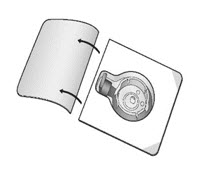
DOSAGE AND ADMINISTRATION For intravenous use after reconstitution only. For intravenous use after reconstitution only ( 2 ) Each vial of FEIBA contains the labeled amount of factor VIII inhibitor bypassing activity in units. ( 2.1 ) Type of Bleeding Dose (unit/kg) Frequency/Duration Control and Prevention of Bleeding 50 - 100 Determined by the type of bleeding episode Perioperative Management 50 - 100 Determined by the type of surgical intervention Routine Prophylaxis 85 Every other day Maximum injection or infusion rate must not exceed 10 units per kg of body weight per minute. ( 2.3 ) 2.1 Dose A guide for dosing FEIBA is provided in Table 1. Table 1: Dosing Guidelines Dose (unit/kg) Frequency of Doses (hours) Duration of Therapy Control and Prevention of Bleeding Joint Hemorrhage 50 – 100 12 Until pain and acute disabilities are improved. Mucous Membrane Bleeding 50 – 100 6 At least 1 day or until bleeding is resolved. Soft Tissue Hemorrhage (e.g., retroperitoneal bleeding) 100 12 Until resolution of bleed. Other Severe Hemorrhage (e.g., CNS bleeds) 100 6 – 12 Until resolution of bleed. Perioperative Management Preoperative 50 – 100 One time dose Immediately prior to surgery. Postoperative 50 – 100 6 – 12 Until resolution of bleed and healing are achieved. Routine Prophylaxis 85 Every other day Dosage and duration of treatment depend on the location and extent of bleeding, and the patient's clinical condition. Careful monitoring of replacement therapy is necessary in cases of major surgery or life-threatening bleeding episodes. Each vial of FEIBA contains the labeled amount of factor VIII inhibitor bypassing activity in units. Base the dose and frequency of FEIBA on the individual clinical response. Clinical response to treatment with FEIBA may vary by patient and may not correlate with the patient's inhibitor titer. Record the name of the patient and batch number of the product in order to maintain a link between the patient and the batch of the product. Do not exceed a single dose of 100 units per kg body weight or a daily dose of 200 units per kg body weight [see Warnings and Precautions (5.1) ] . 2.2 Preparation and Reconstitution Use aseptic technique throughout the entire reconstitution process. If the patient uses more than one vial per injection, reconstitute each vial according to the following instructions. Allow the vials of FEIBA and Sterile Water for Injection (diluent) to reach room temperature, if refrigerated. Remove the plastic caps from the concentrate and diluent vials. Wipe the stoppers of both vials with a sterile alcohol swab and allow them to dry prior to use. Open the package of BAXJECT II Hi-Flow device by peeling away the lid completely without touching the inside (Fig. A). Do not remove the device from the package. Do not touch the clear spike. Place the diluent vial on a flat and solid surface. Turn the package over and insert the clear plastic spike through the diluent stopper by pressing straight down (Fig. B). Grip the BAXJECT II Hi-Flow device package at the edges and pull the package off the device (Fig. C). Do not remove the blue protective cap from the BAXJECT II Hi-Flow device. Do not touch the purple spike. Turn the system over, so that the diluent vial is on top. Quickly insert the purple spike of the BAXJECT II Hi-Flow device fully into the FEIBA vial. The vacuum will draw the diluent into the FEIBA vial (Fig. D). The connection of the two vials should be done expeditiously to close the open fluid pathway created by the first insertion of the spike to the diluent vial. Gently swirl (do not shake) the vial until FEIBA is completely dissolved. Make sure that FEIBA has been dissolved completely; otherwise, active material will not pass through the device filter. The reconstituted solution should be inspected visually for particulate matter before administration. The solution should be discarded if it is not clear or is discolored. After reconstitution of FEIBA is complete, the injection or infusion should begin immediately and must be completed within three hours following reconstitution. Do not refrigerate after reconstitution. Discard unused portion. Figure A Figure B Figure C Figure D Figure A Figure B Figure C Figure D 2.3 Administration For intravenous injection or intravenous infusion after reconstitution only. Inspect the reconstituted FEIBA solution visually for particulate matter and discoloration prior to administration. The appearance of the solution should be colorless to slightly yellowish. Do not use if particulate matter or discoloration is observed. Flush venous access lines with isotonic saline prior to and after infusion of FEIBA. Do not administer in the same tubing or container with other medicinal products. Use plastic Luer lock syringes because protein such as FEIBA tends to stick to the surface of all-glass syringes. Remove the blue protective cap from the BAXJECT II Hi-Flow device. Tightly connect the syringe to the BAXJECT II Hi-Flow device (DO NOT DRAW AIR INTO THE SYRINGE) by turning the syringe in clockwise direction until stop position. Use of a Luer lock syringe is highly recommended to ensure a tight connection between the syringe and the BAXJECT II Hi-Flow device (Fig. E). Invert the system so that the dissolved FEIBA product is on top. Draw the dissolved product carefully into the syringe by pulling the plunger back slowly to avoid foaming (Fig. F). Ensure that the tight connection between the BAXJECT II Hi-Flow device and the syringe is maintained. Disconnect the syringe. Attach a suitable needle and inject or infuse intravenously at a rate that does not exceed 10 units per kg of body weight per minute. A syringe pump may be used to control the rate of administration. For a patient with a body weight of 75 kg, this corresponds to an infusion rate up to 15 mL per minute. Figure E Figure F Figure E Figure F
Warnings
WARNINGS AND PRECAUTIONS FEIBA can cause thromboembolic events following doses above 200 units per kg per day and in patients with thrombotic risk factors. Monitor patients receiving FEIBA for signs and symptoms of thromboembolic events. ( 5.1 ) Anaphylaxis and severe hypersensitivity reactions may occur. Should symptoms occur, discontinue treatment with FEIBA and administer appropriate treatment. ( 5.2 ) FEIBA is made from human plasma and may contain infectious agents, e.g., viruses, the variant Creutzfeldt-Jacob disease (vCJD) and theoretically, Creutzfeldt-Jacob disease (CJD) agent. ( 5.3 ) 5.1 Embolic and Thrombotic Events Thromboembolic events (including venous thrombosis, pulmonary embolism, myocardial infarction, and stroke) can occur with FEIBA, particularly following the administration of high doses (above 200 units per kg per day) and/or in patients with thrombotic risk factors [see Adverse Reactions (6) ] . Patients with DIC, advanced atherosclerotic disease, crush injury, septicemia, or concomitant treatment with recombinant factor VIIa have an increased risk of developing thrombotic events due to circulating tissue factor or predisposing coagulopathy. Potential benefit of treatment with FEIBA should be weighed against the potential risk of these thromboembolic events. Monitor patients receiving more than 100 units per kg of body weight of FEIBA for the development of DIC, acute coronary ischemia and signs and symptoms of other thromboembolic events. If clinical signs or symptoms occur, such as chest pain or pressure, shortness of breath, altered consciousness, vision, or speech, limb or abdomen swelling and/or pain, discontinue the infusion and initiate appropriate diagnostic and therapeutic measures. The safety and efficacy of FEIBA for breakthrough bleeding in patients receiving emicizumab has not been established. Cases of thrombotic microangiopathy (TMA) were reported in a clinical trial where subjects received FEIBA as part of a treatment regimen for breakthrough bleeding following treatment with emicizumab. 6 Consider the benefits and risks with FEIBA if considered required for patients receiving emicizumab prophylaxis. If treatment with FEIBA is required for patients receiving emicizumab, the hemophilia treating physician should closely monitor for signs and symptoms of TMA. In FEIBA clinical studies thrombotic microangiopathy (TMA) has not been reported. 5.2 Hypersensitivity Reactions Hypersensitivity and allergic reactions, including severe anaphylactoid reactions, can occur following the infusion of FEIBA. The symptoms include urticaria, angioedema, gastrointestinal manifestations, bronchospasm, and hypotension. These reactions can be severe and systemic (e.g., anaphylaxis with urticaria and angioedema, bronchospasm, and circulatory shock). Other infusion reactions, such as chills, pyrexia, and hypertension have also been reported. If signs and symptoms of severe allergic reactions occur, immediately discontinue administration of FEIBA and provide appropriate supportive care. 5.3 Transmission of Infectious Agents Because FEIBA is made from human plasma it may carry a risk of transmitting infectious agents, e.g., viruses, and the variant Creutzfeldt-Jakob disease (vCJD) agent, and theoretically, the Creutzfeldt-Jakob disease (CJD) agent. The risk has been minimized by screening plasma donors for prior exposure to certain viruses, by testing for the presence of certain current virus infections and by inactivating and removing certain viruses during the manufacturing process [see Description (11) ] . Despite these measures, the product may still potentially transmit human pathogenic agents. There is also the possibility that unknown infectious agents may still be present. All infections thought by a physician to have been possibly transmitted by this product should be reported by the physician or other healthcare providers to Takeda Pharmaceuticals U.S.A., Inc. at 1-877-TAKEDA-7 (1-877-825-3327) (in the U.S.) and /or to FDA Med Watch (1-800-FDA-1088 or www.fda.gov/medwatch ). 5.4 Presence of Isohemagglutinins and Interference with Laboratory Tests FEIBA contains blood group isohemagglutinins (anti-A and anti-B). Passive transmission of antibodies to erythrocyte antigens, e.g., A, B, D, may interfere with some serological tests for red cell antibodies, such as antiglobulin test (Coombs test).
Contraindications
CONTRAINDICATIONS Known anaphylactic or severe hypersensitivity reactions to FEIBA or any of its components, including factors of the kinin generating system. Disseminated intravascular coagulation (DIC). Acute thrombosis or embolism (including myocardial infarction). History of anaphylactic or severe hypersensitivity reactions to FEIBA or any of its components, including factors of the kinin generating system. ( 4 ) Disseminated intravascular coagulation (DIC). ( 4 ) Acute thrombosis or embolism (including myocardial infarction). ( 4 )
Mechanism of action
Mechanism of Action The mechanism of action of FEIBA is still the subject of scientific discussion. FEIBA contains multiple components, mainly non-activated factors II, IX, X and mainly activated factor VII. These factors can interact with plasma coagulation factors and platelets to increase the impaired thrombin generation of hemophilia patients with inhibitors, leading to hemostasis.
A drug lookup is just the start. Eleplan keeps the whole care plan in one place.
Medications, diagnoses, documents, appointments, and the whole care team — organized and always in sync, with Ellie, your AI care assistant, on top of it. Free to start.