aminolevulinic acid hydrochloride 0.1 MG/MG Topical Gel
Managing this medication for someone you care for? Eleplan keeps diagnoses, medications and appointments in one plan.
Start free with EleplanClinical drug
aminolevulinic acid hydrochloride 0.1 MG/MG Topical Gel
0.1 MG/MG · Topical Gel · topical
A form of aminolevulinic acid →
aminolevulinic acid hydrochloride 0.1 MG/MG Topical Gel — Sensitizers used in photodynamic/radiation therapy. 1. INDICATIONS AND USAGE AMELUZ, in combination with photodynamic therapy (PDT) using BF-RhodoLED ® or RhodoLED ® XL lamp, a narrowband, red light…
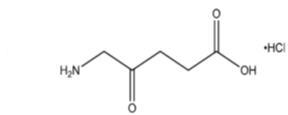
Active ingredient
Classification
Sensitizers used in photodynamic/radiation therapyPorphyrin Precursor
Drug interactions
Aminolevulinic acid may interact with phototoxic drugs, leading to a risk of phototoxic skin reactions.
- majorSt. John's wort — may experience a phototoxic skin reaction
- majorgriseofulvin — may experience a phototoxic skin reaction
- majorthiazide diuretics — may experience a phototoxic skin reaction
- majorsulfonylureas — may experience a phototoxic skin reaction
- majorphenothiazines — may experience a phototoxic skin reaction
- majorsulphonamides — may experience a phototoxic skin reaction
- majorquinolones — may experience a phototoxic skin reaction
- majortetracyclines — may experience a phototoxic skin reaction
- majortopical preparations containing ALA — may experience a phototoxic skin reaction
Real-world adverse events (FAERS)
Drug Ineffective307Wrong Technique in Product Usage Process182Poor Quality Product Administered177Product Quality Issue153Off Label Use149Erythema116Product Dose Omission Issue114Application Site Pain94
Indications
1. INDICATIONS AND USAGE AMELUZ, in combination with photodynamic therapy (PDT) using BF-RhodoLED ® or RhodoLED ® XL lamp, a narrowband, red light illumination source, is indicated for lesion-directed and field-directed treatment of actinic keratoses (AKs) of mild-to-moderate severity on the face and scalp. AMELUZ, a porphyrin precursor, in combination with photodynamic therapy using BF-RhodoLED or RhodoLED XL lamp, is indicated for the lesion-directed and field-directed treatment of actinic keratoses (AK) of mild-to-moderate severity on the face and scalp ( 1 ).
Dosage
2. DOSAGE AND ADMINISTRATION Administer AMELUZ only by a health care provider ( 2.1 ). AMELUZ is for topical use only ( 2.1 ). Use AMELUZ in combination with red light photodynamic therapy (PDT). See BF-RhodoLED or RhodoLED XL user manual for detailed lamp safety and operating instructions ( 2.1 ). Photodynamic therapy with AMELUZ involves preparation of lesions, application of the product, occlusion and illumination with BF-RhodoLED or RhodoLED XL lamp ( 2.3 ). Apply an approximately 1 mm thick layer of AMELUZ to skin lesion(s). Cover individual lesions or the entire AK-field with AMELUZ. Include approximately 5 mm of the surrounding skin. Do not exceed an application area of 60 cm 2 . Do not use more than 6 grams of AMELUZ (3 tubes) at one time ( 2.2 ). Retreat lesions that have not completely resolved 3 months after the initial treatment ( 2.2 ). 2.1 Important Administration Information AMELUZ, in conjunction with lesion preparation, is only to be administered by a health care provider. AMELUZ is for topical use only. Not for ophthalmic, oral, or intravaginal use. Treat single lesions or an entire field affected by multiple lesions with AMELUZ, in combination with red light photodynamic therapy (PDT). PDT requires administration of both AMELUZ and BF-RhodoLED or RhodoLED XL light. Refer to BF-RhodoLED or RhodoLED XL user manual for detailed lamp safety and operating instructions. Adhere to all safety instructions for both patient and medical personnel while conducting the PDT. 2.2 Recommended Dosage Apply an approximately 1-mm thick layer of AMELUZ to skin lesion(s). Cover individual lesions or the entire AK-field with AMELUZ. Include approximately 5 mm of the surrounding skin. Do not exceed an application area of 60 cm 2 . Do not use more than 6 grams of AMELUZ (3 tubes) at one time. Retreat lesions that have not completely resolved after 3 months after the initial treatment. 2.3 Administration Instructions PDT is a multi-stage process: Step 1. Preparation of Lesions Before applying AMELUZ, carefully wipe all lesions with an ethanol or isopropanol-soaked cotton pad to ensure degreasing of the skin. Figure 1A: Degreasing the skin Thereafter, remove any scaling and crusts and gently roughen all lesion surfaces, taking care to avoid bleeding. Figure 1B: Removal of scales and crusts Step 2. Application of AMELUZ Apply AMELUZ using glove protected fingertips or a spatula. Use sufficient amount of gel to cover individual lesions or the entire field: Lesion-directed treatment: Apply gel approximately 1 mm thick to one or more individual AK lesions and include approximately 5 mm of the surrounding healthy skin. Field-directed treatment: Apply gel approximately 1 mm thick to the treatment field. Apply gel to the lesions and the skin in-between the lesions. Additionally, cover approximately 5 mm of the surrounding healthy area. Do not exceed an application area of 60 cm 2 and do not use more than 6 grams of AMELUZ (3 tubes) at one time. The gel can be applied to healthy skin around the lesions. Avoid application near mucous membranes such as the eyes, nostrils, mouth, and ears (keep a distance of 1 cm from these areas). In case of accidental contact with mucous membranes, thoroughly rinse with water [ see Warnings and Precautions (5.7) ]. Allow the gel to dry for approximately 10 minutes before applying occlusive dressing. Figure 2: Drug application Step 3. Occlusion for 3 Hours Cover the area where the gel has been applied with a light-blocking, occlusive dressing. Following 3 hours of occlusion, remove the dressing and wipe off any remaining gel. Figure 3: Occlusion Step 4. Illumination with Red Light For patient and medical personnel, wear suitable protective eyewear during illumination. Avoid staring directly into the light source [ see Warnings and Precautions (5.3) ]. Illuminate the treatment area with the BF-RhodoLED or RhodoLED XL lamp immediately after removing occlusion and any remaining gel. BF-RhodoLED and RhodoLED XL lamps are red light sources with a narrow spectrum around 635 nm that deliver a light dose of approximately 37 J/cm 2 . Calibration by the operator is not needed; the illumination time is calculated automatically. Physical measures such as cooling with an air stream or nebulized water may help reduce pain during illumination. Either the BF-RhodoLED or RhodoLED XL lamp can be used: BF-RhodoLED has an effective treatment area of 6 x 16 cm when an area of 8 x 18 cm is illuminated. Position the lamp head 5-8 cm from the skin’s surface. Larger areas can be illuminated in several steps. RhodoLED XL has a curved configuration with an effective treatment area up to 23 x 29 cm. Position the lamp head of the RhodoLED XL 11-14 cm from the skin’s surface. This usually allows a full-face illumination with the use of 5 panels. The smallest recommended number of panels to be used are 3 adjacent panels (see chapter 8.4.6 of RhodoLED XL user manual). Healthy untreated skin surrounding the AK lesions does not need protection during illumination. Figure 4A: Illumination with BF-RhodoLED Figure 4B: Illumination with RhodoLED XL If for any reason, the lesions cannot be illuminated within 3 hours after AMELUZ application, rinse off the gel with saline and water. For 2 days, protect the lesion sites and surrounding skin from sunlight or prolonged or intense light (e.g., tanning beds, sun lamps). Figure 1A: Degreasing of the skin Figure 1B: Figure 1B: Removal of scales and crusts Figure 2: Drug application Figure 3: Occlusion Figure 4A: Illumination Figure 4B: Illumination
Warnings
5. WARNINGS AND PRECAUTIONS Hypersensitivity: Hypersensitivity reactions have been reported with the use of AMELUZ prior to photodynamic therapy (PDT). If allergic reaction occurs, wash off AMELUZ and institute appropriate therapy ( 5.1 ). Transient Amnestic Episodes: Transient amnestic episodes have been reported with use of AMELUZ in combination with PDT. Advise patients to contact their healthcare provider if amnesia or confusion occurs after treatment ( 5.2 ). Risk of BF-RhodoLED or RhodoLED XL Lamp Induced Eye Injury: Patients and healthcare providers must wear protective eyewear before operating BF-RhodoLED or RhodoLED XL lamp ( 5.3 ). Ophthalmic Adverse Reactions: Avoid direct contact of AMELUZ with the eyes ( 5.4 ). Increased Photosensitivity: Protect treated lesions from sunlight exposure for 48 hours post treatment ( 5.5 ). Risk of Bleeding in Patients with Coagulation Disorders: Take special care to avoid bleeding during lesion preparation in patients with inherited or acquired coagulation disorders ( 5.6 ). Mucous Membrane Irritation: Avoid direct contact of AMELUZ with the mucous membranes ( 5.7 ). 5.1 Hypersensitivity Several cases of hypersensitivity were reported during postmarketing use of AMELUZ prior to PDT illumination [ see Adverse Reactions (6.2) ]. If allergic reactions occur, clean the area of skin where the product was applied and institute appropriate therapy. Inform patients and their caregivers that AMELUZ may cause hypersensitivity, potentially including severe courses (anaphylaxis). 5.2 Transient Amnestic Episodes Transient amnestic episodes have been reported during postmarketing use of AMELUZ in combination with photodynamic therapy. Inform patients and their caregivers that AMELUZ in combination with photodynamic therapy may cause transient amnestic episodes. Advise them to contact the healthcare provider if the patient develops amnesia after treatment. 5.3 Risk of BF-RhodoLED or RhodoLED XL Lamp Induced Eye Injury BF-RhodoLED or RhodoLED XL lamp may cause eye irritation, glare, or injury. Before operating the lamp, personnel must refer to the user manual for specific warnings, cautions, and instructions. Eye exposure to the BF-RhodoLED or RhodoLED XL light must be prevented. Protective eye equipment must be used by patient, healthcare providers and any person present during the illumination period. Avoid staring directly into the light source. 5.4 Ophthalmic Adverse Reactions Eyelid edema and dry eyes have occurred after PDT with AMELUZ. PDT with AMELUZ can cause ophthalmic adverse reactions. Avoid direct contact of AMELUZ with the eyes. Rinse eyes with water in case of accidental contact. 5.5 Increased Photosensitivity AMELUZ increases photosensitivity. Avoid sunlight, prolonged or intense light (e.g., tanning beds, sun lamps) on lesions and surrounding skin treated with AMELUZ for approximately 48 hours following treatment, whether exposed to illumination or not. Concomitant use of AMELUZ with other known photosensitizing agents may increase the risk of phototoxic reaction to PDT [see Drug Interactions (7) ] . 5.6 Risk of Bleeding in Patients with Coagulation Disorders AMELUZ has not been tested on patients with inherited or acquired coagulation disorders. Take special care to avoid bleeding during lesion preparation in such patients [ see Dosage and Administration (2.3) ] . Any bleeding must be stopped before application of the gel. 5.7 Risk of Mucous Membrane Irritation AMELUZ can cause mucous membrane irritation. AMELUZ is intended for topical use only. Avoid direct contact of AMELUZ to the mucous membranes. Rinse with water in case of accidental contact.
Contraindications
4. CONTRAINDICATIONS AMELUZ is contraindicated in patients with: Known hypersensitivity to porphyrins. Known hypersensitivity to any of the components of AMELUZ, which includes soybean phosphatidylcholine [see Warnings and Precautions (5.1) ] . Porphyria. AMELUZ use may cause uncontrolled phototoxic effects [see Warnings and Precautions (5.5) ] . Photodermatoses. PDT may worsen the phototoxic or photoallergic reactions [see Warnings and Precautions (5.5) ] . Known hypersensitivity to porphyrins ( 4 ). Known hypersensitivity to any component of AMELUZ, which includes soybean phosphatidylcholine ( 4 ). Porphyria ( 4 ). Photodermatoses ( 4 ).
Mechanism of action
Mechanism of Action Photoactivation following topical application of AMELUZ occurs when aminolevulinic acid (prodrug) is metabolized to protoporphyrin IX (PpIX), a photoactive compound which accumulates in the skin. When exposed to red light of a suitable wavelength and energy, PpIX is activated resulting in an excited state of porphyrin molecules. In the presence of oxygen, reactive oxygen species are formed which causes damage to cellular components, and eventually destroys the cells. AMELUZ photodynamic therapy of AK lesions utilizes photoactivation of topically applied AMELUZ resulting from BF-RhodoLED or RhodoLED XL illumination, which provides a red light of narrow spectrum and a light dose of approximately 37 J/cm 2 .
Indicated ICD-10 codes
Source: RxNorm + openFDA + RxClass + FAERS · 2026
Look up another medication