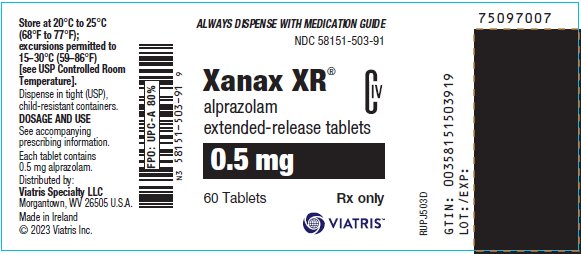
alprazolam 2 MG Oral Tablet — Benzodiazepine derivatives. INDICATIONS AND USAGE Alprazolam extended-release tablets are indicated for the treatment of panic disorder with or without agoraphobia, in adults…
Boxed warning
WARNING: RISKS FROM CONCOMITANT USE WITH OPIOIDS; ABUSE, MISUSE, AND ADDICTION; and DEPENDENCE AND WITHDRAWAL REACTIONS Concomitant use of benzodiazepines and opioids may result in profound sedation, respiratory depression, coma, and death. Reserve concomitant prescribing of these drugs in patients for whom alternative treatment options are inadequate. Limit dosages and durations to the minimum required. Follow patients for signs and symptoms of respiratory depression and sedation [ see Warnings and Precautions ( 5.1 ), Drug Interactions ( 7.1 )] . The use of benzodiazepines, including Alprazolam orally disintegrating tablets, exposes users to risks of abuse, misuse, and addiction, which can lead to overdose or death. Abuse and misuse of benzodiazepines commonly involve concomitant use of other medications, alcohol, and/or illicit substances, which is associated with an increased frequency of serious adverse outcomes. Before prescribing Alprazolam orally disintegrating tablets and throughout treatment, assess each patient’s risk for abuse, misuse, and addiction [see Warnings and Precautions ( 5.2 )] . The continued use of benzodiazepines, including Alprazolam orally disintegrating tablets, may lead to clinically significant physical dependence. The risks of dependence and withdrawal increase with longer treatment duration and higher daily dose. Abrupt discontinuation or rapid dosage reduction of Alprazolam orally disintegrating tablets after continued use may precipitate acute withdrawal reactions, which can be life-threatening. To reduce the risk of withdrawal reactions, use a gradual taper to discontinue Alprazolam orally disintegrating tablets or reduce the dosage [see Dosage and Administration ( 2.3 ) and Warnings and Precautions ( 5.3 )] . WARNING: RISKS FROM CONCOMITANT USE WITH OPIOIDS ABUSE, MISUSE, AND ADDICTION; and DEPENDENCE AND WITHDRAWAL REACTIONS See full prescribing information for complete boxed warning. The use of benzodiazepines, including alprazolam orally disintegrating tablets, exposes users to risks of abuse, misuse, and addiction. Concomitant use of benzodiazepines and opioids may result in profound sedation, respiratory depression, coma, and death. Reserve concomitant prescribing of these drugs in patients for whom alternative treatment options are inadequate. Limit dosages and durations to the minimum required. Follow patients for signs and symptoms of respiratory depression and sedation ( 5.1 , 7.1 ). The use of benzodiazepines, including alprazolam orally disintegrating tablets, exposes users to risks of abuse, misuse, and addiction, which can lead to overdose or death. Before prescribing alprazolam orally disintegrating tablets and throughout treatment, assess each patient’s risk for abuse, misuse, and addiction ( 5.2 ). Abrupt discontinuation or rapid dosage reduction of alprazolam orally disintegrating tablets after continued use may precipitate acute withdrawal reactions, which can be life-threatening. To reduce the risk of withdrawal reactions, use a gradual taper to discontinue alprazolam orally disintegrating tablets or reduce the dosage ( 2.3 , 5.3 ).
Drug Ineffective13,512Nausea12,982Fatigue12,059Drug Abuse11,053Anxiety10,250Headache10,014Pain9,894Toxicity to Various Agents8,977
Indications
INDICATIONS AND USAGE Alprazolam extended-release tablets are indicated for the treatment of panic disorder with or without agoraphobia, in adults. Alprazolam extended-release tablets are a benzodiazepine indicated for the treatment of panic disorder with or without agoraphobia, in adults. ( 1 ) 2.1 Recommended Dosage Administer alprazolam extended-release tablets orally once daily, preferably in the morning. Swallow tablets whole; do not divide, crush, or chew. The recommended starting oral dosage for alprazolam extended-release tablets is 0.5 mg to 1 mg once daily. Depending on the response, the dosage may be adjusted at intervals of every 3 to 4 days in increments of no more than 1 mg daily. The recommended dosage range is 3 mg to 6 mg once daily. Controlled trials of alprazolam extended-release tablets for the treatment of panic disorder included dosages in the range of 1 mg to 10 mg per day. Most patients showed a response in the dosage range of 3 mg to 6 mg per day. Occasional patients required as much as 10 mg per day. The longer-term efficacy of alprazolam extended-release tablets has not been systematically evaluated. If alprazolam extended-release tablets is used for periods longer than 8 weeks, the healthcare provider should periodically reassess the usefulness of the drug for the individual patient. After a period of extended freedom from panic attacks, a carefully supervised tapered discontinuation may be attempted, but there is evidence that this may often be difficult to accomplish without recurrence of symptoms and/or the manifestation of withdrawal phenomena [see Dosage and Administration ( 2.2 ), Warnings and Precautions ( 5.2 )] . 2.2 Discontinuation or Dosage Reduction of Alprazolam Extended-Release Tablets To reduce the risk of withdrawal reactions, use a gradual taper to discontinue alprazolam extended-release tablets or reduce the dosage. If a patient develops withdrawal reactions, consider pausing the taper or increasing the dosage to the previous tapered dosage level. Subsequently decrease the dosage more slowly [see Warnings and Precautions ( 5.3 ), Drug Abuse and Dependence ( 9.3 )]. Reduce the dosage by no more than 0.5 mg every three days. Some patients may benefit from an even more gradual discontinuation. Some patients may prove resistant to all discontinuation regimens. In a controlled postmarketing discontinuation study of panic disorder patients which compared the recommended taper schedule with a slower taper schedule, no difference was observed between the groups in the proportion of patients who tapered to zero dose; however, the slower schedule was associated with a reduction in symptoms associated with a withdrawal syndrome. 2.3 Dosage Recommendations in Geriatric Patients In geriatric patients, the recommended starting dosage of alprazolam extended-release tablets is 0.5 mg once daily. This may be gradually increased if needed and tolerated . Geriatric patients may be sensitive to the effects of benzodiazepines [see Use in Specific Populations ( 8.5 ), Clinical Pharmacology ( 12.3 )] . 2.4 Dosage Recommendations in Patients with Hepatic Impairment In patients with hepatic impairment, the recommended starting dosage of alprazolam extended-release tablets is 0.5 mg once daily. This may be gradually increased if needed and tolerated [see Use in Specific Populations ( 8.6 ), Clinical Pharmacology ( 12.3 )]. 2.5 Dosage Modifications for Drug Interactions Alprazolam extended-release tablets should be reduced to half of the recommended dosage when a patient is started on ritonavir and alprazolam extended-release tablets together, or when ritonavir is added to a patient treated with alprazolam extended-release tablets. Increase alprazolam extended-release tablets dosage to the target dose after 10 to 14 days of dosing ritonavir and alprazolam extended-release tablets together. It is not necessary to reduce alprazolam extended-release tablets dosage in patients who have been taking ritonavir for more than 10 to 14 days. Alprazolam extended-release tablets are contraindicated with concomitant use of all strong CYP3A inhibitors, except ritonavir [see Contraindications ( 4 ), Warnings and Precautions ( 5.5 ), Drug Interactions ( 7.1 )] . 2.6 Switching Patients from Alprazolam Tablets to Alprazolam Extended-Release Tablets Patients who are currently being treated with divided doses of alprazolam tablets may be switched to alprazolam extended-release tablets at the same total daily dose taken once daily. If the clinical response after switching is inadequate, titrate the dosage as outlined above.
Dosage
DOSAGE AND ADMINISTRATION Dosage should be individualized for maximum beneficial effect. While the usual daily dosages given below will meet the needs of most patients, there will be some who require doses greater than 4 mg per day. In such cases, the dosage should be increased cautiously to avoid adverse reactions. In general, benzodiazepines should be prescribed for short periods. Reevaluate the need for continued therapy before extending the treatment period. Indication Recommended Dose Anxiety Disorder ( 2.1 ) Initial: 0.25 mg to 0.5 mg given three times daily. Maximum: 4 mg per day given in divided doses. Panic Disorder ( 2.2 ) Initial: 0.5 mg given three times daily. Maximum: Doses up to 10 mg per day may be required to achieve a successful response. With dry hands, place the tablet on top of the tongue where it will disintegrate and be swallowed with saliva ( 2.5 ). Depending on response, the dose may be increased to achieve a maximum therapeutic effect, at intervals of 3 to 4 days ( 2.1 , 2.2 ). Use the lowest possible effective dose. Periodically reassess the need for continued treatment ( 2.1 ). In general, benzodiazepines should be prescribed for short periods ( 2 ). Discontinuation of treatment or dose reduction should be gradual and under close physician supervision. Decrease the dosage by no more than 0.5 mg per day every 3 days. Some patients may require an even slower dosage reduction ( 2.1 , 2.2 ). Dosing in elderly: the starting dose is 0.25 mg, given two or three times daily ( 2.4 ). Severe hepatic impairment: the starting dose is 0.25 mg, given two or three times daily ( 2.4 ). 2.1 Generalized Anxiety Disorder Initiate treatment with a dose of 0.25 mg to 0.5 mg three times daily. The dose may be increased to achieve a maximum therapeutic effect, at intervals of 3 to 4 days, to a maximum daily dose of 4 mg, given in divided doses. Use the lowest possible effective dose, and periodically reassess the need for continued treatment. The risk of dependence can increase with dose and duration of treatment. 2.2 Panic Disorder The successful treatment of many panic disorder patients has required the use of alprazolam at doses greater than 4 mg daily. In controlled trials conducted to establish the efficacy of alprazolam in panic disorder, doses in the range of 1 mg to 10 mg daily were used. The mean dosage employed was approximately 5 mg to 6 mg daily. Among the approximately 1700 patients participating in the panic disorder development program, about 300 received alprazolam in dosages of greater than 7 mg per day, including approximately 100 patients who received maximum dosages of greater than 9 mg per day. Occasional patients required as much as 10 mg a day to achieve a successful response. Dose Titration Initiate treatment with a dose of 0.5 mg three times daily. Depending on the response, the dose may be increased at intervals of 3 to 4 days in increments of no more than 1 mg per day. Slower titration to the dose levels greater than 4 mg per day may be advisable to allow full expression of the pharmacodynamic effect of alprazolam. To lessen the possibility of interdose symptoms, the times of administration should be distributed as evenly as possible throughout the waking hours, (i.e., administered three or four times daily). Generally, therapy should be initiated at a low dose to minimize the risk of adverse responses in patients especially sensitive to the drug. The dose should be advanced until an acceptable therapeutic response (i.e., a substantial reduction in or total elimination of panic attacks) is achieved, intolerance occurs, or the maximum recommended dose is attained. Dose Maintenance For patients receiving doses greater than 4 mg per day, periodically reassess treatment and consider a reduction of dosage. In a controlled postmarketing dose-response study, patients treated with doses of alprazolam greater than 4 mg per day for 3 months were able to taper to 50% of their total daily maintenance dose without apparent loss of clinical benefit. Because of the danger of withdrawal, avoid abrupt discontinuation of treatment [see Warnings and Precautions ( 5.3 ) , Drug Abuse and Dependence ( 9.3 )] . The necessary duration of treatment for panic disorder patients responding to alprazolam is unknown. After a period of extended freedom from attacks, a carefully supervised tapered discontinuation may be attempted, but there is evidence that this may often be difficult to accomplish without recurrence of symptoms and/or the manifestation of withdrawal phenomena. 2.3 Discontinuation or Dosage Reduction of Alprazolam Orally Disintegrating Tablets To reduce the risk of withdrawal reactions, use a gradual taper to discontinue Alprazolam orally disintegrating tablets or reduce the dosage. If a patient develops withdrawal reactions, consider pausing the taper or increasing the dosage to the previous tapered dosage level. Subsequently decrease the dosage more slowly [see Warnings and Precautions ( 5.3 ) and Drug Abuse and Dependence ( 9.3) ] . In a controlled postmarketing discontinuation study of panic disorder patients which compared this recommended taper schedule with a slower taper schedule, there was no difference between the groups in the proportion of patients who tapered and completely discontinued treatment with alprazolam; however, the slower schedule was associated with a reduction in symptoms associated with a withdrawal syndrome. Reduce the dose by no more than 0.5 mg every 3 days. Some patients may benefit from an even more gradual discontinuation. Some patients may prove resistant to all discontinuation regimens. 2.4 Dosing in Special Populations In elderly patients, in patients with advanced liver disease, or in patients with debilitating disease (e.g., severe pulmonary disease), the usual starting dose is 0.25 mg, given two or three times daily. This may be gradually increased if needed and tolerated. The elderly may be especially sensitive to the effects of benzodiazepines. If adverse reactions occur at the recommended starting dose, the dose may be lowered. 2.5 Instructions to be Given to Patients for Use/Handling Alprazolam Orally Disintegrating Tablets Just prior to administration, with dry hands, remove the tablet from the bottle. Immediately place the alprazolam orally disintegrating tablet on top of the tongue where it will disintegrate and be swallowed with saliva. Administration with liquid is not necessary. Discard any cotton that was included in the bottle and reseal the bottle tightly to prevent introducing moisture that might cause the tablets to disintegrate.
Warnings
WARNINGS AND PRECAUTIONS Effects on Driving and Operating Machinery: Patients receiving alprazolam should be cautioned against operating machinery or driving a motor vehicle, as well as avoiding concomitant use of alcohol and other central nervous system (CNS) depressant drugs. ( 5.4 ) Patients with Depression: Exercise caution in patients with signs or symptoms of depression. Prescribe the least number of tablets feasible to avoid intentional overdosage. ( 5.6 ) Neonatal Sedation and Withdrawal Syndrome: Alprazolam use during pregnancy can result in neonatal sedation and/or neonatal withdrawal. ( 5.8 , 8.1 ) 5.1 Risks from Concomitant Use with Opioids Concomitant use of benzodiazepines, including alprazolam, and opioids may result in profound sedation, respiratory depression, coma, and death. Because of these risks, reserve concomitant prescribing of these drugs in patients for whom alternative treatment options are inadequate. Observational studies have demonstrated that concomitant use of opioid analgesics and benzodiazepines increases the risk of drug-related mortality compared to use of opioids alone. If a decision is made to prescribe alprazolam concomitantly with opioids, prescribe the lowest effective dosages and minimum durations of concomitant use, and follow patients closely for signs and symptoms of respiratory depression and sedation. In patients already receiving an opioid analgesic, prescribe a lower initial dose of alprazolam than indicated in the absence of an opioid and titrate based on clinical response. If an opioid is initiated in a patient already taking alprazolam, prescribe a lower initial dose of the opioid and titrate based upon clinical response. Advise both patients and caregivers about the risks of respiratory depression and sedation when alprazolam is used with opioids. Advise patients not to drive or operate heavy machinery until the effects of concomitant use with the opioid have been determined [see Drug Interactions (7.1) ] . 5.2 Abuse, Misuse, and Addiction The use of benzodiazepines, including alprazolam, exposes users to the risks of abuse, misuse, and addiction, which can lead to overdose or death. Abuse and misuse of benzodiazepines often (but not always) involve the use of doses greater than the maximum recommended dosage and commonly involve concomitant use of other medications, alcohol, and/or illicit substances, which is associated with an increased frequency of serious adverse outcomes, including respiratory depression, overdose, or death [see Drug Abuse and Dependence (9.2) ] . Before prescribing alprazolam and throughout treatment, assess each patient’s risk for abuse, misuse, and addiction (e.g., using a standardized screening tool). Use of alprazolam, particularly in patients at elevated risk, necessitates counseling about the risks and proper use of alprazolam along with monitoring for signs and symptoms of abuse, misuse, and addiction. Prescribe the lowest effective dosage; avoid or minimize concomitant use of CNS depressants and other substances associated with abuse, misuse, and addiction (e.g., opioid analgesics, stimulants); and advise patients on the proper disposal of unused drug. If a substance use disorder is suspected, evaluate the patient and institute (or refer them for) early treatment, as appropriate. 5.3 Dependence and Withdrawal Reactions To reduce the risk of withdrawal reactions, use a gradual taper to discontinue alprazolam or reduce the dosage (a patient-specific plan should be used to taper the dose) [see Dosage and Administration (2.3) ] . Patients at an increased risk of withdrawal adverse reactions after benzodiazepine discontinuation or rapid dosage reduction include those who take higher dosages, and those who have had longer durations of use. Acute Withdrawal Reactions The continued use of benzodiazepines, including alprazolam, may lead to clinically significant physical dependence. Abrupt discontinuation or rapid dosage reduction of alprazolam after continued use, or administration of flumazenil (a benzodiazepine antagonist) may precipitate acute withdrawal reactions, which can be life-threatening (e.g., seizures) [see Drug Abuse and Dependence (9.3) ] . Protracted Withdrawal Syndrome In some cases, benzodiazepine users have developed a protracted withdrawal syndrome with withdrawal symptoms lasting weeks to more than 12 months [see Drug Abuse and Dependence (9.3) ] . Certain adverse clinical events, some life-threatening, are a direct consequence of physical dependence to alprazolam. These include a spectrum of withdrawal symptoms; the most important is seizure [see Drug Abuse and Dependence (9.3) ] . Even after relatively short-term use at doses of < 4 mg/day, there is some risk of dependence. Spontaneous reporting system data suggest that the risk of dependence and its severity appear to be greater in patients treated with doses greater than 4 mg/day and for long periods (more than 12 weeks). However, in a controlled postmarketing discontinuation study of panic disorder patients who received alprazolam, the duration of treatment (3 months compared to 6 months) had no effect on the ability of patients to taper to zero dose. In contrast, patients treated with doses of alprazolam greater than 4 mg/day had more difficulty tapering to zero dose than those treated with less than 4 mg/day. In a controlled clinical trial in which 63 patients were randomized to alprazolam and where withdrawal symptoms were specifically sought, the following were identified as symptoms of withdrawal: heightened sensory perception, impaired concentration, dysosmia, clouded sensorium, paresthesias, muscle cramps, muscle twitch, diarrhea, blurred vision, appetite decrease, and weight loss. Other symptoms, such as anxiety and insomnia, were frequently seen during discontinuation, but it could not be determined if they were due to return of illness, rebound, or withdrawal. Interdose Symptoms Early morning anxiety and emergence of anxiety symptoms between doses of alprazolam have been reported in patients with panic disorder taking prescribed maintenance doses. These symptoms may reflect the development of tolerance or a time interval between doses which is longer than the duration of clinical action of the administered dose. In either case, it is presumed that the prescribed dose is not sufficient to maintain plasma levels above those needed to prevent relapse, rebound, or withdrawal symptoms over the entire course of the interdosing interval. 5.4 Effects on Driving and Operating Machinery Because of its CNS depressant effects, patients receiving alprazolam should be cautioned against engaging in hazardous occupations or activities requiring complete mental alertness such as operating machinery or driving a motor vehicle. For the same reason, patients should be cautioned about the concomitant use of alcohol and other CNS depressant drugs during treatment with alprazolam [see Drug Interactions (7.1) ] . 5.5 Interaction with Drugs that Inhibit Metabolism via Cytochrome P450 3A The initial step in alprazolam metabolism is hydroxylation catalyzed by cytochrome P450 3A (CYP3A). Drugs that inhibit this metabolic pathway may have a profound effect on the clearance of alprazolam. Strong CYP3A Inhibitors Alprazolam is contraindicated in patients receiving strong inhibitors of CYP3A (such as azole antifungal agents), except ritonavir [see Contraindications (4) ]. Ketoconazole and itraconazole have been shown in vivo to increase plasma alprazolam concentrations 3.98 fold and 2.70 fold, respectively. Dosage adjustment is necessary when alprazolam and ritonavir are initiated concomitantly or when ritonavir is added to a stable dosage of alprazolam [see Dosage and Administration (2.6) , Drug Interactions (7.1) ]. Drugs demonstrated to be CYP3A inhibitors on the basis of clinical studies involving alprazolam: nefazodone, fluvoxamine, and cimetidine [see Drug Interaction (7.1), Clinical Pharmacology (12.3)]. Use caut
Contraindications
CONTRAINDICATIONS Alprazolam orally disintegrating tablets are contraindicated in patients with acute narrow angle glaucoma. Alprazolam orally disintegrating tablets can exacerbate narrow angle closure. Alprazolam orally disintegrating tablets may be used in patients with open angle glaucoma who are receiving appropriate therapy. Alprazolam orally disintegrating tablets are contraindicated in patients treated with potent CYP3A4 inhibitors (e.g., ketoconazole and itraconazole), because these medications significantly impair the oxidative metabolism mediated by cytochrome P450 3A (CYP3A) and can increase alprazolam exposures [see Clinical Pharmacology ( 12.3 ), Warnings and Precautions ( 5.8 ), and Drug Interactions ( 7.4 )] . Acute narrow angle glaucoma. Alprazolam can exacerbate narrow angle closure ( 4 ). Concomitant Use with potent CYP3A inhibitors (e.g., ketoconazole and itraconazole). Can increase the serum concentration of alprazolam ( 4 ).
Mechanism of action
CLINICAL PHARMACOLOGY Pharmacodynamics CNS agents of the 1,4 benzodiazepine class presumably exert their effects by binding at stereospecific receptors at several sites within the central nervous system. Their exact mechanism of action is unknown. Clinically, all benzodiazepines cause a dose-related central nervous system depressant activity varying from mild impairment of task performance to hypnosis. Pharmacokinetics Absorption Following oral administration of alprazolam (immediate-release) tablets, alprazolam is readily absorbed. Peak concentrations in the plasma occur in one to two hours following administration. Plasma levels are proportional to the dose given; over the dose range of 0.5 to 3 mg, peak levels of 8 to 37 ng/mL were observed. Using a specific assay methodology, the mean plasma elimination half-life of alprazolam has been found to be about 11.2 hours (range: 6.3 to 26.9 hours) in healthy adults. The mean absolute bioavailability of alprazolam from alprazolam extended-release tablets is approximately 90%, and the relative bioavailability compared to alprazolam tablets is 100%. The bioavailability and pharmacokinetics of alprazolam following administration of alprazolam extended-release tablets are similar to that for alprazolam tablets, with the exception of a slower rate of absorption. The slower absorption rate results in a relatively constant concentration that is maintained between 5 and 11 hours after the dosing. The pharmacokinetics of alprazolam and two of its major active metabolites (4-hydroxyalprazolam and α-hydroxyalprazolam) are linear, and concentrations are proportional up to the recommended maximum daily dose of 10 mg given once daily. Multiple dose studies indicate that the metabolism and elimination of alprazolam are similar for the immediate-release and the extended-release products. Food has a significant influence on the bioavailability of alprazolam extended-release tablets. A high-fat meal given up to 2 hours before dosing with alprazolam extended-release tablets increased the mean C max by about 25%. The effect of this meal on T max depended on the timing of the meal, with a reduction in T max by about 1/3 for subjects eating immediately before dosing and an increase in T max by about 1/3 for subjects eating 1 hour or more after dosing. The extent of exposure (AUC) and elimination half-life (t 1/2 ) were not affected by eating. There were significant differences in absorption rate for the alprazolam extended-release tablet, depending on the time of day administered, with the C max increased by 30% and the T max decreased by an hour following dosing at night, compared to morning dosing. Distribution The apparent volume of distribution of alprazolam is similar for alprazolam extended-release and alprazolam tablets. In vitro , alprazolam is bound (80%) to human serum protein. Serum albumin accounts for the majority of the binding. Metabolism Alprazolam is extensively metabolized in humans, primarily by cytochrome P450 3A4 (CYP3A4), to two major metabolites in the plasma: 4-hydroxyalprazolam and α-hydroxyalprazolam. A benzophenone derived from alprazolam is also found in humans. Their half-lives appear to be similar to that of alprazolam. The pharmacokinetic parameters at steady-state for the two hydroxylated metabolites of alprazolam (4-hydroxyalprazolam and α-hydroxyalprazolam) were similar for alprazolam and alprazolam extended-release tablets, indicating that the metabolism of alprazolam is not affected by absorption rate. The plasma concentrations of 4-hydroxyalprazolam and α-hydroxyalprazolam relative to unchanged alprazolam concentration after both alprazolam extended-release and alprazolam tablets were always less than 10% and 4%, respectively. The reported relative potencies in benzodiazepine receptor binding experiments and in animal models of induced seizure inhibition are 0.2 and 0.66, respectively, for 4-hydroxyalprazolam and α-hydroxyalprazolam. Such low concentrations and the lesser potencies of 4-hydroxyalprazolam and α-hydroxyalprazolam suggest that they are unlikely to contribute much to the pharmacological effects of alprazolam. The benzophenone metabolite is essentially inactive. Elimination Alprazolam and its metabolites are excreted primarily in the urine. The mean plasma elimination half-life of alprazolam following administration of alprazolam extended-release tablet ranges from 10.7 to 15.8 hours in healthy adults. Special Populations While pharmacokinetic studies have not been performed in special populations with alprazolam extended-release tablets, the factors (such as age, gender, hepatic or renal impairment) that would affect the pharmacokinetics of alprazolam after the administration of alprazolam tablets would not be expected to be different with the administration of alprazolam extended-release tablets. Changes in the absorption, distribution, metabolism, and excretion of benzodiazepines have been reported in a variety of disease states including alcoholism, impaired hepatic function, and impaired renal function. Changes have also been demonstrated in geriatric patients. A mean half-life of alprazolam of 16.3 hours has been observed in healthy elderly subjects (range: 9 to 26.9 hours, n=16) compared to 11 hours (range: 6.3 to 15.8 hours, n=16) in healthy adult subjects. In patients with alcoholic liver disease the half-life of alprazolam ranged between 5.8 and 65.3 hours (mean: 19.7 hours, n=17) as compared to between 6.3 and 26.9 hours (mean=11.4 hours, n=17) in healthy subjects. In an obese group of subjects the half-life of alprazolam ranged between 9.9 and 40.4 hours (mean=21.8 hours, n=12) as compared to between 6.3 and 15.8 hours (mean=10.6 hours, n=12) in healthy subjects. Because of its similarity to other benzodiazepines, it is assumed that alprazolam undergoes transplacental passage and that it is excreted in human milk. Race — Maximal concentrations and half-life of alprazolam are approximately 15% and 25% higher in Asians compared to Caucasians. Pediatrics — The pharmacokinetics of alprazolam after administration of the alprazolam extended-release tablet in pediatric patients have not been studied. Gender — Gender has no effect on the pharmacokinetics of alprazolam. Cigarette Smoking — Alprazolam concentrations may be reduced by up to 50% in smokers compared to non-smokers. Drug-Drug Interactions Alprazolam is primarily eliminated by metabolism via cytochrome P450 3A (CYP3A). Most of the interactions that have been documented with alprazolam are with drugs that inhibit or induce CYP3A4. Compounds that are potent inhibitors of CYP3A would be expected to increase plasma alprazolam concentrations. Drug products that have been studied in vivo , along with their effect on increasing alprazolam AUC, are as follows: ketoconazole, 3.98 fold; itraconazole, 2.7 fold; nefazodone, 1.98 fold; fluvoxamine, 1.96 fold; and erythromycin, 1.61 fold (see CONTRAINDICATIONS , WARNINGS , and PRECAUTIONS–Drug Interactions ). CYP3A inducers would be expected to decrease alprazolam concentrations and this has been observed in vivo . The oral clearance of alprazolam (given in a 0.8 mg single dose) was increased from 0.9±0.21 mL/min/kg to 2.13±0.54 mL/min/kg and the elimination t 1/2 was shortened (from 17.1±4.9 to 7.7±1.7 h) following administration of 300 mg/day carbamazepine for 10 days (see PRECAUTIONS–Drug Interactions ). However, the carbamazepine dose used in this study was fairly low compared to the recommended doses (1000 to 1200 mg/day); the effect at usual carbamazepine doses is unknown. The ability of alprazolam to induce or inhibit human hepatic enzyme systems has not been determined. However, this is not a property of benzodiazepines in general. Further, alprazolam did not affect the prothrombin or plasma warfarin levels in male volunteers administered sodium warfarin orally. CLINICAL EFFICACY TRIALS The efficacy of alprazolam extended-release tablets in the treatment of panic diso
A drug lookup is just the start. Eleplan keeps the whole care plan in one place.
Medications, diagnoses, documents, appointments, and the whole care team — organized and always in sync, with Ellie, your AI care assistant, on top of it. Free to start.