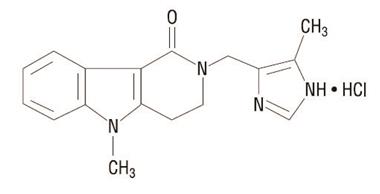
alosetron 1 MG Oral Tablet — Serotonin receptor antagonists. INDICATIONS AND USAGE Alosetron tablets are indicated only for women with severe diarrhea-predominant irritable bowel syndrome (IBS) who have…
Boxed warning
WARNING: SERIOUS GASTROINTESTINAL ADVERSE REACTIONS Infrequent but serious gastrointestinal adverse reactions have been reported with the use of alosetron hydrochloride. These events, including ischemic colitis and serious complications of constipation, have resulted in hospitalization and rarely, blood transfusion, surgery and death. Alosetron hydrochloride is indicated only for women with severe diarrhea-predominant irritable bowel syndrome (IBS) who have not responded adequately to conventional therapy [see Indications and Usage (1) ] . Alosetron hydrochloride should be discontinued immediately in patients who develop constipation or symptoms of ischemic colitis. Patients should immediately report constipation or symptoms of ischemic colitis to their prescriber. Alosetron hydrochloride should not be resumed in patients who develop ischemic colitis. Patients who have constipation should immediately contact their prescriber if the constipation does not resolve after alosetron hydrochloride is discontinued. Patients with resolved constipation should resume alosetron hydrochloride only on the advice of their treating prescriber [see Dosage and Administration (2.1) , Warnings and Precautions (5.1) , (5.2) ] . WARNING: SERIOUS GASTROINTESTINAL ADVERSE REACTIONS See full prescribing information for complete boxed warning. Infrequent but serious gastrointestinal adverse reactions have been reported with the use of alosetron hydrochloride. These events, including ischemic colitis and serious complications of constipation, have resulted in hospitalization and, rarely, blood transfusion, surgery and death. Alosetron hydrochloride is indicated only for women with severe diarrhea-predominant irritable bowel syndrome (IBS) who have not responded adequately to conventional therapy. (1) Discontinue alosetron hydrochloride immediately in patients who develop constipation or symptoms of ischemic colitis. Do not resume alosetron hydrochloride in patients who develop ischemic colitis. (2.1, 5.1, 5.2)
Alosetron has several interactions with CYP enzyme inhibitors that may affect its clearance and plasma concentrations.
majorfluvoxamine — increased exposure and half-life of alosetron
majorCYP1A2 inhibitors — increased exposure of alosetron
moderateCYP3A4 inhibitors — increased exposure of alosetron
moderateketoconazole — increased mean alosetron plasma concentrations
Real-world adverse events (FAERS)
Drug Ineffective136Constipation133Diarrhoea116Abdominal Pain113Colitis Ischaemic68Nausea62Vomiting60Adverse Event43
Indications
INDICATIONS AND USAGE Alosetron tablets are indicated only for women with severe diarrhea-predominant irritable bowel syndrome (IBS) who have: chronic IBS symptoms (generally lasting 6 months or longer), had anatomic or biochemical abnormalities of the gastrointestinal tract excluded, and not responded adequately to conventional therapy. Diarrhea-predominant IBS is severe if it includes diarrhea and one or more of the following: frequent and severe abdominal pain/discomfort, frequent bowel urgency or fecal incontinence, disability or restriction of daily activities due to IBS. Because of infrequent but serious gastrointestinal adverse reactions associated with alosetron tablets, the indication is restricted to those patients for whom the benefit-to-risk balance is most favorable. Clinical studies have not been performed to adequately confirm the benefits of alosetron tablets in men. Alosetron tablets are selective serotonin 5-HT 3 antagonist indicated only for women with severe diarrhea-predominant irritable bowel syndrome (IBS) who have: chronic IBS symptoms (generally lasting 6 months or longer), had anatomic or biochemical abnormalities of the gastrointestinal tract excluded and not responded adequately to conventional therapy. ( 1 ) Severe IBS includes diarrhea and 1 or more of the following: frequent and severe abdominal pain/discomfort, frequent bowel urgency or fecal incontinence, disability or restriction of daily activities due to IBS. ( 1 )
Dosage
DOSAGE AND ADMINISTRATION Starting dose is 0.5 mg twice a day ( 2.1 ) May increase dose to 1 mg twice a day after 4 weeks if starting dosage is well tolerated but does not adequately control IBS symptoms ( 2.1 ) Discontinue alosetron tablets in patients who have not had adequate control of IBS symptoms after 4 weeks of treatment with 1 mg twice a day. ( 2.1 ) 2.1 Adult Patients To lower the risk of constipation, alosetron tablets should be started at a dosage of 0.5 mg twice a day. Patients who become constipated at this dosage should stop taking alosetron tablets until the constipation resolves. They may be restarted at 0.5 mg once a day. If constipation recurs at the lower dose, Alosetron tablets should be discontinued immediately. Patients well controlled on 0.5 mg once or twice a day may be maintained on this regimen. If after 4 weeks the dosage is well tolerated but does not adequately control IBS symptoms, then the dosage can be increased to up to 1 mg twice a day. Alosetron tablets should be discontinued in patients who have not had adequate control of IBS symptoms after 4 weeks of treatment with 1 mg twice a day. Alosetron tablets can be taken with or without food [see Clinical Pharmacology (12.3) ] . Alosetron tablets should be discontinued immediately in patients who develop constipation or signs of ischemic colitis. Alosetron tablets should not be restarted in patients who develop ischemic colitis. Clinical trial and postmarketing experience suggest that debilitated patients or patients taking additional medications that decrease gastrointestinal motility may be at greater risk of serious complications of constipation. Therefore, appropriate caution and follow-up should be exercised if alosetron tablets are prescribed for these patients. Postmarketing experience suggests that elderly patients may be at greater risk for complications of constipation; therefore, appropriate caution and follow-up should be exercised if alosetron tablets are prescribed for these patients [see Warnings and Precautions (5.1) ] . 2.2 Patients with Hepatic Impairment Alosetron tablets are extensively metabolized by the liver, and increased exposure to alosetron tablets is likely to occur in patients with hepatic impairment. Increased drug exposure may increase the risk of serious adverse reactions. Alosetron tablets should be used with caution in patients with mild or moderate hepatic impairment and is contraindicated in patients with severe hepatic impairment [see Contraindications (4) , Use in Specific Populations (8.6) ].
Warnings
WARNINGS AND PRECAUTIONS Serious Complications of Constipation: May occur in some patients without warning. Includes obstruction, ileus, impaction, toxic megacolon and secondary bowel ischemia and in rare cases perforation and death have been reported. Risk is increased in patients who are elderly, debilitated, or taking medications that decrease bowel motility. (5.1) Discontinue alosetron hydrochloride immediately if constipation occurs. (5.1) Ischemic colitis: May occur in some patients without warning. Promptly evaluate patients with signs of ischemic colitis (e.g., rectal bleeding, bloody diarrhea, new or worsening abdominal pain). (5.2) Discontinue alosetron hydrochloride immediately if signs of ischemic colitis occur, such as rectal bleeding, bloody diarrhea, or new or worsening abdominal pain. (5.2) 5.1 Serious Complications of Constipation Some patients have experienced serious complications of constipation without warning. Serious complications of constipation, including obstruction, ileus, impaction, toxic megacolon and secondary bowel ischemia, have been reported with use of alosetron hydrochloride during clinical trials. Complications of constipation have been reported with use of 1 mg twice daily and with lower doses. A dose response relationship has not been established for serious complications of constipation. The incidence of serious complications of constipation was approximately 0.1% (1 per 1,000 patients) in women receiving either alosetron hydrochloride or placebo. In addition, rare cases of perforation and death have been reported from post-marketing clinical practice. In some cases, complications of constipation required intestinal surgery, including colectomy. Patients who are elderly, debilitated, or taking additional medications that decrease gastrointestinal motility may be at greater risk for complications of constipation. Alosetron hydrochloride should be discontinued immediately in patients who develop constipation [see Boxed Warning ] . 5.2 Ischemic Colitis Some patients have experienced ischemic colitis without warning. Ischemic colitis has been reported in patients receiving alosetron hydrochloride in clinical trials as well as during marketed use of the drug. In IBS clinical trials, the cumulative incidence of ischemic colitis in women receiving alosetron hydrochloride was 0.2% (2 per 1,000 patients, 95% confidence interval 1 to 3) through 3 months and was 0.3% (3 per 1,000 patients, 95% confidence interval 1 to 4) through 6 months. Ischemic colitis has been reported with use of 1 mg twice daily and with lower doses. A dose-response relationship has not been established. Ischemic colitis was reported in one patient receiving placebo. The patient experience in controlled clinical trials is insufficient to estimate the incidence of ischemic colitis in patients taking alosetron hydrochloride for longer than 6 months. Alosetron hydrochloride should be discontinued immediately in patients with signs of ischemic colitis such as rectal bleeding, bloody diarrhea, or new or worsening abdominal pain. Because ischemic colitis can be life-threatening, patients with signs or symptoms of ischemic colitis should be evaluated promptly and have appropriate diagnostic testing performed. Treatment with alosetron hydrochloride should not be resumed in patients who develop ischemic colitis.
Contraindications
CONTRAINDICATIONS Do not initiate in patients with constipation. (4.1) History of chronic or severe constipation or sequelae from constipation; intestinal obstruction, stricture, toxic megacolon, gastrointestinal perforation and/or adhesions; ischemic colitis; impaired intestinal circulation, thrombophlebitis, or hypercoagulable state; Crohn’s disease or ulcerative colitis; diverticulitis; severe hepatic impairment. (4.2) Concomitant use of fluvoxamine. (4.3) 4.1 Constipation Alosetron hydrochloride should not be initiated in patients with constipation [see Warnings and Precautions (5.1) ] . 4.2 History of Severe Bowel or Hepatic Disorders Alosetron hydrochloride is contraindicated in patients with a history of the following: chronic or severe constipation or sequelae from constipation intestinal obstruction, stricture, toxic megacolon, gastrointestinal perforation and/or adhesions ischemic colitis, impaired intestinal circulation, thrombophlebitis, or hypercoagulable state Crohn’s disease or ulcerative colitis diverticulitis severe hepatic impairment 4.3 Concomitant Use of Fluvoxamine Concomitant administration of alosetron hydrochloride with fluvoxamine is contraindicated. Fluvoxamine, a known strong inhibitor of CYP1A2, has been shown to increase mean alosetron plasma concentrations (AUC) approximately 6-fold and prolong the half-life by approximately 3-fold [see Drug Interactions (7.1) ] .
Mechanism of action
Mechanism of Action Alosetron is a potent and selective 5-HT 3 receptor antagonist. 5-HT 3 receptors are ligand-gated cation channels that are extensively distributed on enteric neurons in the human gastrointestinal tract, as well as other peripheral and central locations. Activation of these channels and the resulting neuronal depolarization affect the regulation of visceral pain, colonic transit, and gastrointestinal secretions, processes that relate to the pathophysiology of IBS. 5-HT 3 receptor antagonists such as alosetron inhibit activation of non-selective cation channels, which results in the modulation of the enteric nervous system. The cause of IBS is unknown. IBS is characterized by visceral hypersensitivity and hyperactivity of the gastrointestinal tract, which lead to abnormal sensations of pain and motor activity. Following distention of the rectum, patients with IBS exhibit pain and discomfort at lower volumes than healthy volunteers. Following such distention, alosetron reduced pain and exaggerated motor responses, possibly due to blockade of 5-HT 3 receptors.
A drug lookup is just the start. Eleplan keeps the whole care plan in one place.
Medications, diagnoses, documents, appointments, and the whole care team — organized and always in sync, with Ellie, your AI care assistant, on top of it. Free to start.