alectinib 150 MG Oral Capsule
Managing this medication for someone you care for? Eleplan keeps diagnoses, medications and appointments in one plan.
Start free with EleplanClinical drug
alectinib 150 MG Oral Capsule
150 MG · Oral Capsule · oral
A form of alectinib →
alectinib 150 MG Oral Capsule — Anaplastic lymphoma kinase (ALK) inhibitors. INDICATIONS AND USAGE ALECENSA is a kinase inhibitor indicated for: adjuvant treatment in adult patients following tumor resection of anaplastic…
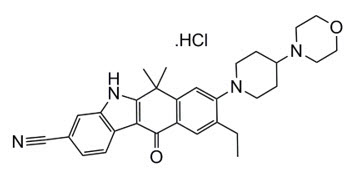
Active ingredient
Classification
Anaplastic lymphoma kinase (ALK) inhibitorsKinase Inhibitor
Real-world adverse events (FAERS)
Death687Fatigue506No Adverse Event464Off Label Use455Constipation437Rash256Dyspnoea231Myalgia207
Indications
INDICATIONS AND USAGE ALECENSA is a kinase inhibitor indicated for: adjuvant treatment in adult patients following tumor resection of anaplastic lymphoma kinase (ALK)-positive non-small cell lung cancer (NSCLC) (tumors ≥ 4 cm or node positive) as detected by an FDA-approved test. ( 1.1 ) treatment of adult patients with ALK-positive metastatic NSCLC as detected by an FDA-approved test. ( 1.2 ) 1.1 Adjuvant Treatment of Resected ALK-Positive Non-Small Cell Lung Cancer (NSCLC) ALECENSA is indicated as adjuvant treatment in adult patients following tumor resection of anaplastic lymphoma kinase (ALK)-positive non-small cell lung cancer (NSCLC) (tumors ≥ 4 cm or node positive), as detected by an FDA-approved test [see Dosage & Administration (2.1) ]. 1.2 Treatment of Metastatic ALK-Positive NSCLC ALECENSA is indicated for the treatment of adult patients with ALK-positive metastatic NSCLC as detected by an FDA-approved test [see Dosage & Administration (2.1) ] .
Dosage
DOSAGE AND ADMINISTRATION 600 mg orally twice daily. Administer ALECENSA with food. ( 2.2 ) 2.1 Patient Selection Select patients with resectable tumors for the adjuvant treatment of NSCLC with ALECENSA based on the presence of ALK positivity in tumor tissue [see Indications and Usage (1.1) and Clinical Studies (14.1) ]. Select patients for the treatment of metastatic NSCLC with ALECENSA based on the presence of ALK positivity in tumor tissue or plasma specimens [see Indications and Usage (1.2) and Clinical Studies (14.2) ] . If ALK rearrangements are not detected in a plasma specimen, test tumor tissue if feasible. Information on FDA-approved tests for the detection of ALK rearrangements in NSCLC is available at http://www.fda.gov/CompanionDiagnostics. 2.2 Dosing and Administration The recommended dosage information for ALECENSA is provided in Table 1 . Table 1: ALECENSA Recommended Dosage and Duration of Treatment Indication Recommended Dosage of ALECENSA Duration Adjuvant treatment of resected NSCLC 600 mg orally twice daily with food [see Clinical Pharmacology (12.3) ] For a total of 2 years or until disease recurrence or unacceptable toxicity Metastatic NSCLC Until disease progression or unacceptable toxicity Swallow capsules whole, do not open or dissolve the contents of the capsule. If a dose of ALECENSA is missed or vomiting occurs after taking a dose of ALECENSA, take the next dose at the scheduled time. 2.3 Recommended Dosage for Hepatic Impairment The recommended dose of ALECENSA in patients with severe hepatic impairment (Child-Pugh C) is 450 mg orally twice daily [see Use in Specific Populations (8.7) and Clinical Pharmacology (12.3) ]. 2.4 Dose Modifications for Adverse Reactions The dose reduction schedule for ALECENSA is provided in Table 2 . Table 2: ALECENSA Dose Reduction Schedule Dose Reduction Schedule Dose Level Starting dose 600 mg taken orally twice daily First dose reduction 450 mg taken orally twice daily Second dose reduction 300 mg taken orally twice daily Discontinue if patients are unable to tolerate the 300 mg twice daily dose. Recommendations for dose modifications of ALECENSA in case of adverse reactions are provided in Table 3 . Table 3: ALECENSA Dose Modifications for Adverse Reactions Criteria ALT = alanine transaminase; AST = aspartate transaminase; ULN = upper limit of normal; ILD = interstitial lung disease; CPK = blood creatine phosphokinase ALECENSA Dose Modification ALT or AST elevation of greater than 5 times upper limit of normal (ULN) with total bilirubin less than or equal to 2 times ULN Temporarily withhold until recovery to baseline or to less than or equal to 3 times ULN, then resume at reduced dose as per Table 2 . ALT or AST elevation greater than 3 times ULN with total bilirubin elevation greater than 2 times ULN in the absence of cholestasis or hemolysis Permanently discontinue ALECENSA. Total bilirubin elevation of greater than 3 times ULN Temporarily withhold until recovery to baseline or to less than or equal to 1.5 times ULN, then resume at reduced dose as per Table 2 . Any grade treatment-related interstitial lung disease (ILD)/pneumonitis Permanently discontinue ALECENSA. Grade 3 renal impairment Temporarily withhold until serum creatinine recovers to less than or equal to 1.5 times ULN, then resume at reduced dose. Grade 4 renal impairment Permanently discontinue ALECENSA. Symptomatic bradycardia Withhold ALECENSA until recovery to asymptomatic bradycardia or to a heart rate of 60 bpm or above. If contributing concomitant medication is identified and discontinued, or its dose is adjusted, resume ALECENSA at previous dose upon recovery to asymptomatic bradycardia or to a heart rate of 60 bpm or above. If no contributing concomitant medication is identified, or if contributing concomitant medications are not discontinued or dose modified, resume ALECENSA at reduced dose (see Table 2 ) upon recovery to asymptomatic bradycardia or to a heart rate of 60 bpm or above. Bradycardia Heart rate less than 60 beats per minute (bpm) (life-threatening consequences, urgent intervention indicated) Permanently discontinue ALECENSA if no contributing concomitant medication is identified. If contributing concomitant medication is identified and discontinued, or its dose is adjusted, resume ALECENSA at reduced dose (see Table 2 ) upon recovery to asymptomatic bradycardia or to a heart rate of 60 bpm or above, with frequent monitoring as clinically indicated. Permanently discontinue ALECENSA in case of recurrence. CPK elevation greater than 5 times ULN Temporarily withhold until recovery to baseline or to less than or equal to 2.5 times ULN, then resume at same dose. CPK elevation greater than 10 times ULN or second occurrence of CPK elevation of greater than 5 times ULN Temporarily withhold until recovery to baseline or to less than or equal to 2.5 times ULN, then resume at reduced dose as per Table 2 . Hemolytic Anemia Withhold ALECENSA if hemolytic anemia is suspected. Upon resolution, resume at reduced dose or permanently discontinue.
Warnings
WARNINGS AND PRECAUTIONS Hepatotoxicity: Monitor liver laboratory tests every 2 weeks during the first 3 months of treatment, then once a month and as clinically indicated, with more frequent testing in patients who develop transaminase and bilirubin elevations. In case of severe ALT, AST, or bilirubin elevations, withhold, then reduce dose, or permanently discontinue ALECENSA. ( 2.4 , 5.1 ) Interstitial Lung Disease (ILD)/Pneumonitis: Immediately withhold ALECENSA in patients diagnosed with ILD/pneumonitis and permanently discontinue if no other potential causes of ILD/pneumonitis have been identified. ( 2.4 , 5.2 ) Renal Impairment: Withhold ALECENSA for severe renal impairment, then resume ALECENSA at reduced dose upon recovery or permanently discontinue ( 2.4 , 5.3 ). Bradycardia: Monitor heart rate and blood pressure regularly. If symptomatic, withhold ALECENSA then reduce dose, or permanently discontinue. ( 2.4 , 5.4 ) Severe Myalgia and Creatine Phosphokinase (CPK) Elevation: Assess CPK every 2 weeks during the first month of treatment and in patients reporting unexplained muscle pain, tenderness, or weakness. In case of severe CPK elevations, withhold, then resume or reduce dose. ( 2.4 , 5.5 ) Hemolytic Anemia: If hemolytic anemia is suspected, withhold ALECENSA. If hemolytic anemia is confirmed, consider resuming at a reduced dose upon resolution or permanently discontinue. ( 5.6 ) Embryo-Fetal Toxicity: ALECENSA can cause fetal harm. Advise females of reproductive potential of the potential risk to a fetus and to use effective contraception. ( 5.7 , 8.1 , 8.3 ) 5.1 Hepatotoxicity Severe hepatotoxicity, including drug-induced liver injury, occurred in patients treated with ALECENSA. In the pooled safety population [see Adverse Reactions (6.1) ] of patients who received ALECENSA, hepatotoxicity occurred in 41% of patients and the incidence of Grade ≥ 3 hepatotoxicity was 8%. In the ALINA study, hepatotoxicity occurred in 61% of patients treated with ALECENSA and the incidence of Grade ≥ 3 hepatotoxicity was 4.7%. The majority (72% of 136 patients) of elevated transaminases occurred during the first 3 months of treatment. Treatment discontinuation due to hepatotoxicity occurred in 3.6% of patients who received ALECENSA in the pooled safety population and 1.6% of patients treated in the ALINA study. In the pooled safety population, concurrent elevations in ALT or AST greater than or equal to 3 times the ULN and total bilirubin greater than or equal to 2 times the ULN, with normal alkaline phosphatase, occurred in less than 1% of patients treated with ALECENSA. Three patients with Grades 3–4 AST/ALT elevations had drug-induced liver injury (documented by liver biopsy in two cases). Monitor liver function tests including ALT, AST, and total bilirubin every 2 weeks during the first 3 months of treatment, then once a month and as clinically indicated, with more frequent testing in patients who develop transaminase and bilirubin elevations. Based on the severity of the adverse drug reaction, withhold ALECENSA and resume at a reduced dose or permanently discontinue ALECENSA as described in Table 3 [see Dosage and Administration (2.4) ]. 5.2 Interstitial Lung Disease (ILD)/Pneumonitis ILD/pneumonitis occurred in patients treated with ALECENSA. In the pooled safety population [see Adverse Reactions (6.1) ] , ILD/pneumonitis occurred in 1.3% of patients treated with ALECENSA with 0.4% of patients experiencing Grade 3 ILD/pneumonitis. Five patients (0.9%) in the pooled safety population discontinued ALECENSA due to ILD/pneumonitis. The median time-to-onset of Grade 3 or higher ILD/pneumonitis was 2.1 months (range: 0.6 months to 3.6 months). Promptly investigate for ILD/pneumonitis in any patient who presents with worsening of respiratory symptoms indicative of ILD/pneumonitis (e.g., dyspnea, cough, and fever). Immediately withhold ALECENSA treatment in patients diagnosed with ILD/pneumonitis and permanently discontinue ALECENSA if no other potential causes of ILD/pneumonitis have been identified [see Dosage and Administration (2.4) and Adverse Reactions (6) ] . 5.3 Renal Impairment Renal impairment, including fatal cases, occurred in patients treated with ALECENSA. In the pooled safety population [see Adverse Reactions (6.1) ] , renal impairment occurred in 12% of patients treated with ALECENSA, including Grade ≥ 3 in 1.7% of patients, of which 0.4% were fatal events. The median time to Grade ≥ 3 renal impairment was 3.7 months (range 0.5 to 31.8 months). Dosage modifications for renal impairment were required in 2.4% of patients. Permanently discontinue ALECENSA for Grade 4 renal toxicity. Withhold ALECENSA for Grade 3 renal toxicity until recovery to less than or equal to 1.5 times ULN, then resume at reduced dose [see Dosage and Administration (2.4) ] . 5.4 Bradycardia Symptomatic bradycardia occurred in patients treated with ALECENSA. In the pooled safety population [see Adverse Reactions (6.1) ] , bradycardia occurred in 11% of patients treated with ALECENSA. Twenty percent of 521 patients treated with ALECENSA, for whom serial electrocardiograms (ECGs) were available, had post-dose heart rates of less than 50 beats per minute (bpm). Monitor heart rate and blood pressure regularly. For asymptomatic bradycardia dose modification is not required. For symptomatic bradycardia that is not life-threatening, withhold ALECENSA until recovery to asymptomatic bradycardia or to a heart rate ≥ 60 bpm and evaluate concomitant medications known to cause bradycardia, as well as anti-hypertensive medications. If bradycardia is attributable to a concomitant medication, resume ALECENSA at a reduced dose (see Table 2 ) upon recovery to asymptomatic bradycardia or to a heart rate of ≥ 60 bpm, with frequent monitoring as clinically indicated. Permanently discontinue ALECENSA in cases of life-threatening bradycardia if no contributing concomitant medication is identified [see Dosage and Administration (2.4) ] . Permanently discontinue ALECENSA for recurrence of life-threatening bradycardia. 5.5 Severe Myalgia and Creatine Phosphokinase (CPK) Elevation Severe myalgia and creatine phosphokinase (CPK) elevation occurred in patients treated with ALECENSA. In the pooled safety population [see Adverse Reactions (6.1) ] , myalgia (including muscle- and musculoskeletal-related reactions) occurred in 31% of patients treated with ALECENSA, including Grade ≥ 3 in 0.8% of patients. Dosage modifications for myalgia events were required in 2.1% of patients. In the pooled safety population, of the 491 patients with CPK laboratory data available, elevated CPK occurred in 56% of patients treated with ALECENSA, including 6% Grade ≥ 3. The median time to Grade ≥ 3 CPK elevation was 15 days (interquartile range - 15 –337 days). Dosage modifications for elevation of CPK occurred in 5% of patients. In the ALINA study, elevated CPK occurred in 77% of 128 patients with CPK laboratory data, including 6% Grade ≥ 3 elevations. Advise patients to report any unexplained muscle pain, tenderness, or weakness. Assess CPK levels every 2 weeks for the first month of treatment and as clinically indicated in patients reporting symptoms. Based on the severity of the CPK elevation, withhold ALECENSA, then resume or reduce dose [see Dosage and Administration (2.4) ]. 5.6 Hemolytic Anemia Hemolytic anemia occurred in patients treated with ALECENSA. Hemolytic anemia was initially reported with ALECENSA in the postmarketing setting, including cases associated with a negative direct antiglobulin test (DAT) result. Assessments for the determination of hemolytic anemia were subsequently collected in the ALINA study, where hemolytic anemia was observed in 3.1% of patients treated with ALECENSA. If hemolytic anemia is suspected, withhold ALECENSA and initiate appropriate laboratory testing. If hemolytic anemia is confirmed, consider resuming at a reduced dose upon resolution or permanently discontinue ALECENSA [se
Contraindications
CONTRAINDICATIONS None. None. ( 4 )
Mechanism of action
Mechanism of Action Alectinib is a tyrosine kinase inhibitor that targets ALK and RET. In nonclinical studies, alectinib inhibited ALK phosphorylation and ALK-mediated activation of the downstream signaling proteins STAT3 and AKT, and decreased tumor cell viability in multiple cell lines harboring ALK fusions, amplifications, or activating mutations. The major active metabolite of alectinib, M4, showed similar in vitro potency and activity. Alectinib and M4 demonstrated in vitro and in vivo activity against multiple mutant forms of the ALK enzyme, including some mutations identified in NSCLC tumors in patients who have progressed on crizotinib. In mouse models implanted with tumors carrying ALK fusions, administration of alectinib resulted in antitumor activity and prolonged survival, including in mouse models implanted intracranially with ALK-driven tumor cell lines.
Indicated ICD-10 codes
Source: RxNorm + openFDA + RxClass + FAERS · 2026
Look up another medication