acetylcysteine 200 MG/ML Ophthalmic Solution
Managing this medication for someone you care for? Eleplan keeps diagnoses, medications and appointments in one plan.
Start free with EleplanClinical drug
acetylcysteine 200 MG/ML Ophthalmic Solution
200 MG/ML · Ophthalmic Solution · ophthalmic
A form of acetylcysteine →
acetylcysteine 200 MG/ML Ophthalmic Solution — Mucolytics. INDICATIONS AND USAGE Acetylcysteine Injection is an antidote for acetaminophen overdose indicated to prevent or lessen hepatic injury after…
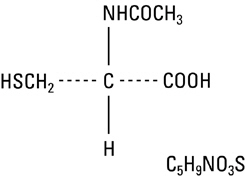
Active ingredient
Classification
MucolyticsAntidote
Real-world adverse events (FAERS)
Dyspnoea760Drug Ineffective655Off Label Use651Pneumonia612Pyrexia502Fatigue436Nausea424Diarrhoea338
Indications
INDICATIONS AND USAGE Acetylcysteine Injection is an antidote for acetaminophen overdose indicated to prevent or lessen hepatic injury after ingestion of a potentially hepatotoxic quantity of acetaminophen. Overdose incidences are divided into two types; Acute Ingestion or Repeated Supratherapeutic Ingestion (RSI). [see Dosage and Administration ( 2 ) and Acetaminophen Assays – Interpretation and Methodology -(Acute or Repeated Supratherapeutic Ingestion) ( 1.1 , 1.2 )] . On admission for suspected acetaminophen overdose, a serum blood sample should be drawn at least 4 hours after ingestion to determine the acetaminophen level and will serve as a basis for determining the need for treatment with acetylcysteine. If the patient presents after 4 hours post-ingestion, the serum acetaminophen sample should be determined immediately. Acetylcysteine Injection should be administered within 8 hours from acetaminophen ingestion for maximal protection against hepatic injury for patients whose serum acetaminophen levels fall above the "possible" toxicity line on the Rumack-Matthew nomogram (line connecting 150 mcg/mL at 4 hours with 37.5 mcg/mL at 12 hours); [see Acetaminophen Assays – Interpretation and Methodology (1.1, 1.2 )] . If the time of ingestion is unknown, or the serum acetaminophen level is not available, cannot be interpreted, or is not available within the 8 hour time interval from acetaminophen ingestion, Acetylcysteine Injection should be administered immediately if 24 hours or less have elapsed from the reported time of ingestion of an overdose of acetaminophen, regardless of the quantity reported to have been ingested. The aspartate aminotransferase (AST, SGOT), alanine aminotranferase (ALT, SGPT), bilirubin, prothrombin time, creatinine, blood urea nitrogen (BUN), blood glucose, and electrolytes also should be determined in order to monitor hepatic and renal function and electrolyte and fluid balance. NOTE: The critical ingestion-treatment interval for maximal protection against severe hepatic injury is between 0 to 8 hours. Efficacy diminishes progressively after 8 hours and treatment initiation between 15 and 24 hours post-ingestion of acetaminophen yields limited efficacy. However, it does not appear to worsen the condition of patients and it should not be withheld, since the reported time of ingestion may not be correct. Acetylcysteine Injection is an antidote for acetaminophen overdose indicated to prevent or lessen hepatic injury after ingestion of a potentially hepatotoxic quantity of acetaminophen (1) 1.1 Acetaminophen Assays Interpretation and Methodology – Acute Ingestion The acute ingestion of acetaminophen in quantities of 150 mg/kg or greater may result in hepatic toxicity. However, the reported history of the quantity of a drug ingested as an overdose is often inaccurate and is not a reliable guide to therapy of the overdose. Therefore, plasma or serum acetaminophen concentrations, determined as early as possible, but no sooner than four hours following an acute overdose, are essential in assessing the potential risk of hepatotoxicity. If an assay for acetaminophen cannot be obtained, it is necessary to assume that the overdose is potentially toxic. Interpretation of Acetaminophen Assays When results of the plasma acetaminophen assay are available, refer to the nomogram in Figure 1 to determine if plasma concentration is in the potentially toxic range. Values above the line connecting 200 mcg/mL at 4 hours with 50 mcg/mL at 12 hours (probable line) are associated with a probability of hepatic toxicity if an antidote is not administered. If the predetoxification plasma level is above the line connecting 150 mcg/mL at 4 hours with 37.5 mcg/mL at 12 hours (possible line), continue with maintenance doses of acetylcysteine. It is better to err on the safe side and thus this line, defining possible toxicity, is plotted 25% below the line defining probable toxicity. If the predetoxification plasma level is below the line connecting 150 mcg/mL at 4 hours with 37.5 mcg/mL at 12 hours (possible line), there is minimal risk of hepatic toxicity, and Acetylcysteine treatment may be discontinued. Estimating Potential for Hepatotoxicity: The following depiction of the Rumack- Matthew nomogram has been developed to estimate the probability that plasma levels in relation to intervals post-ingestion will result in hepatotoxicity. The Rumack-Matthew nomogram may underestimate the risk for hepatotoxicity in some patients with risk factors such as chronic alcoholism, malnutrition, or CYP2E1 enzyme inducing drugs (e.g., isoniazid). Figure 1. Rumack-Matthew Nomogram: Figure 1. Michael J Hodgman, Alexander R Garrard, A Review of Acetaminophen Poisoning. Crit Care Clin . 28 (2012) 499-516. Stephen J. Wolf, Kennon Heard, et.al, Clinical Policy: Critical Issues in the Management of Patients Presenting to the Emergency Department with Acetaminophen Overdose. Ann Emerg Med . 2007:50:292-313. figure 1 1.2 Acetaminophen Assays Interpretation and Methodology – Repeated Supratherapeutic Ingestion Repeated Supratherapeutic Ingestion (RSI) is defined as ingestion of acetaminophen at doses higher than those recommended for extended periods of time. The nomogram does not apply to patients with RSI. Treatment is based on the acetaminophen and elevated AST/ALT levels indicative of potential toxicity due to acetaminophen. For specific treatment information regarding the clinical management of repeated supratherapeutic acetaminophen overdose, please contact your regional poison center at 1-800-222-1222, or alternatively, a special health professional assistance line for acetaminophen overdose at 1-800-525-6115. Figure 2. Acetylcysteine Injection Treatment Flow Chart 1 Acetaminophen levels drawn less than 4 hours post-ingestion may be misleading. 2 With an extended-release preparation, an acetaminophen level drawn less than 8 hours post-ingestion may be misleading. Draw a second level at 4 to 6 hours after the initial level. If either falls above the toxicity line, acetylcysteine treatment should be initiated. 3 Acetylcysteine may be withheld until acetaminophen assay results are available as long as initiation of treatment is not delayed beyond 8 hours post-ingestion. If more than 8 hours post-ingestion, start acetylcysteine treatment immediately. figure 2
Dosage
DOSAGE AND ADMINISTRATION Pre-Treatment Assessment Following Acute Ingestion ( 2.1 ) : Obtain a plasma or serum sample to assay for acetaminophen concentration at least 4 hours after ingestion. If the time of acetaminophen ingestion is unknown: Administer a loading dose of acetylcysteine injection immediately. Obtain an acetaminophen concentration to determine need for continued treatment. If the acetaminophen concentration cannot be obtained (or is unavailable or uninterpretable) within the 8-hour time interval after acetaminophen ingestion or there is clinical evidence of acetaminophen toxicity: Administer a loading dose of acetylcysteine injection immediately and continue treatment for a total of three doses over 21 hours. If the patient presents more than 8 hours after ingestion and the time of acute acetaminophen ingestion is known: Administer a loading dose of acetylcysteine injection immediately. Obtain acetaminophen concentration to determine need for continued treatment. If the patient presents less than 8 hours after ingestion and the time of acute acetaminophen ingestion is known and the acetaminophen concentration is known: Use the Rumack-Matthew nomogram ( Figure 1 ) to determine whether or not to initiate treatment with acetylcysteine injection ( 2.2 ). Nomogram for Estimating Potential for Hepatotoxicity from Acute Acetaminophen Ingestion ( 2.2 ): See Full Prescribing Information for instructions on how to use the nomogram to determine the need for dosing. Preparation and Storage of Diluted Solution Prior to Administration ( 2.3 ) : Acetylcysteine injection is hyperosmolar (2600 mOsmol/L), therefore acetylcysteine injection must be diluted in sterile water for injection, 0.45% sodium chloride injection, or 5% dextrose in water injection prior to intravenous administration. See Full Prescribing Information for examples of osmolarity depending on the type of solution and acetylcysteine injection concentration. Recommended Adult and Pediatric Dosage ( 2.4 ): Acetylcysteine injection is for intravenous administration only. Total dosage of acetylcysteine injection is 300 mg/kg given intravenously as 3 separate doses and total recommended infusion time for 3 doses is 21 hours. See Full Prescribing Information for weight-based dosage and weight-based dilution ( 2.4 ). See Full Prescribing Information for recommendations for continuing acetylcysteine injection treatment after 21 hours ( 2.2 ). Repeated Supratherapeutic Acetaminophen Ingestion ( 2.5 ): Obtain acetaminophen concentration and other laboratory tests to guide treatment; Rumack-Matthew nomogram does not apply. 2.1 Pre-Treatment Assessment and Testing Following Acute Acetaminophen Ingestion The following recommendations are related to acute acetaminophen ingestion. For recommendations related to repeated supratherapeutic exposure [see Dosage and Administration ( 2.5 )] . Assess the history and timing of acetaminophen ingestion as an overdose. The reported history of the quantity of acetaminophen ingested as an overdose is often inaccurate and is not a reliable guide to therapy. Obtain the following laboratory tests to monitor hepatic and renal function and electrolyte and fluid balance: aspartate aminotransferase (AST), alanine aminotransferase (ALT), bilirubin, international normalized ratio (INR), creatinine, blood urea nitrogen (BUN), blood glucose, and electrolytes. Obtain a plasma or serum sample to assay for acetaminophen concentration at least 4 hours after ingestion. Acetaminophen concentrations obtained earlier than 4 hours post-ingestion may be misleading as they may not represent maximum acetaminophen concentrations. If the time of acute acetaminophen ingestion is unknown: Administer a loading dose of acetylcysteine injection immediately [see Dosage and Administration ( 2.4 )]. Obtain an acetaminophen concentration to determine need for continued treatment [see Dosage and Administration ( 2.2 )]. If the acetaminophen concentration cannot be obtained (or is unavailable or uninterpretable) within the 8-hour time interval after acetaminophen ingestion or there is clinical evidence of acetaminophen toxicity: Administer a loading dose of acetylcysteine injection immediately and continue treatment for a total of three doses over 21 hours [see Dosage and Administration ( 2.4 )]. If the patient presents more than 8 hours after ingestion and the time of acute acetaminophen ingestion is known: Administer a loading dose of acetylcysteine injection immediately [see Dosage and Administration ( 2.4 )] Obtain an acetaminophen concentration to determine need for continued treatment [see Dosage and Administration ( 2.2 )]. If the patient presents less than 8 hours after ingestion and the time of acute acetaminophen ingestion is known and the acetaminophen concentration is known: Use the Rumack-Matthew nomogram ( Figure 1 ) to determine whether or not to initiate treatment with acetylcysteine injection [see Dosage and Administration ( 2.2 )]. 2.2 Nomogram for Estimating Potential for Hepatotoxicity from Acute Acetaminophen Ingestion and Need for Acetylcysteine Injection Treatment Acetylcysteine injection is an antidote for acetaminophen overdose. The critical ingestion-treatment interval for maximal protection against severe hepatic injury is between 0 to 8 hours. Efficacy diminishes progressively after 8 hours and treatment initiation between 15 and 24 hours post-ingestion of acetaminophen yields limited efficacy. However, it does not appear to worsen the condition of patients and it should not be withheld, since the reported time of ingestion may not be correct. If the timing of the acute acetaminophen ingestion is known and the results of the acetaminophen assay are available within 8 hours: Refer to the Rumack-Matthew nomogram (see Figure 1 ) to determine whether or not to initiate treatment with acetylcysteine injection. Initiation of acetylcysteine injection depends on the plasma or serum acetaminophen concentration and also the clinical presentation of the patient. The nomogram may underestimate the hepatotoxicity risk in patients with chronic alcoholism, malnutrition, or CYP2E1 enzyme inducing drugs (e.g., isoniazid), and consideration should be given to treating these patients even if the acetaminophen concentrations are in the nontoxic range. Loading dose For patients whose acetaminophen concentrations are at or above the “possible” toxicity line (dotted line in nomogram): Administer a loading dose of acetylcysteine injection [see Dosage and Administration ( 2.4 )] . For patients with an acute overdose from an extended-release acetaminophen, if the acetaminophen concentration at 4 hours post ingestion is below the possible toxicity line then obtain a second sample for acetaminophen concentration 8 to 10 hours after the acute ingestion. If the second value is at or above the “possible” toxicity line (dotted line in nomogram): Administer a loading dose of acetylcysteine injection [see Dosage and Administration ( 2.4 )] . For patients whose values are below the “possible” toxicity line, but time of ingestion was unknown or sample was obtained less than 4 hours after ingestion: Administer a loading dose of acetylcysteine injection [see Dosage and Administration ( 2.4 )] . For patients whose values are below the “possible” toxicity line and time of ingestion is known and the sample was obtained more than 4 hours after ingestion, do not administer acetylcysteine injection because there is minimal risk of hepatotoxicity. Figure 1. Rumack-Matthew Nomogram for Estimating Potential for Hepatotoxicity for Acetaminophen Poisoning – Plasma or Serum Acetaminophen Concentration versus Time (hours) Post-acetaminophen Ingestion (Adapted from Rumack and Matthew, Pediatrics 1975; 55: 871-876) Figure 1 Maintenance Dose Determine need for continued treatment with acetylcysteine injection after the loading dose. Choose ONE of the following based on the acetaminophen concentration: The acetaminophen c
Warnings
WARNINGS AND PRECAUTIONS Hypersensitivity Reactions, Including Hypotension, Wheezing, Shortness of Breath and Bronchospasm : Observe patients during and after the infusion; immediately discontinue infusion if a serious reaction occurs and initiate appropriate treatment. Acetylcysteine injection infusion may be carefully restarted after treatment of hypersensitivity has been initiated ( 5.1 ). Fluid Overload : Total volume administered should be reduced for patients weighing less than 40 kg and for those requiring fluid restriction ( 5.2 ). 5.1 Hypersensitivity Reactions Serious acute hypersensitivity reactions during acetylcysteine administration including rash, hypotension, wheezing, and/or shortness of breath, have been observed in patients receiving intravenous acetylcysteine for acetaminophen overdose and occurred soon after initiation of the infusion [see Adverse Reactions (6.1) ]. If a severe hypersensitivity reaction occurs, immediately stop the infusion of Acetylcysteine injection and initiate appropriate treatment. One patient with asthma developed bronchospasm and died after intravenous administration of acetylcysteine. Acetylcysteine injection should be used with caution in patients with asthma, or where there is a history of bronchospasm. Patients with asthma should be closely monitored during initiation of Acetylcysteine injection therapy and throughout Acetylcysteine injection therapy. Acute flushing and erythema of the skin may occur in patients receiving acetylcysteine intravenously. These reactions usually occur 30 to 60 minutes after initiating the infusion and often resolve spontaneously despite continued infusion of acetylcysteine. If a reaction to acetylcysteine involves more than simply flushing and erythema of the skin, it should be treated as a hypersensitivity reaction. Management of less severe hypersensitivity reactions should be based upon the severity of the reaction and include temporary interruption of the infusion and/or administration of antihistaminic drugs. The Acetylcysteine injection infusion may be carefully restarted after treatment of the hypersensitivity symptoms has been initiated; however, if the hypersensitivity reaction returns upon re-initiation of treatment or increases in severity, Acetylcysteine injection should be discontinued and alternative patient management should be considered. 5.2 Fluid Overload The total volume of Acetylcysteine injection administered should be adjusted for patients less than 40 kg and for those requiring fluid restriction. To avoid fluid overload, the volume of diluent should be reduced as needed [see Dosage and Administration (2) ] . If volume is not adjusted fluid overload can occur, potentially resulting in hyponatremia, seizure and death. Intravenous administration of Acetylcysteine injection can cause fluid overload, potentially resulting in hyponatremia, seizure and death. To avoid fluid overload, use the recommended dilution shown in Tables 2, 3 and 4 [see Dosage and Administration (2.4) ].
Contraindications
CONTRAINDICATIONS Acetylcysteine Injection is contraindicated in patients with a previous hypersensitivity reaction to acetylcysteine [see Warnings and Precautions ( 5.1 )] . Patients with a previous hypersensitivity reaction to acetylcysteine ( 4 )
Mechanism of action
ACETYLCYSTEINE AS A MUCOLYTIC AGENT CLINICAL PHARMACOLOGY: The viscosity of pulmonary mucous secretions depends on the concentrations of mucoprotein and, to a lesser extent, deoxyribonucleic acid (DNA). The latter increases with increasing purulence owing to the presence of cellular debris. The mucolytic action of acetylcysteine is related to the sulfhydryl group in the molecule. This group probably “opens” disulfide linkages in mucus thereby lowering the viscosity. The mucolytic activity of acetylcysteine is unaltered by the presence of DNA, and increases with increasing pH. Significant mucolysis occurs between pH 7 and 9. Acetylcysteine undergoes rapid deacetylation in vivo to yield cysteine or oxidation to yield diacetylcystine. Occasionally, patients exposed to the inhalation of an acetylcysteine aerosol respond with the development of increased airways obstruction of varying and unpredictable severity. Those patients who are reactors cannot be identified a priori from a random patient population. Even when patients are known to have reacted previously to the inhalation of an acetylcysteine aerosol, they may not react during a subsequent treatment. The converse is also true; patients who have had inhalation treatments of acetylcysteine without incident may still react to subsequent inhalation with increased airways obstruction. Most patients with bronchospasm are quickly relieved by the use of a bronchodilator given by nebulization. If bronchospasm progresses, the medication should be discontinued immediately. ACETYLCYSTEINE AS AN ANTIDOTE FOR ACETAMINOPHEN OVERDOSE CLINICAL PHARMACOLOGY: (Antidotal) Acetaminophen is rapidly absorbed from the upper gastrointestinal tract with peak plasma levels occurring between 30 and 60 minutes after therapeutic doses and usually within 4 hours following an overdose. The parent compound, which is nontoxic, is extensively metabolized in the liver to form principally the sulfate and glucuronide conjugates which are also nontoxic and are rapidly excreted in the urine. A small fraction of an ingested dose is metabolized in the liver by the cytochrome P-450 mixed function oxidase enzyme system to form a reactive, potentially toxic, intermediate metabolite which preferentially conjugates with hepatic glutathione to form the nontoxic cysteine and mercapturic acid derivatives which are then excreted by the kidney. Therapeutic doses of acetaminophen do not saturate the glucuronide and sulfate conjugation pathways and do not result in the formation of sufficient reactive metabolite to deplete glutathione stores. However, following ingestion of a large overdose (150 mg/kg or greater) the glucuronide and sulfate conjugation pathways are saturated resulting in a larger fraction of the drug being metabolized via the P-450 pathway. The increased formation of reactive metabolite may deplete the hepatic stores of glutathione with subsequent binding of the metabolite to protein molecules within the hepatocyte resulting in cellular necrosis. Acetylcysteine has been shown to reduce the extent of liver injury following acetaminophen overdose. Its effectiveness depends on early oral administration, with benefit seen principally in patients treated within 16 hours of the overdose. Acetylcysteine probably protects the liver by maintaining or restoring the glutathione levels, or by acting as an alternate substrate for conjugation with, and thus detoxification of, the reactive metabolite.
Indicated ICD-10 codes
Source: RxNorm + openFDA + RxClass + FAERS · 2026
Look up another medication