50 ML fosaprepitant 3 MG/ML Injection
Managing this medication for someone you care for? Eleplan keeps diagnoses, medications and appointments in one plan.
Start free with EleplanClinical drug
50 ML fosaprepitant 3 MG/ML Injection
3 MG/ML · Injection · injection
A form of fosaprepitant →
50 ML fosaprepitant 3 MG/ML Injection. INDICATIONS AND USAGE Fosaprepitant for injection, in combination with other antiemetic agents, is indicated in adults for the prevention of: •…
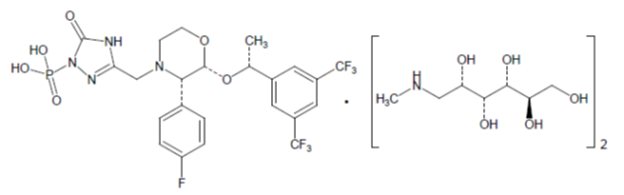
Active ingredient
Drug interactions
Fosaprepitant has several clinically significant drug interactions, particularly involving CYP3A4 substrates and inhibitors.
- majorpimozide — Increased pimozide exposure
- moderatebenzodiazepines — Increased exposure to midazolam or other benzodiazepines may increase the risk of adverse reactions
- moderatedexamethasone — Increased dexamethasone exposure
- moderatemethylprednisolone — Increased methylprednisolone exposure
- moderatewarfarin — Decreased warfarin exposure and decreased prothrombin time (INR)
- majorCYP3A4 inhibitors — Significantly increased exposure of aprepitant may increase the risk of adverse reactions
- majorCYP3A4 inducers — Substantially decreased exposure of aprepitant may decrease the efficacy of FOCINVEZ
Indications
INDICATIONS AND USAGE Fosaprepitant for injection, in combination with other antiemetic agents, is indicated in adults for the prevention of: • acute and delayed nausea and vomiting associated with initial and repeat courses of highly emetogenic cancer chemotherapy (HEC) including high-dose cisplatin. • delayed nausea and vomiting associated with initial and repeat courses of moderately emetogenic cancer chemotherapy (MEC). Limitations of Use • Fosaprepitant for injection has not been studied for the treatment of established nausea and vomiting. Pediatric use information is approved for Merck Sharp & Dohme Corp., a subsidiary of Merck & Co., Inc.’s Emend (fosaprepitant) for injection. However, due to Merck Sharp & Dohme Corp., a subsidiary of Merck & Co., Inc.’s marketing exclusivity rights, this drug product is not labeled with that pediatric information. Fosaprepitant for injection is a substance P/neurokinin-1 (NK 1 ) receptor antagonist, indicated in adults, in combination with other antiemetic agents, for the prevention of (1 ): acute and delayed nausea and vomiting associated with initial and repeat courses of highly emetogenic cancer chemotherapy (HEC) including high-dose cisplatin delayed nausea and vomiting associated with initial and repeat courses of moderately emetogenic cancer chemotherapy (MEC). Limitations of Use ( 1 ) Fosaprepitant for injection has not been studied for treatment of established nausea and vomiting.
Dosage
DOSAGE AND ADMINISTRATION Recommended Adult Dosage ( 2.1 ) FOCINVEZ 150 mg on Day 1 as an intravenous infusion over 20 to 30 minutes; Complete the infusion approximately 30 minutes prior to chemotherapy. Recommended Dosage for Pediatric Patients (6 months to 17 years) Weighing at Least 6 kg ( 2.2 ) See Full Prescribing Information for pediatric dosage regimens by age. single dose chemotherapy regimens: single dose of FOCINVEZ on Day 1. single or multi-day chemotherapy regimens: 3-day regimen of FOCINVEZ on Day 1 and aprepitant capsules or aprepitant for oral suspension on Days 2 and 3. Administer FOCINVEZ through a central venous catheter on Day 1 as an intravenous infusion over 30 minutes (12 years to 17 years) or 60 minutes (6 months to less than 12 years). Complete the infusion approximately 30 minutes prior to chemotherapy. Concomitant Antiemetics See Full Prescribing Information for additional information. ( 2.1 , 2.2 ) 2.1 Recommended Dosage for the Prevention of Nausea and Vomiting Associated with HEC and MEC in Adult Patients The recommended dosage of FOCINVEZ, dexamethasone, and a 5-HT 3 antagonist for the prevention of nausea and vomiting associated with administration of HEC or MEC in adults is shown in Table 1 or Table 2, respectively. Administer FOCINVEZ as an intravenous infusion on Day 1 over 20 to 30 minutes, completing the infusion approximately 30 minutes prior to chemotherapy. Table 1 Recommended Adult Dosage for the Prevention of Nausea and Vomiting Associated with HEC Day 1 Day 2 Day 3 Day 4 FOCINVEZ a 150 mg intravenously over 20 to 30 minutes none none none Dexamethasone b 12 mg orally 8 mg orally 8 mg orally twice daily 8 mg orally twice daily 5-HT 3 antagonist See selected 5-HT 3 antagonist prescribing information for the recommended dosage none none none a The concentration of FOCINVEZ is 3 mg/mL b Administer dexamethasone 30 minutes prior to chemotherapy treatment on Day 1 and in the morning on Days 2 through 4. Also administer dexamethasone in the evenings on Days 3 and 4. A 50% dosage reduction of dexamethasone on Days 1 and 2 is recommended to account for a drug interaction with FOCINVEZ [see Clinical Pharmacology ( 12.3 )] . Table 2 Recommended Adult Dosage for the Prevention of Nausea and Vomiting Associated with MEC Day 1 FOCINVEZ a 150 mg intravenously over 20 to 30 minutes Dexamethasone b 12 mg orally 5-HT 3 antagonist See selected 5-HT 3 antagonist prescribing information for the recommended dosage a The concentration of FOCINVEZ is 3 mg/mL. b Administer dexamethasone 30 minutes prior to chemotherapy treatment on Day 1. A 50% dosage reduction of dexamethasone is recommended to account for a drug interaction with FOCINVEZ [see Clinical Pharmacology ( 12.3 )] . 2.2 Recommended Dosage for the Prevention of Nausea and Vomiting Associated with HEC and MEC in Pediatric Patients The recommended pediatric dosage regimens of FOCINVEZ, to be administered with a 5-HT 3 antagonist, with or without a corticosteroid, for the prevention of nausea and vomiting associated with administration of single or multi-day chemotherapy regimens of HEC or MEC, are shown in Tables 3 and 4. Single-day chemotherapy regimens include those regimens in which HEC or MEC is administered for a single day only. Multi-day chemotherapy regimens include chemotherapy regimens in which HEC or MEC is administered for 2 or more days. FOCINVEZ Dosage Regimens for Use with Single-Day Chemotherapy Regimens For pediatric patients weighing at least 6 kg receiving single-day HEC or MEC, FOCINVEZ may be administered as: a single dose regimen of FOCINVEZ infused through a central venous catheter on Day 1, as shown in Table 3; or as a 3-day fosaprepitant/aprepitant regimen consisting of FOCINVEZ as an intravenous infusion through a central venous catheter on Day 1 and aprepitant capsules or aprepitant for oral suspension on Days 2 and 3, as shown in Table 4. Administer FOCINVEZ on Day 1 over 30 minutes (12 years to 17 years) or 60 minutes (6 months to less than 12 years), completing the infusion approximately 30 minutes prior to chemotherapy. Table 3 FOCINVEZ Single Dose Regimen for the Prevention of Nausea and Vomiting Associated with Single-Day Regimens of HEC or MEC in Pediatric Patients 6 Months a to 17 Years Drug Age Regimen FOCINVEZ b 12 Years to 17 Years 150 mg intravenously over 30 minutes 2 Years to less than 12 Years 4 mg/kg (maximum dose 150 mg) intravenously over 60 minutes 6 Months to less than 2 Years 5 mg/kg (maximum dose 150 mg) intravenously over 60 minutes Dexamethasone c 6 Months to 17 Years If a corticosteroid, such as dexamethasone, is co-administered, administer 50% of the recommended corticosteroid dose on Days 1 and 2. 5-HT 3 antagonist 6 Months to 17 Years See selected 5-HT 3 antagonist prescribing information for the recommended dosage a Dosing in pediatric patients less than 6 kg is not recommended b The concentration of FOCINVEZ is 3mg/mL. c Administer dexamethasone 30 minutes prior to chemotherapy treatment on Day 1 FOCINVEZ Dosage Regimen for Use with Multi-Day Chemotherapy Regimens For pediatric patients weighing at least 6 kg receiving multi-day regimens of HEC or MEC, administer FOCINVEZ as an intravenous infusion through a central venous catheter on Day 1 and aprepitant capsules or aprepitant for oral suspension on Days 2 and 3, as shown in Table 4. Administer FOCINVEZ over 30 minutes (12 years to 17 years) or 60 minutes (6 months to less than 12 years), completing the infusion approximately 30 minutes prior to chemotherapy. Table 4. 3-Day Fosaprepitant/Aprepitant Dosage Regimen for Prevention of Nausea and Vomiting Associated with Single or Multi-day Regimens of HEC or MEC in Pediatric Patients 6 Months a to 17 Years Age Group Drug Day 1 Day 2 Day 3 12 Years to 17 Years FOCINVEZ b 115 mg intravenously over 30 minutes - - Aprepitant capsules c - 80 mg orally 80 mg orally 6 Months to Less than 12 Years FOCINVEZ 3 mg/kg (maximum dose 115 mg) intravenously over 60 minutes - - Aprepitant for oral suspension d - 2 mg/kg orally (maximum 80 mg) 2 mg/kg orally (maximum 80 mg) 6 Months to 17 Years Dexamethasone e If a corticosteroid, such as dexamethasone, is co-administered, administer 50% of the recommended corticosteroid dose on Days 1 through 4 6 Months to 17 Years 5-HT 3 antagonist See selected 5-HT 3 antagonist prescribing information for the recommended dosage a Dosing in pediatric patients less than 6 kg is not recommended b The concentration of FOCINVEZ is 3 mg/mL. c For patients 12 years to 17 years who cannot swallow oral capsules, aprepitant for oral suspension can be used instead. d For patients less than 12 years of age who weigh at least 40 kg and who are able to swallow oral capsules, aprepitant capsules can be used on Days 2 and 3. e Administer dexamethasone 30 minutes prior to chemotherapy treatment on Day 1. Additional pediatric use information is approved for Merck Sharp & Dohme LLCs EMEND (fosaprepitant) for injection. However, due to Merck Sharp & Dohme LLCs marketing exclusivity rights, this drug product is not labeled with that information. 2.3 Preparation and Administration of FOCINVEZ FOCINVEZ is ready-to-use for intravenous infusion. The concentration of FOCINVEZ is 3 mg/mL . Determine the volume to be administered from the injection vial directly based on the recommended dose [see Dosage and Administration ( 2.1 , 2.2 )]. Adults The entire volume of the vial (50 mL) should be administered. Pediatrics In patients 12 years and older, the volume to be administered is calculated as follows: Volume to administer (mL) = the recommended dose (mg) / 3 (mg/mL)* In patients 6 months to less than 12 years, the volume to be administered is calculated as follows: Volume to administer (mL) = the recommended dose (mg/kg) x weight (kg) / 3 (mg/mL) * Note: Do not exceed the maximum dose [see Dosage and Administration ( 2.2 )] In pediatric patients, the entire volume in vial may NOT be required. Discard the unused portion. * The r
Warnings
WARNINGS AND PRECAUTIONS • CYP3A4 Interactions: Fosaprepitant is a weak inhibitor of CYP3A4, and aprepitant, the active moiety, is a substrate, inhibitor, and inducer of CYP3A4; see Full Prescribing Information for recommendations regarding contraindications, risk of adverse reactions, and dosage adjustment of fosaprepitant and concomitant drugs. ( 4 , 5.1 , 7.1 , 7.2 ) • Hypersensitivity Reactions (including anaphylaxis and anaphylactic shock): May occur during or soon after infusion. If symptoms occur, discontinue the drug. Do not reinitiate fosaprepitant, if symptoms occur with previous use. ( 4 , 5.2 ) · Infusion Site Reactions (including thrombophlebitis, necrosis, and vasculitis): Majority of reactions reported in patients receiving vesicant chemotherapy. Avoid infusion into small veins. Discontinue infusion and administer treatment if a severe reaction develops. ( 5.3 ) •Warfarin (a CYP2C9 substrate) : Risk of decreased INR of prothrombin time; monitor INR in 2–week period, particularly at 7 to 10 days, following initiation of fosaprepitant. ( 5.4 , 7.1 ) • Hormonal Contraceptives: Efficacy of contraceptives may be reduced during and for 28 days following administration of fosaprepitant. Use effective alternative or back-up methods of contraception. ( 5.5 , 7.1 , 8.3 ) 5.1 Clinically Significant CYP3A4 Drug Interactions Fosaprepitant, a prodrug of aprepitant, is a weak inhibitor of CYP3A4, and aprepitant is a substrate, inhibitor, and inducer of CYP3A4. · Use of fosaprepitant with other drugs that are CYP3A4 substrates, may result in increased plasma concentration of the concomitant drug. · Use of pimozide with fosaprepitant is contraindicated due to the risk of significantly increased plasma concentrations of pimozide, potentially resulting in prolongation of the QT interval, a known adverse reaction of pimozide [see Contraindications ( 4 )]. · Use of fosaprepitant with strong or moderate CYP3A4 inhibitors (e.g., ketoconazole, diltiazem) may increase plasma concentrations of aprepitant and result in an increased risk of adverse reactions related to fosaprepitant. · Use of fosaprepitant with strong CYP3A4 inducers (e.g., rifampin) may result in a reduction in aprepitant plasma concentrations and decreased efficacy of fosaprepitant. See Table 7 and Table 8 for a listing of potentially significant drug interactions [see Drug Interactions ( 7.1 , 7.2 )]. 5.2 Hypersensitivity Reactions Serious hypersensitivity reactions, including anaphylaxis and anaphylactic shock, during or soon after infusion of fosaprepitant have occurred. Symptoms including flushing, erythema, dyspnea, hypotension and syncope have been reported [see Adverse Reactions ( 6.2 )]. Monitor patients during and after infusion. If hypersensitivity reactions occur, discontinue the infusion and administer appropriate medical therapy. Do not reinitiate fosaprepitant in patients who experience these symptoms with previous use [see Contraindications ( 4 )]. 5.3 Infusion Site Reactions Infusion site reactions (ISRs) have been reported with the use of fosaprepitant for injection [see Adverse Reactions (6.1)]. The majority of severe ISRs, including thrombophlebitis and vasculitis, were reported with concomitant vesicant (anthracycline-based) chemotherapy administration, particularly when associated with extravasation. Necrosis was also reported in some patients with concomitant vesicant chemotherapy. Most ISRs occurred with the first, second or third exposure to single doses of fosaprepitant for injection and in some cases, reactions persisted for two weeks or longer. Treatment of severe ISRs consisted of medical, and in some cases surgical, intervention. Avoid infusion of fosaprepitant for injection into small veins or through a butterfly catheter. If a severe ISR develops during infusion, discontinue the infusion and administer appropriate medical treatment. 5.4 Decrease in INR with Concomitant Warfarin Coadministration of fosaprepitant with warfarin, a CYP2C9 substrate, may result in a clinically significant decrease in the International Normalized Ratio (INR) of prothrombin time [see Clinical Pharmacology (12.3)]. Monitor the INR in patients on chronic warfarin therapy in the 2-week period, particularly at 7 to 10 days, following initiation of fosaprepitant with each chemotherapy cycle [see Drug Interactions ( 7.1 )]. 5.5 Risk of Reduced Efficacy of Hormonal Contraceptives Upon coadministration with fosaprepitant, the efficacy of hormonal contraceptives may be reduced during administration of and for 28 days following the last dose of fosaprepitant [see Clinical Pharmacology ( 12.3 )]. Advise patients to use effective alternative or back-up methods of contraception during treatment with fosaprepitant and for 1 month following administration of fosaprepitant [see Drug Interactions ( 7.1 ), Use in Specific Populations ( 8.3 )]. 5.3 Infusion Site Reactions Infusion site reactions (ISRs) have been reported with the use of fosaprepitant for injection [see Adverse Reactions (6.1)]. The majority of severe ISRs, including thrombophlebitis and vasculitis, were reported with concomitant vesicant (anthracycline-based) chemotherapy administration, particularly when associated with extravasation. Necrosis was also reported in some patients with concomitant vesicant chemotherapy. Most ISRs occurred with the first, second or third exposure to single doses of fosaprepitant for injection and in some cases, reactions persisted for two weeks or longer. Treatment of severe ISRs consisted of medical, and in some cases surgical, intervention. Avoid infusion of fosaprepitant for injection into small veins or through a butterfly catheter. If a severe ISR develops during infusion, discontinue the infusion and administer appropriate medical treatment.
Contraindications
CONTRAINDICATIONS Fosaprepitant for injection is contraindicated in patients: • who are hypersensitive to any component of the product. Hypersensitivity reactions including anaphylactic reactions, flushing, erythema, and dyspnea have been reported [see Warnings and Precautions ( 5.2 ), Adverse Reactions ( 6.2 )]. • taking pimozide. Inhibition of CYP3A4 by aprepitant, the active moiety, could result in elevated plasma concentrations of this drug, which is a CYP3A4 substrate, potentially causing serious or life-threatening reactions, such as QT prolongation, a known adverse reaction of pimozide [see Warnings and Precautions ( 5.1 )]. • Known hypersensitivity to any component of this drug. ( 4 , 5.2 ) • Concurrent use with pimozide. ( 4 )
Mechanism of action
Mechanism of Action Fosaprepitant is a prodrug of aprepitant and accordingly, its antiemetic effects are attributable to aprepitant. Aprepitant is a selective high-affinity antagonist of human substance P/neurokinin 1 (NK 1 ) receptors. Aprepitant has little or no affinity for serotonin (5-HT 3 ), dopamine, and corticosteroid receptors, the targets of existing therapies for chemotherapy-induced nausea and vomiting (CINV). Aprepitant has been shown in animal models to inhibit emesis induced by cytotoxic chemotherapeutic agents, such as cisplatin, via central actions. Animal and human Positron Emission Tomography (PET) studies with aprepitant have shown that it crosses the blood brain barrier and occupies brain NK 1 receptors. Animal and human studies have shown that aprepitant augments the antiemetic activity of the 5-HT 3 -receptor antagonist ondansetron and the corticosteroid dexamethasone and inhibits both the acute and delayed phases of cisplatin-induced emesis.
Indicated ICD-10 codes
Source: RxNorm + openFDA + RxClass + FAERS · 2026
Look up another medication