26.3 ML gemcitabine 38 MG/ML Injection
Managing this medication for someone you care for? Eleplan keeps diagnoses, medications and appointments in one plan.
Start free with EleplanClinical drug
26.3 ML gemcitabine 38 MG/ML Injection
38 MG/ML · Injection · injection
A form of gemcitabine →
26.3 ML gemcitabine 38 MG/ML Injection — Pyrimidine analogues. INDICATIONS AND USAGE Gemcitabine for Injection is a nucleoside metabolic inhibitor indicated: in combination with carboplatin, for the treatment of…
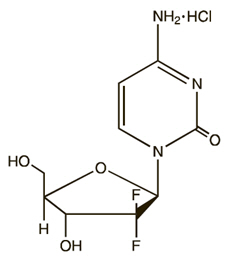
Active ingredient
Classification
Pyrimidine analoguesNucleoside Metabolic Inhibitor
Indications
INDICATIONS AND USAGE Gemcitabine for Injection is a nucleoside metabolic inhibitor indicated: in combination with carboplatin, for the treatment of advanced ovarian cancer that has relapsed at least 6 months after completion of platinum-based therapy. ( 1.1 ) in combination with paclitaxel, for first-line treatment of metastatic breast cancer after failure of prior anthracycline-containing adjuvant chemotherapy, unless anthracyclines were clinically contraindicated. ( 1.2 ) in combination with cisplatin, for the treatment of non-small cell lung cancer. ( 1.3 ) as a single agent for the treatment of pancreatic cancer. ( 1.4 ) 1.1 Ovarian Cancer Gemcitabine for Injection, USP in combination with carboplatin is indicated for the treatment of patients with advanced ovarian cancer that has relapsed at least 6 months after completion of platinum-based therapy. 1.2 Breast Cancer Gemcitabine for Injection, USP in combination with paclitaxel is indicated for the first-line treatment of patients with metastatic breast cancer after failure of prior anthracycline-containing adjuvant chemotherapy, unless anthracyclines were clinically contraindicated. 1.3 Non-Small Cell Lung Cancer Gemcitabine for Injection, USP in combination with cisplatin is indicated for the first-line treatment of patients with inoperable, locally advanced (Stage IIIA or IIIB) or metastatic (Stage IV) non-small cell lung cancer (NSCLC). 1.4 Pancreatic Cancer Gemcitabine for Injection, USP is indicated as first-line treatment for patients with locally advanced (nonresectable Stage II or Stage III) or metastatic (Stage IV) adenocarcinoma of the pancreas. Gemcitabine for Injection, USP is indicated for patients previously treated with fluorouracil.
Dosage
DOSAGE AND ADMINISTRATION Gemcitabine for Injection is for intravenous use only. Ovarian Cancer: 1000 mg/m 2 over 30 minutes on Days 1 and 8 of each 21-day cycle. ( 2.1 ) Breast Cancer: 1250 mg/m 2 over 30 minutes on Days 1 and 8 of each 21-day cycle. ( 2.2 ) Non-Small Cell Lung Cancer: 1000 mg/m 2 over 30 minutes on Days 1, 8, and 15 of each 28-day cycle or 1250 mg/m 2 over 30 minutes on Days 1 and 8 of each 21-day cycle. ( 2.3 ) Pancreatic Cancer: 1000 mg/m 2 over 30 minutes once weekly for the first 7 weeks, then one week rest, then once weekly for 3 weeks of each 28-day cycle. ( 2.4 ) 2.1 Ovarian Cancer Recommended Dose and Schedule The recommended dosage of Gemcitabine for Injection, USP is 1000 mg/m 2 intravenously over 30 minutes on Days 1 and 8 of each 21-day cycle in combination with carboplatin AUC 4 administered intravenously on Day 1 after Gemcitabine for Injection, USP administration. Refer to carboplatin prescribing information for additional information. Dosage Modifications Recommended Gemcitabine for Injection, USP dosage modifications for myelosuppression are described in Tables 1 and 2 [see Warnings and Precautions ( 5.2 )] . Refer to the recommended dosage modifications for non-hematologic adverse reactions [see Dosage and Administration ( 2.5 )] . Table 1: Recommended Dosage Modifications for Gemcitabine for Injection, USP for Myelosuppression on Day of Treatment in Ovarian Cancer Treatment Day Absolute Neutrophil Count (x 10 6 /L) Platelet Count (x 10 6 /L) Dosage Modification Day 1 Greater than or equal to 1500 And Greater than or equal to 100,000 None Less than 1500 Or Less than 100,000 Delay Treatment Cycle Day 8 Greater than or equal to 1500 And Greater than or equal to 100,000 None 1000 to 1499 Or 75,000 to 99,999 50% of full dose Less than 1000 Or Less than 75,000 Hold Table 2: Recommended Dosage Modifications for Gemcitabine for Injection, USP for Myelosuppression in Previous Cycle in Ovarian Cancer Occurrence Myelosuppression During Treatment Cycle Dosage Modification Initial Occurrence Absolute neutrophil count less than 500 x 10 6 /L for more than 5 days or Absolute neutrophil count less than 100 x 10 6 /L for more than 3 days or Febrile neutropenia or Platelets less than 25,000x10 6 /L or Cycle delay for more than one week due to toxicity Permanently reduce Gemcitabine for Injection, USP to 800 mg/m 2 on Days 1 and 8 Subsequent Occurrence If any of the above toxicities occur after the initial dose reduction: Permanently reduce Gemcitabine for Injection, USP to 800 mg/m 2 on Day 1 only 2.2 Breast Cancer Recommended Dose and Schedule The recommended dosage of Gemcitabine for Injection, USP is 1250 mg/m 2 intravenously over 30 minutes on Days 1 and 8 of each 21-day cycle in combination with paclitaxel 175 mg/m 2 administered as a 3-hour intravenous infusion on Day 1 before Gemcitabine for Injection, USP administration. Refer to paclitaxel prescribing information for additional information. Dosage Modifications Recommended Gemcitabine for Injection, USP dosage modifications for myelosuppression are described in Table 3 [see Warnings and Precautions ( 5.2 )] . Refer to the recommended dosage modifications for non-hematologic adverse reactions [see Dosage and Administration ( 2.5 )] . Table 3: Recommended Dosage Modifications for Gemcitabine for Injection, USP for Myelosuppression on Day of Treatment in Breast Cancer Treatment Day Absolute Neutrophil Count (x 10 6 /L) Platelet Count (x 10 6 /L) Dosage Modification Day 1 Greater than or equal to 1500 And Greater than or equal to 100,000 None Less than 1500 Or Less than 100,000 Hold Day 8 Greater than or equal to 1200 And Greater than 75,000 None 1000 to 1199 Or 50,000 to 75,000 75% of full dose 700 to 999 And Greater than or equal to 50,000 50% of full dose Less than 700 Or Less than 50,000 Hold 2.3 Non-Small Cell Lung Cancer Recommended Dose and Schedule 28-day schedule The recommended dosage of Gemcitabine for Injection, USP is 1000 mg/m 2 intravenously over 30 minutes on Days 1, 8, and 15 of each 28-day cycle in combination with cisplatin 100 mg/m 2 administered intravenously on Day 1 after Gemcitabine for Injection, USP administration. 21-day schedule The recommended dosage of Gemcitabine for Injection, USP is 1250 mg/m 2 intravenously over 30 minutes on Days 1 and 8 of each 21-day cycle in combination with cisplatin 100 mg/m 2 administered intravenously on Day 1 after Gemcitabine for Injection, USP administration. Refer to cisplatin prescribing information for additional information. Dosage Modifications Recommended dosage modifications for Gemcitabine for Injection, USP myelosuppression are described in Table 4 [see Warnings and Precautions ( 5.2 )] . Refer to the recommended dosage modifications for non-hematologic adverse reactions [see Dosage and Administration ( 2.5 )] . 2.4 Pancreatic Cancer Recommended Dose and Schedule The recommended dosage of Gemcitabine for Injection, USP is 1000 mg/m 2 intravenously over 30 minutes. The recommended treatment schedule is as follows: Weeks 1 to 8: weekly dosing for the first 7 weeks followed by one week rest. After week 8: weekly dosing on Days 1, 8, and 15 of each 28-day cycle. Dosage Modifications Recommended dosage modifications for Gemcitabine for Injection, USP for myelosuppression are described in Table 4 [see Warnings and Precautions ( 5.2 )] . Refer to the recommended dosage modifications for non-hematologic adverse reactions [see Dosage and Administration ( 2.5 )] . Table 4: Recommended Dosage Modifications for Gemcitabine for Injection, USP for Myelosuppression in Pancreatic Cancer and Non-Small Cell Lung Cancer Absolute Neutrophil Count (x 10 6 /L) Platelet Count (x 10 6 /L) Dosage Modification Greater than or equal to 1000 And Greater than or equal to 100,000 None 500 to 999 Or 50,000 to 99,999 75% of full dose Less than 500 Or Less than 50,000 Hold 2.5 Dosage Modifications for Non-Hematologic Adverse Reactions Permanently discontinue Gemcitabine for Injection, USP for any of the following: Severe Cutaneous Adverse Reactions (SCARS) [see Warnings and Precautions ( 5.3 )] Unexplained dyspnea or evidence of severe pulmonary toxicity [see Warnings and Precautions ( 5.4 )] Hemolytic uremic syndrome (HUS) or severe renal impairment [see Warnings and Precautions ( 5.5 )] Severe hepatic toxicity [see Warnings and Precautions ( 5.6 )] Capillary leak syndrome (CLS) [see Warnings and Precautions ( 5.9 )] Posterior reversible encephalopathy syndrome (PRES) [see Warnings and Precautions ( 5.10 )] Withhold Gemcitabine for Injection, USP or reduce dose by 50% for other Grade 3 or 4 non-hematological adverse reactions until resolved. No dose modifications are recommended for alopecia, nausea, or vomiting. 2.6 Preparation Gemcitabine for Injection, USP vials contain no antimicrobial preservatives and are intended for single use only. Gemcitabine for Injection, USP is a cytotoxic drug. Follow applicable special handling and disposal procedures. 1 Exercise caution and wear gloves when preparing Gemcitabine for Injection, USP solutions. Immediately wash the skin thoroughly or rinse the mucosa with copious amounts of water if Gemcitabine for Injection, USP contacts the skin or mucus membranes. Death has occurred in animal studies due to dermal absorption. Reconstitute the 200 mg vial with 5 mL and the 1 gram vial with 25 mL of 0.9% Sodium Chloride Injection, USP to yield a Gemcitabine for Injection, USP concentration of 38 mg per mL. Reconstituted Gemcitabine for Injection, USP is a clear, colorless to light straw-colored solution. Visually inspect reconstituted product for particulate matter and discoloration. Discard if particulate matter or discoloration is observed. Withdraw the calculated dose from the vial and discard any unused portion. Prior to administration, dilute the reconstituted solution with 0.9% Sodium Chloride Injection, USP to a minimum final concentration of at least 0.1 mg per mL. Store Gemcitabine for Injection,
Warnings
WARNINGS AND PRECAUTIONS Schedule-Dependent Toxicity: Increased toxicity with infusion time greater than 60 minutes or dosing more frequently than once weekly. ( 5.1 ) Myelosuppression: Monitor for myelosuppression prior to each cycle and reduce or withhold dose for severe myelosuppression. ( 5.2 , 5.8 ) Severe Cutaneous Adverse Reactions (SCARs):Permanently discontinue gemcitabine injection if SCARs occur. ( 5.3 ) Pulmonary Toxicity and Respiratory Failure: Discontinue Gemcitabine for Injection for unexplained dyspnea or other evidence of severe pulmonary toxicity. ( 5.4 ) Hemolytic Uremic Syndrome (HUS): Monitor renal function prior to initiation and during treatment. Discontinue Gemcitabine for Injection for HUS or severe renal impairment. ( 5.5 ) Hepatic Toxicity: Monitor hepatic function prior to initiation and during treatment. Discontinue Gemcitabine for Injection for severe hepatic toxicity. ( 5.6 ) Embryo-Fetal Toxicity: Can cause fetal harm. Advise females and males of reproductive potential to use effective contraception. ( 5.7 , 8.1 ) Exacerbation of Radiation Therapy Toxicity: May cause severe and life-threatening toxicity when administered during or within 7 days of radiation therapy. ( 5.8 ) Capillary Leak Syndrome: Discontinue Gemcitabine for Injection. ( 5.9 ) Posterior Reversible Encephalopathy Syndrome (PRES): Discontinue Gemcitabine for Injection. ( 5.10 ) 5.1 Schedule-Dependent Toxicity In clinical trials evaluating the maximum tolerated dose of Gemcitabine for Injection, prolongation of the infusion time beyond 60 minutes or more frequent than weekly dosing resulted in an increased incidence of clinically significant hypotension, severe flu-like symptoms, myelosuppression, and asthenia. The half-life of Gemcitabine for Injection is influenced by the length of the infusion [see Clinical Pharmacology ( 12.3 )] . Refer to the recommended Gemcitabine for Injection dosage [see Dosage and Administration ( 2.1 , 2.2 , 2.3 , 2.4 )] . 5.2 Myelosuppression Myelosuppression manifested by neutropenia, thrombocytopenia, and anemia occurs with Gemcitabine for Injection as a single agent and the risks are increased when Gemcitabine for Injection is combined with other cytotoxic drugs. In clinical trials, Grade 3 or 4 neutropenia, anemia, and thrombocytopenia occurred in 25%, 8%, and 5%, respectively of the 979 patients who received single agent Gemcitabine for Injection. The frequencies of Grade 3 or 4 neutropenia, anemia, and thrombocytopenia varied from 48% to 71%, 8% to 28%, and 5% to 55%, respectively, in patients receiving Gemcitabine for Injection in combination with another drug [see Adverse Reactions ( 6.1 )] . Prior to each dose of Gemcitabine for Injection, obtain a complete blood count (CBC) with a differential and a platelet count. Modify the dosage as recommended [see Dosage and Administration ( 2.1 , 2.2 , 2.3 , 2.4 )] . 5.3 Severe Cutaneous Adverse Reactions (SCARS) SCARs, including Stevens-Johnson syndrome (SJS), toxic epidermal necrolysis (TEN), drug reaction with eosinophilia and systemic symptoms (DRESS), and acute generalized exanthematous pustulosis (AGEP), which can be life-threatening or fatal, have been reported in association with gemcitabine treatment [see Adverse Reactions ( 6.2 )] . Monitor patients for signs and symptoms of severe cutaneous adverse reactions. Permanently discontinue gemcitabine in patients who develop SCARs. 5.4 Pulmonary Toxicity and Respiratory Failure Pulmonary toxicity, including interstitial pneumonitis, pulmonary fibrosis, pulmonary edema, and adult respiratory distress syndrome (ARDS), has been reported. In some cases, these pulmonary events can lead to fatal respiratory failure despite the discontinuation of therapy. The onset of pulmonary symptoms may occur up to 2 weeks after the last dose of Gemcitabine for Injection [see Adverse Reactions ( 6.1 , 6.2 )] . Permanently discontinue Gemcitabine for Injection in patients who develop unexplained dyspnea, with or without bronchospasm, or evidence of severe pulmonary toxicity. 5.5 Hemolytic Uremic Syndrome Hemolytic uremic syndrome (HUS), including fatalities from renal failure or the requirement for dialysis, can occur with Gemcitabine for Injection. In clinical trials, HUS occurred in 0.25% of 2429 patients. Most fatal cases of renal failure were due to HUS [see Adverse Reactions ( 6.1 )] . Serious cases of thrombotic microangiopathy other than HUS have been reported with Gemcitabine for Injection [see Adverse Reactions ( 6.2 )] . Assess renal function prior to initiation of Gemcitabine for Injection and periodically during treatment. Consider the diagnosis of HUS in patients who develop anemia with evidence of microangiopathic hemolysis; increased bilirubin or LDH; reticulocytosis; severe thrombocytopenia; or renal failure (increased serum creatinine or BUN). Permanently discontinue Gemcitabine for Injection in patients with HUS or severe renal impairment. Renal failure may not be reversible even with the discontinuation of therapy. 5.6 Hepatic Toxicity Drug-induced liver injury, including liver failure and death, has been reported in patients receiving Gemcitabine for Injection alone or with other potentially hepatotoxic drugs [see Adverse Reactions ( 6.1 , 6.2 )] . Administration of Gemcitabine for Injection in patients with concurrent liver metastases or a pre-existing medical history of hepatitis, alcoholism, or liver cirrhosis can lead to exacerbation of the underlying hepatic insufficiency. Assess hepatic function prior to initiation of Gemcitabine for Injection and periodically during treatment. Permanently discontinue Gemcitabine for Injection in patients who develop severe hepatic toxicity. 5.7 Embryo-Fetal Toxicity Based on animal data and its mechanism of action, Gemcitabine for Injection can cause fetal harm when administered to a pregnant woman. Gemcitabine was teratogenic, embryotoxic, and fetotoxic in mice and rabbits. Advise pregnant women of the potential risk to a fetus. Advise females of reproductive potential to use effective contraception during treatment with Gemcitabine for Injection and for 6 months after the final dose. Advise male patients with female partners of reproductive potential to use effective contraception during treatment with Gemcitabine for Injection and for 3 months following the final dose [see Use in Specific Populations ( 8.1 , 8.3 )] . 5.8 Exacerbation of Radiation Therapy Toxicity Gemcitabine for Injection is not recommended for use in combination with radiation therapy. Concurrent (given together or ≤7 days apart) Life-threatening mucositis, especially esophagitis and pneumonitis occurred in a trial in which Gemcitabine for Injection was administered at a dose of 1000 mg/m 2 to patients with non-small cell lung cancer for up to 6 consecutive weeks concurrently with thoracic radiation. Non-concurrent (given >7 days apart) Excessive toxicity has not been observed when Gemcitabine for Injection is administered more than 7 days before or after radiation. Radiation recall has been reported in patients who received Gemcitabine for Injection after prior radiation. 5.9 Capillary Leak Syndrome Capillary leak syndrome (CLS) with severe consequences has been reported in patients receiving Gemcitabine for Injection as a single agent or in combination with other chemotherapeutic agents [see Adverse Reactions ( 6.2 )] . Permanently discontinue Gemcitabine for Injection if CLS develops during therapy. 5.10 Posterior Reversible Encephalopathy Syndrome Posterior reversible encephalopathy syndrome (PRES) has been reported in patients receiving Gemcitabine for Injection as a single agent or in combination with other chemotherapeutic agents [see Adverse Reactions ( 6.2 )] . PRES can present with headache, seizure, lethargy, hypertension, confusion, blindness, and other visual and neurologic disturbances. Confirm the diagnosis of PRES with magnetic resonance imaging (MRI). Permanently discontinue Gemcitabine for In
Contraindications
CONTRAINDICATIONS Gemcitabine for Injection, USP is contraindicated in patients with a known hypersensitivity to gemcitabine. Reactions include anaphylaxis [see Adverse Reactions ( 6.1 )] . Patients with a known hypersensitivity to gemcitabine. ( 4 )
Mechanism of action
CLINICAL PHARMACOLOGY 12.1 Mechanism of Action Gemcitabine kills cells undergoing DNA synthesis and blocks the progression of cells through the G1/S-phase boundary. Gemcitabine is metabolized by nucleoside kinases to diphosphate (dFdCDP) and triphosphate (dFdCTP) nucleosides. Gemcitabine diphosphate inhibits ribonucleotide reductase, an enzyme responsible for catalyzing the reactions that generate deoxynucleoside triphosphates for DNA synthesis, resulting in reductions in deoxynucleotide concentrations, including dCTP. Gemcitabine triphosphate competes with dCTP for incorporation into DNA. The reduction in the intracellular concentration of dCTP by the action of the diphosphate enhances the incorporation of gemcitabine triphosphate into DNA (self-potentiation). After the gemcitabine nucleotide is incorporated into DNA, only one additional nucleotide is added to the growing DNA strands, which eventually results in the initiation of apoptotic cell death. 12.3 Pharmacokinetics The pharmacokinetics of gemcitabine were examined in 353 patients with various solid tumors. Pharmacokinetic parameters were derived using data from patients treated for varying durations of therapy given weekly with periodic rest weeks and using both short infusions (<70 minutes) and long infusions (70 to 285 minutes). The total Gemcitabine for Injection dose varied from 500 mg/m 2 to 3600 mg/m 2 . Distribution The volume of distribution was increased with infusion length. Volume of distribution of gemcitabine was 50 L/m 2 following infusions lasting <70 minutes. For long infusions, the volume of distribution rose to 370 L/m 2 . Gemcitabine pharmacokinetics are linear and are described by a 2-compartment model. Population pharmacokinetic analyses of combined single and multiple dose studies showed that the volume of distribution of gemcitabine was significantly influenced by duration of infusion and sex. Gemcitabine plasma protein binding is negligible. Elimination Metabolism The active metabolite, gemcitabine triphosphate, can be extracted from peripheral blood mononuclear cells. The half-life of the terminal phase for gemcitabine triphosphate from mononuclear cells ranges from 1.7 to 19.4 hours. Excretion Gemcitabine disposition was studied in 5 patients who received a single 1000 mg/m 2 of radiolabeled drug as a 30-minute infusion. Within one week, 92% to 98% of the dose was recovered, almost entirely in the urine. Gemcitabine (<10%) and the inactive uracil metabolite, 2´-deoxy-2´,2´-difluorouridine (dFdU) accounted for 99% of the excreted dose. The metabolite dFdU is also found in plasma. Specific Populations Geriatric Patients Clearance gemcitabine was affected by age. The lower clearance in geriatric patients results in higher concentrations of gemcitabine for any given dose. Differences in either clearance or volume of distribution based on patient characteristics or the duration of infusion result in changes in half-life and plasma concentrations. Table 15 shows plasma clearance and half-life of gemcitabine following short infusions for typical patients by age and sex. Table 15: Gemcitabine Clearance and Half-Life for the “Typical” Patient Age Clearance Men (L/hr/m 2 ) Clearance Women (L/hr/m 2 ) Half-Life a Men (min) Half-Life a Women (min) 29 92.2 69.4 42 49 45 75.7 57.0 48 57 65 55.1 41.5 61 73 79 40.7 30.7 79 94 a Half-life for patients receiving a <70 minute infusion. Gemcitabine half-life for short infusions ranged from 42 to 94 minutes and for long infusions varied from 245 to 638 minutes, depending on age and sex, reflecting a greatly increased volume of distribution with longer infusions. Male and Female Patients Females have lower clearance and longer half-lives than male patients as described in Table 15. Patients with Renal Impairment No clinical studies have been conducted with gemcitabine in patients with decreased renal function. Patients with Hepatic Impairment No clinical studies have been conducted with gemcitabine in patients with decreased hepatic function. Drug Interaction Studies When Gemcitabine for Injection (1250 mg/m 2 on Days 1 and 8) and cisplatin (75 mg/m 2 on Day 1) were administered in patients with NSCLC, the clearance of gemcitabine on Day 1 was 128 L/hr/m 2 and on Day 8 was 107 L/hr/m 2 . Data from patients with NSCLC demonstrate that Gemcitabine for Injection and carboplatin given in combination does not alter the pharmacokinetics of gemcitabine or carboplatin compared to administration of either single agent; however, due to wide confidence intervals and small sample size, interpatient variability may be observed. Data from metastatic breast cancer patients shows that Gemcitabine for Injection has little or no effect on the pharmacokinetics (clearance and half-life) of paclitaxel and paclitaxel has little or no effect on the pharmacokinetics of gemcitabine.
Source: RxNorm + openFDA + RxClass + FAERS · 2026
Look up another medication