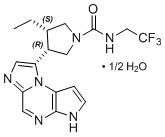
24 HR upadacitinib 45 MG Extended Release Oral Tablet — Janus-associated kinase (JAK) inhibitors. INDICATIONS AND USAGE RINVOQ/RINVOQ LQ is a Janus kinase (JAK) inhibitor. RINVOQ is indicated for the treatment of adults with moderately to…
Boxed warning
WARNING: SERIOUS INFECTIONS, MORTALITY, MALIGNANCY, MAJOR ADVERSE CARDIOVASCULAR EVENTS, and THROMBOSIS SERIOUS INFECTIONS Patients treated with RINVOQ /RINVOQ LQ are at increased risk for developing serious infections that may lead to hospitalization or death [see Warnings and Precautions ( 5.1 ), Adverse Reactions ( 6.1 )]. Most patients who developed these infections were taking concomitant immunosuppressants such as methotrexate or corticosteroids. If a serious infection develops, interrupt RINVOQ /RINVOQ LQ until the infection is controlled. Reported infections include: Active tuberculosis, which may present with pulmonary or extrapulmonary disease. Patients should be tested for latent tuberculosis before RINVOQ /RINVOQ LQ use and during therapy. Treatment for latent infection should be considered prior to RINVOQ /RINVOQ LQ use. Invasive fungal infections, including cryptococcosis and pneumocystosis. Bacterial, viral, including herpes zoster, and other infections due to opportunistic pathogens. The risks and benefits of treatment with RINVOQ /RINVOQ LQ should be carefully considered prior to initiating therapy in patients with chronic or recurrent infection. Patients should be closely monitored for the development of signs and symptoms of infection during and after treatment with RINVOQ /RINVOQ LQ , including the possible development of tuberculosis in patients who tested negative for latent tuberculosis infection prior to initiating therapy [see Warnings and Precautions ( 5.1 )]. MORTALITY In a large, randomized, postmarketing safety study in rheumatoid arthritis (RA) patients 50 years of age and older with at least one cardiovascular risk factor comparing another Janus kinase (JAK) inhibitor to tumor necrosis factor (TNF) blockers, a higher rate of all-cause mortality, including sudden cardiovascular death, was observed with the JAK inhibitor [see Warnings and Precautions ( 5.2 )] . MALIGNANCIES Lymphoma and other malignancies have been observed in patients treated with RINVOQ . In RA patients treated with another JAK inhibitor, a higher rate of malignancies (excluding non-melanoma skin cancer (NMSC)) was observed when compared with TNF blockers. Patients who are current or past smokers are at additional increased risk [see Warnings and Precautions ( 5.3 )] . MAJOR ADVERSE CARDIOVASCULAR EVENTS In RA patients 50 years of age and older with at least one cardiovascular risk factor treated with another JAK inhibitor, a higher rate of major adverse cardiovascular events (MACE) (defined as cardiovascular death, myocardial infarction, and stroke), was observed when compared with TNF blockers. Patients who are current or past smokers are at additional increased risk. Discontinue RINVOQ /RINVOQ LQ in patients that have experienced a myocardial infarction or stroke [see Warnings and Precautions ( 5.4 )] . THROMBOSIS Thrombos e s, including deep venous thrombosis, pulmonary embolism, and arterial thrombosis , have occurred in patients treated for inflammatory conditions with J AK inhibitors , including RINVOQ . Many of these adverse events were serious and some resulted in death. In RA patients 50 years of age and older with at least one cardiovascular risk factor treated with another JAK inhibitor, a higher rate of thrombosis was observed when compared with TNF blockers. Avoid RINVOQ /RINVOQ LQ in patients at risk. Patients with symptoms of thrombosis should discontinue RINVOQ /RINVOQ LQ and be promptly evaluated [see Warnings and Precautions ( 5.5 )]. WARNING: SERIOUS INFECTIONS, MORTALITY, MALIGNANCY, MAJOR ADVERSE CARDIOVASCULAR EVENTS (MACE), and THROMBOSIS See full prescribing information for complete boxed warning. Increased risk of serious bacterial, fungal, viral, and opportunistic infections leading to hospitalization or death, including tuberculosis (TB). Interrupt treatment with RINVOQ / RINVOQ LQ if serious infection occurs until the infection is controlled. Test for latent TB before and during therapy; treat latent TB prior to use. Monitor all patients for active TB during treatment, even patients with initial negative , latent TB test. ( 5.1 ) Higher rate of all-cause mortality, including sudden cardiovascular death with another Janus kinase (JAK) inhibitor vs. tumor necrosis factor (TNF) blockers in rheumatoid arthritis (RA) patients. ( 5.2 ) Malignancies have occurred in patients treated with RINVOQ. Higher rate of lymphomas and lung cancers with another JAK inhibitor vs. TNF blockers in RA patients. ( 5.3 ) Higher rate of MACE (defined as cardiovascular death, myocardial infarction, and stroke) with another JAK inhibitor vs. TNF blockers in RA patients. ( 5.4 ) Thrombosis has occurred in patients treated with RINVOQ. Increased incidence of pulmonary embolism, venous and arterial thrombosis with another JAK inhibitor vs. TNF blockers. ( 5.5 )
INDICATIONS AND USAGE RINVOQ/RINVOQ LQ is a Janus kinase (JAK) inhibitor. RINVOQ is indicated for the treatment of adults with moderately to severely active rheumatoid arthritis who have had an inadequate response or intolerance to one or more TNF blockers. ( 1.1 ) Limitations of Use RINVOQ is not recommended for use in combination with other JAK inhibitors, biologic DMARDs, or with potent immunosuppressants such as azathioprine and cyclosporine. ( 1.1 ) RINVOQ/RINVOQ LQ is indicated for the treatment of adults and pediatric patients 2 years of age and older with active psoriatic arthritis who have had an inadequate response or intolerance to one or more TNF blockers. ( 1.2 ) Limitation s of Use RINVOQ/RINVOQ LQ is not recommended for use in combination with other JAK inhibitors, biologic DMARDs, or with potent immunosuppressants such as azathioprine and cyclosporine. ( 1.2 ) RINVOQ is indicated for the treatment of adults and pediatric patients 12 years of age and older with refractory, moderate to severe atopic dermatitis whose disease is not adequately controlled with other systemic drug products, including biologics, or when use of those therapies are inadvisable. ( 1.3 ) Limitations of Use RINVOQ is not recommended for use in combination with other JAK inhibitors, biologic immunomodulators, or with other immunosuppressants. ( 1.3 ) RINVOQ is indicated for the treatment of adults with moderately to severely active ulcerative colitis (UC) who have had an inadequate response or intolerance to one or more TNF blockers. If TNF blockers are clinically inadvisable, patients should have received at least one approved systemic therapy prior to use of RINVOQ. ( 1.4 ) Limitations of Use RINVOQ is not recommended for use in combination with other JAK inhibitors, biological therapies for UC, or with potent immunosuppressants such as azathioprine and cyclosporine. ( 1.4 ) RINVOQ is indicated for the treatment of adults with moderately to severely active Crohn’s disease (CD) who have had an inadequate response or intolerance to one or more TNF blockers. If TNF blockers are clinically inadvisable, patients should have received at least one approved systemic therapy prior to use of RINVOQ. ( 1.5 ) Limitations of Use RINVOQ is not recommended for use in combination with other JAK inhibitors, biological therapies for CD, or with potent immunosuppressants such as azathioprine and cyclosporine. ( 1.5 ) RINVOQ is indicated for the treatment of adults with active ankylosing spondylitis who have had an inadequate response or intolerance to one or more TNF blockers. ( 1.6 ) Limitations of Use RINVOQ is not recommended for use in combination with other JAK inhibitors, biologic DMARDs, or with potent immunosuppressants such as azathioprine and cyclosporine. ( 1.6 ) RINVOQ is indicated for the treatment of adults with active non-radiographic axial spondyloarthritis with objective signs of inflammation who have had an inadequate response or intolerance to TNF blocker therapy. ( 1.7 ) Limitations of Use RINVOQ is not recommended for use in combination with other JAK inhibitors, biologic DMARDs, or with potent immunosuppressants such as azathioprine and cyclosporine. ( 1.7 ) RINVOQ/RINVOQ LQ is indicated for the treatment of patients 2 years of age and older with active polyarticular juvenile idiopathic arthritis who have had an inadequate response or intolerance to one or more TNF blockers. ( 1.8 ) Limitations of Use RINVOQ/RINVOQ LQ is not recommended for use in combination with other JAK inhibitors, biologic DMARDs, or with potent immunosuppressants such as azathioprine and cyclosporine. ( 1.8 ) RINVOQ is indicated for the treatment of adults with giant cell arteritis ( 1.9 ) Limitations of Use RINVOQ is not recommended for use in combination with other JAK inhibitors, biologic DMARDs, or with potent immunosuppressants such as azathioprine and cyclosporine. ( 1.9 ) 1.1 Rheumatoid Arthritis RINVOQ ® is indicated for the treatment of adults with moderately to severely active rheumatoid arthritis who have had an inadequate response or intolerance to one or more TNF blockers. Limitations of Use: RINVOQ is not recommended for use in combination with other JAK inhibitors, biologic disease-modifying antirheumatic drugs (DMARDs), or with potent immunosuppressants such as azathioprine and cyclosporine. 1.2 Psoriatic Arthritis RINVOQ/RINVOQ LQ is indicated for the treatment of adults and pediatric patients 2 years of age and older with active psoriatic arthritis who have had an inadequate response or intolerance to one or more TNF blockers. Limitations of Use: RINVOQ/RINVOQ LQ is not recommended for use in combination with other JAK inhibitors, biologic DMARDs, or with potent immunosuppressants such as azathioprine and cyclosporine. 1.3 Atopic Dermatitis RINVOQ is indicated for the treatment of adults and pediatric patients 12 years of age and older with refractory, moderate to severe atopic dermatitis whose disease is not adequately controlled with other systemic drug products, including biologics, or when use of those therapies are inadvisable. Limitations of Use: RINVOQ is not recommended for use in combination with other JAK inhibitors, biologic immunomodulators, or with other immunosuppressants. 1.4 Ulcerative Colitis RINVOQ is indicated for the treatment of adult patients with moderately to severely active ulcerative colitis (UC) who have had an inadequate response or intolerance to one or more TNF blockers. If TNF blockers are clinically inadvisable, patients should have received at least one approved systemic therapy prior to use of RINVOQ. Limitations of Use: RINVOQ is not recommended for use in combination with other JAK inhibitors, biological therapies for UC, or with potent immunosuppressants such as azathioprine and cyclosporine. 1.5 Crohn’s Disease RINVOQ is indicated for the treatment of adult patients with moderately to severely active Crohn’s disease (CD) who have had an inadequate response or intolerance to one or more TNF blockers. If TNF blockers are clinically inadvisable, patients should have received at least one approved systemic therapy prior to use of RINVOQ. Limitations of Use: RINVOQ is not recommended for use in combination with other JAK inhibitors, biological therapies for CD, or with potent immunosuppressants such as azathioprine and cyclosporine. 1. 6 Ankylosing Spondylitis RINVOQ is indicated for the treatment of adults with active ankylosing spondylitis who have had an inadequate response or intolerance to one or more TNF blockers. Limitations of Use: RINVOQ is not recommended for use in combination with other JAK inhibitors, biologic DMARDs, or with potent immunosuppressants such as azathioprine and cyclosporine. 1. 7 Non-radiographic Axial Spondyloarthritis RINVOQ is indicated for the treatment of adults with active non-radiographic axial spondyloarthritis with objective signs of inflammation who have had an inadequate response or intolerance to TNF blocker therapy. Limitations of Use: RINVOQ is not recommended for use in combination with other JAK inhibitors, biologic DMARDs, or with potent immunosuppressants such as azathioprine and cyclosporine. 1.8 Polyarticular Juvenile Idiopathic Arthritis RINVOQ/RINVOQ LQ is indicated for the treatment of patients 2 years of age and older with active polyarticular juvenile idiopathic arthritis (pJIA) who have had an inadequate response or intolerance to one or more TNF blockers. Limitations of Use: RINVOQ/RINVOQ LQ is not recommended for use in combination with other JAK inhibitors, biologic DMARDs, or with potent immunosuppressants such as azathioprine and cyclosporine. 1.9 Giant Cell Arteritis RINVOQ is indicated for the treatment of adults with giant cell arteritis. Limitations of Use: RINVOQ is not recommended for use in combination with other JAK inhibitors, biologic DMARDs, or with potent immunosuppressants such as azathioprine and cyclosporine.
Dosage
DOSAGE AND ADMINISTRATION RINVOQ LQ oral solution is not substitutable with RINVOQ extended-release tablets ( 2.2 , 2.10 ). Changes between RINVOQ LQ oral solution and RINVOQ extended-release tablets should be made by the healthcare provider. Prior to treatment update immunizations and consider evaluating for active and latent tuberculosis, viral hepatitis, hepatic function, and pregnancy status ( 2.1 ) Avoid initiation or interrupt RINVOQ/RINVOQ LQ if absolute lymphocyte count is less than 500 cells/mm 3 , absolute neutrophil count is less than 1000 cells/mm 3 , or hemoglobin level is less than 8 g/dL. ( 2.1 , 2.14 ) Rheumatoid Arthritis , Ankylosing Spondylitis, and Non-radiographic Axial Spondyloarthritis Adults: The recommended dosage of RINVOQ is 15 mg once daily. ( 2.3 , 2.8 , 2.9 ) Psoriatic Arthritis Pediatric Patients 2 to less than 18 Years of Age Weighing at Least 10 kg: The recommended dosage is based on body weight ( 2.4 ) Adults: The recommended dosage of RINVOQ is 15 mg once daily. ( 2.4 ) Atopic Dermatitis Pediatric Patients 12 Years of Age and Older Weighing at Least 40 kg and Adults Less Than 65 Years of Age : Initiate treatment with RINVOQ 15 mg orally once daily. If an adequate response is not achieved, consider increasing the dosage to 30 mg orally once daily. ( 2.5 ) Adults 65 Years of Age and Older : Recommended dosage of RINVOQ is 15 mg once daily. ( 2.5 ) Severe Renal Impairment : Recommended dosage of RINVOQ is 15 mg once daily. ( 2.12 ) Ulcerative Colitis Adults: The recommended induction dosage of RINVOQ is 45 mg once daily for 8 weeks. The recommended maintenance dosage of RINVOQ is 15 mg once daily. A maintenance dosage of 30 mg once daily may be considered for patients with refractory, severe, or extensive disease. Discontinue RINVOQ if adequate therapeutic response is not achieved with the 30 mg dosage. Use the lowest effective dosage needed to maintain response. ( 2.6 ) See the Full Prescribing Information for the recommended dosage in patients with renal or hepatic impairment and for dosage modification due to drug interactions. ( 2.12 , 2.13 ) Crohn’s D isease Adults: The recommended induction dosage of RINVOQ is 45 mg once daily for 12 weeks. The recommended maintenance dosage of RINVOQ is 15 mg once daily. A maintenance dosage of 30 mg once daily may be considered for patients with refractory, severe, or extensive disease. Discontinue RINVOQ if an adequate therapeutic response is not achieved with the 30 mg dosage. Use the lowest effective dosage needed to maintain response. ( 2.7 ) See the Full Prescribing Information for the recommended dosage in patients with renal or hepatic impairment and for dosage modification due to drug interactions. ( 2.12 , 2.13 ) Polyarticular Juvenile Idiopathic Arthritis The recommended dosage is based on body weight ( 2.10 ) Giant Cell Arteritis The recommended dosage of RINVOQ is 15 mg once daily in combination with a tapering course of corticosteroids. RINVOQ 15 mg once daily can be used as monotherapy following discontinuation of corticosteroids ( 2.11 ) 2.1 Recommended Evaluations and Immunizations Prior to Treatment Initiation Prior to RINVOQ/RINVOQ LQ treatment initiation, consider performing the following evaluations: Active and latent tuberculosis (TB) infection evaluation - If positive, treat for TB prior to RINVOQ/RINVOQ LQ use [see Warnings and Precautions ( 5.1 )] . Viral hepatitis screening in accordance with clinical guidelines – RINVOQ/RINVOQ LQ initiation is not recommended in patients with active hepatitis B or hepatitis C [see Warnings and Precautions ( 5.1 )] . A complete blood count – RINVOQ/RINVOQ LQ initiation is not recommended in patients with an absolute lymphocyte count less than 500 cells/mm 3 , absolute neutrophil count less than 1000 cells/mm 3 , or hemoglobin level less than 8 g/dL [see Dosage and Administration ( 2.14 ) and Warnings and Precautions ( 5.8 )] . Baseline hepatic function: RINVOQ/RINVOQ LQ initiation is not recommended for patients with severe hepatic impairment (Child-Pugh C) [see Use in Specific Populations ( 8.7 ) and Clinical Pharmacology ( 12.3 )]. Pregnancy Status: Verify the pregnancy status of females of reproductive potential prior to starting treatment [see Warnings and Precautions ( 5.9 ) and Use in Specific Populations ( 8.1 , 8.3 )]. Update immunizations according to current immunization guidelines [see Warnings and Precautions ( 5.10 )]. 2.2 Important Administration Instructions RINVOQ LQ oral solution is not substitutable with RINVOQ extended-release tablets [see Dosage and Administration ( 2.4 , 2.10 )]. Changes between RINVOQ LQ oral solution and RINVOQ extended-release tablets should be made by the health care provider. RINVOQ/RINVOQ LQ should be taken orally with or without food [see Clinical Pharmacology ( 12.3 )]. RINVOQ tablets should be swallowed whole. RINVOQ tablets should not be split, crushed, or chewed. RINVOQ LQ should be administered using the provided press-in bottle adapter and oral dosing syringe [see Instructions for Use ] . RINVOQ LQ is dosed twice daily [see Dosage and Administration ( 2.4 , 2.10 )]. 2.3 Recommended Dosage in Rheumatoid Arthritis The recommended dosage of RINVOQ is 15 mg once daily. 2. 4 Recommended Dosage in Psoriatic Arthritis Pediatric Patients 2 to Less Than 18 Years of Age The recommended dosage is based on body weight ( Table 1 ). Table 1: RINVOQ/RINVOQ LQ Dosage for Pediatric Patients 2 Years to Less Than 18 Years of Age with Psoriatic Arthritis Patient Weight RINVOQ LQ RINVOQ 10 kg to less than 20 kg 3 mg (3 mL oral solution) twice daily Not recommended 20 kg to less than 30 kg 4 mg (4 mL oral solution) twice daily Not recommended 30 kg and greater 6 mg (6 mL oral solution) twice daily 15 mg (one 15 mg tablet) once daily RINVOQ LQ oral solution is not substitutable with RINVOQ extended-release tablets. Changes between RINVOQ LQ oral solution and RINVOQ extended-release tablets should be made by the health care provider. Adults 18 Years of Age and Older The recommended dosage of RINVOQ is 15 mg once daily. 2.5 Recommended Dosage in Atopic Dermatitis Pediatric Patients 12 Years of Age and Older Weighing at Least 40 kg and Adults Less Than 65 Years of Age Initiate treatment with RINVOQ 15 mg once daily. If an adequate response is not achieved, consider increasing the dosage to 30 mg once daily. Discontinue RINVOQ if an adequate response is not achieved with the 30 mg dose. Use the lowest effective dose needed to maintain response. Adults 65 Years of Age and Older The recommended dosage of RINVOQ is 15 mg once daily. 2.6 Recommended Dosage in Ulcerative Colitis Adult Patients: Induction The recommended induction dosage of RINVOQ is 45 mg once daily for 8 weeks. Adult Patients: Maintenance The recommended dosage of RINVOQ for maintenance treatment is 15 mg once daily. A dosage of 30 mg once daily may be considered for patients with refractory, severe or extensive disease. Discontinue RINVOQ if an adequate therapeutic response is not achieved with the 30 mg dosage. Use the lowest effective dosage needed to maintain response. 2.7 Recommended Dosage in Crohn’s Disease Adult Patients: Induction The recommended induction dosage of RINVOQ is 45 mg once daily for 12 weeks. Adult Patients: Maintenance The recommended dosage of RINVOQ for maintenance treatment is 15 mg once daily. A dosage of 30 mg once daily may be considered for patients with refractory, severe or extensive disease. Discontinue RINVOQ if an adequate therapeutic response is not achieved with the 30 mg dosage. Use the lowest effective dosage needed to maintain response. 2. 8 Recommended Dosage in Ankylosing Spondylitis The recommended dosage of RINVOQ is 15 mg once daily. 2. 9 Recommend ed Dosage in Non-radiographic Axial Spondyloarthritis The recommended dosage of RINVOQ is 15 mg once daily. 2. 10 Recommended Dosage in Polyarticular Juvenile Idiopathic Arthritis The recommended dosage is based on body weight (Table 2). Tabl
Warnings
WARNINGS AND PRECAUTIONS Serious Infections : Avoid use in patients with active, serious infection, including localized infections. ( 5.1 ) Hypersensitivity : Serious hypersensitivity reactions (e.g., anaphylaxis) have been reported. Discontinue if a serious hypersensitivity reaction occurs. ( 5.6 ) Gastrointestinal (GI) Perforations : Monitor patients at risk for GI perforations and promptly evaluate patients with symptoms. ( 5.7 ) Laboratory Abnormalities : Monitoring recommended due to potential changes in lymphocytes, neutrophils, hemoglobin, liver enzymes and lipids. ( 5.8 ) Embryo-Fetal Toxicity : May cause fetal harm based on animal studies. Advise female patients of reproductive potential of the potential risk to a fetus and to use effective contraception. ( 5.9 , 8.1 , 8.3 ) Vaccinations : Avoid use with live vaccines. ( 5.10 ) Medication Residue in Stool : Observed in stool or ostomy output in patients with shortened GI transit times. Monitor patients clinically and consider alternative treatment if inadequate therapeutic response. ( 5.11 ) 5.1 Serious Infections Serious and sometimes fatal infections have been reported in patients receiving RINVOQ. The most frequent serious infections reported with RINVOQ included pneumonia and cellulitis [see Adverse Reactions ( 6.1 )] . Among opportunistic infections, tuberculosis, multidermatomal herpes zoster, oral/esophageal candidiasis, and cryptococcosis, were reported with RINVOQ. A higher rate of serious infections was observed with RINVOQ 30 mg compared to RINVOQ 15 mg. Avoid use of RINVOQ/RINVOQ LQ in patients with an active, serious infection, including localized infections. Consider the risks and benefits of treatment prior to initiating RINVOQ/RINVOQ LQ in patients: with chronic or recurrent infection who have been exposed to tuberculosis with a history of a serious or an opportunistic infection who have resided or traveled in areas of endemic tuberculosis or endemic mycoses; or with underlying conditions that may predispose them to infection. Closely monitor patients for the development of signs and symptoms of infection during and after treatment with RINVOQ/RINVOQ LQ. Interrupt RINVOQ/RINVOQ LQ if a patient develops a serious or opportunistic infection. A patient who develops a new infection during treatment with RINVOQ/RINVOQ LQ should undergo prompt and complete diagnostic testing appropriate for an immunocompromised patient; appropriate antimicrobial therapy should be initiated, the patient should be closely monitored, and RINVOQ/RINVOQ LQ should be interrupted if the patient is not responding to antimicrobial therapy. RINVOQ/RINVOQ LQ may be resumed once the infection is controlled. Tuberculosis Evaluate and test patients for latent and active tuberculosis (TB) infection prior to administration of RINVOQ/RINVOQ LQ. Patients with latent TB should be treated with standard antimycobacterial therapy before initiating RINVOQ/RINVOQ LQ. RINVOQ/RINVOQ LQ should not be given to patients with active TB. Consider anti-TB therapy prior to initiation of RINVOQ/RINVOQ LQ in patients with previously untreated latent TB or active TB in whom an adequate course of treatment cannot be confirmed, and for patients with a negative test for latent TB but who have risk factors for TB infection. Consultation with a physician with expertise in the treatment of TB is recommended to aid in the decision about whether initiating anti-TB therapy is appropriate for an individual patient. During RINVOQ/RINVOQ LQ use, monitor patients for the development of signs and symptoms of TB, including patients who tested negative for latent TB infection prior to initiating therapy. Viral R eactivation Viral reactivation, including cases of herpes virus reactivation (e.g., herpes zoster) and hepatitis B virus reactivation, were reported in clinical trials with RINVOQ [see Adverse Reactions ( 6.1 )] . The risk of herpes zoster appears to be higher in patients treated with RINVOQ in Japan. If a patient develops herpes zoster, consider temporarily interrupting RINVOQ/RINVOQ LQ until the episode resolves. Screening for viral hepatitis and monitoring for reactivation should be performed in accordance with clinical guidelines before starting and during therapy with RINVOQ/RINVOQ LQ. Patients who were positive for hepatitis C antibody and hepatitis C virus RNA, were excluded from clinical trials. Patients who were positive for hepatitis B surface antigen or hepatitis B virus DNA were excluded from clinical trials. However, cases of hepatitis B reactivation were still reported in patients enrolled in the Phase 3 trials of RINVOQ. If hepatitis B virus DNA is detected while receiving RINVOQ/RINVOQ LQ, a liver specialist should be consulted. 5.2 Mortality In a large, randomized, postmarketing safety study of another JAK inhibitor in RA patients 50 years of age and older with at least one cardiovascular risk factor, a higher rate of all-cause mortality, including sudden cardiovascular death, was observed in patients treated with the JAK inhibitor compared with TNF blockers. Consider the benefits and risks for the individual patient prior to initiating or continuing therapy with RINVOQ/RINVOQ LQ. 5. 3 Malignancy and Lymphoproliferative Disorders Malignancies, including lymphomas, were observed in clinical trials of RINVOQ [see Adverse Reactions ( 6.1 )] . In a large, randomized, postmarketing safety study of another JAK inhibitor in RA patients, a higher rate of malignancies (excluding NMSC) was observed in patients treated with the JAK inhibitor compared to those treated with TNF blockers. A higher rate of lymphomas was observed in patients treated with the JAK inhibitor compared to those treated with TNF blockers. A higher rate of lung cancers was observed in current or past smokers treated with the JAK inhibitor compared to those treated with TNF blockers. In this study, current or past smokers had an additional increased risk of overall malignancies. Consider the benefits and risks for the individual patient prior to initiating or continuing therapy with RINVOQ/RINVOQ LQ, particularly in patients with a known malignancy (other than a successfully treated NMSC), patients who develop a malignancy when on treatment, and patients who are current or past smokers. Non-Melanoma Skin Cancer NMSCs have been reported in patients treated with RINVOQ. Periodic skin examination is recommended for patients who are at increased risk for skin cancer. Exposure to sunlight and UV light should be limited by wearing protective clothing and using a broad-spectrum sunscreen. 5.4 Major Adverse Cardiovascular Events In a large, randomized, postmarketing safety study of another JAK inhibitor in RA patients 50 years of age and older with at least one cardiovascular risk factor, a higher rate of major adverse cardiovascular events (MACE) defined as cardiovascular death, non-fatal myocardial infarction (MI), and non-fatal stroke was observed with the JAK inhibitor compared to those treated with TNF blockers. Patients who are current or past smokers are at additional increased risk. Consider the benefits and risks for the individual patient prior to initiating or continuing therapy with RINVOQ/RINVOQ LQ, particularly in patients who are current or past smokers and patients with other cardiovascular risk factors. Patients should be informed about the symptoms of serious cardiovascular events and the steps to take if they occur. Discontinue RINVOQ/RINVOQ LQ in patients that have experienced a myocardial infarction or stroke. 5. 5 Thrombosis Thromboses, including deep venous thrombosis (DVT), pulmonary embolism (PE), and arterial thrombosis, have occurred in patients treated for inflammatory conditions with JAK inhibitors, including RINVOQ. Many of these adverse events were serious and some resulted in death [see Adverse Reactions ( 6.1 )] . In a large, randomized, postmarketing safety study of another JAK inhibitor in RA patients 50 years of age and older with at l
Contraindications
CONTRAINDICATIONS RINVOQ/RINVOQ LQ is contraindicated in patients with known hypersensitivity to upadacitinib or any of its excipients [see Warnings and Precautions ( 5.6 )] . Known hypersensitivity to upadacitinib or any of the excipients in RINVOQ/RINVOQ LQ. ( 4 , 5.6 )
Mechanism of action
Mechanism of Action Upadacitinib is a Janus kinase (JAK) inhibitor. JAKs are intracellular enzymes which transmit signals arising from cytokine or growth factor-receptor interactions on the cellular membrane to influence cellular processes of hematopoiesis and immune cell function. Within the signaling pathway, JAKs phosphorylate and activate signal transducers and activators of transcription (STATs) which modulate intracellular activity including gene expression. Upadacitinib modulates the signaling pathway at the point of JAKs, preventing the phosphorylation and activation of STATs. JAK enzymes transmit cytokine signaling through their pairing (e.g., JAK1/JAK2, JAK1/JAK3, JAK1/TYK2, JAK2/JAK2, JAK2/TYK2). In a cell-free isolated enzyme assay, upadacitinib had greater inhibitory potency at JAK1 and JAK2 relative to JAK3 and TYK2. In human leukocyte cellular assays, upadacitinib inhibited cytokine-induced STAT phosphorylation mediated by JAK1 and JAK1/JAK3 more potently than JAK2/JAK2 mediated STAT phosphorylation. The relevance of inhibition of specific JAK enzymes to therapeutic effectiveness is not currently known.
A drug lookup is just the start. Eleplan keeps the whole care plan in one place.
Medications, diagnoses, documents, appointments, and the whole care team — organized and always in sync, with Ellie, your AI care assistant, on top of it. Free to start.