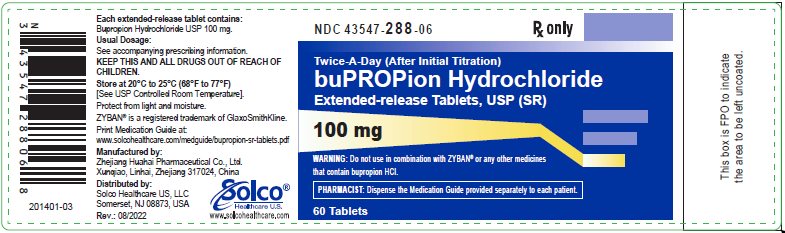
24 HR bupropion hydrobromide 174 MG Extended Release Oral Tablet — Centrally acting antiobesity products. INDICATIONS AND USAGE Bupropion hydrochloride extended-release tablets, USP (XL) are an aminoketone antidepressant, indicated for the treatment of…
Boxed warning
WARNING: SUICIDAL THOUGHTS AND BEHAVIORS; AND NEUROPSYCHIATRIC REACTIONS SUICIDALITY AND ANTIDEPRESSANT DRUGS Antidepressants increased the risk of suicidal thoughts and behavior in children, adolescents, and young adults in short-term trials. These trials did not show an increase in the risk of suicidal thoughts and behavior with antidepressant use in subjects over age 24; there was a reduction in risk with antidepressant use in subjects aged 65 and older [see Warnings and Precautions ( 5.1 )] . In patients of all ages who are started on antidepressant therapy, monitor closely for worsening, and for emergence of suicidal thoughts and behaviors. Advise families and caregivers of the need for close observation and communication with the prescriber [see Warnings and Precautions ( 5.1 )] . NEUROPSYCHIATRIC REACTIONS IN PATIENTS TAKING BUPROPION FOR SMOKING CESSATION Serious neuropsychiatric reactions have occurred in patients taking bupropion for smoking cessation [see Warnings and Precautions ( 5.2 )]. The majority of these reactions occurred during bupropion treatment, but some occurred in the context of discontinuing treatment. In many cases, a causal relationship to bupropion treatment is not certain, because depressed mood may be a symptom of nicotine withdrawal. However, some of the cases occurred in patients taking bupropion who continued to smoke. Although bupropion hydrochloride extended-release tablets (SR) are not approved for smoking cessation, observe all patients for neuropsychiatric reactions. Instruct the patient to contact a healthcare provider if such reactions occur [ see Warnings and Precautions ( 5.2 )] . WARNING: SUICIDAL THOUGHTS AND BEHAVIORS; AND NEUROPSYCHIATRIC REACTIONS See full prescribing information for complete boxed warning. • Increased risk of suicidal thinking and behavior in children, adolescents and young adults taking antidepressants. ( 5.1 ) • Monitor for worsening and emergence of suicidal thoughts and behaviors. ( 5.1 ) • Serious neuropsychiatric events have been reported in patients taking bupropion for smoking cessation. ( 5.2 )
Bupropion has several drug interactions that may require dose adjustments or caution when coadministered with certain medications.
moderateCYP2B6 inducers (e.g., ritonavir, lopinavir, efavirenz, carbamazepine, phenobarbital, phenytoin) — Dose increase may be necessary if coadministered.
moderateCYP2D6 substrates (e.g., venlafaxine, nortriptyline, imipramine, desipramine, paroxetine, fluoxetine, sertraline, haloperidol, risperidone, thioridazine, metoprolol, propafenone, flecainide) — Can increase concentrations of these drugs.
majordrugs that lower seizure threshold (e.g., other bupropion products, antipsychotics, antidepressants, theophylline, systemic corticosteroids) — Use with caution due to increased seizure risk.
majordopaminergic drugs (levodopa, amantadine) — CNS toxicity can occur.
majorMAOIs (e.g., phenelzine) — Increased risk of hypertensive reactions.
moderatealcohol — Rare reports of adverse neuropsychiatric events or reduced alcohol tolerance.
Indications
INDICATIONS AND USAGE Bupropion hydrochloride extended-release tablets, USP (XL) are an aminoketone antidepressant, indicated for the treatment of major depressive disorder (MDD) and prevention of seasonal affective disorder (SAD). Periodically reevaluate long-term usefulness for the individual patient. ( 1 ) 1.1 Major Depressive Disorder Bupropion hydrochloride extended-release tablets, USP (XL) are indicated for the treatment of major depressive disorder (MDD), as defined by the Diagnostic and Statistical Manual (DSM). The efficacy of the immediate-release formulation of bupropion was established in two 4-week controlled inpatient trials and one 6-week controlled outpatient trial of adult patients with MDD. The efficacy of the sustained-release formulation of bupropion in the maintenance treatment of MDD was established in a long-term (up to 44 weeks), placebo-controlled trial in patients who had responded to bupropion in an 8-week study of acute treatment [see Clinical Studies ( 14.1 )]. 1.2 Seasonal Affective Disorder Bupropion hydrochloride extended-release tablets, USP (XL) are indicated for the prevention of seasonal major depressive episodes in patients with a diagnosis of seasonal affective disorder (SAD). The efficacy of bupropion hydrochloride extended-release tablets (XL) in the prevention of seasonal major depressive episodes was established in 3 placebo-controlled trials in adult outpatients with a history of MDD with an autumn-winter seasonal pattern as defined in the DSM [see Clinical Studies ( 14.2 )].
Dosage
DOSAGE AND ADMINISTRATION Starting dose: 150 mg per day for first 3 days. ( 2.1 ) General: Increase dose gradually to reduce seizure risk. ( 2.1 , 5.3 ) Begin dosing one week before quit day. ( 2.1 ) After 3 days, increase the dose to 300 mg per day, given as 150 mg twice daily at an interval of at least 8 hours. ( 2.1 ) May be used with a nicotine transdermal system. ( 2.5 ) Moderate to severe hepatic impairment: 150 mg every other day. ( 2.6 , 8.7 ) Mild hepatic impairment: Consider reducing the dose and/or frequency of dosing. ( 2.6 , 8.7 ) Renal impairment: Consider reducing the dose and/or frequency. ( 2.7 , 8.6 ) 2.1 Usual Dosage Treatment with bupropion hydrochloride extended-release tablets (SR) should be initiated before the patient’s planned quit day, while the patient is still smoking, because it takes approximately 1 week of treatment to achieve steady-state blood levels of bupropion. The patient should set a “target quit date” within the first 2 weeks of treatment with bupropion hydrochloride extended-release tablets (SR). Dosing To minimize the risk of seizure: Begin dosing with one 150-mg tablet per day for 3 days. Increase dose to 300 mg per day given as one 150-mg tablet twice each day with an interval of at least 8 hours between each dose. Do not exceed 300 mg per day. Bupropion hydrochloride extended-release tablets (SR) should be swallowed whole and not crushed, divided, or chewed, as this may lead to an increased risk of adverse effects including seizures [see Warnings and Precautions ( 5.3 )] . Bupropion hydrochloride extended-release tablets (SR) may be taken with or without food [see Clinical Pharmacology ( 12.3 )] . 2.2 Duration of Treatment Treatment with bupropion hydrochloride extended-release tablets (SR) should be continued for 7 to 12 weeks. If the patient has not quit smoking after 7 to 12 weeks, it is unlikely that he or she will quit during that attempt so treatment with bupropion hydrochloride extended-release tablets (SR) should probably be discontinued and the treatment plan reassessed. The goal of therapy with bupropion hydrochloride extended-release tablets (SR) is complete abstinence. Discuss discontinuing treatment with bupropion hydrochloride extended-release tablets (SR) after 12 weeks if the patient feels ready but consider whether the patient may benefit from ongoing treatment. Patients who successfully quit after 12 weeks of treatment but do not feel ready to discontinue treatment should be considered for ongoing therapy with bupropion hydrochloride extended-release tablets (SR); longer treatment should be guided by the relative benefits and risks for individual patients. It is important that patients continue to receive counseling and support throughout treatment with bupropion hydrochloride extended-release tablets (SR) and for a period of time thereafter. 2.3 Individualization of Therapy Patients are more likely to quit smoking and remain abstinent if they are seen frequently and receive support from their physicians or other healthcare professionals. It is important to ensure that patients read the instructions provided to them and have their questions answered. Physicians should review the patient’s overall smoking cessation program that includes treatment with bupropion hydrochloride extended-release tablets (SR). Patients should be advised of the importance of participating in the behavioral interventions, counseling, and/or support services to be used in conjunction with bupropion hydrochloride extended-release tablets (SR) [see Medication Guide ] . Patients who fail to quit smoking during an attempt may benefit from interventions to improve their chances for success on subsequent attempts. Patients who are unsuccessful should be evaluated to determine why they failed. A new quit attempt should be encouraged when factors that contributed to failure can be eliminated or reduced, and conditions are more favorable. 2.4 Maintenance Tobacco dependence is a chronic condition. Some patients may need on-going treatment. Whether to continue treatment with bupropion hydrochloride extended-release tablets (SR) for periods longer than 12 weeks for smoking cessation must be determined for individual patients. 2.5 Combination Treatment with Bupropion Hydrochloride Extended-Release Tablets (SR) and a Nicotine Transdermal System (NTS) Combination treatment with bupropion hydrochloride extended-release tablets (SR) and NTS may be prescribed for smoking cessation. The prescriber should review the complete prescribing information for both bupropion hydrochloride extended-release tablets (SR) and NTS before using combination treatment [see Clinical Studies ( 14 )]. Monitoring for treatment-emergent hypertension in patients treated with the combination of bupropion hydrochloride extended-release tablets (SR) and NTS is recommended. 2.6 Dose Adjustment in Patients with Hepatic Impairment In patients with moderate to severe hepatic impairment (Child-Pugh score: 7 to 15), the maximum dose should not exceed 150 mg every other day. In patients with mild hepatic impairment (Child-Pugh score: 5 to 6), consider reducing the dose and/or frequency of dosing [see Use in Specific Populations ( 8.7 ), Clinical Pharmacology ( 12.3 )] . 2.7 Dose Adjustment in Patients with Renal Impairment Consider reducing the dose and/or frequency of bupropion hydrochloride extended-release tablets (SR) in patients with renal impairment (Glomerular Filtration Rate less than 90 mL per min) [see Use in Specific Populations ( 8.6 ), Clinical Pharmacology ( 12.3 )] . 2.8 Use of Bupropion Hydrochloride Extended-Release Tablets (SR) with Reversible MAOIs Such as Linezolid or Methylene Blue Do not start bupropion hydrochloride extended-release tablets (SR) in a patient who is being treated with a reversible MAOI such as linezolid or intravenous methylene blue. Drug interactions can increase the risk of hypertensive reactions [see Contraindications ( 4 ), Drug Interactions ( 7.6 )] . In some cases, a patient already receiving therapy with bupropion hydrochloride extended-release tablets (SR) may require urgent treatment with linezolid or intravenous methylene blue. If acceptable alternatives to linezolid or intravenous methylene blue treatment are not available and the potential benefits of linezolid or intravenous methylene blue treatment are judged to outweigh the risks of hypertensive reactions in a particular patient, bupropion hydrochloride extended-release tablets (SR) should be stopped promptly, and linezolid or intravenous methylene blue can be administered. The patient should be monitored for 2 weeks or until 24 hours after the last dose of linezolid or intravenous methylene blue, whichever comes first. Therapy with bupropion hydrochloride extended-release tablets (SR) may be resumed 24 hours after the last dose of linezolid or intravenous methylene blue. The risk of administering methylene blue by non-intravenous routes (such as oral tablets or by local injection) or in intravenous doses much lower than 1 mg per kg with bupropion hydrochloride extended-release tablets (SR) is unclear. The clinician should, nevertheless, be aware of the possibility of a drug interaction with such use [see Contraindications ( 4 ), Drug Interactions ( 7.6 )] .
Warnings
WARNINGS AND PRECAUTIONS Neuropsychiatric Adverse Events During Smoking Cessation: Postmarketing reports of serious or clinically significant neuropsychiatric adverse events have included changes in mood (including depression and mania), psychosis, hallucinations, paranoia, delusions, homicidal ideation, aggression, hostility, agitation, anxiety, and panic, as well as suicidal ideation, suicide attempt, and completed suicide. Observe patients attempting to quit smoking with bupropion hydrochloride extended-release tablets (XL) for the occurrence of such symptoms and instruct them to discontinue bupropion hydrochloride extended-release (XL) tablets and contact a healthcare provider if they experience such adverse events. ( 5.2 ) Seizure Risk: The risk is dose-related. Can minimize risk by limiting daily dose to 450 mg and gradually increasing the dose. Discontinue if seizure occurs. ( 4 , 5.3 , 7.3 ) Hypertension: Bupropion hydrochloride extended-release tablets (XL) can increase blood pressure. Monitor blood pressure before initiating treatment and periodically during treatment. ( 5.4 ) Activation of Mania/Hypomania: Screen patients for bipolar disorder and monitor for these symptoms. ( 5.5 ) Psychosis and Other Neuropsychiatric Reactions: Instruct patients to contact a healthcare professional if such reactions occur. ( 5.6 ) Angle-Closure Glaucoma: Angle-closure glaucoma has occurred in patients with untreated anatomically narrow angles treated with antidepressants. ( 5.7 ) 5.1 Suicidal Thoughts and Behaviors in Children, Adolescents, and Young Adults Patients with major depressive disorder (MDD), both adult and pediatric, may experience worsening of their depression and/or the emergence of suicidal ideation and behavior (suicidality) or unusual changes in behavior, whether or not they are taking antidepressant medications, and this risk may persist until significant remission occurs. Suicide is a known risk of depression and certain other psychiatric disorders, and these disorders themselves are the strongest predictors of suicide. There has been a long-standing concern that antidepressants may have a role in inducing worsening of depression and the emergence of suicidality in certain patients during the early phases of treatment. Pooled analyses of short-term placebo-controlled trials of antidepressant drugs (Selective Serotonin Reuptake Inhibitors [SSRIs] and others) show that these drugs increase the risk of suicidal thinking and behavior (suicidality) in children, adolescents, and young adults (ages 18 to 24) with major depressive disorder (MDD) and other psychiatric disorders. Short-term studies did not show an increase in the risk of suicidality with antidepressants compared to placebo in adults beyond age 24; there was a reduction with antidepressants compared to placebo in adults aged 65 and older. The pooled analyses of placebo-controlled trials in children and adolescents with MDD, obsessive compulsive disorder (OCD), or other psychiatric disorders included a total of 24 short-term trials of 9 antidepressant drugs in over 4400 patients. The pooled analyses of placebo-controlled trials in adults with MDD or other psychiatric disorders included a total of 295 short-term trials (median duration of 2 months) of 11 antidepressant drugs in over 77,000 patients. There was considerable variation in risk of suicidality among drugs, but a tendency toward an increase in the younger patients for almost all drugs studied. There were differences in absolute risk of suicidality across the different indications, with the highest incidence in MDD. The risk differences (drug vs. placebo), however, were relatively stable within age strata and across indications. These risk differences (drug-placebo difference in the number of cases of suicidality per 1000 patients treated) are provided in Table 1. Table 1: Risk Differences in the Number of Suicidality Cases by Age Group in the Pooled Placebo-Controlled Trials of Antidepressants in Pediatric and Adult Patients Age Range Drug-Placebo Difference in Number of Cases of Suicidality per 1000 Patients Treated Increases Compared to Placebo <18 years 14 additional cases 18-24 years 5 additional cases Decreases Compared to Placebo 25-64 years 1 fewer case ≥65 years 6 fewer cases No suicides occurred in any of the pediatric trials. There were suicides in the adult trials, but the number was not sufficient to reach any conclusion about drug effect on suicide. It is unknown whether the suicidality risk extends to longer-term use, i.e., beyond several months. However, there is substantial evidence from placebo-controlled maintenance trials in adults with depression that the use of antidepressants can delay the recurrence of depression. All patients being treated with antidepressants for any indication should be monitored appropriately and observed closely for clinical worsening, suicidality, and unusual changes in behavior, especially during the initial few months of a course of drug therapy, or at times of dose changes, either increases or decreases [see Boxed Warning and Use in Specific Populations (8.4) ]. The following symptoms, anxiety, agitation, panic attacks, insomnia, irritability, hostility, aggressiveness, impulsivity, akathisia (psychomotor restlessness), hypomania, and mania, have been reported in adult and pediatric patients being treated with antidepressants for major depressive disorder as well as for other indications, both psychiatric and nonpsychiatric. Although a causal link between the emergence of such symptoms and either the worsening of depression and/or the emergence of suicidal impulses has not been established, there is concern that such symptoms may represent precursors to emerging suicidality. Consideration should be given to changing the therapeutic regimen, including possibly discontinuing the medication, in patients whose depression is persistently worse, or who are experiencing emergent suicidality or symptoms that might be precursors to worsening depression or suicidality, especially if these symptoms are severe, abrupt in onset, or were not part of the patient’s presenting symptoms. Families and caregivers of patients being treated with antidepressants for major depressive disorder or other indications, both psychiatric and nonpsychiatric, should be alerted about the need to monitor patients for the emergence of agitation, irritability, unusual changes in behavior, and the other symptoms described above, as well as the emergence of suicidality, and to report such symptoms immediately to healthcare providers. Such monitoring should include daily observation by families and caregivers. Prescriptions for bupropion hydrochloride extended-release tablets (XL) should be written for the smallest quantity of tablets consistent with good patient management, in order to reduce the risk of overdose. 5.2 Neuropsychiatric Adverse Events and Suicide Risk in Smoking Cessation Treatment Bupropion hydrochloride extended-release tablets (XL) are not approved for smoking cessation treatment; however, bupropion HCl sustained-release is approved for this use. Serious neuropsychiatric adverse events have been reported in patients taking bupropion for smoking cessation. These postmarketing reports have included changes in mood (including depression and mania), psychosis, hallucinations, paranoia, delusions, homicidal ideation, aggression, hostility, agitation, anxiety, and panic, as well as suicidal ideation, suicide attempt, and completed suicide [see Adverse Reactions (6.2) ]. Some patients who stopped smoking may have been experiencing symptoms of nicotine withdrawal, including depressed mood. Depression, rarely including suicidal ideation, has been reported in smokers undergoing a smoking cessation attempt without medication. However, some of these adverse events occurred in patients taking bupropion who continued to smoke. Neuropsychiatric adverse events occurred in patients without and with pre-existin
Contraindications
CONTRAINDICATIONS • Bupropion hydrochloride extended-release tablets (XL) are contraindicated in patients with a seizure disorder [see Warnings and Precautions ( 5.3 )] . • Bupropion hydrochloride extended-release tablets (XL) are contraindicated in patients treated currently with other bupropion products because the incidence of seizure is dose dependent [see Warnings and Precautions ( 5.3 )] . • Bupropion hydrochloride extended-release tablets (XL) are contraindicated in patients with a current or prior diagnosis of bulimia or anorexia nervosa because a higher incidence of seizures was observed in such patients treated with bupropion [see Warnings and Precautions ( 5.3 )] . • Bupropion hydrochloride extended-release tablets (XL) are contraindicated in patients undergoing abrupt discontinuation of alcohol, benzodiazepines, barbiturates, and antiepileptic drugs [see Warnings and Precautions ( 5.3 ) and Drug Interactions ( 7.3 )] . • The use of MAOIs (intended to treat psychiatric disorders) concomitantly with bupropion hydrochloride extended-release tablets (XL) or within 14 days of discontinuing treatment with bupropion hydrochloride extended-release tablets (XL) is contraindicated. There is an increased risk of hypertensive reactions when bupropion hydrochloride extended-release tablets (XL) are used concomitantly with MAOIs. The use of bupropion hydrochloride extended-release tablets (XL) within 14 days of discontinuing treatment with an MAOI is also contraindicated. Starting bupropion hydrochloride extended-release tablets (XL) in a patient treated with reversible MAOIs such as linezolid or intravenous methylene blue is contraindicated [see Dosage and Administration ( 2.8 ), Warnings and Precautions ( 5.4 ), and Drug Interactions ( 7.6 )] . • Bupropion hydrochloride extended-release tablets (XL) are contraindicated in patients with known hypersensitivity to bupropion or the other ingredients of bupropion hydrochloride extended-release tablets (XL). Anaphylactoid/anaphylactic reactions and Stevens-Johnson syndrome have been reported [see Warnings and Precautions ( 5.8 )] . •Seizure disorder ( 4 , 5.3 ) •Current use of other bupropion products ( 4 , 5.3 ) •Current or prior diagnosis of bulimia or anorexia nervosa ( 4 , 5.3 ) •Abrupt discontinuation of alcohol, benzodiazepines, barbiturates, or antiepileptic drugs ( 4 , 5.3 ) • Monoamine Oxidase Inhibitors (MAOIs): Do not use MAOIs intended to treat psychiatric disorders with bupropion hydrochloride extended-release tablets (XL) or within 14 days of stopping treatment with bupropion hydrochloride extended-release tablets (XL). Do not use bupropion hydrochloride extended-release tablets (XL) within 14 days of stopping an MAOI intended to treat psychiatric disorders. In addition, do not start bupropion hydrochloride extended-release tablets (XL) in a patient who is being treated with linezolid or intravenous methylene blue ( 4 , 7.6 ). •Known hypersensitivity to bupropion or other ingredients of bupropion hydrochloride extended-release tablets (XL) ( 4 , 5.8 )
Mechanism of action
CLINICAL PHARMACOLOGY 12.1 Mechanism of Action The exact mechanism of the antidepressant action of bupropion is not known but is presumed to be related to noradrenergic and/or dopaminergic mechanisms. Bupropion is a relatively weak inhibitor of the neuronal reuptake of norepinephrine and dopamine and does not inhibit the reuptake of serotonin. Bupropion does not inhibit monoamine oxidase. 12.3 Pharmacokinetics Bupropion is a racemic mixture. The pharmacological activity and pharmacokinetics of the individual enantiomers have not been studied. The mean elimination half-life (±SD) of bupropion after chronic dosing is 21 (±9) hours, and steady-state plasma concentrations of bupropion are reached within 8 days. Absorption The absolute bioavailability of bupropion hydrochloride tablets in humans has not been determined because an intravenous formulation for human use is not available. However, it appears likely that only a small proportion of any orally administered dose reaches the systemic circulation intact. In rat and dog studies, the bioavailability of bupropion ranged from 5% to 20%. In humans, following oral administration of bupropion hydrochloride tablets, peak plasma bupropion concentrations are usually achieved within 2 hours. Plasma bupropion concentrations are dose-proportional following single doses of 100 to 250 mg; however, it is not known if the proportionality between dose and plasma level is maintained in chronic use. Distribution In vitro tests show that bupropion is 84% bound to human plasma proteins at concentrations up to 200 mcg/mL. The extent of protein binding of the hydroxybupropion metabolite is similar to that for bupropion, whereas the extent of protein binding of the threohydrobupropion metabolite is about half that seen with bupropion. Metabolism Bupropion is extensively metabolized in humans. Three metabolites are active: hydroxybupropion, which is formed via hydroxylation of the tert -butyl group of bupropion, and the amino-alcohol isomers threohydrobupropion and erythrohydrobupropion, which are formed via reduction of the carbonyl group. In vitro findings suggest that CYP2B6 is the principal isoenzyme involved in the formation of hydroxybupropion, while cytochrome P450 enzymes are not involved in the formation of threohydrobupropion. Oxidation of the bupropion side chain results in the formation of a glycine conjugate of meta-chlorobenzoic acid, which is then excreted as the major urinary metabolite. The potency and toxicity of the metabolites relative to bupropion have not been fully characterized. However, it has been demonstrated in an antidepressant screening test in mice that hydroxybupropion is one-half as potent as bupropion, while threohydrobupropion and erythrohydrobupropion are 5-fold less potent than bupropion. This may be of clinical importance because the plasma concentrations of the metabolites are as high as or higher than those of bupropion. Following a single dose in humans, peak plasma concentrations of hydroxybupropion occur approximately 3 hours after administration of bupropion hydrochloride tablets and are approximately 10 times the peak level of the parent drug at steady state. The elimination half-life of hydroxybupropion is approximately 20 (±5) hours, and its AUC at steady state is about 17 times that of bupropion. The times to peak concentrations for the erythrohydrobupropion and threohydrobupropion metabolites are similar to that of the hydroxybupropion metabolite. However, their elimination half-lives are longer, 33 (±10) and 37 (±13) hours, respectively, and steady-state AUCs are 1.5 and 7 times that of bupropion, respectively. Bupropion and its metabolites exhibit linear kinetics following chronic administration of 300 to 450 mg/day. Elimination Following oral administration of 200 mg of 14 C-bupropion in humans, 87% and 10% of the radioactive dose were recovered in the urine and feces, respectively. Only 0.5% of the oral dose was excreted as unchanged bupropion. Specific Populations Factors or conditions altering metabolic capacity (e.g., liver disease, congestive heart failure [CHF], age, concomitant medications, etc.) or elimination may be expected to influence the degree and extent of accumulation of the active metabolites of bupropion. The elimination of the major metabolites of bupropion may be affected by reduced renal or hepatic function because they are moderately polar compounds and are likely to undergo further metabolism or conjugation in the liver prior to urinary excretion. Patients with Renal Impairment: There is limited information on the pharmacokinetics of bupropion in patients with renal impairment. An inter-trial comparison between normal subjects and subjects with end-stage renal failure demonstrated that the parent drug C max and AUC values were comparable in the 2 groups, whereas the hydroxybupropion and threohydrobupropion metabolites had a 2.3- and 2.8-fold increase, respectively, in AUC for subjects with end-stage renal failure. A second trial, comparing normal subjects and subjects with moderate-to-severe renal impairment (GFR 30.9 ± 10.8 mL/min) showed that after a single 150-mg dose of sustained-release bupropion, exposure to bupropion was approximately 2-fold higher in subjects with impaired renal function, while levels of the hydroxybupropion and threo/erythrohydrobupropion (combined) metabolites were similar in the 2 groups. Bupropion is extensively metabolized in the liver to active metabolites, which are further metabolized and subsequently excreted by the kidneys. The elimination of the major metabolites of bupropion may be reduced by impaired renal function. Bupropion hydrochloride tablets should be used with caution in patients with renal impairment and a reduced frequency and/or dose should be considered [see Use in Specific Populations ( 8.6 )]. Patients with Hepatic Impairment: The effect of hepatic impairment on the pharmacokinetics of bupropion was characterized in 2 single-dose trials, one in subjects with alcoholic liver disease and one in subjects with mild-to-severe cirrhosis. The first trial demonstrated that the half-life of hydroxybupropion was significantly longer in 8 subjects with alcoholic liver disease than in 8 healthy volunteers (32 ± 14 hours versus 21 ± 5 hours, respectively). Although not statistically significant, the AUCs for bupropion and hydroxybupropion were more variable and tended to be greater (by 53% to 57%) in volunteers with alcoholic liver disease. The differences in half-life for bupropion and the other metabolites in the 2 groups were minimal. The second trial demonstrated no statistically significant differences in the pharmacokinetics of bupropion and its active metabolites in 9 subjects with mild-to-moderate hepatic cirrhosis compared with 8 healthy volunteers. However, more variability was observed in some of the pharmacokinetic parameters for bupropion (AUC, C max , and T max ) and its active metabolites (t ½ ) in subjects with mild-to-moderate hepatic cirrhosis. In subjects with severe hepatic cirrhosis, significant alterations in the pharmacokinetics of bupropion and its metabolites were seen (Table 3). Table 3. Pharmacokinetics of Bupropion and Metabolites in Patients with Severe Hepatic Cirrhosis: Ratio Relative to Healthy Matched Controls C max AUC t ½ T max a Bupropion 1.69 3.12 1.43 0.5 h Hydroxybupropion 0.31 1.28 3.88 19 h Threo/erythrohydrobupropion amino alcohol 0.69 2.48 1.96 20 h a = Difference. Patients with Left Ventricular Dysfunction: During a chronic dosing trial with bupropion in 14 depressed subjects with left ventricular dysfunction (history of CHF or an enlarged heart on x-ray), there was no apparent effect on the pharmacokinetics of bupropion or its metabolites, compared with healthy volunteers. Age: The effects of age on the pharmacokinetics of bupropion and its metabolites have not been fully characterized, but an exploration of steady-state bupropion concentrations from several depressi
A drug lookup is just the start. Eleplan keeps the whole care plan in one place.
Medications, diagnoses, documents, appointments, and the whole care team — organized and always in sync, with Ellie, your AI care assistant, on top of it. Free to start.