1.2 ML temsirolimus 25 MG/ML Injection
Managing this medication for someone you care for? Eleplan keeps diagnoses, medications and appointments in one plan.
Start free with EleplanClinical drug
1.2 ML temsirolimus 25 MG/ML Injection
25 MG/ML · Injection · injection
A form of temsirolimus →
1.2 ML temsirolimus 25 MG/ML Injection — Mammalian target of rapamycin (mTOR) kinase inhibitors. INDICATIONS AND USAGE Temsirolimus injection is indicated for the treatment of advanced renal cell carcinoma. Temsirolimus injection is a kinase…
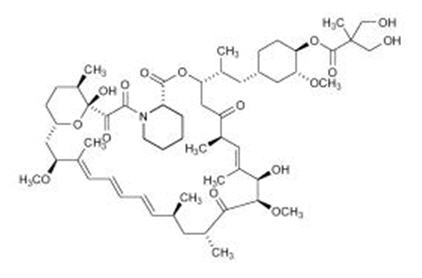
Active ingredient
Classification
Mammalian target of rapamycin (mTOR) kinase inhibitorsKinase Inhibitor
Drug interactions
Temsirolimus has several drug interactions that may require dose adjustments or monitoring for adverse effects.
- moderaterifampin — decreased sirolimus C max and AUC
- moderateketoconazole — increased sirolimus AUC and C max
- unknownramipril — angioedema
- unknownamlodipine — angioedema
Indications
INDICATIONS AND USAGE Temsirolimus injection is indicated for the treatment of advanced renal cell carcinoma. Temsirolimus injection is a kinase inhibitor indicated for the treatment of advanced renal cell carcinoma. ( 1 )
Dosage
DOSAGE AND ADMINISTRATION The recommended dose of Temsirolimus injection is 25 mg administered as an intravenous infusion over a 30-60 minute period once a week. Treat until disease progression or unacceptable toxicity. ( 2.1 ) Antihistamine pre-treatment is recommended. ( 2.2 ) Dose reduction is required in patients with mild hepatic impairment. ( 2.4 ) Temsirolimus injection vial contents must first be diluted with the enclosed diluent before diluting the resultant solution with 250 mL of 0.9% Sodium Chloride Injection. ( 2.5 ) 2.1 Advanced Renal Cell Carcinoma The recommended dose of Temsirolimus injection for advanced renal cell carcinoma is 25 mg administered as an intravenous infusion over a 30 – 60 minute period once a week. Treatment should continue until disease progression or unacceptable toxicity occurs. 2.2 Premedication Patients should receive prophylactic intravenous diphenhydramine 25 to 50 mg (or similar antihistamine) approximately 30 minutes before the start of each dose of Temsirolimus injection [see Warnings and Precautions ( 5.1 )] . 2.3 Dosage Interruption/Adjustment Temsirolimus injection should be held for absolute neutrophil count (ANC) <1,000/mm 3 , platelet count <75,000/mm 3 , or NCI CTCAE grade 3 or greater adverse reactions. Once toxicities have resolved to grade 2 or less, Temsirolimus injection may be restarted with the dose reduced by 5 mg/week to a dose no lower than 15 mg/week. 2.4 Dose Modification Guidelines Hepatic Impairment : Use caution when treating patients with hepatic impairment. If Temsirolimus injection must be given in patients with mild hepatic impairment (bilirubin >1 - 1.5xULN or AST >ULN but bilirubin ≤ULN), reduce the dose of Temsirolimus injection to 15 mg/week. Temsirolimus injection is contraindicated in patients with bilirubin >1.5×ULN [see Contraindications ( 4 ), Warnings and Precautions ( 5.2 ) and Use in Specific Populations ( 8.7 )]. Concomitant Strong CYP3A4 Inhibitors : The concomitant use of strong CYP3A4 inhibitors should be avoided (e.g. ketoconazole, itraconazole, clarithromycin, atazanavir, indinavir, nefazodone, nelfinavir, ritonavir, saquinavir, telithromycin, and voriconazole). Grapefruit juice may also increase plasma concentrations of sirolimus (a major metabolite of temsirolimus) and should be avoided. If patients must be co-administered a strong CYP3A4 inhibitor, based on pharmacokinetic studies, a Temsirolimus injection dose reduction to 12.5 mg/week should be considered. This dose of Temsirolimus injection is predicted to adjust the AUC to the range observed without inhibitors. However, there are no clinical data with this dose adjustment in patients receiving strong CYP3A4 inhibitors. If the strong inhibitor is discontinued, a washout period of approximately 1 week should be allowed before the Temsirolimus injection dose is adjusted back to the dose used prior to initiation of the strong CYP3A4 inhibitor [see Warnings and Precautions ( 5.12 ) and Drug Interactions ( 7.2 )] . Concomitant Strong CYP3A4 Inducers : The use of concomitant strong CYP3A4 inducers should be avoided (e.g. dexamethasone, phenytoin, carbamazepine, rifampin, rifabutin, rifampacin, phenobarbital). If patients must be co-administered a strong CYP3A4 inducer, based on pharmacokinetic studies, a Temsirolimus injection dose increase from 25 mg/week up to 50 mg/week should be considered. This dose of Temsirolimus injection is predicted to adjust the AUC to the range observed without inducers. However, there are no clinical data with this dose adjustment in patients receiving strong CYP3A4 inducers. If the strong inducer is discontinued the temsirolimus dose should be returned to the dose used prior to initiation of the strong CYP3A4 inducer [see Warnings and Precautions ( 5.12 ) and Drug Interactions ( 7.1 )]. 2.5 Instructions for Preparation Temsirolimus injection is a cytotoxic drug. Follow applicable special handling and disposal procedures 1 . Temsirolimus injection must be stored under refrigeration at 2° to 8°C (36°–46°F) and protected from light. During handling and preparation of admixtures, Temsirolimus injection should be protected from excessive room light and sunlight. Parenteral drug products should be inspected visually for particulate matter and discoloration prior to administration, whenever solution and container permit. In order to minimize the patient exposure to the plasticizer DEHP (di-2-ethylhexyl phthalate), which may be leached from PVC infusion bags or sets, the final Temsirolimus injection dilution for infusion should be stored in bottles (glass, polypropylene) or plastic bags (polypropylene, polyolefin) and administered through polyethylene-lined administration sets. Temsirolimus injection 25 mg/mL injection must be diluted with the supplied diluent before further dilution in 0.9% Sodium Chloride Injection, USP. Please note that both the Temsirolimus injection and diluent vials contain an overfill to ensure the recommended volume can be withdrawn. Follow this two-step dilution process in an aseptic manner. Step 1: DILUTION OF TEMSIROLIMUS INJECTION 25 MG/ML WITH SUPPLIED DILUENT Each Vial of Temsirolimus injection must first be mixed with 1.8 mL of the enclosed diluent. The resultant solution contains 30 mg/3 mL (10 mg/mL). Mix well by inversion of the vial. Allow sufficient time for the air bubbles to subside. The solution should be clear to slightly turbid, colorless to light-yellow solution, essentially free from visual particulates. The concentrate-diluent mixture is stable below 25ºC for up to 24 hours. Step 2: DILUTION OF CONCENTRATE-DILUENT MIXTURE WITH 0.9% SODIUM CHLORIDE INJECTION, USP Withdraw precisely the required amount of concentrate-diluent mixture containing temsirolimus 10 mg/mL as prepared in Step 1 from the vial (i.e., 2.5 mL for a temsirolimus dose of 25 mg) and further dilute into an infusion bag containing 250 mL of 0.9% Sodium Chloride Injection, USP. Mix by inversion of the bag or bottle, avoiding excessive shaking, as this may cause foaming. The resulting solution should be inspected visually for particulate matter and discoloration prior to administration. The admixture of Temsirolimus injection in 0.9% Sodium Chloride Injection, USP should be protected from excessive room light and sunlight. 2.6 Administration Administration of the final diluted solution should be completed within six hours from the time that Temsirolimus injection is first added to 0.9% Sodium Chloride Injection, USP. Temsirolimus injection is administered as an intravenous infusion over a 30-to 60-minute period once weekly. The use of an infusion pump is the preferred method of administration to ensure accurate delivery of the product. Appropriate administration materials should be composed of glass, polyolefin, or polyethylene to avoid excessive loss of product and diethylhexylpthalate (DEHP) extraction. The administration materials should consist of non-DEHP, non-polyvinylchloride (PVC) tubing with appropriate filter. In the case when a PVC administration set has to be used, it should not contain DEHP. An in-line polyethersulfone filter with a pore size of not greater than 5 microns is recommended for administration to avoid the possibility of particles bigger than 5 microns being infused. If the administration set available does not have an in-line filter incorporated, a polyethersulfone filter should be added at the set (i.e., an end-filter) before the admixture reaches the vein of the patient. Different end-filters can be used, ranging in filter pore size from 0.2 microns up to 5 microns. The use of both an in-line and end-filter is not recommended. Temsirolimus injection, when diluted, contains polysorbate 80, which is known to increase the rate of DEHP extraction from PVC. This should be considered during the preparation and administration of Temsirolimus injection, including storage time elapsed when in direct contact with PVC following constitution. Compatibilities and Inco
Warnings
WARNINGS AND PRECAUTIONS Hypersensitivity/Infusion Reactions (including some life-threatening and rare fatal reactions) can occur early in the first infusion of Temsirolimus injection. Patients should be monitored throughout the infusion. ( 5.1 ) To treat hypersensitivity reactions, stop Temsirolimus injection and treat with an antihistamine. Temsirolimus injection may be restarted at physician discretion at a slower rate. ( 5.1 ) Hepatic Impairment: Use caution when treating patients with mild hepatic impairment and reduce dose. ( 2.4 , 5.2 ) Hyperglycemia and hyperlipidemia are likely and may require treatment. Monitor glucose and lipid profiles. ( 5.3 , 5.6 ) Infections may result from immunosuppression. ( 5.4 ) Monitor for symptoms or radiographic changes of interstitial lung disease (ILD). If ILD is suspected, discontinue Temsirolimus injection, and consider use of corticosteroids and/or antibiotics. ( 5.5 ) Bowel perforation may occur. Evaluate fever, abdominal pain, bloody stools, and/or acute abdomen promptly. ( 5.7 ) Renal failure, sometimes fatal, has occurred. Monitor renal function at baseline and while on Temsirolimus injection. ( 5.8 ) Due to abnormal wound healing, use Temsirolimus injection with caution in the perioperative period. ( 5.9 ) Proteinuria and nephrotic syndrome may occur. Monitor urine protein prior to the start of Temsirolimus injection therapy and periodically thereafter. Discontinue Temsirolimus injection in patients with who develop nephrotic syndrome. ( 5.11 ) Live vaccinations and close contact with those who received live vaccines should be avoided. ( 5.14 ) Embryo-Fetal Toxicity: Can cause fetal harm. Advise patients of the potential hazard to the fetus and to use effective contraception. ( 5.15 , 8.1 , 8.3 ) Elderly patients may be more likely to experience certain adverse reactions, including diarrhea, edema and pneumonia. ( 5.16 ) 5.1 Hypersensitivity/Infusion Reactions Hypersensitivity/infusion reactions, including but not limited to flushing, chest pain, dyspnea, hypotension, apnea, loss of consciousness, hypersensitivity and anaphylaxis, have been associated with the administration of temsirolimus. These reactions can occur very early in the first infusion, but may also occur with subsequent infusions. Patients should be monitored throughout the infusion and appropriate supportive care should be available. Temsirolimus infusion should be interrupted in all patients with severe infusion reactions and appropriate medical therapy administered. Temsirolimus injection should be used with caution in persons with known hypersensitivity to temsirolimus or its metabolites (including sirolimus), polysorbate 80, or to any other component (including the excipients) of Temsirolimus injection. An H 1 antihistamine should be administered to patients before the start of the intravenous temsirolimus infusion. Temsirolimus injection should be used with caution in patients with known hypersensitivity to an antihistamine, or patients who cannot receive an antihistamine for other medical reasons. If a patient develops a hypersensitivity reaction during the Temsirolimus injection infusion, the infusion should be stopped and the patient should be observed for at least 30 to 60 minutes (depending on the severity of the reaction). At the discretion of the physician, treatment may be resumed with the administration of an H 1 -receptor antagonist (such as diphenhydramine), if not previously administered [see Dosage and Administration ( 2.2 )] , and/or an H 2 -receptor antagonist (such as intravenous famotidine 20 mg or intravenous ranitidine 50 mg) approximately 30 minutes before restarting the Temsirolimus injection infusion. The infusion may then be resumed at a slower rate (up to 60 minutes). A benefit-risk assessment should be done prior to the continuation of temsirolimus therapy in patients with severe or life-threatening reactions. 5.2 Hepatic Impairment The safety and pharmacokinetics of Temsirolimus injection were evaluated in a dose escalation phase 1 study in 110 patients with normal or varying degrees of hepatic impairment. Patients with baseline bilirubin >1.5×ULN experienced greater toxicity than patients with baseline bilirubin ≤1.5×ULN when treated with Temsirolimus injection. The overall frequency of ≥ grade 3 adverse reactions and deaths, including deaths due to progressive disease, were greater in patients with baseline bilirubin >1.5×ULN due to increased risk of death [see Contraindications ( 4 )] . Use caution when treating patients with mild hepatic impairment. Concentrations of temsirolimus and its metabolite sirolimus were increased in patients with elevated AST or bilirubin levels. If Temsirolimus injection must be given in patients with mild hepatic impairment (bilirubin >1 – 1.5×ULN or AST >ULN but bilirubin ≤ULN), reduce the dose of Temsirolimus injection to 15 mg/week [see Dosage and Administration ( 2.4 )]. 5.3 Hyperglycemia/Glucose Intolerance The use of Temsirolimus injection is likely to result in increases in serum glucose. In the phase 3 trial, 89% of patients receiving Temsirolimus injection had at least one elevated serum glucose while on treatment, and 26% of patients reported hyperglycemia as an adverse event. This may result in the need for an increase in the dose of, or initiation of, insulin and/or oral hypoglycemic agent therapy. Serum glucose should be tested before and during treatment with Temsirolimus injection. Patients should be advised to report excessive thirst or any increase in the volume or frequency of urination. 5.4 Infections The use of Temsirolimus injection may result in immunosuppression. Patients should be carefully observed for the occurrence of infections, including opportunistic infections [see Adverse Reactions ( 6.1 )]. Pneumocystis jiroveci pneumonia (PJP), including fatalities, has been reported in patients who received temsirolimus. This may be associated with concomitant use of corticosteroids or other immunosuppressive agents. Prophylaxis of PJP should be considered when concomitant use of corticosteroids or other immunosuppressive agents are required. 5.5 Interstitial Lung Disease Cases of interstitial lung disease, some resulting in death, occurred in patients who received Temsirolimus injection. Some patients were asymptomatic, or had minimal symptoms, with infiltrates detected on computed tomography scan or chest radiograph. Others presented with symptoms such as dyspnea, cough, hypoxia, and fever. Some patients required discontinuation of Temsirolimus injection and/or treatment with corticosteroids and/or antibiotics, while some patients continued treatment without additional intervention. Patients should be advised to report promptly any new or worsening respiratory symptoms. It is recommended that patients undergo baseline radiographic assessment by lung computed tomography scan or chest radiograph prior to the initiation of Temsirolimus injection therapy. Follow such assessments periodically, even in the absence of clinical respiratory symptoms. It is recommended that patients be followed closely for occurrence of clinical respiratory symptoms. If clinically significant respiratory symptoms develop, consider withholding Temsirolimus injection administration until after recovery of symptoms and improvement of radiographic findings related to pneumonitis. Empiric treatment with corticosteroids and/or antibiotics may be considered. Opportunistic infections such as PJP should be considered in the differential diagnosis. For patients who require use of corticosteroids, prophylaxis of PJP may be considered. 5.6 Hyperlipidemia The use of Temsirolimus injection is likely to result in increases in serum triglycerides and cholesterol. In the phase 3 trial, 87% of patients receiving Temsirolimus injection had at least one elevated serum cholesterol value and 83% had at least one elevated serum triglyceride value. This may require initiation, or increase in the dose,
Contraindications
CONTRAINDICATIONS Temsirolimus injection is contraindicated in patients with bilirubin >1.5 x ULN [ see Warnings and Precautions ( 5.2 )]. Temsirolimus injection is contraindicated in patients with bilirubin >1.5 x ULN. ( 4 )
Mechanism of action
Mechanism of Action Temsirolimus is an inhibitor of mTOR (mammalian target of rapamycin). Temsirolimus binds to an intracellular protein (FKBP-12), and the protein-drug complex inhibits the activity of mTOR that controls cell division. Inhibition of mTOR activity resulted in a G1 growth arrest in treated tumor cells. When mTOR was inhibited, its ability to phosphorylate p70S6k and S6 ribosomal protein, which are downstream of mTOR in the PI3 kinase/AKT pathway was blocked. In in vitro studies using renal cell carcinoma cell lines, temsirolimus inhibited the activity of mTOR and resulted in reduced levels of the hypoxia-inducible factors HIF-1 and HIF-2 alpha, and the vascular endothelial growth factor.
Indicated ICD-10 codes
Source: RxNorm + openFDA + RxClass + FAERS · 2026
Look up another medication