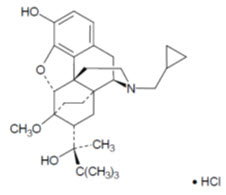
0.32 ML buprenorphine 50 MG/ML Prefilled Syringe — Oripavine derivatives. INDICATIONS AND USAGE Buprenorphine transdermal system is indicated for the management of severe and persistent pain that requires an extended…
Boxed warning
WARNING: SERIOUS AND LIFE-THREATENING RISKS FROM USE OF BUPRENORPHINE TRANSDERMAL SYSTEM Addiction, Abuse, and Misuse Because the use of Buprenorphine transdermal system exposes patients and other users to the risks of opioid addiction, abuse, and misuse, which can lead to overdose and death, assess each patient’s risk prior to prescribing and reassess all patients regularly for the development of these behaviors and conditions [see Warnings and Precautions ( 5.1 )]. L ife-Threatening Respiratory Depression Serious, life-threatening, or fatal respiratory depression may occur with use of buprenorphine transdermal system, especially during initiation or following a dosage increase . To reduce the risk of respiratory depression, proper dosing and titration of buprenorphine transdermal system are essential . Misuse or abuse of buprenorphine transdermal system by chewing, swallowing, snorting or injecting buprenorphine extracted from the transdermal system will result in the uncontrolled delivery of buprenorphine and pose a significant risk of overdose and death [see Warnings and Precautions ( 5.2 )]. Accidental Exposure Accidental exposure of even one dose of buprenorphine transdermal system, especially in children, can result in a fatal overdose of buprenorphine [see Warnings and Precautions ( 5.2 )] . Risks From Concomitant Use With Benzodiazepines Or Other CNS Depressants Concomitant use of opioids with benzodiazepines or other central nervous system (CNS) depressants, including alcohol, may result in profound sedation, respiratory depression, coma, and death. Reserve concomitant prescribing of buprenorphine transdermal system and benzodiazepines or other CNS depressants for use in patients for whom alternative treatment options are inadequate [see Warnings and Precautions ( 5.3 ), Drug Interactions ( 7 )]. Neonatal Opioid Withdrawal Syndrome (NOWS) I f opioid use is required for an extended period of time in a pregnant woman, advise the patient of the risk of NOWS, which may be life-threatening if not recognized and treated. Ensure that management by neonatology experts will be available at delivery [see Warnings and Precautions ( 5.4 )] . Opioid Analgesic Risk Evaluation and Mitigation Strategy (REMS) Healthcare providers are strongly encouraged to complete a REMS-compliant education program and to counsel patients and caregivers on serious risks, safe use, and the importance of reading the Medication Guide with each prescription [see Warnings and Precautions ( 5.5 )] . WARNING: SERIOUS AND LIFE-THREATENING RISKS FROM USE OF BUPRENORPHINE TRANSDERMAL SYSTEM See full prescribing information for complete boxed warning. Buprenorphine transdermal system exposes users to risks of addiction, abuse, and misuse, which can lead to overdose and death. Assess patient’s risk before prescribing and reassess regularly for these behaviors and conditions. ( 5.1 , 10 ) Serious, life-threatening or fatal respiratory depression may occur, especially upon initiation or following a dosage increase. To reduce the risk of respiratory depression, proper dosing and titration of buprenorphine transdermal system are essential. Instruct patients on proper administration of buprenorphine transdermal system to reduce the risk. ( 2.1 , 5.2 ) Accidental exposure to buprenorphine transdermal system, especially in children, can result in fatal overdose of buprenorphine. ( 5.2 ) Concomitant use of opioids with benzodiazepines or other central nervous system (CNS) depressants, including alcohol, may result in profound sedation, respiratory depression, coma, and death. Reserve concomitant prescribing for use in patients for whom alternative treatment options are inadequate. ( 5.3 , 7 ) If opioid use is required for an extended period of time in a pregnant woman, advise the patient of the risk of Neonatal Opioid Withdrawal Syndrome, which may be life threatening if not recognized and treated. Ensure that management by neonatology experts will be available at delivery. ( 5.4 ) Healthcare providers are strongly encouraged to complete a REMS- compliant education program and to counsel patients and caregivers on serious risks, safe use, and the importance of reading the Medication Guide with each prescription. ( 5.5 )
Buprenorphine has several clinically significant drug interactions that can affect its efficacy and safety.
majorbenzodiazepines or other CNS depressants — increased risk of respiratory depression, profound sedation, coma, and death
majorCYP3A4 inhibitors — increased plasma concentration of buprenorphine, resulting in increased or prolonged opioid effects
majorCYP3A4 inducers — decreased plasma concentration of buprenorphine, potentially resulting in decreased efficacy or withdrawal syndrome
unknownnon-nucleoside reverse transcriptase inhibitors (NNRTIs) — pharmacokinetic interactions with buprenorphine, but no significant pharmacodynamic effects
moderateprotease inhibitors (PIs) — elevated levels of buprenorphine and potential increased sedation
majorserotonergic drugs — risk of serotonin syndrome
Indications
INDICATIONS AND USAGE Buprenorphine transdermal system is indicated for the management of severe and persistent pain that requires an extended treatment period with a daily opioid analgesic and for which alternative treatment options are inadequate. L imitations of Use Because of the risks of addiction, abuse and misuse with opioids, which can occur at any dosage or duration, and because of the greater risk of overdose and death with extended-release/long-acting opioid formulations [see Warnings and Precautions ( 5.1 )] , reserve buprenorphine transdermal system for use in patients for whom alternative treatment options (e.g., non-opioid analgesics or immediate-release opioids) are ineffective, not tolerated, or would be otherwise inadequate to provide sufficient management of pain. Buprenorphine transdermal system is not indicated as an as-needed (prn) analgesic Buprenorphine transdermal system is a partial opioid agonist indicated for the management of severe and persistent pain that requires an extended treatment period with a daily opioid analgesic and for which alternative treatment options are inadequate. ( 1 ) Limitations of Use ( 1 ) Because of the risks of addiction, abuse, and misuse with opioids, which can occur at any dosage or duration, and because of the greater risks of overdose and death with extended-release/long-acting opioid formulations, reserve buprenorphine transdermal system for use in patients for whom alternative treatment options (e.g., non-opioid analgesics or immediate-release opioids) are ineffective, not tolerated, or would be otherwise inadequate to provide sufficient management of pain. Buprenorphine transdermal system is not indicated as an as-needed (prn) analgesic.
Dosage
DOSAGE AND ADMINISTRATION Administer buprenorphine sublingual tablet sublingually as a single daily dose. (2.1) Strongly consider prescribing naloxone at the time buprenorphine sublingual tablet is initiated or renewed because patients being treated for opioid use disorder have the potential for relapse, putting them at risk for opioid overdose. (2.2) To avoid precipitating withdrawal, induction with buprenorphine sublingual tablet should be undertaken when objective and clear signs of withdrawal are evident. (2.3) Buprenorphine and naloxone sublingual film or buprenorphine and naloxone sublingual tablet is generally initiated after two days of buprenorphine sublingual tablet titration. (2.4) Administer buprenorphine sublingual tablets as directed in the Full Prescribing Information. (2.3, 2.4, 2.5) Buprenorphine sublingual tablet must be administered whole. Do not cut, chew, or swallow buprenorphine sublingual tablets. (2.5) When discontinuing treatment, gradually taper to avoid signs and symptoms of withdrawal. (2.9) 2.1 Important Dosage and Administration Instructions Buprenorphine sublingual tablet is administered sublingually as a single daily dose. Buprenorphine sublingual tablet does not contain naloxone and is preferred for use only during induction. Following induction, buprenorphine and naloxone sublingual film or buprenorphine and naloxone sublingual tablet is preferred due to the presence of naloxone when clinical use includes unsupervised administration. The use of buprenorphine sublingual tablet for unsupervised administration should be limited to those patients who cannot tolerate buprenorphine and naloxone sublingual film or buprenorphine and naloxone sublingual tablet; for example, those patients who have been shown to be hypersensitive to naloxone. Medication should be prescribed in consideration of the frequency of visits. Provision of multiple refills is not advised early in treatment or without appropriate patient follow-up visits. 2.2 Patient Access to Naloxone for the Emergency Treatment of Opioid Overdose Discuss the availability of naloxone for the emergency treatment of opioid overdose with the patient and caregiver. Because patients being treated for opioid use disorder have the potential for relapse, putting them at risk for opioid overdose, strongly consider prescribing naloxone for the emergency treatment of opioid overdose, both when initiating and renewing treatment with buprenorphine sublingual tablet. Also consider prescribing naloxone if the patient has household members (including children) or other close contacts at risk for accidental ingestion or opioid overdose [see Warnings and Precautions (5.2)]. Advise patients and caregivers that naloxone may also be administered for a known or suspected overdose with buprenorphine sublingual tablet itself. Higher than normal doses and repeated administration of naloxone may be necessary due to the long duration of action of buprenorphine sublingual tablet and its affinity for the mu-opioid receptor [see Overdosage (10)]. Inform patients and caregivers of their options for obtaining naloxone as permitted by individual state naloxone dispensing and prescribing requirements or guidelines (e.g., by prescription, directly from a pharmacist, or as part of a community-based program) [see Patient Counseling Information (17)]. 2.3 Induction Prior to induction, consideration should be given to the type of opioid dependence (i.e., long- or short-acting opioid products), the time since last opioid use, and the degree or level of opioid dependence. Patients dependent on heroin or other short-acting opioid products: At treatment initiation, the first dose of buprenorphine sublingual tablet should be administered only when objective and clear signs of moderate opioid withdrawal appear, and not less than 4 hours after the patient last used an opioid. It is recommended that an adequate treatment dose, titrated to clinical effectiveness, should be achieved as rapidly as possible. The dosing on the initial day of treatment may be given in 2 mg to 4 mg increments if preferred. In some studies, gradual induction over several days led to a high rate of dropout of buprenorphine patients during the induction period. In a one-month study, patients received 8 mg of buprenorphine sublingual tablet on Day 1 and 16 mg buprenorphine sublingual tablet on Day 2. From Day 3 onward, patients received either buprenorphine and naloxone sublingual tablet or buprenorphine sublingual tablet at the same buprenorphine dose as Day 2 based on their assigned treatment. Induction in the studies of buprenorphine solution was accomplished over 3 to 4 days, depending on the target dose. Patients dependent on methadone or other long-acting opioid products: Patients dependent upon methadone or other long-acting opioid products may be more susceptible to precipitated and prolonged withdrawal during induction than those on short-acting opioid products; therefore, the first dose of buprenorphine sublingual tablet should only be administered when objective and clear signs of moderate opioid withdrawal appear, and generally not less than 24 hours after the patient last used a long-acting opioid product. There is little controlled experience with the transfer of methadone-maintained patients to buprenorphine. Available evidence suggests that withdrawal signs and symptoms are possible during induction onto buprenorphine. Withdrawal appears more likely in patients maintained on higher doses of methadone (>30 mg) and when the first buprenorphine dose is administered shortly after the last methadone dose. 2.4 Maintenance Buprenorphine and naloxone sublingual tablet is preferred for maintenance treatment. Where buprenorphine sublingual tablet is used in maintenance in patients who cannot tolerate the presence of naloxone, the dosage of buprenorphine sublingual tablets should be progressively adjusted in increments/decrements of 2 mg or 4 mg buprenorphine to a level that holds the patient in treatment and suppresses opioid withdrawal signs and symptoms. After treatment induction and stabilization, the maintenance dose of buprenorphine sublingual tablet is generally in the range of 4 mg to 24 mg buprenorphine per day depending on the individual patient. The recommended target dosage of buprenorphine sublingual tablet is 16 mg as a single daily dose. Dosages higher than 24 mg have not been demonstrated to provide any clinical advantage. When determining the prescription quantity for unsupervised administration, consider the patient’s level of stability, the security of his or her home situation, and other factors likely to affect the ability to manage supplies of take-home medication. There is no maximum recommended duration of maintenance treatment. Patients may require treatment indefinitely and should continue for as long as patients are benefiting and the use of buprenorphine sublingual tablet contributes to the intended treatment goals. 2.5 Method of Administration Buprenorphine sublingual tablet must be administered whole. Do not cut, chew, or swallow buprenorphine sublingual tablet. Advise patients not to eat or drink anything until the tablet is completely dissolved. Buprenorphine sublingual tablet should be placed under the tongue until it is dissolved. For doses requiring the use of more than two tablets, patients are advised to either place all the tablets at once or alternatively (if they cannot fit in more than two tablets comfortably), place two tablets at a time under the tongue. Either way, the patients should continue to hold the tablets under the tongue until they dissolve; swallowing the tablets reduces the bioavailability of the drug. To ensure consistency in bioavailability, patients should follow the same manner of dosing with continued use of the product. Proper administration technique should be demonstrated to the patient. Advise patients to do the following after the product has completely dissolved in the o
Warnings
WARNINGS AND PRECAUTIONS Addiction, Abuse, and Misuse: Buprenorphine can be abused in a similar manner to other opioids. Monitor patients for conditions indicative of diversion or progression of opioid dependence and addictive behaviors. Multiple refills should not be prescribed early in treatment or without appropriate patient follow-up visits. (5.1) Respiratory Depression: Life-threatening respiratory depression and death have occurred in association with buprenorphine use. Warn patients of the potential danger of self-administration of benzodiazepines or other CNS depressants while under treatment with buprenorphine sublingual tablets. (5.2, 5.3) Unintentional Pediatric Exposure : Store buprenorphine sublingual tablet safely out of the sight and reach of children. Buprenorphine can cause severe, possibly fatal, respiratory depression in children. (5.4) Neonatal Opioid Withdrawal Syndrome : Neonatal opioid withdrawal syndrome (NOWS) is an expected and treatable outcome of prolonged use of opioids during pregnancy. (5.5) Adrenal Insufficiency: If diagnosed, treat with physiologic replacement of corticosteroids, and wean patient off of the opioid. (5.6) Risk of Opioid Withdrawal with Abrupt Discontinuation : If treatment is temporarily interrupted or discontinued, monitor patients for withdrawal and treat appropriately. (5.7) Risk of Hepatitis, Hepatic Events : Monitor liver function tests prior to initiation and during treatment and evaluate suspected hepatic events. (5.8) Precipitation of Opioid Withdrawal Signs and Symptoms : An opioid withdrawal syndrome is likely to occur with parenteral misuse of buprenorphine sublingual tablet by individuals physically dependent on full opioid agonists, or by sublingual administration before the agonist effects of other opioids have subsided. (5.10) Risk of Overdose in Opioid-Naïve Patients: Buprenorphine sublingual tablet is NOT appropriate as an analgesic. There have been reported deaths of opioid naïve individuals who received a 2 mg sublingual dose of buprenorphine. (5.11) 5.1 Addiction, Abuse, and Misuse Buprenorphine sublingual tablets contain buprenorphine, a Schedule III controlled substance that can be abused in a manner similar to other opioids, legal or illicit. Prescribe and dispense buprenorphine with appropriate precautions to minimize risk of misuse, abuse, or diversion, and ensure appropriate protection from theft, including in the home. Clinical monitoring appropriate to the patient’s level of stability is essential. Multiple refills should not be prescribed early in treatment or without appropriate patient follow-up visits [see Drug Abuse and Dependence (9.2)]. 5.2 Risk of Life-Threatening Respiratory and Central Nervous System (CNS) Depression Buprenorphine has been associated with life-threating respiratory depression and death. Many, but not all, postmarketing reports regarding coma and death involved misuses by self-injection or were associated with the concomitant use of benzodiazepines or other CNS depressants, including alcohol. Warn patients of the potential danger of self-administration of benzodiazepines or other CNS depressants while under treatment with buprenorphine sublingual tablets [see Warnings and Precautions (5.3), Drug Interactions (7)]. Use buprenorphine sublingual tablets with caution in patients with compromised respiratory function (e.g., chronic obstructive pulmonary disease, cor pulmonale, decreased respiratory reserve, hypoxia, hypercapnia, or preexisting respiratory depression). Educate patients and caregivers on how to recognize respiratory depression and emphasize the importance of calling 911 or getting emergency medical help right away in the event of a known or suspected overdose [see Patient Counseling Information (17)]. Opioids can cause sleep-related breathing disorders including central sleep apnea (CSA) and sleep-related hypoxemia. Opioid use increases the risk of CSA in a dose-dependent fashion. In patients who present with CSA, consider decreasing the opioid dosage using best practices for opioid taper [see Dosage and Administration (2.9)]. Patient Access to Naloxone for the Emergency Treatment of Opioid Overdose Discuss the availability of naloxone for the emergency treatment of opioid overdose with the patient and caregiver. Because patients being treated for opioid use disorder have the potential for relapse, putting them at risk for opioid overdose, strongly consider prescribing naloxone for the emergency treatment of opioid overdose, both when initiating and renewing treatment with buprenorphine sublingual tablets. Also consider prescribing naloxone if the patient has household members (including children) or other close contacts at risk for accidental ingestion or opioid overdose [see Dosage and Administration (2.2)]. Advise patients and caregivers that naloxone may also be administered for a known or suspected overdose with buprenorphine sublingual tablets itself. Higher than normal doses and repeated administration of naloxone may be necessary due to the long duration of action of buprenorphine sublingual tablets and its affinity for the mu-opioid receptor [see Overdosage (10)]. Inform patients and caregivers of their options for obtaining naloxone as permitted by individual state naloxone dispensing and prescribing requirements or guidelines (e.g., by prescription, directly from a pharmacist, or as part of a community-based program). Educate patients and caregivers on how to recognize respiratory depression and, if naloxone is prescribed, how to treat with naloxone. Emphasize the importance of calling 911 or getting emergency medical help, even if naloxone is administered [see Patient Counseling Information (17)]. 5.3 Managing Risks from Concomitant Use of Benzodiazepines or Other CNS Depressants Concomitant use of buprenorphine and benzodiazepines or other CNS depressants increases the risk of adverse reactions including overdose and death. Medication-assisted treatment of opioid use disorder, however, should not be categorically denied to patients taking these drugs. Prohibiting or creating barriers to treatment can pose an even greater risk of morbidity and mortality due to the opioid use disorder alone. As a routine part of orientation to buprenorphine treatment, educate patients about the risks of concomitant use of benzodiazepines, sedatives, opioid analgesics, and alcohol. Develop strategies to manage use of prescribed or illicit benzodiazepines or other CNS depressants at initiation of buprenorphine treatment, or if it emerges as a concern during treatment. Adjustments to induction procedures and additional monitoring may be required. There is no evidence to support dose limitations or arbitrary caps of buprenorphine as a strategy to address benzodiazepine use in buprenorphine-treated patients. However, if a patient is sedated at the time of buprenorphine dosing, delay or omit the buprenorphine dose if appropriate. Cessation of benzodiazepines or other CNS depressants is preferred in most cases of concomitant use. In some cases, monitoring in a higher level of care for taper may be appropriate. In others, gradually tapering a patient off of a prescribed benzodiazepine or other CNS depressant or decreasing to the lowest effective dose may be appropriate. For patients in buprenorphine treatment, benzodiazepines are not the treatment of choice for anxiety or insomnia. Before co-prescribing benzodiazepines, ensure that patients are appropriately diagnosed and consider alternative medications and non-pharmacologic treatments to address anxiety or insomnia. Ensure that other healthcare providers prescribing benzodiazepines or other CNS depressants are aware of the patient’s buprenorphine treatment and coordinate care to minimize the risks associated with concomitant use. If concomitant use is warranted, strongly consider prescribing naloxone for the emergency treatment of opioid overdose, as is recommended for all patients in buprenorphine
Contraindications
CONTRAINDICATIONS Buprenorphine transdermal system is contraindicated in patients with: Significant respiratory depression [see Warnings and Precautions ( 5.2 )] Acute or severe bronchial asthma in an unmonitored setting or in the absence of resuscitative equipment [see Warnings and Precautions ( 5.10 )] Known or suspected gastrointestinal obstruction, including paralytic ileus [see Warnings and Precautions ( 5.15 )] Hypersensitivity (e.g., anaphylaxis) to buprenorphine [see Warnings and Precautions ( 5.18 ), Adverse Reactions ( 6 )] Significant respiratory depression ( 4 ) Acute or severe bronchial asthma in an unmonitored setting or in the absence of resuscitative equipment ( 4 ) Known or suspected gastrointestinal obstruction, including paralytic ileus ( 4 ) Hypersensitivity to buprenorphine ( 4 )
Mechanism of action
CLINICAL PHARMACOLOGY 12.1 Mechanism of Action Buprenorphine is a partial agonist at the mu-opioid receptor and an antagonist at the kappa-opioid receptors, an agonist at delta-opioid receptors, and a partial agonist at ORL-1 (nociceptin) receptors. The contributions of these actions to its analgesic profile are unclear. 12.2 Pharmacodynamics Effects on the Central Nervous System Buprenorphine produces respiratory depression by direct action on brainstem respiratory centers. The respiratory depression involves a reduction in the responsiveness of the brainstem respiratory centers to both increases in carbon dioxide tension and electrical stimulation. Buprenorphine causes miosis, even in total darkness. Pinpoint pupils are a sign of opioid overdose but are not pathognomonic (e.g., pontine lesions of hemorrhagic or ischemic origins may produce similar findings). Marked mydriasis rather than miosis may be seen with worsening hypoxia in overdose situations. Effects on the Gastrointestinal Tract and Other Smooth Muscle Buprenorphine causes a reduction in motility associated with an increase in smooth muscle tone in the antrum of the stomach and duodenum. Digestion of food in the small intestine is delayed and propulsive contractions are decreased. Propulsive peristaltic waves in the colon are decreased, while tone is increased to the point of spasm, resulting in constipation. Other opioid-induced effects may include a reduction in biliary and pancreatic secretions, spasm of sphincter of Oddi, and transient elevations in serum amylase. Effects on the Cardiovascular System Buprenorphine produces peripheral vasodilation, which may result in orthostatic hypotension or syncope. Manifestations of histamine release and/or peripheral vasodilation may include pruritus, flushing, red eyes, sweating, and/or orthostatic hypotension. Effects on Cardiac Electrophysiology The effect of buprenorphine transdermal system 10 mcg/hour and 2 x buprenorphine transdermal system 20 mcg/hour on QTc interval was evaluated in a double-blind (buprenorphine transdermal system vs. placebo), randomized, placebo and active-controlled (moxifloxacin 400 mg, open label), parallel-group, dose-escalating, single-dose study in 132 healthy male and female subjects aged 18 to 55 years. The dose escalation sequence for buprenorphine transdermal system during the titration period was: buprenorphine transdermal system 5 mcg/hour for 3 days, then buprenorphine transdermal system 10 mcg/hour for 3 days, then buprenorphine transdermal system 20 mcg/hour for 3 days, then 2 x buprenorphine transdermal system 20 mcg/hour for 4 days. The QTc evaluation was performed during the third day of buprenorphine transdermal system 10 mcg/hour and the fourth day of 2 x buprenorphine transdermal system 20 mcg/hour when the plasma levels of buprenorphine were at steady state for the corresponding doses [see Warnings and Precautions ( 5.17 )] . There was no clinically meaningful effect on mean QTc with a buprenorphine transdermal system dose of 10 mcg/hour. A buprenorphine transdermal system dose of 40 mcg/hour (given as two 20 mcg/hour buprenorphine transdermal systems) prolonged mean QTc by a maximum of 9.2 (90% CI: 5.2-13.3) msec across the 13 assessment time points. Effects on the Endocrine System Opioids inhibit the secretion of adrenocorticotropic hormone (ACTH), cortisol, and luteinizing hormone (LH) in humans [see Adverse Reactions ( 6.2 )] . They also stimulate prolactin, growth hormone (GH) secretion, and pancreatic secretion of insulin and glucagon. Use of opioids for an extended period of time may influence the hypothalamic-pituitary-gonadal axis, leading to androgen deficiency that may manifest as low libido, impotence, erectile dysfunction, amenorrhea, or infertility. The causal role of opioids in the clinical syndrome of hypogonadism is unknown because the various medical, physical, lifestyle, and psychological stressors that may influence gonadal hormone levels have not been adequately controlled for in studies conducted to date [see Adverse Reactions ( 6.2 )] . Effects on the Immune System Opioids have been shown to have a variety of effects on components of the immune system in in vitro and animal models. The clinical significance of these findings is unknown. Overall, the effects of opioids appear to be modestly immunosuppressive. Concentration–Efficacy Relationships The minimum effective analgesic concentration will vary widely among patients, especially among patients who have been previously treated with opioid agonists. The minimum effective analgesic concentration of buprenorphine for any individual patient may increase over time due to an increase in pain, the development of a new pain syndrome, and/or the development of analgesic tolerance [see Dosage and Administration ( 2.1 , 2.4 )] . Concentration–Adverse Reaction Relationships There is a relationship between increasing buprenorphine plasma concentration and increasing frequency of dose-related opioid adverse reactions such as nausea, vomiting, CNS effects, and respiratory depression. In opioid-tolerant patients, the situation may be altered by the development of tolerance to opioid-related adverse reactions [see Dosage and Administration ( 2.1 , 2.3 , 2.4 )] . 12.3 Pharmacokinetics Absorption Each buprenorphine transdermal system provides delivery of buprenorphine for 7 days. Steady state was achieved during the first application by Day 3 (see Figure 2). Figure 2 Mean (SD) Buprenorphine Plasma Concentrations Following Three Consecutive Applications of Buprenorphine Transdermal System 10 mcg/hour (N = 36 Healthy Subjects) Buprenorphine transdermal system 5 mcg/hour, 10 mcg/hour, and 20 mcg/hour provide dose-proportional total buprenorphine exposures (AUC) following 7-day applications. Buprenorphine transdermal system single 7-day application and steady-state pharmacokinetic parameters are summarized in Table 7. Plasma buprenorphine concentrations after titration showed no further change over the 60-day period studied. Table 7: Pharmacokinetic Parameters of Buprenorphine Transdermal System in Healthy Subjects, Mean (%CV) Single 7-day Application AUC inf (pg.h/mL) C max (pg/mL) Buprenorphine Transdermal System 5 mcg/hour 12087 (37) 176 (67) Buprenorphine Transdermal System 10 mcg/hour 27035 (29) 191 (34) Buprenorphine Transdermal System 20 mcg/hour 54294 (36) 471 (49) Multiple 7-day Applications AUC tau,ss (pg.h/mL) C max,ss (pg/mL) Buprenorphine Transdermal System 10 mcg/hour, steady-state 27543 (33) 224 (35) Transdermal delivery studies showed that intact human skin is permeable to buprenorphine. In clinical pharmacology studies, the median time for buprenorphine transdermal system 10 mcg/hour to deliver quantifiable buprenorphine concentrations (≥ 25 pg/mL) was approximately 17 hours. The absolute bioavailability of buprenorphine transdermal system relative to IV administration, following a 7-day application, is approximately 15% for all doses (buprenorphine transdermal system 5 mcg/hour, 10 mcg/hour, and 20 mcg/hour). Effects of Application Site A study in healthy subjects demonstrated that the pharmacokinetic profile of buprenorphine delivered by buprenorphine transdermal system 10 mcg/hour is similar when applied to the upper outer arm, upper chest, upper back, or the side of the chest [see Dosage and Administration ( 2.7 )] . The reapplication of buprenorphine transdermal system 10 mcg/hour after various rest periods to the same application site in healthy subjects showed that the minimum rest period needed to avoid variability in drug absorption is 3 weeks (21 days) [see Dosage and Administration ( 2.7 )] . Effects of Heat In a study of healthy subjects, application of a heating pad directly on the buprenorphine transdermal system 10 mcg/hour system caused a 26% to 55% increase in blood concentrations of buprenorphine. Concentrations returned to normal within 5 hours after the heat was removed. For this reason, instruct patients n
A drug lookup is just the start. Eleplan keeps the whole care plan in one place.
Medications, diagnoses, documents, appointments, and the whole care team — organized and always in sync, with Ellie, your AI care assistant, on top of it. Free to start.