Methocarbamol
Managing this medication for someone you care for? Eleplan keeps diagnoses, medications and appointments in one plan.
Start free with EleplanMedication reference
Methocarbamol
Muscle Relaxant [EPC] — ORAL · INTRAMUSCULAR · INTRAVENOUS
Methocarbamol — Muscle Relaxant [EPC]. INDICATIONS AND USAGE ATMEKSI (methocarbamol) oral suspension is a muscle relaxant indicated as: an adjunct to rest, physical therapy, and other…
Brand names
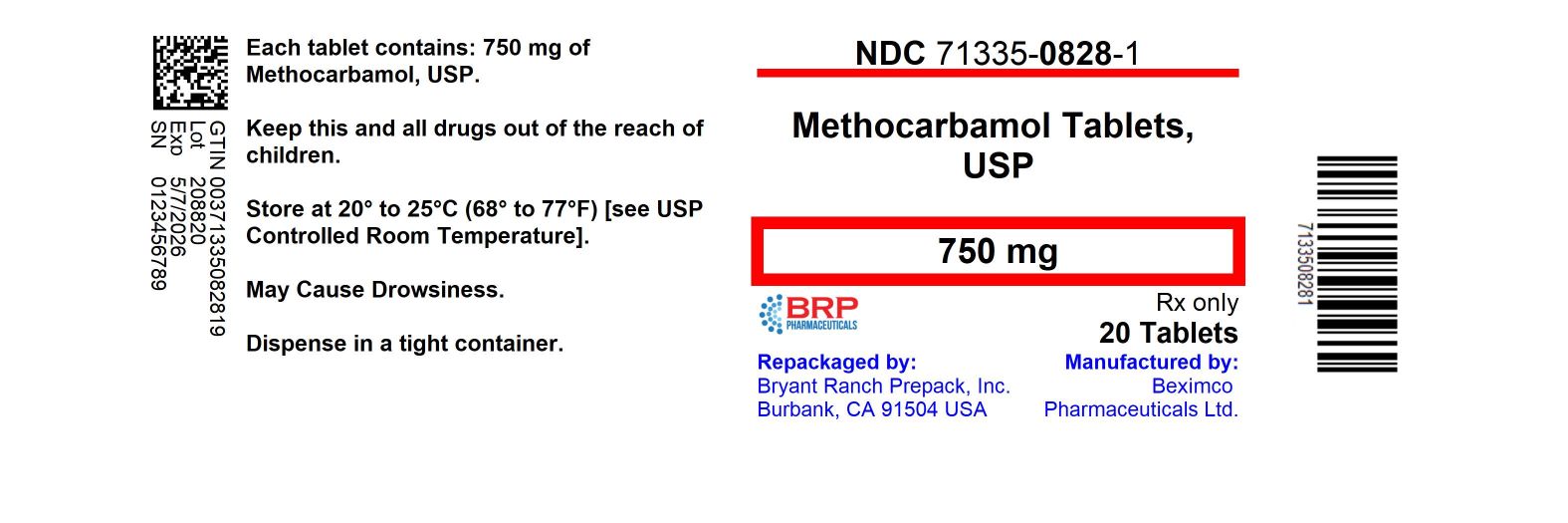
MethocarbamolROBAXINmethocarbamolTanlorMETHOCARBAMOLMethocarb 500-EZSMethocarbamol Tablets, USP, 750 mgATMEKSIMethocarbamol Tablets, USP, 500 mg
Active ingredients
METHOCARBAMOL
Indications
INDICATIONS AND USAGE ATMEKSI (methocarbamol) oral suspension is a muscle relaxant indicated as: an adjunct to rest, physical therapy, and other measures for the relief of discomfort associated with acute, painful musculoskeletal conditions in patients 16 and older. 1.1 Acute, painful musculoskeletal conditions. ATMEKSI is indicated as an adjunct to rest, physical therapy, and other measures for the relief of discomfort associated with acute, painful musculoskeletal conditions in patients 16 and older. 1.1 Acute, painful musculoskeletal conditions. ATMEKSI is indicated as an adjunct to rest, physical therapy, and other measures for the relief of discomfort associated with acute, painful musculoskeletal conditions in patients 16 and older.
Dosage
DOSAGE AND ADMINISTRATION For Intravenous and Intramuscular Use Only. Total adult dosage should not exceed 30 mL (3 vials) a day for more than 3 consecutive days except in the treatment of tetanus. If the condition persists, a like course may be repeated after a drug-free interval of 48 hours. Dosage and frequency of injection should be based on the severity of the condition being treated and therapeutic response noted. For the relief of symptoms of moderate degree, one dose of 1 gram (one 10 mL vial) may be adequate. Ordinarily this injection need not be repeated, as the administration of the oral form will usually sustain the relief initiated by the injection. For the severest cases or in postoperative conditions in which oral administration is not feasible, additional doses of 1 gram may be repeated every 8 hours up to a maximum of 3 g/day for no more than 3 consecutive days. Directions for Intravenous Use Methocarbamol injection may be administered undiluted directly into the vein at a maximum rate of three mL per minute. It may also be added to an intravenous drip of Sodium Chloride Injection (Sterile Isotonic Sodium Chloride Solution for Parenteral Use) or five percent Dextrose Injection (Sterile 5 percent Dextrose Solution); one vial given as a single dose should not be diluted to more than 250 mL for intravenous infusion. AFTER MIXING WITH INTRAVENOUS INFUSION FLUIDS, DO NOT REFRIGERATE. Care should be exercised to avoid vascular extravasation of this hypertonic solution, which may result in thrombophlebitis. It is preferable that the patient be in a recumbent position during and for at least 10 to 15 minutes following the injection. Directions for Intramuscular Use When the intramuscular route is indicated, not more than five mL (one-half vial) should be injected into each gluteal region. The injections may be repeated at eight hour intervals, if necessary. When satisfactory relief of symptoms is achieved, it can usually be maintained with tablets. Not Recommended for Subcutaneous Administration. Special Directions for Use in Tetanus There is clinical evidence which suggests that methocarbamol may have a beneficial effect in the control of the neuromuscular manifestations of tetanus. It does not, however, replace the usual procedure of debridement, tetanus antitoxin, penicillin, tracheotomy, attention to fluid balance, and supportive care. Methocarbamol injection should be added to the regimen as soon as possible. For adults: Inject one or two vials directly into the tubing of the previously inserted indwelling needle. An additional 10 mL or 20 mL may be added to the infusion bottle so that a total of up to 30 mL (three vials) is given as the initial dose (see PRECAUTIONS ). This procedure should be repeated every six hours until conditions allow for the insertion of a nasogastric tube. Crushed methocarbamol tablets suspended in water or saline may then be given through this tube. Total daily oral doses up to 24 grams may be required as judged by patient response. For pediatric patients: A minimum initial dose of 15 mg/kg or 500 mg/m 2 is recommended. This dosage may be repeated every six hours, if required. The total dose should not exceed 1.8 g/m 2 for 3 consecutive days. The maintenance dosage may be given by injection into tubing or by intravenous infusion with an appropriate quantity of fluid. See directions for intravenous use.
Warnings
Warnings and Precautions Since methocarbamol may possess a general CNS depressant effect, patients receiving Methocarbamol tablets should be cautioned about combined effects with alcohol and other CNS depressants. Safe use of Methocarbamol tablets has not been established with regard to possible adverse effects upon fetal development. There have been reports of fetal and congenital abnormalities following in utero exposure to methocarbamol. Therefore, Methocarbamol tablets should not be used in women who are or may become pregnant and particularly during early pregnancy unless in the judgment of the physician the potential benefits outweigh the possible hazards (see PRECAUTIONS, PREGNANCY ). Use in Activities Requiring Mental Alertness Methocarbamol may impair mental and/or physical abilities required for performance of hazardous tasks, such as operating machinery or driving a motor vehicle. Patients should be cautioned about operating machinery, including automobiles, until they are reasonably certain that methocarbamol therapy does not adversely affect their ability to engage in such activities. INFORMATION FOR PATIENTS Patients should be cautioned that methocarbamol may cause drowsiness or dizziness, which may impair their ability to operate motor vehicles or machinery. Because methocarbamol may possess a general CNS-depressant effect, patients should be cautioned about combined effects with alcohol and other CNS depressants. DRUG INTERACTIONS See WARNINGS and PRECAUTIONS for interaction with CNS drugs and alcohol. Methocarbamol may inhibit the effect of pyridostigmine bromide. Therefore, methocarbamol should be used with caution in patients with myasthenia gravis receiving anticholinesterase agents. DRUG/LABORATORY TEST INTERACTIONS Methocarbamol may cause color interference in certain screening tests for 5-hydroxyindoleacetic acid (5-HIAA) using nitrosonaphthol reagent and in screening tests for urinary vanillylmandelic acid (VMA) using the Gitlow method. CARCINOGENESIS, MUTAGENESIS, IMPAIRMENT OF FERTILITY Long-term studies to evaluate the carcinogenic potential of methocarbamol have not been performed. No studies have been conducted to assess the effect of methocarbamol on mutagenesis or its potential to impair fertility. PREGNANCY Teratogenic Effects Pregnancy Category C Animal reproduction studies have not been conducted with methocarbamol. It is also not known whether methocarbamol can cause fetal harm when administered to a pregnant woman or can affect reproduction capacity. Methocarbamol tablets should be given to a pregnant woman only if clearly needed. Safe use of methocarbamol tablet has not been established with regard to possible adverse effects upon fetal development. There have been reports of fetal and congenital abnormalities following in utero exposure to methocarbamol. Therefore, Methocarbamol tablets should not be used in women who are or may become pregnant and particularly during early pregnancy unless in the judgment of the physician the potential benefits outweigh the possible hazards (see WARNINGS). NURSING MOTHERS Methocarbamol and/or its metabolites are excreted in the milk of dogs; however, it is not known whether methocarbamol or its metabolites are excreted in human milk. Because many drugs are excreted in human milk, caution should be exercised when methocarbamol tablets are administered to a nursing woman. PEDIATRIC USE Safety and effectiveness of methocarbamol tablets in pediatric patients below the age of 16 have not been established.
Contraindications
CONTRAINDICATIONS Methocarbamol Injection should not be administered to patients with known or suspected renal pathology. This caution is necessary because of the presence of polyethylene glycol 300 in the vehicle. A much larger amount of polyethylene glycol 300 than is present in recommended doses of Methocarbamol Injection is known to have increased pre-existing acidosis and urea retention in patients with renal impairment. Although the amount present in this preparation is well within the limits of safety, caution dictates this contraindication. Methocarbamol Injection is contraindicated in patients hypersensitive to methocarbamol or to any of the injection components.
Drug interactions
DRUG INTERACTIONS ATMEKSI may inhibit the effect of pyridostigmine bromide. Patients with myasthenia gravis should be monitored closely for symptoms of myasthenia gravis such as weakness. If symptoms of myasthenia gravis are observed, treatment with ATMEKSI should be stopped immediately ( 7.2 ) Laboratory test interference: Methocarbamol may cause color interference in the following screening tests: 5-hydroxyindoleacetic acid (using nitrosonaphthol reagent) and VMA (Giltow method) ( 7.3 ) 7.1 CNS drugs and alcohol ATMEKSI may potentiate the effects of CNS (central nervous system) depressants and alcohol [ see Warnings and Precautions (5.1) ]. 7.2 Pyridostigmine Bromide ATMEKSI may inhibit the effect of pyridostigmine bromide. Patients with myasthenia gravis should be monitored closely for symptoms of myasthenia gravis such as weakness. If symptoms of myasthenia gravis are observed, treatment with ATMEKSI should be stopped immediately. 7.3 Drug/Laboratory Test Interactions ATMEKSI may cause color interference in certain screening tests for 5-hydroxyindoleacetic acid (5-HIAA) using nitrosonaphthol reagent and in screening tests for urinary vanillylmandelic acid (VMA) using the Gitlow method. 7.1 CNS drugs and alcohol ATMEKSI may potentiate the effects of CNS (central nervous system) depressants and alcohol [ see Warnings and Precautions (5.1) ]. 7.2 Pyridostigmine Bromide ATMEKSI may inhibit the effect of pyridostigmine bromide. Patients with myasthenia gravis should be monitored closely for symptoms of myasthenia gravis such as weakness. If symptoms of myasthenia gravis are observed, treatment with ATMEKSI should be stopped immediately. 7.3 Drug/Laboratory Test Interactions ATMEKSI may cause color interference in certain screening tests for 5-hydroxyindoleacetic acid (5-HIAA) using nitrosonaphthol reagent and in screening tests for urinary vanillylmandelic acid (VMA) using the Gitlow method.
Adverse reactions
ADVERSE REACTIONS The following serious adverse reaction is described elsewhere in the labeling: Interactions with CNS Depressants and Alcohol [ see Warnings and Precautions (5.1) ] The following adverse reactions associated with the use of methocarbamol have been identified in clinical studies or postmarketing reports. Because some of these reactions were reported voluntarily from a population of uncertain size, it is not always possible to reliably estimate their frequency or establish a causal relationship to drug exposure. Adverse reactions reported with the administration of methocarbamol include: Body as a whole : Anaphylactic reaction, angioneurotic edema, fever, headache. Cardiovascular system: Bradycardia, flushing, hypotension, syncope, thrombophlebitis. Digestive system: Dyspepsia, jaundice (including cholestatic jaundice), nausea and vomiting. Hemic and lymphatic system: Leukopenia. Immune System: Hypersensitivity reactions. Nervous system: Amnesia, confusion, diplopia, dizziness or lightheadedness, drowsiness, insomnia, mild muscular incoordination, nystagmus, sedation, seizures (including grand mal), vertigo. Skin and special senses: Blurred vision, conjunctivitis, nasal congestion, metallic taste, pruritus, rash, urticaria. Body: Anaphylactic reaction, angioneurotic edema, fever, headache ( 6 ) Cardiovascular system: Bradycardia, flushing, hypotension, syncope, thrombophlebitis ( 6 ) Digestive system: Dyspepsia, jaundice (including cholestatic jaundice), nausea and vomiting ( 6 ) Hemic and lymphatic system: Leukopenia ( 6 ) Immune system: Hypersensitivity reactions ( 6 ) Nervous system: Amnesia, confusion, diplopia, dizziness or lightheadedness, drowsiness, insomnia, mild muscular incoordination, nystagmus, sedation, seizures (including grand mal), vertigo ( 6 ) Skin and special senses: Blurred vision, conjunctivitis, nasal congestion, metallic taste, pruritus, rash and urticaria ( 6 ) To report SUSPECTED ADVERSE REACTIONS, contact Rosemont Pharmaceuticals, LLC. at 1-844-638-2235 or FDA at 1-800-FDA-1088 or www.fda.gov/medwatch .
Mechanism of action
CLINICAL PHARMACOLOGY 12.1 Mechanism of Action The mechanism of action of methocarbamol in humans has not been established but may be due to general central nervous system (CNS) depression. It has no direct action on the contractile mechanism of striated muscle, the motor end plate, or the nerve fiber. 12.3 Pharmacokinetics Absorption After oral administration in healthy volunteers, ATMEKSI is rapidly absorbed with a median Tmax of 0.66 hours. Food decreases the extent and delays the rate of absorption of methocarbamol. In the presence of food, the Cmax is decreased by 51% and the AUC is decreased by 31%. The median Tmax is delayed to 1.6 hours. Distribution Methocarbamol demonstrates moderate binding to plasma proteins, typically ranging from 46% to 50%. Elimination In healthy volunteers, the plasma clearance of methocarbamol ranges between 0.20 and 0.80 L/h/kg. The mean plasma elimination half-life of ATMEKSI in healthy volunteers is approximately 1.3 hours and 1.5 hours when administered with or without food. Metabolism Methocarbamol is metabolized via dealkylation and hydroxylation. Conjugation of methocarbamol also is likely. Essentially all methocarbamol metabolites are eliminated in the urine. Excretion Small amounts of unchanged methocarbamol also are excreted in the urine. Specific Populations Geriatric Patients The mean (± SD) elimination half-life of methocarbamol in elderly healthy volunteers (mean (± SD) age, 69 (± 4) years) was slightly prolonged compared to a younger (mean (± SD) age, 53.3 (± 8.8) years), healthy population (1.5 (± 0.4) hours versus 1.1 (± 0.27) hours, respectively). The fraction of bound methocarbamol was slightly decreased in the elderly versus younger volunteers (41 to 43% versus 46 to 50%, respectively). Pediatric Patients Safety and effectiveness of methocarbamol oral suspension in pediatric patients below the age of 16 have not been established. Patients with Renal Impairment The clearance of methocarbamol in 8 renally-impaired patients on maintenance hemodialysis was reduced about 40% compared to 17 normal subjects, although the mean (± SD) elimination half-life in these two groups was similar: 1.2 (± 0.6) versus 1.1 (± 0.3) hours, respectively. Patients with Hepatic Impairment In 8 patients with cirrhosis secondary to alcohol abuse, the mean total clearance of methocarbamol was reduced approximately 70% compared to that obtained in 8 age- and weight-matched normal subjects. The mean (± SD) elimination half-life in the cirrhotic patients and the normal subjects was 3.38 (± 1.62) hours and 1.11 (± 0.27) hours, respectively. The percent of methocarbamol bound to plasma proteins was decreased to approximately 40 to 45% compared to 46 to 50% in the normal subjects. 12.1 Mechanism of Action The mechanism of action of methocarbamol in humans has not been established but may be due to general central nervous system (CNS) depression. It has no direct action on the contractile mechanism of striated muscle, the motor end plate, or the nerve fiber. 12.3 Pharmacokinetics Absorption After oral administration in healthy volunteers, ATMEKSI is rapidly absorbed with a median Tmax of 0.66 hours. Food decreases the extent and delays the rate of absorption of methocarbamol. In the presence of food, the Cmax is decreased by 51% and the AUC is decreased by 31%. The median Tmax is delayed to 1.6 hours. Distribution Methocarbamol demonstrates moderate binding to plasma proteins, typically ranging from 46% to 50%. Elimination In healthy volunteers, the plasma clearance of methocarbamol ranges between 0.20 and 0.80 L/h/kg. The mean plasma elimination half-life of ATMEKSI in healthy volunteers is approximately 1.3 hours and 1.5 hours when administered with or without food. Metabolism Methocarbamol is metabolized via dealkylation and hydroxylation. Conjugation of methocarbamol also is likely. Essentially all methocarbamol metabolites are eliminated in the urine. Excretion Small amounts of unchanged methocarbamol also are excreted in the urine. Specific Populations Geriatric Patients The mean (± SD) elimination half-life of methocarbamol in elderly healthy volunteers (mean (± SD) age, 69 (± 4) years) was slightly prolonged compared to a younger (mean (± SD) age, 53.3 (± 8.8) years), healthy population (1.5 (± 0.4) hours versus 1.1 (± 0.27) hours, respectively). The fraction of bound methocarbamol was slightly decreased in the elderly versus younger volunteers (41 to 43% versus 46 to 50%, respectively). Pediatric Patients Safety and effectiveness of methocarbamol oral suspension in pediatric patients below the age of 16 have not been established. Patients with Renal Impairment The clearance of methocarbamol in 8 renally-impaired patients on maintenance hemodialysis was reduced about 40% compared to 17 normal subjects, although the mean (± SD) elimination half-life in these two groups was similar: 1.2 (± 0.6) versus 1.1 (± 0.3) hours, respectively. Patients with Hepatic Impairment In 8 patients with cirrhosis secondary to alcohol abuse, the mean total clearance of methocarbamol was reduced approximately 70% compared to that obtained in 8 age- and weight-matched normal subjects. The mean (± SD) elimination half-life in the cirrhotic patients and the normal subjects was 3.38 (± 1.62) hours and 1.11 (± 0.27) hours, respectively. The percent of methocarbamol bound to plasma proteins was decreased to approximately 40 to 45% compared to 46 to 50% in the normal subjects.
Available forms (10)
10 ML methocarbamol 100 MG/ML Injectionmethocarbamol 1000 MG Oral Tabletmethocarbamol 150 MG/ML Oral Suspensionmethocarbamol 500 MG Oral Tabletmethocarbamol 750 MG Oral Tablet10 ML methocarbamol 100 MG/ML Injection [Robaxin]brandmethocarbamol 1000 MG Oral Tablet [Tanlor]brandmethocarbamol 150 MG/ML Oral Suspension [Atmeksi]brandmethocarbamol 500 MG Oral Tablet [Robaxin]brandmethocarbamol 750 MG Oral Tablet [Robaxin]brand
NDC examples
63187-13025021-68955154-212955154-213050090-018369584-61169584-61287063-1350641-610367296-143572789-39763187-019
Indicated ICD-10 codes
Treats these conditions
Source: openFDA + RxNorm · 2026
Look up another medication