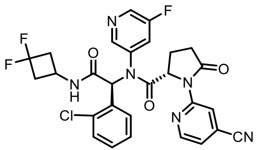
Ivosidenib — Isocitrate Dehydrogenase 1 Inhibitor [EPC]. INDICATIONS AND USAGE TIBSOVO is an isocitrate dehydrogenase-1 (IDH1) inhibitor indicated for patients with a susceptible IDH1 mutation as detected…
Boxed warning
WARNING: DIFFERENTIATION SYNDROME IN AML AND MDS Patients treated with TIBSOVO have experienced symptoms of differentiation syndrome, which can be fatal. Symptoms may include fever, dyspnea, hypoxia, pulmonary infiltrates, pleural or pericardial effusions, rapid weight gain or peripheral edema, hypotension, and hepatic, renal, or multi-organ dysfunction. If differentiation syndrome is suspected, initiate corticosteroid therapy and hemodynamic monitoring until symptom resolution [see Warnings and Precautions (5.1) and Adverse Reactions (6.1) ] . WARNING: DIFFERENTIATION SYNDROME IN AML AND MDS See full prescribing information for complete boxed warning. Patients treated with TIBSOVO have experienced symptoms of differentiation syndrome, which can be fatal. If differentiation syndrome is suspected, initiate corticosteroid therapy and hemodynamic monitoring until symptom resolution ( 5.1 , 6.1 ).
INDICATIONS AND USAGE TIBSOVO is an isocitrate dehydrogenase-1 (IDH1) inhibitor indicated for patients with a susceptible IDH1 mutation as detected by an FDA-approved test with: Newly Diagnosed Acute Myeloid Leukemia (AML) In combination with azacitidine or as monotherapy for the treatment of newly diagnosed AML in adults 75 years or older, or who have comorbidities that preclude use of intensive induction chemotherapy ( 1.1 ). Relapsed or refractory AML For the treatment of adult patients with relapsed or refractory AML ( 1.2 ). Relapsed or refractory Myelodysplastic Syndromes (MDS) For the treatment of adult patients with relapsed or refractory myelodysplastic syndromes ( 1.3 ). Locally Advanced or Metastatic Cholangiocarcinoma For the treatment of adult patients with locally advanced or metastatic cholangiocarcinoma who have been previously treated ( 1.4 ). 1.1 Newly Diagnosed Acute Myeloid Leukemia TIBSOVO is indicated in combination with azacitidine or as monotherapy for the treatment of newly diagnosed acute myeloid leukemia (AML) with a susceptible isocitrate dehydrogenase-1 (IDH1) mutation as detected by an FDA-approved test in adults 75 years or older, or who have comorbidities that preclude use of intensive induction chemotherapy [see Dosage and Administration (2.1) , Clinical Pharmacology (12.1) and Clinical Studies (14.1) ]. 1.2 Relapsed or Refractory Acute Myeloid Leukemia TIBSOVO is indicated for the treatment of adult patients with relapsed or refractory acute myeloid leukemia (AML) with a susceptible isocitrate dehydrogenase-1 (IDH1) mutation as detected by an FDA-approved test [see Dosage and Administration (2.1) , Clinical Pharmacology (12.1) and Clinical Studies (14.2) ] . 1.3 Relapsed or Refractory Myelodysplastic Syndromes TIBSOVO is indicated for the treatment of adult patients with relapsed or refractory myelodysplastic syndromes (MDS) with a susceptible isocitrate dehydrogenase-1 (IDH1) mutation as detected by an FDA-approved test [see Dosage and Administration (2.1) , Clinical Pharmacology (12.1) and Clinical Studies (14.3) ] . 1.4 Locally Advanced or Metastatic Cholangiocarcinoma TIBSOVO is indicated for the treatment of adult patients with previously treated, locally advanced or metastatic cholangiocarcinoma with an isocitrate dehydrogenase-1 (IDH1) mutation as detected by an FDA-approved test [see Dosage and Administration (2.1) , Clinical Pharmacology (12.1) , and Clinical Studies (14.4) ] .
Dosage
DOSAGE AND ADMINISTRATION 500 mg orally once daily with or without food until disease progression or unacceptable toxicity ( 2.2 ). Avoid a high-fat meal. 2.1 Patient Selection Select patients for treatment with TIBSOVO based on the presence of IDH1 mutations [see Clinical Studies (14.1 , 14.2 , 14.3 , 14.4 )]. Information on FDA-approved tests for the detection of IDH1 mutations in AML, MDS, and cholangiocarcinoma is available at http://www.fda.gov/CompanionDiagnostics. 2.2 Recommended Dosage The recommended dosage of TIBSOVO is 500 mg taken orally once daily until disease progression or unacceptable toxicity [see Clinical Studies (14.1 , 14.2 , 14.3 , 14.4 )] . For patients with AML or MDS without disease progression or unacceptable toxicity, continue TIBSOVO for a minimum of 6 months to allow time for clinical response. Administer TIBSOVO with or without food. Do not administer TIBSOVO with a high-fat meal [see Warnings and Precautions (5.2) and Clinical Pharmacology (12.3) ]. Do not split, crush, or chew TIBSOVO tablets. Administer TIBSOVO tablets orally about the same time each day. If a dose of TIBSOVO is vomited, do not administer a replacement dose; wait until the next scheduled dose is due. If a dose of TIBSOVO is missed or not taken at the usual time, administer the dose as soon as possible and at least 12 hours prior to the next scheduled dose. Return to the normal schedule the following day. Do not administer 2 doses within 12 hours. Newly Diagnosed AML (Combination Regimen) Start TIBSOVO administration on Cycle 1 Day 1 in combination with azacitidine 75 mg/m 2 subcutaneously or intravenously once daily on Days 1-7 (or Days 1-5 and 8-9) of each 28-day cycle [see Clinical Studies (14.1) ] . Refer to the Prescribing Information for azacitidine for additional dosing information. 2.3 Monitoring and Dosage Modifications for Toxicities Obtain an electrocardiogram (ECG) prior to treatment initiation. Monitor ECGs at least once weekly for the first 3 weeks of therapy and then at least once monthly for the duration of therapy [see Warnings and Precautions (5.2) ] . Manage any abnormalities promptly . Interrupt dosing or reduce dose for toxicities. See Table 1 for dosage modification guidelines. Table 1: Recommended Dosage Modifications for TIBSOVO Adverse Reactions Recommended Action Differentiation syndrome [see Warnings and Precautions (5.1) ] If differentiation syndrome is suspected, administer systemic corticosteroids and initiate hemodynamic monitoring until symptom resolution and for a minimum of 3 days . Interrupt TIBSOVO if severe signs and/or symptoms persist for more than 48 hours after initiation of systemic corticosteroids . Resume TIBSOVO when signs and symptoms improve to Grade 2 or lower. Noninfectious leukocytosis (white blood cell [WBC] count greater than 25 × 10 9 /L or an absolute increase in total WBC of greater than 15 × 10 9 /L from baseline) Initiate treatment with hydroxyurea, as per standard institutional practices, and leukapheresis if clinically indicated. Taper hydroxyurea only after leukocytosis improves or resolves. Interrupt TIBSOVO if leukocytosis is not improved with hydroxyurea, and then resume TIBSOVO at 500 mg daily when leukocytosis has resolved. QTc interval greater than 480 msec to 500 msec [see Warnings and Precautions (5.2) and Drug Interactions (7.1) ] Monitor and supplement electrolyte levels as clinically indicated. Review and adjust concomitant medications with known QTc interval-prolonging effects. Interrupt TIBSOVO. Restart TIBSOVO at 500 mg once daily after the QTc interval returns to less than or equal to 480 msec. Monitor ECGs at least weekly for 2 weeks following resolution of QTc prolongation. QTc interval greater than 500 msec [see Warnings and Precautions (5.2) and Drug Interactions (7.1) ] Monitor and supplement electrolyte levels as clinically indicated. Review and adjust concomitant medications with known QTc interval-prolonging effects . Interrupt TIBSOVO. Resume TIBSOVO at a reduced dose of 250 mg once daily when QTc interval returns to within 30 msec of baseline or less than or equal to 480 msec. Monitor ECGs at least weekly for 2 weeks following resolution of QTc prolongation. Consider re-escalating the dose of TIBSOVO to 500 mg daily if an alternative etiology for QTc prolongation can be identified. QTc interval prolongation with signs/symptoms of life-threatening arrhythmia [see Warnings and Precautions (5.2) ] Discontinue TIBSOVO permanently. Guillain-Barré syndrome [see Warnings and Precautions (5.3) ] Discontinue TIBSOVO permanently. Other Grade 3 Grade 1 is mild, Grade 2 is moderate, Grade 3 is severe, Grade 4 is life-threatening; grading based on Common Terminology Criteria for Adverse Events (CTCAE) version 4.03. adverse reactions As monotherapy in AML and MDS : Interrupt TIBSOVO until toxicity resolves to Grade 2 or lower. Resume TIBSOVO at 250 mg once daily; may increase to 500 mg once daily if toxicities resolve to Grade 1 or lower. If Grade 3 or higher toxicity recurs, discontinue TIBSOVO. In cholangiocarcinoma, or in AML in combination with azacitidine : Interrupt TIBSOVO until toxicity resolves to Grade 1 or lower, or baseline, then resume at 500 mg daily (Grade 3 toxicity) or 250 mg daily (Grade 4 toxicity). If Grade 3 toxicity recurs (a second time), reduce TIBSOVO dose to 250 mg daily until the toxicity resolves, then resume 500 mg daily. If Grade 3 toxicity recurs (a third time), or Grade 4 toxicity recurs, discontinue TIBSOVO. Patients with AML or MDS Assess blood counts and blood chemistries prior to the initiation of TIBSOVO, at least once weekly for the first month, once every other week for the second month, and once monthly for the duration of therapy. Monitor blood creatine phosphokinase weekly for the first month of therapy. 2.4 Dosage Modification for Use with Strong CYP3A4 Inhibitors If a strong CYP3A4 inhibitor must be coadministered, reduce the TIBSOVO dose to 250 mg once daily. If the strong inhibitor is discontinued, increase the TIBSOVO dose (after at least 5 half-lives of the strong CYP3A4 inhibitor) to the recommended dose of 500 mg once daily.
Warnings
WARNINGS AND PRECAUTIONS QTc Interval Prolongation : Monitor electrocardiograms and electrolytes. If QTc interval prolongation occurs, dose reduce or withhold, then resume dose or permanently discontinue TIBSOVO ( 2.3 , 5.2 ). Guillain-Barré Syndrome : Monitor patients for signs and symptoms of new motor and/or sensory findings. Permanently discontinue TIBSOVO in patients who are diagnosed with Guillain-Barré syndrome ( 2.3 , 5.3 ). 5.1 Differentiation Syndrome in AML and MDS Differentiation syndrome is associated with rapid proliferation and differentiation of myeloid cells and may be life-threatening or fatal. Symptoms of differentiation syndrome in patients treated with TIBSOVO included noninfectious leukocytosis, peripheral edema, pyrexia, dyspnea, pleural effusion, hypotension, hypoxia, pulmonary edema, pneumonitis, pericardial effusion, rash, fluid overload, tumor lysis syndrome and creatinine increased. In the combination study AG120-C-009, 15% (11/71) patients with newly diagnosed AML treated with TIBSOVO plus azacitidine experienced differentiation syndrome [see Adverse Reactions (6.1) ] . Of the 11 patients with newly diagnosed AML who experienced differentiation syndrome with TIBSOVO plus azacitidine 8 (73%) recovered. Differentiation syndrome occurred as early as 3 days after start of therapy and during the first month on treatment. In the monotherapy clinical trial AG120-C-001, 25% (7/28) of patients with newly diagnosed AML and 19% (34/179) of patients with relapsed or refractory AML treated with TIBSOVO experienced differentiation syndrome [see Adverse Reactions (6.1) ] . Of the 7 patients with newly diagnosed AML who experienced differentiation syndrome, 6 (86%) patients recovered. Of the 34 patients with relapsed or refractory AML who experienced differentiation syndrome, 27 (79%) patients recovered after treatment or after dose interruption of TIBSOVO. Differentiation syndrome occurred as early as 1 day and up to 3 months after TIBSOVO initiation and has been observed with or without concomitant leukocytosis. In the monotherapy clinical trial AG120-C-001, 11% (2/19) of patients with relapsed or refractory MDS treated with TIBSOVO experienced differentiation syndrome [see Adverse Reactions (6.1) ] . Of the 2 patients who experienced differentiation syndrome, both recovered after treatment or after dose interruption of TIBSOVO. Differentiation syndrome occurred as early as 1 day and up to 3 months after TIBSOVO initiation and has been observed with or without concomitant leukocytosis. If differentiation syndrome is suspected, initiate dexamethasone 10 mg IV every 12 hours (or an equivalent dose of an alternative oral or IV corticosteroid) and hemodynamic monitoring until improvement [see Dosage and Administration (2.3) ] . If concomitant noninfectious leukocytosis is observed, initiate treatment with hydroxyurea or leukapheresis, as clinically indicated. Taper corticosteroids and hydroxyurea after resolution of symptoms and administer corticosteroids for a minimum of 3 days. Symptoms of differentiation syndrome may recur with premature discontinuation of corticosteroid and/or hydroxyurea treatment. If severe signs and/or symptoms persist for more than 48 hours after initiation of corticosteroids, interrupt TIBSOVO until signs and symptoms are no longer severe [see Dosage and Administration (2.3) ]. 5.2 QTc Interval Prolongation Patients treated with TIBSOVO can develop QT (QTc) prolongation and ventricular arrhythmias [see Clinical Pharmacology (12.2) ]. Of the 71 patients with newly diagnosed AML treated with TIBSOVO in combination with azacitidine in the clinical trial (Study AG120-C-009), 10 (14%) were found to have a heart-rate corrected QT interval (using Fridericia's method) (QTcF) greater than 500 msec and 15 out of 69 (22%) had an increase from baseline QTcF greater than 60 msec [see Adverse Reactions (6.1) ] . The clinical trial excluded patients with a QTcF ≥ 470 msec or other factors that increased the risk of QT prolongation or arrhythmic events (e.g. NYHA Class III or IV congestive heart failure, hypokalemia, family history of long QT interval syndrome). Of the 265 patients with hematological malignancies, including patients with AML and MDS, treated with TIBSOVO monotherapy in the clinical trial (AG120-C-001), 9% were found to have a QTc interval greater than 500 msec and 14% of patients had an increase from baseline QTc greater than 60 msec [see Adverse Reactions (6.1) ] . One patient developed ventricular fibrillation attributed to TIBSOVO. The clinical trial excluded patients with baseline QTc of ≥ 450 msec (unless the QTc ≥ 450 msec was due to a pre-existing bundle branch block) or with a history of long QT syndrome or uncontrolled or significant cardiovascular disease. Of the 123 patients with cholangiocarcinoma treated with TIBSOVO in the clinical trial (Study AG120-C-005), 2% were found to have a QTc interval greater than 500 msec and 5% of patients had an increase from baseline QTc greater than 60 msec [see Adverse Reactions (6.1) ] . The clinical trial excluded patients with a heart-rate corrected QT interval (using Fridericia's formula) (QTcF) ≥ 450 msec or other factors that increased the risk of QT prolongation or arrhythmic events (e.g., heart failure, hypokalemia, family history of long QT interval syndrome). Concomitant use of TIBSOVO with drugs known to prolong the QTc interval (e.g., anti-arrhythmic medicines, fluoroquinolones, triazole anti-fungals, 5-HT 3 receptor antagonists) and CYP3A4 inhibitors may increase the risk of QTc interval prolongation [see Drug Interactions (7.1) , Clinical Pharmacology (12.2) ]. Conduct monitoring of electrocardiograms (ECGs) and electrolytes [see Dosage and Administration (2.3) ] . In patients with congenital long QTc syndrome, congestive heart failure, electrolyte abnormalities, or those who are taking medications known to prolong the QTc interval, more frequent monitoring may be necessary. Interrupt TIBSOVO if QTc increases to greater than 480 msec and less than 500 msec. Interrupt and reduce TIBSOVO if QTc increases to greater than 500 msec. Permanently discontinue TIBSOVO in patients who develop QTc interval prolongation with signs or symptoms of life-threatening arrhythmia [See Dosage and Administration (2.3) ] . 5.3 Guillain-Barré Syndrome Guillain-Barré syndrome can develop in patients treated with TIBSOVO. Guillain-Barré syndrome occurred in 0.8% (2/265) of patients treated with TIBSOVO in study AG120-C-001 [see Adverse Reactions (6.1) ] . Monitor patients taking TIBSOVO for onset of new signs or symptoms of motor and/or sensory neuropathy such as unilateral or bilateral weakness, sensory alterations, paresthesias, or difficulty breathing. Permanently discontinue TIBSOVO in patients who are diagnosed with Guillain-Barré syndrome [see Dosage and Administration (2.3) ].
Contraindications
CONTRAINDICATIONS None. None ( 4 ).
Drug interactions
DRUG INTERACTIONS Strong or Moderate CYP3A4 Inhibitors: Reduce TIBSOVO dose with strong CYP3A4 inhibitors. Monitor patients for increased risk of QTc interval prolongation ( 2.4 , 5.2 , 7.1 , 12.3 ). Strong CYP3A4 Inducers: Avoid concomitant use with TIBSOVO ( 7.1 , 12.3 ). Sensitive CYP3A4 substrates: Avoid concomitant use with TIBSOVO ( 7.2 , 12.3 ). QTc Prolonging Drugs: Avoid concomitant use with TIBSOVO. If co-administration is unavoidable, monitor patients for increased risk of QTc interval prolongation ( 5.2 , 7.1 ). 7.1 Effect of Other Drugs on Ivosidenib Strong or Moderate CYP3A4 Inhibitors Clinical Impact Co-administration of TIBSOVO with strong or moderate CYP3A4 inhibitors increased ivosidenib plasma concentrations [see Clinical Pharmacology (12.3) ]. Increased ivosidenib plasma concentrations may increase the risk of QTc interval prolongation [see Warnings and Precautions (5.2) ]. Prevention or Management Consider alternative therapies that are not strong or moderate CYP3A4 inhibitors during treatment with TIBSOVO. If co-administration of a strong CYP3A4 inhibitor is unavoidable, reduce TIBSOVO to 250 mg once daily [see Dosage and Administration (2.3) ]. Monitor patients for increased risk of QTc interval prolongation [see Warnings and Precautions (5.2) ] . Strong CYP3A4 Inducers Clinical Impact Co-administration of TIBSOVO with strong CYP3A4 inducers decreased ivosidenib plasma concentrations [see Clinical Pharmacology (12.3) ]. Prevention or Management Avoid co-administration of strong CYP3A4 inducers with TIBSOVO. QTc Prolonging Drugs Clinical Impact Co-administration of TIBSOVO with QTc prolonging drugs may increase the risk of QTc interval prolongation [see Warnings and Precautions (5.2) ]. Prevention or Management Avoid co-administration of QTc prolonging drugs with TIBSOVO or replace with alternative therapies. If co-administration of a QTc prolonging drug is unavoidable, monitor patients for increased risk of QTc interval prolongation [ see Warnings and Precautions (5.2) ]. 7.2 Effect of Ivosidenib on Other Drugs Ivosidenib induces CYP3A4 and may induce CYP2C9. Co-administration will decrease concentrations of drugs that are sensitive CYP3A4 substrates and may decrease concentrations of drugs that are sensitive CYP2C9 substrates [see Clinical Pharmacology (12.3) ] . Use alternative therapies that are not sensitive substrates of CYP3A4 and CYP2C9 during TIBSOVO treatment. If co-administration of TIBSOVO with sensitive CYP3A4 substrates or CYP2C9 substrates is unavoidable, monitor patients for loss of therapeutic effect of these drugs. Do not administer TIBSOVO with anti-fungal agents that are substrates of CYP3A4 due to expected loss of antifungal efficacy. Co-administration of TIBSOVO may decrease the concentrations of hormonal contraceptives, consider alternative methods of contraception in patients receiving TIBSOVO.
Adverse reactions
ADVERSE REACTIONS The following clinically significant adverse reactions are described elsewhere in the labeling: Differentiation Syndrome in AML and MDS [see Warnings and Precautions (5.1) ] QTc Interval Prolongation [see Warnings and Precautions (5.2) ] Guillain-Barré Syndrome [see Warnings and Precautions (5.3) ] The most common adverse reactions including laboratory abnormalities (≥ 25%) in patients with AML are leukocytes decreased, diarrhea, hemoglobin decreased, platelets decreased, glucose increased, fatigue, alkaline phosphatase increased, edema, potassium decreased, nausea, vomiting, phosphate decreased, decreased appetite, sodium decreased, leukocytosis, magnesium decreased, aspartate aminotransferase increased, arthralgia, dyspnea, uric acid increased, abdominal pain, creatinine increased, mucositis, rash, electrocardiogram QT prolonged, differentiation syndrome, calcium decreased, neutrophils decreased, and myalgia ( 6.1 ). The most common adverse reactions including laboratory abnormalities (≥25%) in patients with relapsed or refractory MDS are creatinine increased, hemoglobin decrease, arthralgia, albumin decreased, aspartate aminotransferase increased, fatigue, diarrhea, cough, sodium decreased, mucositis, decreased appetite, myalgia, phosphate decreased, pruritus, and rash ( 6.1 ). The most common adverse reactions (≥15%) in patients with cholangiocarcinoma are fatigue, nausea, abdominal pain, diarrhea, cough, decreased appetite, ascites, vomiting, anemia, and rash ( 6.1 ). The most common laboratory abnormalities (≥10%) in patients with cholangiocarcinoma are hemoglobin decreased, aspartate aminotransferase increased, and bilirubin increased ( 6.1 ). To report SUSPECTED ADVERSE REACTIONS, contact Servier Pharmaceuticals at 1-800-807-6124 or FDA at 1-800-FDA-1088 or www.fda.gov/medwatch. 6.1 Clinical Trials Experience Because clinical trials are conducted under widely varying conditions, adverse reaction rates observed in the clinical trials of a drug cannot be directly compared to rates in the clinical trials of another drug and may not reflect the rates observed in practice. Acute Myeloid Leukemia In AML, the safety population reflects exposure to TIBSOVO at 500 mg daily in combination with azacitidine or as monotherapy in patients in Studies AG120-C-009 (N=71) and AG120-C-001 (N=213), respectively [see Clinical Studies (14.1 and 14.2) ] . In this safety population, the most common adverse reactions including laboratory abnormalities (≥ 25% in either trial) were leukocytes decreased, diarrhea, hemoglobin decreased, platelets decreased, glucose increased, fatigue, alkaline phosphatase increased, edema, potassium decreased, nausea, vomiting, phosphatase decreased, decreased appetite, sodium decreased, leukocytosis, magnesium decreased, aspartate aminotransferase increased, arthralgia, dyspnea, uric acid increased, abdominal pain, creatinine increased, mucositis, rash, electrocardiogram QT prolonged, differentiation syndrome, calcium decreased, neutrophils decreased, and myalgia. Newly Diagnosed AML TIBSOVO in Combination with Azacitidine The safety of TIBSOVO was evaluated in AML patients treated in combination with azacitidine, in Study AG120-C-009 [see Clinical Studies (14.1) ] . Patients received at least one dose of either TIBSOVO 500 mg daily (N=71) or placebo (N=73). Among patients who received TIBSOVO in combination with azacitidine, the median duration of exposure to TIBSOVO was 6 months (range 0 to 33 months). Thirty-four patients (48%) were exposed to TIBSOVO for at least 6 months and 22 patients (31%) were exposed for at least 1 year. Common (≥ 5%) serious adverse reactions in patients who received TIBSOVO in combination with azacitidine included differentiation syndrome (8%). Fatal adverse reactions occurred in 4% of patients who received TIBSOVO in combination with azacitidine, due to differentiation syndrome (3%) and one case of cerebral ischemia. Adverse reactions leading to discontinuation of TIBSOVO in ≥2% of patients were differentiation syndrome (3%) and pulmonary embolism (3%). The most common (>5%) adverse reactions leading to dose interruption of TIBSOVO were neutropenia (25%), electrocardiogram QT prolonged (7%), and thrombocytopenia (7%). Adverse reactions leading to dose reduction of TIBSOVO included electrocardiogram QT prolonged (8%), neutropenia (8%), and thrombocytopenia (1%). The most common adverse reactions and laboratory abnormalities observed in Study AG120-C-009 are shown in Tables 2 and 3. Table 2: Adverse Reactions (≥10%) in Patients with AML Who Received TIBSOVO + azacitidine with a Difference Between Arms of ≥ 2% Compared with Placebo + azacitidine in AG120-C-009 TIBSOVO + Azacitidine N=71 Placebo + Azacitidine N=73 Body System Adverse Reaction All Grades n (%) Grade ≥3 n (%) All Grades n (%) Grade ≥3 n (%) Gastrointestinal disorders Nausea 30 (42) 2 (3) 28 (38) 3 (4) Vomiting Grouped term includes vomiting and retching. 29 (41) 0 20 (27) 1 (1) Investigations Electrocardiogram QT prolonged 14 (20) 7 (10) 5 (7) 2 (3) Psychiatric Disorders Insomnia 13 (18) 1 (1) 9 (12) 0 Blood system and lymphatic system disorders Differentiation Syndrome Differentiation syndrome can be associated with other commonly reported events such as peripheral edema, leukocytosis, pyrexia, dyspnea, pleural effusion, hypotension, hypoxia, pulmonary edema, pneumonia, pericardial effusion, rash, fluid overload, tumor lysis syndrome, and creatinine increased. 11 (15) 7 (10) 6 (8) 6 (8) Leukocytosis Grouped term includes leukocytosis, white blood cell count increased. 9 (13) 0 1 (1) 0 Vascular disorders Hematoma Grouped term includes hematoma, eye hematoma, catheter site hematoma, oral mucosa hematoma, spontaneous hematoma, application site hematoma, injection site hematoma, periorbital hematoma. 11 (15) 0 3 (4) 0 Hypertension Grouped term includes blood pressure increased, essential hypertension, and hypertension. 9 (13) 3 (4) 6 (8) 4 (5) Musculoskeletal and connective tissue disorders Arthralgia Grouped term includes pain in extremity, arthralgia, back pain, musculoskeletal stiffness, cancer pain, and neck pain. 21 (30) 3 (4) 6 (8) 1 (1) Respiratory, thoracic and mediastinal disorders Dyspnea Grouped term includes dyspnea, dyspnea exertional, hypoxia, respiration failure. 14 (20) 2 (3) 11 (15) 4 (5) Nervous system disorders Headache 8 (11) 0 2 (3) 0 Table 3: Select Laboratory Abnormalities Laboratory abnormality is defined as new or worsened by at least one grade from baseline, or if baseline is unknown. , The denominator used to calculate percentages is the number of treated subjects who can be evaluated for CTCAE criteria for each parameter in each arm. (≥10%) That Worsened from Baseline in Patients with AML Who Received TIBSOVO + azacitidine in AG120-C-009 TIBSOVO + Azacitidine N=71 Placebo + Azacitidine N=73 Parameter All Grades n (%) Grade ≥ 3 n (%) All Grades n (%) Grade ≥ 3 n (%) Hematology Parameters Leukocytes decreased 46 (65) 39 (55) 47 (64) 42 (58) Platelets decreased 41 (58) 30 (42) 52 (71) 42 (58) Hemoglobin decreased 40 (56) 33 (46) 48 (66) 42 (58) Neutrophils decreased 18 (25) 16 (23) 25 (35) 23 (32) Lymphocytes increased 17 (24) 1 (1) 7 (10) 1 (1) Chemistry Parameters Glucose increased 40 (56) 9 (13) 34 (47) 8 (11) Phosphate decreased 29 (41) 7 (10) 25 (34) 9 (12) Aspartate Aminotransferase increased 26 (37) 0 17 (23) 0 Magnesium decreased 25 (35) 0 19 (26) 0 Alkaline Phosphatase increased 23 (32) 0 21 (29) 0 Potassium increased 17 (24) 2 (3) 9 (12) 1 (1) TIBSOVO Monotherapy The safety profile of single-agent TIBSOVO was studied in 28 adults with newly diagnosed AML treated with 500 mg daily [see Clinical Studies (14.1) ] . The median duration of exposure to TIBSOVO was 4.3 months (range 0.3 to 40.9 months). Ten patients (36%) were exposed to TIBSOVO for at least 6 months and 6 patients (21%) were exposed for at least 1 year. Common (≥ 5%) serious adverse reactions included differentiation syndrome (18%), e
Mechanism of action
Mechanism of Action Ivosidenib is a small molecule inhibitor that targets the mutant isocitrate dehydrogenase 1 (IDH1) enzyme. In patients with AML, susceptible IDH1 mutations are defined as those leading to increased levels of 2-hydroxyglutarate (2-HG) in the leukemia cells and where efficacy is predicted by 1) clinically meaningful remissions with the recommended dose of ivosidenib and/or 2) inhibition of mutant IDH1 enzymatic activity at concentrations of ivosidenib sustainable at the recommended dosage according to validated methods. The most common of such mutations in patients with AML are R132H and R132C substitutions. Ivosidenib was shown to inhibit selected IDH1 R132 mutants at much lower concentrations than wild-type IDH1 in vitro. Inhibition of the mutant IDH1 enzyme by ivosidenib led to decreased 2-HG levels and induced myeloid differentiation in vitro and in vivo in mouse xenograft models of IDH1-mutated AML. In blood samples from patients with AML with mutated IDH1, ivosidenib decreased 2-HG levels ex-vivo, reduced blast counts, and increased percentages of mature myeloid cells. In a patient-derived xenograft intra-hepatic cholangiocarcinoma mouse model with IDH1 R132C, ivosidenib reduced 2-HG levels.
A drug lookup is just the start. Eleplan keeps the whole care plan in one place.
Medications, diagnoses, documents, appointments, and the whole care team — organized and always in sync, with Ellie, your AI care assistant, on top of it. Free to start.