Iodoquinol
Managing this medication for someone you care for? Eleplan keeps diagnoses, medications and appointments in one plan.
Start free with EleplanMedication reference
Iodoquinol
Corticosteroid [EPC] — TOPICAL
Iodoquinol — Corticosteroid [EPC]. INDICATIONS: Based on a review of a related drug by the National Research Council and subsequent FDA classification for that drug, the indications…
Brand names
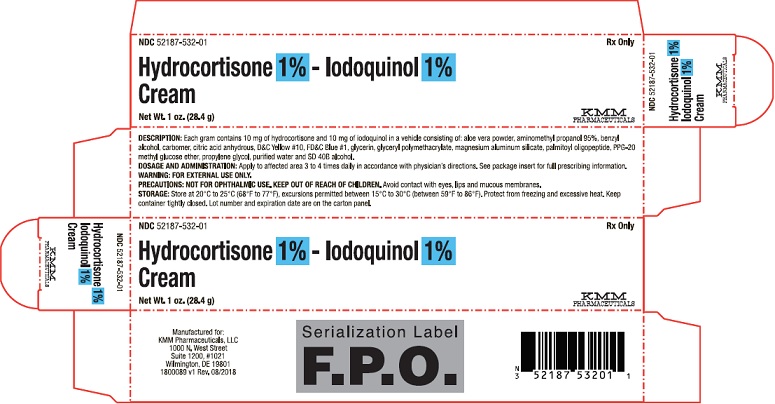
HYDROCORTISONE, IODOQUINOL
Active ingredients
HYDROCORTISONEIODOQUINOL
Indications
INDICATIONS: Based on a review of a related drug by the National Research Council and subsequent FDA classification for that drug, the indications are as follows: “Possibly” Effective: Contact or atopic dermatitis; impetiginized eczema; nummular eczema; endogenous chronic infectious dermatitis; stasis dermatitis; pyoderma; nuchal eczema and chronic eczematoid otitis externa; acne urticata; localized or disseminated neurodermatitis; lichen simplex chronicus; anogenital pruritus (vulvae, scroti, ani); folliculitis; bacterial dermatoses; mycotic dermatoses such as tinea (capitis, cruris, corporis, pedis); moniliasis; intertrigo. Final classification of the less-than-effective indications requires further investigation.
Dosage
DOSAGE AND ADMINISTRATION: Apply to affected area 3 to 4 times daily in accordance with physician’s directions.
Warnings
WARNING: FOR EXTERNAL USE ONLY.
Contraindications
CONTRAINDICATIONS: This product is contraindicated in persons with known or suspected hypersensitivity to any of the ingredients of the product.
Adverse reactions
ADVERSE REACTIONS: The following local adverse reactions are reported infrequently with topical corticosteroids. These reactions are listed in an approximate decreasing order of occurrence: burning, itching, irritation, dryness, folliculitis, hypertrichosis, acneiform eruptions, hypopigmentation, perioral dermatitis, allergic contact dermatitis, maceration of the skin, secondary infections, skin atrophy, striae and miliaria.
Mechanism of action
CLINICAL PHARMACOLOGY: Hydrocortisone has anti-inflammatory, antipruritic and vasoconstrictive properties. While the mechanism of anti-inflammatory activity is unclear, there is evidence to suggest that a recognizable correlation exists between vasoconstrictor potency and therapeutic efficacy in humans. Iodoquinol has both antifungal and antibacterial properties. Pharmacokinetics: The extent of percutaneous absorption of topical steroids is determined by many factors including the vehicle, the integrity of the epidermal barrier and the use of occlusive dressings. Hydrocortisone can be absorbed from normal intact skin. Inflammation and/or other inflammatory disease processes in the skin increase percutaneous absorption. Occlusive dressings substantially increase the percutaneous absorption of topical corticosteroids. Once absorbed through the skin, hydrocortisone is metabolized in the liver and most body tissue to hydrogenated and degraded forms such as tetrahydrocortisone and tetrahydrocortisol. These are excreted in the urine, mainly conjugated as glucuronides, together with a very small proportion of unchanged hydrocortisone. There are no data available regarding the percutaneous absorption of iodoquinol; however, following oral administration, 3-5% of the dose was recovered in the urine as a glucuronide.
Available forms (2)
NDC examples
52187-532
Treats these conditions
Source: openFDA + RxNorm · 2026
Look up another medication