Imatinib Oral
Managing this medication for someone you care for? Eleplan keeps diagnoses, medications and appointments in one plan.
Start free with EleplanMedication reference
Imatinib Oral
ORAL
Imatinib Oral. INDICATIONS AND USAGE Imkeldi is a kinase inhibitor indicated for the treatment of: Newly diagnosed adult and pediatric patients with Philadelphia…
Brand names
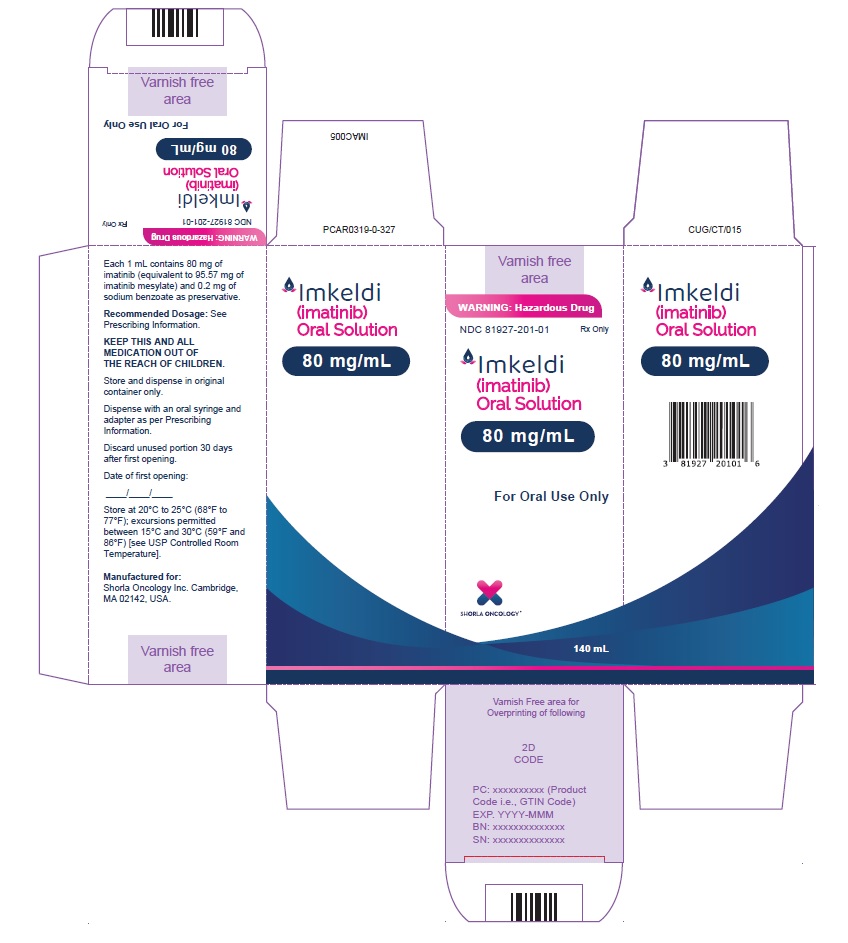
IMKELDI
Active ingredients
IMATINIB MESYLATE
Indications
INDICATIONS AND USAGE Imkeldi is a kinase inhibitor indicated for the treatment of: Newly diagnosed adult and pediatric patients with Philadelphia chromosome positive chronic myeloid leukemia (Ph+ CML) in chronic phase. ( 1.1 ) Patients with Philadelphia chromosome positive chronic myeloid leukemia (Ph+ CML) in blast crisis (BC), accelerated phase (AP), or in chronic phase (CP) after failure of interferon-alpha therapy. ( 1.2 ) Adult patients with relapsed or refractory Philadelphia chromosome positive acute lymphoblastic leukemia (Ph+ ALL). ( 1.3 ) Pediatric patients with newly diagnosed Philadelphia chromosome positive acute lymphoblastic leukemia (Ph+ ALL) in combination with chemotherapy. ( 1.4 ) Adult patients with myelodysplastic/myeloproliferative diseases (MDS/MPD) associated with platelet-derived growth factor receptor (PDGFR) gene re-arrangements. ( 1.5 ) Adult patients with aggressive systemic mastocytosis (ASM) without the D816V c-Kit mutation or with c-Kit mutational status unknown. ( 1.6 ) Adult patients with hypereosinophilic syndrome (HES) and/or chronic eosinophilic leukemia (CEL) who have the FIP1L1-PDGFRα fusion kinase (mutational analysis or fluorescence in situ hybridization [FISH] demonstration of CHIC2 allele deletion) and for patients with HES and/or CEL who are FIP1L1-PDGFRα fusion kinase negative or unknown. ( 1.7 ) Adult patients with unresectable, recurrent and/or metastatic dermatofibrosarcoma protuberans (DFSP). ( 1.8 ) Patients with Kit (CD117) positive unresectable and/or metastatic malignant gastrointestinal stromal tumors (GIST). ( 1.9 ) Adjuvant treatment of adult patients following resection of Kit (CD117) positive GIST. ( 1.10 ) 1.1 Newly Diagnosed Philadelphia Positive Chronic Myeloid Leukemia (Ph+ CML) Newly diagnosed adult and pediatric patients with Philadelphia chromosome positive chronic myeloid leukemia (Ph+ CML) in chronic phase. 1.2 Ph+ CML in Blast Crisis (BC), Accelerated Phase (AP) or Chronic Phase (CP) After Interferon-alpha (IFN) Therapy Patients with Philadelphia chromosome positive chronic myeloid leukemia in blast crisis, accelerated phase, or in chronic phase after failure of interferon-alpha therapy. 1.3 Adult Patients With Ph+ Acute Lymphoblastic Leukemia (ALL) Adult patients with relapsed or refractory Philadelphia chromosome positive acute lymphoblastic leukemia (Ph+ ALL). 1.4 Pediatric Patients With Ph+ Acute Lymphoblastic Leukemia (ALL) Pediatric patients with newly diagnosed Philadelphia chromosome positive acute lymphoblastic leukemia (Ph+ ALL) in combination with chemotherapy. 1.5 Myelodysplastic/Myeloproliferative Diseases (MDS/MPD) Adult patients with myelodysplastic/myeloproliferative diseases associated with platelet-derived growth factor receptor (PDGFR) gene re-arrangements. 1.6 Aggressive Systemic Mastocytosis (ASM) Adult patients with aggressive systemic mastocytosis without the D816V c-Kit mutation or with c-Kit mutational status unknown. 1.7 Hypereosinophilic Syndrome (HES) and/or Chronic Eosinophilic Leukemia (CEL) Adult patients with hypereosinophilic syndrome and/or chronic eosinophilic leukemia who have the FIP1L1-PDGFRα fusion kinase (mutational analysis or fluorescence in situ hybridization [FISH] demonstration of CHIC2 allele deletion) and for patients with HES and/or CEL who are FIP1L1-PDGFRα fusion kinase negative or unknown. 1.8 Dermatofibrosarcoma Protuberans (DFSP) Adult patients with unresectable, recurrent and/or metastatic dermatofibrosarcoma protuberans. 1.9 Kit+ Gastrointestinal Stromal Tumors (GIST) Patients with Kit (CD117) positive unresectable and/or metastatic malignant gastrointestinal stromal tumors. 1.10 Adjuvant Treatment of GIST Adjuvant treatment of adult patients following complete gross resection of Kit (CD117) positive GIST.
Dosage
DOSAGE AND ADMINISTRATION Adults with Ph+ CML CP ( 2.2 ): 400 mg/day Adults with Ph+ CML AP or BC ( 2.2 ): 600 mg/day Pediatrics with Ph+ CML CP ( 2.3 ): 340 mg/m 2 /day Adults with Ph+ ALL ( 2.4 ): 600 mg/day Pediatrics with Ph+ ALL ( 2.5 ): 340 mg/m 2 /day Adults with MDS/MPD ( 2.6 ): 400 mg/day Adults with ASM ( 2.7 ): 100 mg/day or 400 mg/day Adults with HES/CEL ( 2.8 ): 100 mg/day or 400 mg/day Adults with DFSP ( 2.9 ): 800 mg/day Adults with metastatic and/or unresectable GIST ( 2.10 ): 400 mg/day Adjuvant treatment of adults with GIST ( 2.11 ): 400 mg/day Patients with mild to moderate hepatic impairment ( 2.12 ): 400 mg/day Patients with severe hepatic impairment ( 2.12 ): 300 mg/day All doses of Imkeldi should be taken with a meal and a large glass of water. Doses of 400 mg or 600 mg should be administered once daily, whereas a dose of 800 mg should be administered as 400 mg twice a day. Imkeldi is intended for oral use only. It is important that Imkeldi be measured with an accurate measuring device. A household teaspoon is not an accurate measuring device. A pharmacist can provide an appropriate press-in bottle adapter and oral dispensing syringe and can provide instructions for measuring the correct dose. ( 2.1 , 5.15 ) 2.1 Important Administration Instructions All doses of Imkeldi should be taken with a meal and a large glass of water. Doses of 400 mg or 600 mg should be administered once daily, and a dose of 800 mg should be administered as 400 mg twice a day. If a dose is missed, the patient should wait until the next scheduled dose and not take two doses at the same time. Imkeldi is intended for oral use only. It is important that Imkeldi be measured with an accurate measuring device [see Warnings and Precautions (5.15) , Instructions for Use ]. A household teaspoon is not an accurate measuring device. A pharmacist can provide a press-in bottle adapter and oral dispensing syringe and can provide instructions for measuring the correct dose. Recommendations for Dose Rounding Round each dose to the nearest measurable graduation mark on the oral syringe, if necessary [see Instructions for Use ] . Continue treatment until disease progression or unacceptable toxicity. Imkeldi is a hazardous drug. Follow applicable special handling and disposal procedures 1 . 2.2 Adult Patients With Ph+ CML CP, AP, or BC The recommended dosage of Imkeldi is 400 mg/day for adult patients in chronic phase CML and 600 mg/day for adult patients in accelerated phase or blast crisis. In CML, a dose increase from 400 mg to 600 mg in adult patients with chronic phase disease, or from 600 mg to 800 mg (given as 400 mg twice daily) in adult patients in accelerated phase or blast crisis may be considered in the absence of severe adverse drug reaction and severe non-leukemia related neutropenia or thrombocytopenia in the following circumstances: disease progression (at any time), failure to achieve a satisfactory hematologic response after at least 3 months of treatment, failure to achieve a cytogenetic response after 6 to 12 months of treatment, or loss of a previously achieved hematologic or cytogenetic response. 2.3 Pediatric Patients With Ph+ CML CP The recommended dosage of Imkeldi for pediatric patients with newly diagnosed Ph+ CML is 340 mg/m 2 /day (not to exceed 600 mg). Imkeldi treatment can be given as a once daily dose or the daily dose may be split into two–one portion doses in the morning and one portion in the evening. There is no experience with Imkeldi treatment in children under 1 year of age. Follow recommendations for dose rounding [see Dosage and Administration (2.1) ]. 2.4 Adult Patients With Ph+ ALL The recommended dosage of Imkeldi is 600 mg/day for adult patients with relapsed/refractory Ph+ ALL. 2.5 Pediatric Patients With Ph+ ALL The recommended dosage of Imkeldi to be given in combination with chemotherapy to pediatric patients with newly diagnosed Ph+ ALL is 340 mg/m 2 /day (not to exceed 600 mg). Imkeldi treatment can be given as a once daily dose. Follow recommendations for dose rounding [see Dosage and Administration (2.1) ]. 2.6 Adult Patients With MDS/MPD Determine PDGFRb gene rearrangements status prior to initiating treatment. The recommended dosage of Imkeldi is 400 mg/day for adult patients with MDS/MPD. 2.7 Adult Patients With ASM Determine D816V c-Kit mutation status prior to initiating treatment. The recommended dosage of Imkeldi is 400 mg/day for adult patients with ASM without the D816V c-Kit mutation. If c- Kit mutational status is not known or unavailable, treatment with Imkeldi 400 mg/day may be considered for patients with ASM not responding satisfactorily to other therapies. For patients with ASM associated with eosinophilia, a clonal hematological disease related to the fusion kinase FIP1L1-PDGFRα, a starting dose of 100 mg/day is recommended. Dose increase from 100 mg to 400 mg for these patients may be considered in the absence of adverse drug reactions if assessments demonstrate an insufficient response to therapy. 2.8 Adult Patients With HES/CEL The recommended dosage of Imkeldi is 400 mg/day for adult patients with HES/CEL. For HES/CEL patients with demonstrated FIP1L1-PDGFRα fusion kinase, a starting dose of 100 mg/day is recommended. Dose increase from 100 mg to 400 mg for these patients may be considered in the absence of adverse drug reactions if assessments demonstrate an insufficient response to therapy. 2.9 Adult Patients With DFSP The recommended dosage of Imkeldi is 800 mg/day for adult patients with DFSP. 2.10 Adult Patients With Metastatic and/or Unresectable GIST The recommended dosage of Imkeldi is 400 mg/day for adult patients with unresectable and/or metastatic, malignant GIST. A dose increase up to 800 mg daily (given as 400 mg twice daily) may be considered, as clinically indicated, in patients showing clear signs or symptoms of disease progression at a lower dose and in the absence of severe adverse drug reactions. 2.11 Adult Patients With Adjuvant GIST The recommended dosage of Imkeldi is 400 mg/day for the adjuvant treatment of adult patients following complete gross resection of GIST. In clinical trials, one year of imatinib and three years of imatinib were studied. In the patient population defined in Study 2, three years of Imkeldi is recommended [see Clinical Studies (14.8) ] . The optimal treatment duration with Imkeldi is not known. 2.12 Dosage Modifications for Drug Interactions, Hepatic Impairment, and Renal Impairment Drug Interactions Concomitant Strong CYP3A4 inducers Avoid concomitant use of strong CYP3A4 inducers (e.g., dexamethasone, phenytoin, carbamazepine, rifampin, rifabutin, rifampacin, phenobarbital) with Imkeldi. If concomitant use with a strong CYP3A4 inducer cannot be avoided the Imkeldi dosage should be increased by at least 50%, and clinical response should be carefully monitored [see Drug Interactions (7.1) ]. Hepatic Impairment A 25% decrease in the approved recommended Imkeldi dosage should be used for patients with severe hepatic impairment (total bilirubin ˃3 to 10 times upper limit of normal [ULN] and any value for AST) [see Use in Specific Populations (8.6) ] . Patients with mild hepatic impairment (total bilirubin ≤ ULN and aspartate aminotransferase [AST] > ULN, or total bilirubin ˃1 to 1.5 times ULN and any value for AST) and moderate hepatic impairment (total bilirubin ˃ 1.5 to 3 times ULN and any value for AST) do not require a dose adjustment and should be treated per the approved recommended dosage. Renal Impairment Imkeldi should be used with caution in patients with severe renal impairment [see Warnings and Precautions (5.3) , Use in Specific Populations (8.7) ] . Patients with moderate renal impairment (creatinine clearance [CLcr] = 20-39 mL/min) should receive a 50% decrease in the recommended starting dose and future doses can be increased as tolerated. Doses greater than 600 mg are not recommended in patients with mild renal impairment (CLcr = 40-59 mL
Warnings
WARNINGS AND PRECAUTIONS Fluid Retention and Edema: Edema and severe fluid retention have occurred. Weigh patients regularly and manage unexpected rapid weight gain by drug interruption and diuretics. ( 5.1 , 6.1 ) Hematologic Toxicity: Cytopenias, particularly anemia, neutropenia, and thrombocytopenia, have occurred. Manage with dose reduction, dose interruption, or discontinuation of treatment. Perform complete blood counts weekly for the first month, biweekly for the second month, and periodically thereafter. ( 5.2 ) Congestive Heart Failure and Left Ventricular Dysfunction: Severe congestive heart failure and left ventricular dysfunction have been reported, particularly in patients with comorbidities and risk factors. Monitor and treat patients with cardiac disease or risk factors for cardiac failure. ( 5.3 ) Hepatotoxicity: Severe hepatotoxicity, including fatalities may occur. Assess liver function before initiation of treatment and monthly thereafter or as clinically indicated. Monitor liver function when combined with chemotherapy known to be associated with liver dysfunction. ( 5.4 ) Hemorrhage: Grade 3/4 hemorrhage has been reported in clinical studies in patients with newly diagnosed CML and with GIST. GI tumor sites may be the source of GI bleeds in GIST. ( 5.5 ) Gastrointestinal Disorders: Gastrointestinal (GI) perforations, some fatal, have been reported. ( 5.6 ) Hypereosinophilic Cardiac Toxicity: Cardiogenic shock/left ventricular dysfunction has been associated with the initiation of Imkeldi in patients with conditions associated with high eosinophil levels (e.g., HES, MDS/MPD, and ASM). ( 5.7 ) Dermatologic Toxicities: Bullous dermatologic reactions (e.g., erythema multiforme and Stevens-Johnson syndrome) have been reported with the use of Imkeldi. ( 5.8 ) Hypothyroidism: Hypothyroidism has been reported in thyroidectomy patients undergoing levothyroxine replacement. Closely monitor TSH levels in such patients. ( 5.9 ) Embryo-Fetal Toxicity: Can cause fetal harm. Advise females of reproductive potential of the potential risk to the fetus, and to use effective contraception. ( 5.10 , 8.1 ) Growth Retardation in Children and Adolescents: Growth retardation occurring in children and pre-adolescents receiving Imkeldi has been reported. Close monitoring of growth in children under Imkeldi treatment is recommended. ( 5.11 , 6.2 ) Tumor Lysis Syndrome: Close monitoring is recommended. ( 5.12 ) Impairments Related to Driving and Using Machinery: Motor vehicle accidents have been reported in patients receiving imatinib. Caution patients about driving a car or operating machinery. ( 5.13 ) Renal Toxicity: A decline in renal function may occur in patients receiving Imkeldi. Evaluate renal function at baseline and during therapy, with attention to risk factors for renal dysfunction. ( 5.14 ) Measuring Device: Advise patients to measure IMKELDI with an accurate milliliter measuring device. Inform patients that a household teaspoon is not an accurate measuring device and could lead to overdosage, which can result in serious adverse reactions. Advise patients to ask their pharmacist to recommend an appropriate press-in bottle adapter and oral dispensing syringe and for instructions for measuring the correct dose. ( 5.15 ) 5.1 Fluid Retention and Edema Imatinib can cause edema and occasionally serious fluid retention [see Adverse Reactions (6.1) ] . Weigh and monitor patients regularly for signs and symptoms of fluid retention. Investigate unexpected rapid weight gain carefully and provide appropriate treatment. The probability of edema was increased with higher imatinib dose and age greater than 65 years in the CML studies. Severe superficial edema was reported in 1.5% of newly diagnosed CML patients taking imatinib, and in 2% to 6% of other adult CML patients taking imatinib. In addition, other severe fluid retention (e.g., pleural effusion, pericardial effusion, pulmonary edema, and ascites) reactions were reported in 1.3% of newly diagnosed CML patients taking imatinib, and in 2% to 6% of other adult CML patients taking imatinib. Severe fluid retention was reported in 9% to 13.1% of patients taking imatinib for GIST [see Adverse Reactions (6.1) ] . In a randomized trial in patients with newly diagnosed Ph+ CML in chronic phase comparing imatinib and nilotinib, severe (Grade 3 or 4) fluid retention occurred in 2.5% of patients receiving imatinib and in 3.9% of patients receiving nilotinib 300 mg twice daily. Effusions (including pleural effusion, pericardial effusion, ascites) or pulmonary edema were observed in 2.1% (none were Grade 3 or 4) of patients in the imatinib arm and 2.2% (0.7% Grade 3 or 4) of patients in the nilotinib 300 mg twice daily arm. 5.2 Hematologic Toxicity Treatment with imatinib can cause anemia, neutropenia, and thrombocytopenia. Perform complete blood counts weekly for the first month, biweekly for the second month, and periodically thereafter as clinically indicated (for example, every 2 to 3 months). In CML, the occurrence of these cytopenias is dependent on the stage of disease and is more frequent in patients with accelerated phase CML or blast crisis than in patients with chronic phase CML. In pediatric CML patients the most frequent toxicities observed were Grade 3 or 4 cytopenias, including neutropenia, thrombocytopenia, and anemia. These generally occur within the first several months of therapy [see Dosage and Administration (2.14) ]. 5.3 Congestive Heart Failure and Left Ventricular Dysfunction Congestive heart failure and left ventricular dysfunction have been reported in patients taking imatinib. Cardiac adverse reactions were more frequent in patients with advanced age or co-morbidities, including previous medical history of cardiac disease. In an international randomized Phase 3 study in 1106 patients with newly diagnosed Ph+ CML in chronic phase, severe cardiac failure and left ventricular dysfunction were observed in 0.7% of patients taking imatinib compared to 0.9% of patients taking IFN + Ara-C. In another randomized trial with newly diagnosed Ph+ CML patients in chronic phase that compared imatinib and nilotinib, cardiac failure was observed in 1.1% of patients in the imatinib arm and 2.2% of patients in the nilotinib 300 mg twice daily arm and severe (Grade 3 or 4) cardiac failure occurred in 0.7% of patients in each group. Carefully monitor patients with cardiac disease or risk factors for cardiac or history of renal failure. Evaluate and treat any patient with signs or symptoms consistent with cardiac or renal failure. 5.4 Hepatotoxicity Hepatotoxicity, occasionally severe, may occur with Imkeldi [see Adverse Reactions (6.1) ]. Cases of fatal liver failure and severe liver injury requiring liver transplants have been reported with both short-term and long-term use of imatinib. Monitor liver function (transaminases, bilirubin, and alkaline phosphatase) before initiation of treatment and monthly, or as clinically indicated. Manage laboratory abnormalities with Imkeldi interruption and/or dose reduction [see Dosage and Administration (2.13) ]. When imatinib is combined with chemotherapy, liver toxicity in the form of transaminase elevation and hyperbilirubinemia has been observed. Additionally, there have been reports of acute liver failure. Monitoring of hepatic function is recommended. 5.5 Hemorrhage In a trial of imatinib versus IFN+Ara-C in patients with the newly diagnosed CML, 1.8% of patients had Grade 3/4 hemorrhage. In the Phase 3 unresectable or metastatic GIST studies, 211 patients (12.9%) reported Grade 3/4 hemorrhage at any site. In the Phase 2 unresectable or metastatic GIST study, 7 patients (5%) had a total of 8 CTC Grade 3/4 hemorrhages; gastrointestinal (GI) (3 patients), intra-tumoral (3 patients) or both (1 patient). Gastrointestinal tumor sites may have been the source of GI hemorrhages. In a randomized trial in patients with newly diagnosed Ph+ CML in chronic phase comparing ima
Contraindications
CONTRAINDICATIONS None. None. ( 4 )
Drug interactions
DRUG INTERACTIONS • CYP3A4 inducers: Avoid or increase imatinib dosage if unavoidable. ( 7.1 ) • CYP3A4 inhibitors: Use caution. Avoid grapefruit juice. ( 7.2 ) • CYP3A4 substrates: Use caution. Patients who require anticoagulation should receive other anticoagulants instead of warfarin. ( 7.3 ) • CYP2D6 substrates: Use caution. ( 7.4 ) 7.1 Agents Inducing CYP3A Metabolism Consider alternative therapeutic agents with less enzyme induction potential in patients when rifampin or other strong CYP3A4 inducers are indicated for concomitant use with Imkeldi. The dosage of Imkeldi should be increased if concomitant use with a strong CYP3A4 inducer is required [see Dosage and Administration (2.12) ] . Imatinib is a CYP3A substrate. Concomitant use with a strong CYP3A inducer decreases imatinib exposure [see Clinical Pharmacology (12.3) ], which may reduce imatinib efficacy . 7.2 Agents Inhibiting CYP3A Metabolism Caution is recommended when administering Imkeldi with strong CYP3A4 inhibitors. Grapefruit juice should be avoided. Imatinib is a CYP3A substrate. Concomitant use with a strong CYP3A inhibitor increases imatinib exposure [see Clinical Pharmacology (12.3) ] , which may increase the risk of Imkeldi adverse reactions. 7.3 Interactions With Drugs Metabolized by CYP3A4 Use caution when administering Imkeldi with CYP3A4 substrates where minimal concentration changes may lead to serious adverse reactions. Because warfarin is metabolized by both CYP2C9 and CYP3A4, use other anti-coagulants instead of warfarin in patients receiving Imkeldi who require anticoagulation. Imatinib is a CYP3A inhibitor. Imatinib increases exposure of CYP3A substrates [see Clinical Pharmacology (12.3) ] , which may increase the risk of adverse reactions related to these substrates. 7.4 Interactions With Drugs Metabolized by CYP2D6 Use caution when administering Imkeldi with CYP2D6 substrates where minimal concentration changes may lead to serious adverse reactions. Imatinib is a CYP2D6 inhibitor. Imatinib increases exposure of CYP2D6 substrates [see Clinical Pharmacology (12.3) ] , which may increase the risk of adverse reactions related to these substrates.
Adverse reactions
ADVERSE REACTIONS The following serious adverse reactions are described elsewhere in the labeling: Fluid Retention and Edema [see Warnings and Precautions (5.1) ] Hematologic Toxicity [see Warnings and Precautions (5.2) ] Congestive Heart Failure and Left Ventricular Dysfunction [see Warnings and Precautions (5.3) ] Hepatotoxicity [see Warnings and Precautions (5.4) ] Hemorrhage [see Warnings and Precautions (5.5) ] Gastrointestinal Disorders [see Warnings and Precautions (5.6) ] Hypereosinophilic Cardiac Toxicity [see Warnings and Precautions (5.7) ] Dermatologic Toxicities [see Warnings and Precautions (5.8) ] Hypothyroidism [see Warnings and Precautions (5.9) ] Growth Retardation in Children and Adolescents [see Warnings and Precautions (5.11) ] Tumor Lysis Syndrome [see Warnings and Precautions (5.12) ] Impairments Related to Driving and Using Machinery [see Warnings and Precautions (5.13) ] Renal Toxicity [see Warnings and Precautions (5.14) ] The most frequently reported adverse reactions (≥30%) are edema, nausea, vomiting, muscle cramps, musculoskeletal pain, diarrhea, rash, fatigue, and abdominal pain. ( 6.1 ) To report SUSPECTED ADVERSE REACTIONS, contact Shorla Oncology at 844-9-SHORLA or FDA at 1-800-FDA-1088 or www.fda.gov/medwatch . 6.1 Clinical Trials Experience Because clinical trials are conducted under widely varying conditions, adverse reaction rates observed in the clinical trials of a drug cannot be directly compared to rates in the clinical trials of another drug and may not reflect the rates observed in practice. Chronic Myeloid Leukemia The majority of imatinib-treated patients experienced adverse reactions at some time. Imatinib was discontinued due to drug-related adverse reactions in 2.4% of patients receiving imatinib in the randomized trial of newly diagnosed patients with Ph+ CML in chronic phase comparing imatinib versus IFN+Ara-C, and in 12.5% of patients receiving imatinib in the randomized trial of newly diagnosed patients with Ph+ CML in chronic phase comparing imatinib and nilotinib. Imatinib was discontinued due to drug-related adverse reactions in 4% of patients in chronic phase after failure of interferon-alpha therapy, in 4% of patients in accelerated phase and in 5% of patients in blast crisis. The most frequently reported drug-related adverse reactions were edema, nausea and vomiting, muscle cramps, musculoskeletal pain, diarrhea and rash (Table 2 and Table 3 for newly diagnosed CML, Table 4 for other CML patients). Edema was most frequently periorbital or in lower limbs and was managed with diuretics, other supportive measures, or by reducing the dose of imatinib [see Dosage and Administration (2.13) ] . The frequency of severe superficial edema was 1.5%-6%. A variety of adverse reactions represent local or general fluid retention, including pleural effusion, ascites, pulmonary edema, and rapid weight gain with or without superficial edema. These reactions appear to be dose related, were more common in the blast crisis and accelerated phase studies (where the dose was 600 mg/day), and are more common in the elderly. These reactions were usually managed by interrupting imatinib treatment and using diuretics or other appropriate supportive care measures. These reactions may be serious or life threatening. Adverse reactions, regardless of relationship to study drug, that were reported in at least 10% of the imatinib-treated patients are shown in Tables 2, 3, and 4. Table 2: Adverse Reactions Regardless of Relationship to Study Drug Reported in Newly Diagnosed CML Clinical Trial in the Imatinib Versus IFN+Ara-C Study (Greater Than or Equal to 10% of Imatinib-Treated Patients) All adverse reactions occurring in greater than or equal to 10% of imatinib-treated patients are listed regardless of suspected relationship to treatment. All Grades CTC Grades NCI Common Terminology Criteria for Adverse Events, version 3.0. 3/4 Preferred term Imatinib N = 551 (%) IFN+Ara-C N = 533 (%) Imatinib N = 551 (%) IFN+Ara-C N = 533 (%) Fluid retention 61.7 11.1 2.5 0.9 - Superficial edema 59.9 9.6 1.5 0.4 - Other fluid retention reactions Other fluid retention reactions include pleural effusion, ascites, pulmonary edema, pericardial effusion, anasarca, edema aggravated, and fluid retention not otherwise specified. 6.9 1.9 1.3 0.6 Nausea 49.5 61.5 1.3 5.1 Muscle cramps 49.2 11.8 2.2 0.2 Musculoskeletal pain 47.0 44.8 5.4 8.6 Diarrhea 45.4 43.3 3.3 3.2 Rash and related terms 40.1 26.1 2.9 2.4 Fatigue 38.8 67.0 1.8 25.1 Headache 37.0 43.3 0.5 3.8 Joint pain 31.4 38.1 2.5 7.7 Abdominal pain 36.5 25.9 4.2 3.9 Nasopharyngitis 30.5 8.8 0 0.4 Hemorrhage 28.9 21.2 1.8 1.7 - GI hemorrhage 1.6 1.1 0.5 0.2 - CNS hemorrhage 0.2 0.4 0 0.4 Myalgia 24.1 38.8 1.5 8.3 Vomiting 22.5 27.8 2.0 3.4 Dyspepsia 18.9 8.3 0 0.8 Cough 20.0 23.1 0.2 0.6 Pharyngolaryngeal pain 18.1 11.4 0.2 0 Upper respiratory tract infection 21.2 8.4 0.2 0.4 Dizziness 19.4 24.4 0.9 3.8 Pyrexia 17.8 42.6 0.9 3.0 Weight increased 15.6 2.6 2.0 0.4 Insomnia 14.7 18.6 0 2.3 Depression 14.9 35.8 0.5 13.1 Influenza 13.8 6.2 0.2 0.2 Bone pain 11.3 15.6 1.6 3.4 Constipation 11.4 14.4 0.7 0.2 Sinusitis 11.4 6.0 0.2 0.2 Abbreviations: CML, chronic myeloid leukemia; CNS, central nervous system; CTC, common terminology criteria; GI, gastrointestinal; IFN, Interferon-alpha. Table 3: Most Frequently Reported Non-Hematologic Adverse Reactions (regardless of relationship to study drug) in Patients With Newly Diagnosed Ph+ CML-CP in the Imatinib Versus Nilotinib Study (Greater Than or Equal to 10% in Imatinib 400 mg Once Daily or Nilotinib 300 mg Twice Daily Groups) 60-Month Analysis Excluding laboratory abnormalities. Patients with newly diagnosed Ph+ CML-CP Imatinib 400 mg once daily N = 280 Nilotinib 300 mg twice daily N = 279 Imatinib 400 mg once daily N = 280 Nilotinib 300 mg twice daily N = 279 Body system and preferred term All Grades (%) CTC Grades NCI Common Terminology Criteria for Adverse Events, version 3.0. 3/4 (%) Skin and subcutaneous tissue disorders Rash > 19 38 2 < 1 Pruritus 7 21 0 < 1 Alopecia 7 13 0 0 Dry skin 6 12 0 0 Gastrointestinal disorders Nausea 41 22 2 2 Constipation 8 20 0 < 1 Diarrhea 46 19 4 1 Vomiting 27 15 < 1 < 1 Abdominal pain upper 14 18 < 1 1 Abdominal pain 12 15 0 2 Dyspepsia 12 10 0 0 Nervous system disorders Headache 23 32 < 1 3 Dizziness 11 12 < 1 < 1 General disorders and administration-site conditions Fatigue 20 23 1 1 Pyrexia 13 14 0 < 1 Asthenia 12 14 0 < 1 Peripheral edema 20 9 0 < 1 Face edema 14 < 1 < 1 0 Musculoskeletal and connective tissue disorders Myalgia 19 19 < 1 < 1 Arthralgia 17 22 < 1 < 1 Muscle spasms 34 12 1 0 Pain in extremity 16 15 < 1 < 1 Back pain 17 19 1 1 Respiratory, thoracic and mediastinal disorders Cough 13 17 0 0 Oropharyngeal pain 6 12 0 0 Dyspnea 6 11 < 1 2 Infections and infestations Nasopharyngitis 21 27 0 0 Upper respiratory tract infection 14 17 0 < 1 Influenza 9 13 0 0 Gastroenteritis 10 7 < 1 0 Eye disorders Eyelid edema 19 1 < 1 0 Periorbital edema 15 < 1 0 0 Psychiatric disorders Insomnia 9 11 0 0 Vascular disorder Hypertension 4 10 < 1 1 Abbreviation: Ph+ CML-CP, Philadelphia chromosome positive chronic myeloid leukemia-chronic phase. Table 4: Adverse Reactions Regardless of Relationship to Study Drug Reported in Other CML Clinical Trials (Greater Than or Equal to 10% of All Patients in Any Trial) All adverse reactions occurring in greater than or equal to 10% of patients are listed regardless of suspected relationship to treatment. Myeloid blast Crisis (n = 260) Accelerated phase (n = 235) Chronic phase, IFN failure (n = 532) % % % Preferred term All Grades Grade 3/4 All Grades Grade 3/4 All Grades Grade 3/4 Fluid retention 72 11 76 6 69 4 -Superficial edema 66 6 74 3 67 2 -Other fluid retention reactions Other fluid retention reactions include pleural effusion, ascites, pulmonary edema, pericardial effusion, anasarca, edema aggravated, and fluid retention not otherwise specified. 22 6 15 4 7 2 Nausea 71 5 73 5
Mechanism of action
Mechanism of Action Imatinib mesylate is a protein-tyrosine kinase inhibitor that inhibits the BCR-ABL tyrosine kinase, the constitutive abnormal tyrosine kinase created by the Philadelphia chromosome abnormality in CML. Imatinib inhibits proliferation and induces apoptosis in BCR-ABL positive cell lines as well as fresh leukemic cells from Philadelphia chromosome positive chronic myeloid leukemia. Imatinib inhibits colony formation in assays using ex vivo peripheral blood and bone marrow samples from CML patients. In vivo, imatinib inhibits tumor growth of BCR-ABL transfected murine myeloid cells as well as BCR-ABL positive leukemia lines derived from CML patients in blast crisis. Imatinib is also an inhibitor of the receptor tyrosine kinases for platelet-derived growth factor (PDGF) and stem cell factor (SCF), c-Kit, and inhibits PDGF- and SCF-mediated cellular events. In vitro, imatinib inhibits proliferation and induces apoptosis in GIST cells, which express an activating c-Kit mutation.
NDC examples
81927-201
Treats these conditions
Source: openFDA + RxNorm · 2026
Look up another medication