Exemestane
Managing this medication for someone you care for? Eleplan keeps diagnoses, medications and appointments in one plan.
Start free with EleplanMedication reference
Exemestane
Aromatase Inhibitor [EPC] — ORAL
Exemestane — Aromatase Inhibitor [EPC]. INDICATIONS AND USAGE Exemestane is an aromatase inhibitor indicated for: adjuvant treatment of postmenopausal women with estrogen-receptor positive…
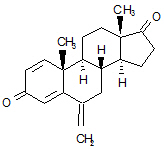
Brand names
ExemestaneEXEMESTANE
Active ingredients
EXEMESTANE
Indications
INDICATIONS AND USAGE Exemestane is an aromatase inhibitor indicated for: adjuvant treatment of postmenopausal women with estrogen-receptor positive early breast cancer who have received two to three years of tamoxifen and are switched to exemestane tablets, USP for completion of a total of five consecutive years of adjuvant hormonal therapy ( 14.1 ). treatment of advanced breast cancer in postmenopausal women whose disease has progressed following tamoxifen therapy ( 14.2 ). 1.1 Adjuvant Treatment of Postmenopausal Women Exemestane tablets, USP are indicated for adjuvant treatment of postmenopausal women with estrogen-receptor positive early breast cancer who have received two to three years of tamoxifen and are switched to exemestane tablets, USP for completion of a total of five consecutive years of adjuvant hormonal therapy [see Clinical Studies ( 14.1 )]. 1.2 Advanced Breast Cancer in Postmenopausal Women Exemestane tablets, USP are indicated for the treatment of advanced breast cancer in postmenopausal women whose disease has progressed following tamoxifen therapy [see Clinical Studies ( 14.2 )].
Dosage
DOSAGE AND ADMINISTRATION Recommended Dose: One 25 mg tablet once daily after a meal ( 2.1 ). 2.1 Recommended Dose The recommended dose of exemestane tablet in early and advanced breast cancer is one 25 mg tablet once daily after a meal. adjuvant treatment of postmenopausal women with estrogen-receptor positive early breast cancer who have received two to three years of tamoxifen and are switched to exemestane tablets for completion of a total of five consecutive years of adjuvant hormonal therapy. the treatment of advanced breast cancer in postmenopausal women whose disease has progressed following tamoxifen therapy. 2.2 Dose Modifications Concomitant use of strong CYP 3A4 inducers decreases exemestane exposure. For patients receiving exemestane tablets with a strong CYP 3A4 inducer such as rifampicin or phenytoin, the recommended dose of exemestane tablet is 50 mg once daily after a meal [see Drug Interactions ( 7 ) and Clinical Pharmacology ( 12.3 )].
Warnings
WARNINGS AND PRECAUTIONS Reductions in bone mineral density (BMD) over time are seen with exemestane use ( 5.1 ). Routine assessment of 25-hydroxy vitamin D levels prior to the start of aromatase inhibitor treatment should be performed ( 5.2 ). Embryo-Fetal Toxicity: Can cause fetal harm. Advise females of reproductive potential of the potential risk to a fetus and to use effective contraception ( 5.6 , 8.1 , 8.3 ). 5.1 Reductions in Bone Mineral Density (BMD) Reductions in bone mineral density (BMD) over time are seen with exemestane use. Table 1 describes changes in BMD from baseline to 24 months in patients receiving exemestane compared to patients receiving tamoxifen (IES) or placebo (027). Concomitant use of bisphosphonates, vitamin D supplementation, and calcium was not allowed. Table 1. Percent Change in BMD from Baseline to 24 months, Exemestane vs. Control 1 IES 027 BMD Exemestane N=29 Tamoxifen 1 N=38 Exemestane N=59 Placebo 1 N=65 Lumbar spine (%) -3.1 -0.2 -3.5 -2.4 Femoral neck (%) -4.2 -0.3 -4.6 -2.6 During adjuvant treatment with exemestane, women with osteoporosis or at risk of osteoporosis should have their bone mineral density formally assessed by bone densitometry at the commencement of treatment. Monitor patients for bone mineral density loss and treat as appropriate. 5.2 Vitamin D Assessment Routine assessment of 25-hydroxy vitamin D levels prior to the start of aromatase inhibitor treatment should be performed, due to the high prevalence of vitamin D deficiency in women with early breast cancer (EBC). Women with vitamin D deficiency should receive supplementation with vitamin D. 5.3 Administration with Estrogen-Containing Agents Exemestane tablets should not be coadministered with systemic estrogen-containing agents as these could interfere with its pharmacologic action. 5.4 Laboratory Abnormalities In patients with early breast cancer, the incidence of hematological abnormalities of Common Toxicity Criteria (CTC) grade ≥1 was lower in the exemestane treatment group, compared with tamoxifen. Incidence of CTC grade 3 or 4 abnormalities was low (approximately 0.1%) in both treatment groups. Approximately 20% of patients receiving exemestane in clinical studies in advanced breast cancer experienced CTC grade 3 or 4 lymphocytopenia. Of these patients, 89% had a pre-existing lower grade lymphopenia. Forty percent of patients either recovered or improved to a lesser severity while on treatment. Patients did not have a significant increase in viral infections, and no opportunistic infections were observed. Elevations of serum levels of AST, ALT, alkaline phosphatase, and gamma glutamyl transferase >5 times the upper value of the normal range (i.e., ≥ CTC grade 3) have been rarely reported in patients treated for advanced breast cancer but appear mostly attributable to the underlying presence of liver and/or bone metastases. In the comparative study in advanced breast cancer patients, CTC grade 3 or 4 elevation of gamma glutamyl transferase without documented evidence of liver metastasis was reported in 2.7% of patients treated with exemestane tablets and in 1.8% of patients treated with megestrol acetate. In patients with early breast cancer, elevations in bilirubin, alkaline phosphatase, and creatinine were more common in those receiving exemestane than either tamoxifen or placebo. Treatment-emergent bilirubin elevations (any CTC grade) occurred in 5% of exemestane patients and 0.8% of tamoxifen patients on the Intergroup Exemestane Study (IES), and in 7% of exemestane treated patients vs. 0% of placebo treated patients in the 027 study. CTC grade 3–4 increases in bilirubin occurred in 0.9% of exemestane treated patients compared to 0.1% of tamoxifen treated patients. Alkaline phosphatase elevations of any CTC grade occurred in 15% of exemestane treated patients on the IES compared to 2.6% of tamoxifen treated patients, and in 14% of exemestane treated patients compared to 7% of placebo treated patients in study 027. Creatinine elevations occurred in 6% of exemestane treated patients and 4.3% of tamoxifen treated patients on the IES and in 6% of exemestane treated patients and 0% of placebo treated patients in study 027. 5.5 Use in Premenopausal Women Exemestane tablets are not indicated for the treatment of breast cancer in premenopausal women. 5.6 Embryo-Fetal Toxicity Based on findings from animal studies and its mechanism of action, exemestane tablets can cause fetal harm when administered to a pregnant woman. In animal reproduction studies, administration of exemestane to pregnant rats and rabbits caused increased incidence of abortions and embryo-fetal toxicity. Advise pregnant women of the potential risk to a fetus. Advise females of reproductive potential to use effective contraception during treatment with exemestane tablets and for 1 month after the last dose [see Use in Specific Populations (8.1) , (8.3) and Clinical Pharmacology (12.1) ] .
Contraindications
CONTRAINDICATIONS Exemestane tablets are contraindicated in patients with a known hypersensitivity to the drug or to any of the excipients. Patients with a known hypersensitivity to the drug or to any of the excipients ( 4 ).
Drug interactions
DRUG INTERACTIONS Drugs That Induce CYP 3A4 Co-medications that induce CYP 3A4 (e.g., rifampicin, phenytoin, carbamazepine, phenobarbital, or St. John's wort) may significantly decrease exposure to exemestane. Dose modification is recommended for patients who are also receiving a strong CYP 3A4 inducer [see Dosage and Administration ( 2.2 ) and Clinical Pharmacology ( 12.3 )] . Strong CYP 3A4 inducers: Concomitant use of strong CYP 3A4 inducers decreases exemestane exposure. Increase the exemestane tablets dose to 50 mg ( 2.2 , 7 ).
Adverse reactions
ADVERSE REACTIONS The following clinically significant adverse reactions are described elsewhere in the labeling: Reductions in Bone Mineral Density (BMD) [see Warnings and Precautions (5.1) ] Early breast cancer: Adverse reactions occurring in ≥10% of patients in any treatment group (exemestane tablets vs. tamoxifen) were hot flushes (21% vs. 20%), fatigue (16% vs. 15%), arthralgia (15% vs. 9%), headache (13% vs. 11%), insomnia (12% vs. 9%), and increased sweating (12% vs. 10%). Discontinuation rates due to AEs were similar between exemestane tablets and tamoxifen (6% vs. 5%). Incidences of cardiac ischemic events (myocardial infarction, angina, and myocardial ischemia) were exemestane tablets 1.6%, tamoxifen 0.6%. Incidence of cardiac failure: exemestane tablets 0.4%, tamoxifen 0.3% ( 6 , 6.1 ). Advanced breast cancer: Most common adverse reactions were mild to moderate and included hot flushes (13% vs. 5%), nausea (9% vs. 5%), fatigue (8% vs. 10%), increased sweating (4% vs. 8%), and increased appetite (3% vs. 6%) for exemestane tablets and megestrol acetate, respectively ( 6 , 6.1 ). To report SUSPECTED ADVERSE REACTIONS, contact Breckenridge Pharmaceutical, Inc. at 1-800-367-3395 or FDA at 1-800-FDA-1088 or www.fda.gov/medwatch. 6.1 Clinical Trial Experience Because clinical trials are conducted under widely varying conditions, adverse reaction rates observed in the clinical trials of a drug cannot be directly compared to rates in the clinical trials of another drug and may not reflect the rates observed in clinical practice. Adjuvant Therapy The data described below reflect exposure to exemestane tablets in 2325 postmenopausal women with early breast cancer. Exemestane tablets tolerability in postmenopausal women with early breast cancer was evaluated in two well-controlled trials: the IES study [See Clinical Studies (14.1) ] and the 027 study (a randomized, placebo-controlled, double-blind, parallel group study specifically designed to assess the effects of exemestane on bone metabolism, hormones, lipids, and coagulation factors over 2 years of treatment). The median duration of adjuvant treatment was 27.4 months and 27.3 months for patients receiving exemestane tablets or tamoxifen, respectively, within the IES study and 23.9 months for patients receiving exemestane tablets or placebo within the 027 study. Median duration of observation after randomization for exemestane tablets was 34.5 months and for tamoxifen was 34.6 months. Median duration of observation was 30 months for both groups in the 027 study. Certain adverse reactions, which were expected based on the known pharmacological properties and side effect profiles of test drugs, were actively sought through a positive checklist. Signs and symptoms were graded for severity using CTC in both studies. Within the IES study, the presence of some illnesses/conditions was monitored through a positive checklist without assessment of severity. These included myocardial infarction, other cardiovascular disorders, gynecological disorders, osteoporosis, osteoporotic fractures, other primary cancer, and hospitalizations. Within the IES study, discontinuations due to adverse reactions occurred in 6% and 5% of patients receiving exemestane tablets and tamoxifen, respectively, and in 12% and 4.1% of patients receiving exemestane or placebo respectively within study 027. Deaths due to any cause were reported for 1.3% of the exemestane treated patients and 1.4% of the tamoxifen treated patients within the IES study. There were 6 deaths due to stroke on the exemestane arm compared to 2 on tamoxifen. There were 5 deaths due to cardiac failure on the exemestane arm compared to 2 on tamoxifen. The incidence of cardiac ischemic events (myocardial infarction, angina, and myocardial ischemia) was 1.6% in exemestane treated patients and 0.6% in tamoxifen treated patients in the IES study. Cardiac failure was observed in 0.4% of exemestane treated patients and 0.3% of tamoxifen treated patients. In the adjuvant treatment of early breast cancer, the most common adverse reactions occurring in ≥10% of patients in any treatment group (exemestane tablets vs. tamoxifen) were hot flushes (21% vs. 20%), fatigue (16% vs. 15%), arthralgia (15% vs. 9%), headache (13% vs. 11%), insomnia (12% vs. 9%), and increased sweating (12% vs. 10%). Discontinuation rates due to AEs were similar between exemestane tablets and tamoxifen (6% vs. 5%). Incidences of cardiac ischemic events (myocardial infarction, angina, and myocardial ischemia) were exemestane tablets 1.6%, tamoxifen 0.6%. Incidence of cardiac failure: exemestane tablets 0.4%, tamoxifen 0.3%. Treatment-emergent adverse reactions and illnesses including all causalities and occurring with an incidence of ≥5% in either treatment group of the IES study during or within one month of the end of treatment are shown in Table 2. Table 2. Incidence (%) of Adverse Reactions of all Grades Graded according to Common Toxicity Criteria; and Illnesses Occurring in (≥5%) of Patients in Any Treatment Group in Study IES in Postmenopausal Women with Early Breast Cancer % of patients Body system and Adverse Reaction by MedDRA dictionary Exemestane Tablets 25 mg daily (N=2252) Tamoxifen 20 mg daily 75 patients received tamoxifen 30 mg daily; (N=2280) Eye Visual disturbances Event actively sought. 5 3.8 Gastrointestinal Nausea 9 9 General Disorders Fatigue 16 15 Musculoskeletal Arthralgia 15 9 Pain in limb 9 6 Back pain 9 7 Osteoarthritis 6 4.5 Nervous System Headache 13 11 Dizziness 10 8 Psychiatric Insomnia 12 9 Depression 6 6 Skin & Subcutaneous Tissue Increased sweating 12 10 Vascular Hot flushes 21 20 Hypertension 10 8 In the IES study, as compared to tamoxifen, exemestane tablets were associated with a higher incidence of events in musculoskeletal disorders and in nervous system disorders, including the following events occurring with frequency lower than 5% (osteoporosis [4.6% vs. 2.8%], osteochondrosis and trigger finger [0.3% vs. 0% for both events], paresthesia [2.6% vs. 0.9%], carpal tunnel syndrome [2.4% vs. 0.2%], and neuropathy [0.6% vs. 0.1%]). Diarrhea was also more frequent in the exemestane group (4.2% vs. 2.2%). Clinical fractures were reported in 94 patients receiving exemestane (4.2%) and 71 patients receiving tamoxifen (3.1%). After a median duration of therapy of about 30 months and a median follow-up of about 52 months, gastric ulcer was observed at a slightly higher frequency in the exemestane tablets group compared to tamoxifen (0.7% vs. <0.1%). The majority of patients on exemestane tablets with gastric ulcer received concomitant treatment with non-steroidal anti-inflammatory agents and/or had a prior history. Tamoxifen was associated with a higher incidence of muscle cramps [3.1% vs. 1.5%], thromboembolism [2.0% vs. 0.9%], endometrial hyperplasia [1.7% vs. 0.6%], and uterine polyps [2.4% vs. 0.4%]. Common adverse reactions occurring in study 027 are described in Table 3. Table 3. Incidence of Selected Treatment-Emergent Adverse Reactions of all CTC Grades Most events were CTC grade 1–2 Occurring in ≥5% of Patients in Either Arm in Study 027 Adverse Reaction Exemestane N=73 (% incidence) Placebo N=73 (% incidence) Hot flushes 33 25 Arthralgia 29 29 Increased sweating 18 21 Alopecia 15 4.1 Hypertension 15 7 Insomnia 14 15 Nausea 12 16 Fatigue 11 19 Abdominal pain 11 14 Depression 10 7 Diarrhea 10 1.4 Dizziness 10 10 Dermatitis 8 1.4 Headache 7 4.1 Myalgia 6 4.1 Edema 6 7 Treatment of Advanced Breast Cancer A total of 1058 patients were treated with exemestane 25 mg once daily in the clinical trials program. One death was considered possibly related to treatment with exemestane; an 80-year-old woman with known coronary artery disease had a myocardial infarction with multiple organ failure after 9 weeks on study treatment. In the clinical trials program, 3% of the patients discontinued treatment with exemestane because of adverse reactions, 2.7% of patients discontinue
Mechanism of action
Mechanism of Action Breast cancer cell growth may be estrogen-dependent. Aromatase is the principal enzyme that converts androgens to estrogens both in pre- and postmenopausal women. While the main source of estrogen (primarily estradiol) is the ovary in premenopausal women, the principal source of circulating estrogens in postmenopausal women is from conversion of adrenal and ovarian androgens (androstenedione and testosterone) to estrogens (estrone and estradiol) by the aromatase enzyme in peripheral tissues. Exemestane is an irreversible, steroidal aromatase inactivator, structurally related to the natural substrate androstenedione. It acts as a false substrate for the aromatase enzyme, and is processed to an intermediate that binds irreversibly to the active site of the enzyme, causing its inactivation, an effect also known as "suicide inhibition." Exemestane significantly lowers circulating estrogen concentrations in postmenopausal women, but has no detectable effect on adrenal biosynthesis of corticosteroids or aldosterone. Exemestane has no effect on other enzymes involved in the steroidogenic pathway up to a concentration at least 600 times higher than that inhibiting the aromatase enzyme.
Available forms (2)
NDC examples
63629-205651991-00559762-285872603-32971921-19069097-316
Indicated ICD-10 codes
Treats these conditions
Source: openFDA + RxNorm · 2026
Look up another medication