Etravirine
Managing this medication for someone you care for? Eleplan keeps diagnoses, medications and appointments in one plan.
Start free with EleplanMedication reference
Etravirine
Human Immunodeficiency Virus 1 Non-Nucleoside Analog Reverse Transcriptase Inhibitor [EPC] — ORAL
Etravirine — Human Immunodeficiency Virus 1 Non-Nucleoside Analog Reverse Transcriptase Inhibitor [EPC]. INDICATIONS AND USAGE Etravirine tablets in combination with other antiretroviral agents, is indicated for the treatment of human immunodeficiency…
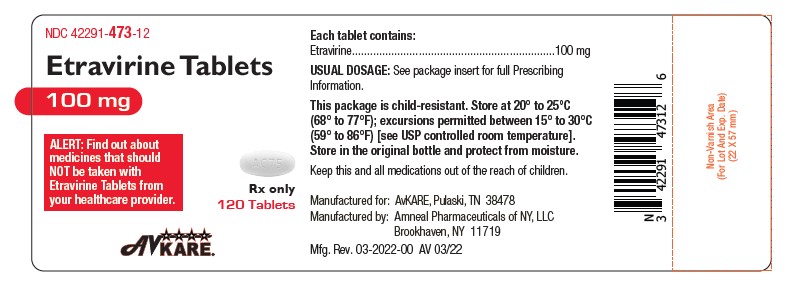
Brand names
ETRAVIRINEetravirineEtravirineIntelence
Active ingredients
ETRAVIRINE
Indications
INDICATIONS AND USAGE Etravirine tablets in combination with other antiretroviral agents, is indicated for the treatment of human immunodeficiency virus type 1 (HIV-1) infection in antiretroviral treatment-experienced adult patients and pediatric patients 2 years of age and older [see Microbiology (12.4) and Clinical Studies (14) ] . Etravirine is a human immunodeficiency virus type 1 (HIV-1) non-nucleoside reverse transcriptase inhibitor (NNRTI) indicated for treatment of HIV-1 infection in treatment-experienced patients 2 years of age and older. ( 1 )
Dosage
DOSAGE AND ADMINISTRATION Adult patients: 200 mg (one 200 mg tablet or two 100 mg tablets) taken twice daily following a meal. ( 2.1 , 2.2 , 2.4 ) Pregnant patients: 200 mg (one 200 mg tablet or two 100 mg tablets) taken twice daily following a meal. ( 2.2 ) Pediatric patients (2 years to less than 18 years of age and weighing at least 10 kg): dosage of etravirine is based on body weight and should not exceed the recommended adult dose. Etravirine tablets should be taken following a meal. ( 2.3 ) 2.1 Recommended Dosage in Adult Patients The recommended oral dosage of etravirine for adult patients is 200 mg (one 200 mg tablet or two 100 mg tablets) taken twice daily following a meal. The type of food does not affect the exposure to etravirine [see Clinical Pharmacology (12.3) ] . 2.2 Recommended Dosage During Pregnancy The recommended oral dosage of etravirine for pregnant individuals is 200 mg (one 200 mg tablet or two 100 mg tablets) taken twice daily following a meal [see Use in Specific Populations (8.1) ] 2.3 Recommended Dosage in Pediatric Patients (2 Years to Less Than 18 Years of Age) The recommended dosage of etravirine for pediatric patients 2 years to less than 18 years of age and weighing at least 10 kg is based on body weight (see Table 1) not exceeding the recommended adult dosage. Etravirine should be taken orally, following a meal. The type of food does not affect the exposure to etravirine [see Clinical Pharmacology (12.3) ] . Table 1: Recommended Dosage of Etravirine Tablets for Pediatric Patients 2 Years to Less Than 18 Years of Age Body Weight kilograms (kg) Dose greater than or equal to 10 kg to less than 20 kg 100 mg twice daily greater than or equal to 20 kg to less than 25 kg 125 mg twice daily greater than or equal to 25 kg to less than 30 kg 150 mg twice daily greater than or equal to 30 kg 200 mg twice daily 2.4 Method of Administration Instruct patients to swallow the etravirine tablet(s) whole with liquid such as water. Patients who are unable to swallow the etravirine tablet(s) whole may disperse the tablet(s) in water. Instruct the patient to do the following: place the tablet(s) in 5 mL (1 teaspoon) of water, or at least enough liquid to cover the medication, stir well until the water looks milky, add approximately 15 mL (1 tablespoon) of liquid. Water may be used but other liquids, such as orange juice or milk, may improve taste. Patients should not place the tablets in orange juice or milk without first adding water. The use of warm (temperature greater than 104°F [greater than 40°C]) or carbonated beverages should be avoided. drink the mixture immediately, rinse the glass several times with orange juice, milk or water and completely swallow the rinse each time to make sure the patient takes the entire dose. 2.1 Recommended Dosage in Adult Patients The recommended oral dosage of etravirine for adult patients is 200 mg (one 200 mg tablet or two 100 mg tablets) taken twice daily following a meal. The type of food does not affect the exposure to etravirine [see Clinical Pharmacology (12.3) ] . 2.2 Recommended Dosage During Pregnancy The recommended oral dosage of etravirine for pregnant individuals is 200 mg (one 200 mg tablet or two 100 mg tablets) taken twice daily following a meal [see Use in Specific Populations (8.1) ] 2.3 Recommended Dosage in Pediatric Patients (2 Years to Less Than 18 Years of Age) The recommended dosage of etravirine for pediatric patients 2 years to less than 18 years of age and weighing at least 10 kg is based on body weight (see Table 1) not exceeding the recommended adult dosage. Etravirine should be taken orally, following a meal. The type of food does not affect the exposure to etravirine [see Clinical Pharmacology (12.3) ] . Table 1: Recommended Dosage of Etravirine Tablets for Pediatric Patients 2 Years to Less Than 18 Years of Age Body Weight kilograms (kg) Dose greater than or equal to 10 kg to less than 20 kg 100 mg twice daily greater than or equal to 20 kg to less than 25 kg 125 mg twice daily greater than or equal to 25 kg to less than 30 kg 150 mg twice daily greater than or equal to 30 kg 200 mg twice daily 2.4 Method of Administration Instruct patients to swallow the etravirine tablet(s) whole with liquid such as water. Patients who are unable to swallow the etravirine tablet(s) whole may disperse the tablet(s) in water. Instruct the patient to do the following: place the tablet(s) in 5 mL (1 teaspoon) of water, or at least enough liquid to cover the medication, stir well until the water looks milky, add approximately 15 mL (1 tablespoon) of liquid. Water may be used but other liquids, such as orange juice or milk, may improve taste. Patients should not place the tablets in orange juice or milk without first adding water. The use of warm (temperature greater than 104°F [greater than 40°C]) or carbonated beverages should be avoided. drink the mixture immediately, rinse the glass several times with orange juice, milk or water and completely swallow the rinse each time to make sure the patient takes the entire dose.
Warnings
WARNINGS AND PRECAUTIONS Severe, potentially life threatening and fatal skin reactions have been reported. This includes cases of Stevens-Johnson syndrome, hypersensitivity reaction, toxic epidermal necrolysis and erythema multiforme. Immediately discontinue treatment if severe hypersensitivity, severe rash or rash with systemic symptoms or liver transaminase elevations develops and monitor clinical status, including liver transaminases closely. ( 5.1 ) Monitor for immune reconstitution syndrome and fat redistribution. ( 5.3, 5.4 ) 5.1 Severe Skin and Hypersensitivity Reactions Severe, potentially life-threatening and fatal skin reactions have been reported. In clinical trials, these include cases of Stevens-Johnson syndrome, toxic epidermal necrolysis and erythema multiforme. Hypersensitivity reactions including Drug Rash with Eosinophilia and Systemic Symptoms (DRESS) have also been reported and were characterized by rash, constitutional findings, and sometimes organ dysfunction, including hepatic failure. In Phase 3 clinical trials, Grade 3 and 4 rashes were reported in 1.3% of subjects receiving etravirine compared to 0.2% of placebo subjects. A total of 2.2% of HIV-1-infected subjects receiving etravirine discontinued from Phase 3 trials due to rash [see Adverse Reactions (6.1 )] . Rash occurred most commonly during the first 6 weeks of therapy. The incidence of rash was higher in females [see Adverse Reactions (6.1) ] . Stevens-Johnson syndrome was reported in 1.1% (2/177) of pediatric patients less than 18 years of age receiving etravirine in combination with other HIV-1 antiretroviral agents in an observational study. Discontinue etravirine immediately if signs or symptoms of severe skin reactions or hypersensitivity reactions develop (including, but not limited to, severe rash or rash accompanied by fever, general malaise, fatigue, muscle or joint aches, blisters, oral lesions, conjunctivitis, facial edema, hepatitis, eosinophilia, angioedema). Clinical status including liver transaminases should be monitored and appropriate therapy initiated. Delay in stopping etravirine treatment after the onset of severe rash may result in a life-threatening reaction. 5.2 Risk of Adverse Reactions or Loss of Virologic Response Due to Drug Interactions The concomitant use of etravirine and other drugs may result in potentially significant drug interactions, some of which may lead to [see Drug Interactions (7.3) ]: Loss of therapeutic effect of concomitant drug or etravirine and possible development of resistance. Possible clinically significant adverse reactions from greater exposures of etravirine or other concomitant drugs. See Table 4 for steps to prevent or manage these possible and known significant drug interactions, including dosing recommendations. Consider the potential for drug interactions prior to and during etravirine therapy and review concomitant medications during etravirine therapy. 5.3 Immune Reconstitution Syndrome Immune reconstitution syndrome has been reported in patients treated with combination antiretroviral therapy, including etravirine. During the initial phase of combination antiretroviral treatment, patients whose immune system responds may develop an inflammatory response to indolent or residual opportunistic infections (such as Mycobacterium avium infection, cytomegalovirus, Pneumocystis jiroveci pneumonia (PCP) or tuberculosis), which may necessitate further evaluation and treatment. Autoimmune disorders (such as Graves' disease, polymyositis, Guillain-Barré syndrome, and autoimmune hepatitis) have also been reported to occur in the setting of immune reconstitution; however, the time to onset is more variable, and can occur many months after initiation of treatment. 5.4 Fat Redistribution Redistribution/accumulation of body fat, including central obesity, dorsocervical fat enlargement (buffalo hump), peripheral wasting, facial wasting, breast enlargement, and "cushingoid appearance" have been observed in patients receiving antiretroviral therapy. The mechanism and long-term consequences of these events are currently unknown. A causal relationship has not been established. 5.1 Severe Skin and Hypersensitivity Reactions Severe, potentially life-threatening and fatal skin reactions have been reported. In clinical trials, these include cases of Stevens-Johnson syndrome, toxic epidermal necrolysis and erythema multiforme. Hypersensitivity reactions including Drug Rash with Eosinophilia and Systemic Symptoms (DRESS) have also been reported and were characterized by rash, constitutional findings, and sometimes organ dysfunction, including hepatic failure. In Phase 3 clinical trials, Grade 3 and 4 rashes were reported in 1.3% of subjects receiving etravirine compared to 0.2% of placebo subjects. A total of 2.2% of HIV-1-infected subjects receiving etravirine discontinued from Phase 3 trials due to rash [see Adverse Reactions (6.1 )] . Rash occurred most commonly during the first 6 weeks of therapy. The incidence of rash was higher in females [see Adverse Reactions (6.1) ] . Stevens-Johnson syndrome was reported in 1.1% (2/177) of pediatric patients less than 18 years of age receiving etravirine in combination with other HIV-1 antiretroviral agents in an observational study. Discontinue etravirine immediately if signs or symptoms of severe skin reactions or hypersensitivity reactions develop (including, but not limited to, severe rash or rash accompanied by fever, general malaise, fatigue, muscle or joint aches, blisters, oral lesions, conjunctivitis, facial edema, hepatitis, eosinophilia, angioedema). Clinical status including liver transaminases should be monitored and appropriate therapy initiated. Delay in stopping etravirine treatment after the onset of severe rash may result in a life-threatening reaction. 5.2 Risk of Adverse Reactions or Loss of Virologic Response Due to Drug Interactions The concomitant use of etravirine and other drugs may result in potentially significant drug interactions, some of which may lead to [see Drug Interactions (7.3) ]: Loss of therapeutic effect of concomitant drug or etravirine and possible development of resistance. Possible clinically significant adverse reactions from greater exposures of etravirine or other concomitant drugs. See Table 4 for steps to prevent or manage these possible and known significant drug interactions, including dosing recommendations. Consider the potential for drug interactions prior to and during etravirine therapy and review concomitant medications during etravirine therapy. 5.3 Immune Reconstitution Syndrome Immune reconstitution syndrome has been reported in patients treated with combination antiretroviral therapy, including etravirine. During the initial phase of combination antiretroviral treatment, patients whose immune system responds may develop an inflammatory response to indolent or residual opportunistic infections (such as Mycobacterium avium infection, cytomegalovirus, Pneumocystis jiroveci pneumonia (PCP) or tuberculosis), which may necessitate further evaluation and treatment. Autoimmune disorders (such as Graves' disease, polymyositis, Guillain-Barré syndrome, and autoimmune hepatitis) have also been reported to occur in the setting of immune reconstitution; however, the time to onset is more variable, and can occur many months after initiation of treatment. 5.4 Fat Redistribution Redistribution/accumulation of body fat, including central obesity, dorsocervical fat enlargement (buffalo hump), peripheral wasting, facial wasting, breast enlargement, and "cushingoid appearance" have been observed in patients receiving antiretroviral therapy. The mechanism and long-term consequences of these events are currently unknown. A causal relationship has not been established.
Contraindications
CONTRAINDICATIONS None. None. ( 4 )
Drug interactions
DRUG INTERACTIONS Co-administration of etravirine with other drugs can alter the concentrations of other drugs and other drugs may alter the concentrations of etravirine. The potential drug-drug interactions must be considered prior to and during therapy. ( 7 , 12.3 ) 7.1 Potential for Other Drugs to Affect Etravirine Tablets Etravirine is a substrate of CYP3A, CYP2C9, and CYP2C19. Therefore, co-administration of etravirine tablets with drugs that induce or inhibit CYP3A, CYP2C9, and CYP2C19 may alter the therapeutic effect or adverse reaction profile of etravirine tablets (see Table 4) [see Clinical Pharmacology (12.3) ]. 7.2 Potential for Etravirine Tablets to Affect Other Drugs Etravirine is an inducer of CYP3A and inhibitor of CYP2C9, CYP2C19 and P-glycoprotein (P-gp). Therefore, co-administration of drugs that are substrates of CYP3A, CYP2C9 and CYP2C19 or are transported by P-gp with etravirine tablets may alter the therapeutic effect or adverse reaction profile of the co-administered drug(s) (see Table 4) [see Clinical Pharmacology (12.3) ]. 7.3 Significant Drug Interactions Table 4 shows significant drug interactions based on which, alterations in dose or regimen of etravirine tablets and/or co-administered drug may be recommended. Drugs that are not recommended for co-administration with etravirine tablets are also included in Table 4 [see Clinical Pharmacology (12.3) ] . Table 4: Significant Drug Interactions Concomitant Drug Class: Drug Name Effect on Concentration of Etravirine or Concomitant Drug Clinical Comment ↑ = increase; ↓ = decrease; ↔ = no change HIV-antiviral agents: integrase strand inhibitors dolutegravir The interaction between INTELENCE and the drug was evaluated in a clinical study. All other drug interactions shown are predicted. ↓ dolutegravir ↔ etravirine Etravirine significantly reduced plasma concentrations of dolutegravir. Using cross - study comparisons to historical pharmacokinetic data for etravirine, dolutegravir did not appear to affect the pharmacokinetics of etravirine. dolutegravir/darunavir/ritonavir ↓ dolutegravir ↔ etravirine The effect of etravirine on dolutegravir plasma concentrations was mitigated by co- administration of darunavir/ritonavir or lopinavir/ritonavir, and is expected to be mitigated by atazanavir/ritonavir. dolutegravir/lopinavir/ritonavir ↔ dolutegravir ↔ etravirine Dolutegravir should only be used with etravirine tablets when co- administered with atazanavir/ritonavir, darunavir/ritonavir, or lopinavir/ritonavir. HIV-antiviral agents: non-nucleoside reverse transcriptase inhibitors (NNRTIs) efavirenz nevirapine ↓ etravirine Combining two NNRTIs has not been shown to be beneficial. Concomitant use of etravirine tablets with efavirenz or nevirapine may cause a significant decrease in the plasma concentrations of Etravirine and loss of therapeutic effect of etravirine tablets. Co-administration of etravirine tablets and other NNRTIs is not recommended. delavirdine rilpivirine ↓ etravirine ↓ rilpivirine ↔ etravirine Combining two NNRTIs has not been shown to be beneficial. Etravirine tablets and delavirdine should not be co-administered. Combining two NNRTIs has not been shown to be beneficial. Co- administration of etravirine tablets and rilpivirine is not recommended. HIV-antiviral agents: protease inhibitors (PIs) atazanavir (without ritonavir) atazanavir/ritonavir atazanavir/cobicistat darunavir/ritonavir darunavir/cobicistat fosamprenavir (without ritonavir) fosamprenavir/ritonavir indinavir (without ritonavir) lopinavir/ritonavir ↓ atazanavir ↓ atazanavir ↔ etravirine ↓ atazanavir ↓ cobicistat ↓ etravirine ↓ cobicistat darunavir: effect unknown ↑ amprenavir ↑ amprenavir ↓ indinavir ↓ etravirine Co-administration of etravirine tablets and atazanavir without low- dose ritonavir is not recommended. Concomitant use of etravirine tablets with atazanavir/ritonavir decreased atazanavir Cmin but it is not considered clinically relevant. The mean systemic exposure (AUC) of etravirine after co-administration of etravirine tablets with atazanavir/ritonavir in HIV-infected subjects was similar to the mean systemic exposure of etravirine observed in the Phase 3 trials after co-administration of etravirine tablets and darunavir/ritonavir (as part of the background regimen). Etravirine tablets and atazanavir/ritonavir can be co-administered without dose adjustments. Co-administration of etravirine tablets with atazanavir/cobicistat is not recommended because it may result in loss of therapeutic effect and development of resistance to atazanavir. The mean systemic exposure (AUC) of etravirine was reduced when etravirine tablets was co-administered with darunavir/ritonavir. Because all subjects in the Phase 3 trials received darunavir/ritonavir as part of the background regimen and Etravirine exposures from these trials were determined to be safe and effective, etravirine tablets and darunavir/ritonavir can be co-administered without dose adjustments. Co-administration of etravirine tablets with darunavir/cobicistat is not recommended because it may result in loss of therapeutic effect and development of resistance to darunavir. Concomitant use of etravirine tablets with fosamprenavir without low-dose ritonavir may cause a significant alteration in the plasma concentration of amprenavir. Co-administration of etravirine tablets and fosamprenavir without low-dose ritonavir is not recommended. Due to a significant increase in the systemic exposure of amprenavir, the appropriate doses of the combination of etravirine tablets and fosamprenavir /ritonavir have not been established. Co- administration of etravirine tablets and fosamprenavir/ritonavir is not recommended. Concomitant use of etravirine tablets with indinavir without low-dose ritonavir may cause a significant alteration in the plasma concentration of indinavir. Co-administration of etravirine tablets and indinavir without low- dose ritonavir is not recommended. The mean systemic exposure (AUC) of Etravirine was reduced after co-administration of etravirine tablets with lopinavir/ritonavir (tablet). Because the reduction in the mean systemic exposures of etravirine in the presence of lopinavir/ritonavir is similar to the reduction in mean systemic exposures of etravirine in the presence of darunavir/ritonavir, etravirine tablets and lopinavir/ritonavir can be co-administered without dose adjustments. nelfinavir (without ritonavir) ritonavir saquinavir/ritonavir tipranavir/ritonavir ↑ nelfinavir ↓ etravirine ↓ etravirine ↓ etravirine Concomitant use of etravirine tablets with nelfinavir without low- dose ritonavir may cause a significant alteration in the plasma concentration of nelfinavir. Co- administration of etravirine tablets and nelfinavir without low- dose ritonavir is not recommended. Concomitant use of etravirine tablets with ritonavir 600 mg twice daily may cause a significant decrease in the plasma concentration of Etravirine and loss of therapeutic effect of etravirine tablets. Co-administration of etravirine tablets and ritonavir 600 mg twice daily is not recommended. The mean systemic exposure (AUC) of etravirine was reduced when etravirine tablets were co-administered with saquinavir/ ritonavir. Because the reduction in the mean systemic exposures of etravirine in the presence of saquinavir/ritonavir is similar to the reduction in mean systemic exposures of etravirine in the presence of darunavir/ritonavir, etravirine tablets and saquinavir/ritonavir can be co-administered without dose adjustments. Concomitant use of etravirine tablets with tipranavir/ritonavir may cause a significant decrease in the plasma concentrations of etravirine and loss of therapeutic effect of etravirine tablets. Co-administration of etravirine tablets and tipranavir/ritonavir is not recommended. CCR5 antagonists maraviroc maraviroc/darunavir/ritonavir The reference for etravirine exposure is the pharmacokinetic parameters of etravirine in the presence of
Adverse reactions
ADVERSE REACTIONS The following adverse reactions are described in greater detail in other sections: Severe skin and hypersensitivity reactions [see Warnings and Precautions (5.1) ] . Immune reconstitution syndrome [see Warnings and Precautions (5.3) ] . The most common adverse drug reactions of moderate to severe intensity (at least 2%) which occurred at a higher rate than placebo in adults are rash and peripheral neuropathy. ( 6.1 ) The most common adverse drug reactions in at least 2% of pediatric patients are rash and diarrhea. ( 6.1 ) To report SUSPECTED ADVERSE REACTIONS, contact Carnegie Pharmaceuticals, LLC at 1-732-783-7010 or FDA at 1-800-FDA-1088 or www.fda.gov/medwatch. 6.1 Clinical Trial Experience Because clinical trials are conducted under widely varying conditions, adverse reaction rates observed in the clinical trials of a drug cannot be directly compared to rates in the clinical trials of another drug and may not reflect the rates observed in practice. Clinical Trials Experience in Adults The safety assessment is based on all data from 1203 subjects in the Phase 3 placebo-controlled trials, TMC125-C206 and TMC125-C216, conducted in antiretroviral treatment-experienced HIV-1-infected adult subjects, 599 of whom received etravirine tablets (200 mg twice daily). In these pooled trials, the median exposure for subjects in the etravirine tablets arm and placebo arm was 52.3 and 51.0 weeks, respectively. Discontinuations due to adverse drug reactions (ADRs) were 5.2% in the etravirine tablets arm and 2.6% in the placebo arm. The most frequently reported ADR at least Grade 2 in severity was rash (10.0%). Stevens-Johnson syndrome, drug hypersensitivity reaction and erythema multiforme were reported in less than 0.1% of subjects during clinical development with etravirine tablets [see Warnings and Precautions (5.1) ] . A total of 2.2% of HIV-1-infected subjects in Phase 3 trials receiving etravirine tablets discontinued due to rash. In general, in clinical trials, rash was mild to moderate, occurred primarily in the second week of therapy, and was infrequent after Week 4. Rash generally resolved within 1 to 2 weeks on continued therapy. The incidence of rash was higher in women compared to men in the etravirine tablets arm in the Phase 3 trials (rash ≥ Grade 2 was reported in 9/60 [15.0%] women versus 51/539 [9.5%] men; discontinuations due to rash were reported in 3/60 [5.0%] women versus 10/539 [1.9%] men) [see Warnings and Precautions (5.1) ] . Patients with a history of NNRTI-related rash did not appear to be at increased risk for the development of etravirine tablets-related rash compared to patients without a history of NNRTI- related rash. Common Adverse Reactions Clinical ADRs of moderate intensity or greater (greater than or equal to Grade 2) and reported in at least 2% of subjects treated with etravirine tablets and occurring at a higher rate compared to placebo (excess of 1%) are presented in Table 2. Laboratory abnormalities considered ADRs are included in Table 3. Table 2: Adverse Drug Reactions (Grades 2 to 4) in at Least 2% of Adult Subjects (Pooled TMC125-C206 and TMC125-C216 Trials) Preferred Term Etravirine tablets + BR N=599 % Placebo + BR N=604 % Rash 10% 3% Peripheral neuropathy 4% 2% N=total number of subjects per treatment group; BR=background regimen Less Common Adverse Reactions Treatment-emergent ADRs occurring in less than 2% of subjects (599 subjects) receiving etravirine tablets and of at least moderate intensity (greater than or equal to Grade 2) are listed below by body system: Cardiac Disorders : myocardial infarction, angina pectoris, atrial fibrillation Ear and Labyrinth Disorders : vertigo Eye Disorders : blurred vision Gastrointestinal Disorders : gastroesophageal reflux disease, flatulence, gastritis, abdominal distension, pancreatitis, constipation, dry mouth, hematemesis, retching, stomatitis General Disorders and Administration Site Conditions : sluggishness Hematologic Disorders : hemolytic anemia Hepatobiliary Disorders : hepatic failure, hepatomegaly, cytolytic hepatitis, hepatic steatosis, hepatitis Immune System Disorders : drug hypersensitivity, immune reconstitution syndrome Metabolism and Nutrition Disorders : diabetes mellitus, anorexia, dyslipidemia Nervous System Disorders : paresthesia, somnolence, convulsion, hypoesthesia, amnesia, syncope, disturbance in attention, hypersomnia, tremor Psychiatric Disorders : anxiety, sleep disorders, abnormal dreams, confusional state, disorientation, nervousness,, nightmares Renal and Urinary Disorders: acute renal failure Reproductive System and Breast Disorders : gynecomastia Respiratory, Thoracic and Mediastinal Disorders : exertional dyspnea, bronchospasm Skin and Subcutaneous Tissue Disorders : night sweats, lipohypertrophy, prurigo, hyperhidrosis, dry skin, swelling face Additional ADRs of at least moderate intensity observed in other trials were acquired lipodystrophy, angioneurotic edema, erythema multiforme and hemorrhagic stroke, each reported in no more than 0.5% of subjects. Laboratory Abnormalities in Treatment-Experienced Patients Selected Grade 2 to Grade 4 laboratory abnormalities that represent a worsening from baseline observed in adult subjects treated with etravirine tablets are presented in Table 3. Table 3: Selected Grade 2 to 4 Laboratory Abnormalities Observed in Treatment-Experienced Subjects (Pooled TMC125-C206 and TMC125- C216 Trials) Laboratory Parameter DAIDS Toxicity Range Etravirine tablets + BR N=599 % Placebo + BR N=604 % GENERAL BIOCHEMISTRY Pancreatic amylase Grade 2 > 1.5–2 × ULN 7% 8% Grade 3 > 2–5 × ULN 7% 8% Grade 4 5 × ULN 2% 1% Lipase Grade 2 > 1.5–3 × ULN 4% 6% Grade 3 > 3–5 × ULN 2% 2% Grade 4 5 × ULN 1% < 1% Creatinine Grade 2 > 1.4–1.8 × ULN 6% 5% Grade 3 > 1.9–3.4 × ULN 2% 1% Grade 4 > 3.4 × ULN 0% < 1% HEMATOLOGY Decreased hemoglobin Grade 2 90–99 g/L 2% 4% Grade 3 70–89 g/L < 1% < 1% Grade 4 < 70 g/L < 1% < 1% White blood cell count Grade 2 1,500–1,999/mm 3 2% 3% Grade 3 1,000–1,499/mm 3 1% 4% Grade 4 < 1,000/mm 3 1% < 1% Neutrophils Grade 2 750–999/mm 3 5% 6% Grade 3 500–749/mm 3 4% 4% Grade 4 < 500/mm 3 2% 3% Platelet count Grade 2 50,000– 99,999/mm 3 3% 5% Grade 3 25,000– 49,999/mm 3 1% 1% Grade 4 < 25,000/mm 3 < 1% < 1% LIPIDS AND GLUCOSE Total cholesterol Grade 2 > 6.20–7.77 mmol/L 240–300 mg/dL 20% 17% Grade 3 > 7.77 mmol/L 300 mg/dL 8% 5% Low density lipoprotein Grade 2 4.13–4.9 mmol/L 160–190 mg/dL 13% 12% Grade 3 > 4.9 mmol/L > 190 mg/dL 7% 7% Triglycerides Grade 2 5.65–8.48 mmol/L 500–750 mg/dL 9% 7% Grade 3 8.49–13.56 mmol/L 751–1200 mg/dL 6% 4% Grade 4 > 13.56 mmol/L > 1200 mg/dL 4% 2% Elevated glucose levels Grade 2 6.95–13.88 mmol/L 161–250 mg/dL 15% 13% Grade 3 13.89–27.75 mmol/L 251–500 mg/dL 4% 2% Grade 4 > 27.75 mmol/L > 500 mg/dL 0% < 1% HEPATIC PARAMETERS Alanine amino transferase Grade 2 2.6–5 × ULN 6% 5% Grade 3 5.1–10 × ULN 3% 2% Grade 4 > 10 × ULN 1% < 1% Aspartate amino transferase Grade 2 2.6–5 × ULN 6% 8% Grade 3 5.1–10 × ULN 3% 2% Grade 4 > 10 × ULN < 1% < 1% ULN=Upper Limit of Normal; BR=background regimen Patients Co-Infected With Hepatitis B and/or Hepatitis C Virus In Phase 3 trials TMC125-C206 and TMC125-C216, 139 subjects (12.3%) with chronic hepatitis B and/or hepatitis C virus co-infection out of 1129 subjects were permitted to enroll. AST and ALT abnormalities occurred more frequently in hepatitis B and/or hepatitis C virus co-infected subjects for both treatment groups. Grade 2 or higher laboratory abnormalities that represent a worsening from baseline of AST, ALT or total bilirubin occurred in 27.8%, 25.0% and 7.1% respectively, of etravirine tablets-treated co-infected subjects as compared to 6.7%, 7.5% and 1.8% of non-co-infected etravirine tablets-treated subjects. In general, adverse events reported by etravirine tablets-treated subjects with hepatitis B and/or hepatitis C virus co-infection were similar to etravirine tablets-treated subjects without hepatitis B
Mechanism of action
Mechanism of Action Etravirine is an antiretroviral drug [see Microbiology (12.4) ] .
Available forms (6)
NDC examples
80005-11280005-11369452-25469452-25569315-28569315-28660219-172060219-172160219-172210147-057010147-057159676-570
Indicated ICD-10 codes
Treats these conditions
Assistance programs
AIDS Drug Assistance Program (ADAP)AIDS Education and Training Centers (AETC) ProgramCoordinated Services and Access to Research for Women, Infants, Children, and YouthEnding the HIV Epidemic: A Plan for America — Ryan White HIV/AIDS Program Parts A and BGrants to Provide Outpatient Early Intervention Services with Respect to HIV DiseaseHIV Care Formula GrantsHIV Emergency Relief Project GrantsHIV-Related Training and Technical AssistanceHousing Opportunities for Persons with AIDSSpecial Projects of National Significance
Source: openFDA + RxNorm · 2026
Look up another medication