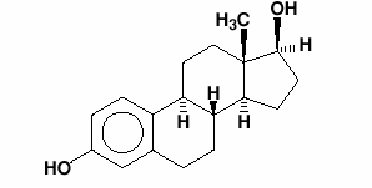
Estradiol Transdermal — Estrogen [EPC]. INDICATIONS AND USAGE Estradiol gel, 0.1% is an estrogen indicated for the treatment of moderate to severe vasomotor symptoms due to menopause (1.1)…
Boxed warning
WARNING: ENDOMETRIAL CANCER WITH UNOPPOSED ESTROGEN IN WOMEN WITH A UTERUS There is an increased risk of endometrial cancer in a woman with a uterus who uses unopposed estrogens. Adding a progestogen to estrogen-only therapy has been shown to reduce the risk of endometrial hyperplasia, which may be a precursor to endometrial cancer. Perform adequate diagnostic measures, including directed or random endometrial sampling when indicated, to rule out malignancy in menopausal women abnormal genital bleeding of unknown etiology [see Warnings and Precautions (5.2) ] . WARNING: ENDOMETRIAL CANCER WITH UNOPPOSED ESTROGEN IN WOMEN WITH A UTERUS See full prescribing information for complete boxed warning. There is an increased risk of endometrial cancer in a woman with a uterus who uses unopposed estrogens (5.2)
INDICATIONS AND USAGE Estradiol gel, 0.1% is an estrogen indicated for the treatment of moderate to severe vasomotor symptoms due to menopause (1.1) . 1.1 Treatment of Moderate to Severe Vasomotor Symptoms due to Menopause
Dosage
DOSAGE AND ADMINISTRATION Daily administration of 0.25 to 1.25 grams of estradiol gel, 0.1% to the right or left upper thigh on alternating days. Women should be started with the lowest effective dose and the dose should be evaluated periodically (2) . 2.1 Important Use Information The timing of estradiol gel, 0.1% initiation can affect the overall benefit-risk profile. Consider initiating estradiol gel, 0.1% in women <60 years old or <10 years since menopause onset [see Warnings and Precautions (5) , Use in Specific Populations (8.5) and Clinical Studies (14) ] . When estrogen is prescribed for a menopausal woman with a uterus, the addition of a progestogen has been shown to reduce the risk of endometrial cancer. There are possible risks associated with the use of progestogens plus estrogens that differ from those of estrogen-alone regimens. See prescribing information for progestogens indicated for the prevention of endometrial hyperplasia in non-hysterectomized menopausal women receiving estrogens [see Warnings and Precautions (5.2 , 5.3) ] . Generally, a woman without a uterus, does not need to use a progestogen with estrogen therapy. In some cases, however, hysterectomized women with a history of endometriosis may benefit from the addition of a progestogen [see Warnings and Precautions (5.13) ] . 2.2 Treatment of Moderate to Severe Vasomotor Symptoms due to Menopause Start therapy with the 0.25 grams applied once daily on the skin of either the right or left upper thigh. Adjust the dose up to a maximum of 1.25 grams, as needed. The application surface area should be about 5 by 7 inches (approximately the size of two palm prints). The entire contents of a unit dose packet should be applied each day. To avoid potential skin irritation, apply estradiol gel, 0.1% to the right or left upper thigh on alternating days. Do not apply estradiol gel, 0.1% on the face, breasts, or irritated skin or in or around the vagina. Allow gel to dry after application before dressing. Do not wash the application site within 1 hour after applying estradiol gel, 0.1%. Avoid contact of the gel with eyes. Wash hands after application.
Warnings
WARNINGS AND PRECAUTIONS Cardiovascular Disorders: Increased risk of PE, DVT, and stroke with estrogen-alone therapy. Discontinue if an arterial or venous thrombotic or thromboembolic event occurs. (5.1) Estrogens increase the risk of gallbladder disease (5.4) Discontinue estrogen if severe hypercalcemia, loss of vision, severe hypertriglyceridemia or cholestatic jaundice occurs (5.5 , 5.6 , 5.8 , 5.9) Monitor thyroid function in women on thyroid replacement therapy (5.10 , 5.21) 5.1 Cardiovascular Disorders Estradiol gel is contraindicated in women with active DVT, PE, stroke, or a history of these conditions [see Contraindications (4) ] . Immediately discontinue estradiol gel if a PE, DVT, or stroke, occurs or is suspected. If feasible, discontinue estradiol gel at least 4 to 6 weeks before surgery of the type associated with an increased risk of thromboembolism, or during periods of prolonged immobilization. The safety and efficacy of estradiol gel for the prevention of cardiovascular disorders has not been established. The Women’s Health Initiate (WHI) estrogen-alone trial reported increased risks of pulmonary embolism (PE), deep vein thrombosis (DVT), and stroke, in postmenopausal women (50 to 79 years of age, average age 63.4 years) during 7.2 years of treatment with daily oral conjugated estrogen (CE) [0.625 mg] relative to placebo. Analyses were also conducted in women aged 50 to 59 years, a group of women more likely to present with onset of moderate to severe VMS compared to women of other age groups in the trial. Only daily oral 0.625 mg CE was studied in the WHI estrogen-alone trial. Therefore, the relevance of the WHI findings regarding adverse cardiovascular events to lower CE doses, other routes of administration, or other estrogen products is not known. Without such data, it is not possible to definitively exclude these risks or determine the extent of these risks for other products [see Clinical Studies (14.2) ] . Venous Thromboembolism In women aged 50 to 59 years, the WHI estrogen-alone trial reported a relative risk for PE of 1.53 (95% confidence interval [CI], 0.63, 3.75) for CE compared to placebo, with an absolute risk difference of 4 per 10,000 women-years (WYs; 10 versus 6). The relative risk for DVT was 1.66 (95% CI 0.75, 3.67) for CE compared to placebo, with a risk difference of 5 per 10,000 WYs (13 versus 8). In the overall study population of women aged 50 to 79 years, the WHI estrogen-alone trial reported a relative risk of PE of 1.35 (95% CI 0.89, 2.05) for CE compared to placebo, with a risk difference of 4 per 10,000 WYs (14 versus 10). The relative risk for DVT was 1.48 (95% 1.06, 2.07) for CE compared to placebo, with a risk difference of 7 per 10,000 WYs (23 versus 15) [see Clinical Studies (14.2) ] . Stroke In women aged 50 to 59 years, the WHI estrogen-alone trial reported a relative risk for stroke of 0.99 (95% 0.53, 1.85) for CE compared to placebo, with a risk difference of -1 per 10,000 WYs (16 versus 17). In the overall study population of women aged 50 to 79 years, the WHI estrogen-alone trial reported a relative risk for stroke of 1.35 (95%, 1.07, 1.70) for CE compared to placebo, with a risk difference of 11 per 10,000 WYs (45 versus 34) [see Clinical Studies (14.2) ] . 5.2 Malignant Neoplasms Endometrial Cancer In estradiol gel-treated menopausal women with a uterus with persistent or recurring abnormal genital bleeding of unknown etiology, perform adequate diagnostic measures, including directed or random endometrial sampling when indicated, to assess for endometrial cancer. An increased risk of endometrial cancer has been reported with the use of unopposed estrogen therapy in a woman with a uterus. The reported endometrial cancer risk among unopposed estrogen users is about 2 to 12 times greater than in non-users and appears dependent on duration of treatment and on estrogen dose. Most studies show no significant increased risk associated with use of estrogens for less than 1 year. The greatest risk appears to be associated with prolonged use, with increased risks of 15- to 24-fold for 5 to 10 years or more. This risk has been shown to persist for at least 8 to 15 years after estrogen therapy is discontinued. There is no evidence that the use of natural estrogens results in a different endometrial risk profile than synthetic estrogens of equivalent estrogen dose. Adding a progestogen to estrogen-alone therapy has been shown to reduce the risk of endometrial hyperplasia, which may be a precursor to endometrial cancer. There are, however, possible risks associated with the use of progestogens plus estrogens that differ from those of estrogen-alone regimens [see Warnings and Precautions (5.3) ] . Breast Cancer Surveillance measures for breast cancer, such as breast examinations and mammography, are recommended. The use of estrogen-alone therapy has been reported to result in an increase in abnormal mammograms requiring further evaluation. In the WHI estrogen-alone trial, after an average follow-up of 7.1 years, daily CE-alone was not associated with an increased risk of invasive breast cancer. Among women 50 to 59 years old, the relative risk was 0.82 (95% CI, 0.50, 1.34) for CE compared to placebo, with a risk difference of -5 per 10,000 WYs (24 versus 29). In the overall study population of women aged 50 to 79 years (average age 63.4 years), the relative risk was 0.79 (95% CI, 0.61, 1.02), with a risk difference of -7 per 10,000 WYs (28 versus 35) [see Clinical Studies (14.2) ] . However, a large meta-analysis including 24 prospective studies of postmenopausal women comparing current use of estrogen-only products with use duration of 5 to 14 years (average of 9 years) versus never use reported a relative risk for breast cancer of 1.33 (95% CI, 1.28 to 1.38). 1 Ovarian Cancer A large meta-analysis including 17 prospective studies of postmenopausal women compared current use of estrogen-only products versus never use and reported a relative risk for ovarian cancer of 1.37 (95% CI, 1.26 to 1.50). The duration of hormone therapy use that was associated with an increased risk of ovarian cancer is unknown. 2 5.3 Risks Associated with the Co-administration of Estrogen Plus Progestogen Studies of the addition of a progestogen for 10 or more days of a cycle of estrogen administration, or daily with estrogen in a continuous regimen, have reported a lowered incidence of endometrial hyperplasia than would be induced by estrogen treatment alone. Endometrial hyperplasia may be a precursor to endometrial cancer. If estradiol gel is administered with a progestogen, there are possible risks associated with the use of progestogens plus estrogens that differ from those of estrogen-alone regimens. Refer to prescribing information for progestogens indicated for the prevention of endometrial hyperplasia in non-hysterectomized women receiving estrogens. 5.4 Gallbladder Disease A 2- to 4-fold increase in the risk of gallbladder disease requiring surgery in postmenopausal women receiving estrogens has been reported. 5.5 Hypercalcemia Estrogen administration may lead to severe hypercalcemia in women with breast cancer and bone metastases. Discontinue estrogens, including estradiol gel, if hypercalcemia occurs, and take appropriate measures to reduce the serum calcium level. 5.6 Visual Abnormalities Retinal vascular thrombosis has been reported in patients receiving estrogens. Discontinue estradiol gel pending examination if there is sudden partial or complete loss of vision, or a sudden onset of proptosis, diplopia, or migraine. Permanently discontinue estrogens, including estradiol gel, if examination reveals papilledema or retinal vascular lesions. 5.7 Elevated Blood Pressure In a small number of case reports, substantial increases in blood pressure have been attributed to idiosyncratic reactions to estrogens. In a large, randomized, placebo-controlled clinical trial, a generalized effect of estrogens on blood pressure was
Contraindications
CONTRAINDICATIONS Estradiol gel is contraindicated in women with any of the following conditions: Abnormal genital bleeding of unknown etiology [see Warning and Precautions (5.2) ] Current or history of breast cancer [see Warning and Precautions (5.2) ] Estrogen-dependent neoplasia [see Warning and Precautions (5.2) ] Active DVT, PE, or history of these conditions [see Warning and Precautions (5.1) ] Active arterial thromboembolic disease (for example, stroke or MI), or a history of these conditions [see Warning and Precautions (5.1) ] Known anaphylactic reaction, angioedema, or hypersensitivity to estradiol gel Hepatic impairment or disease [see Warnings and Precautions (5.9) ] Protein C, protein S, or antithrombin deficiency, or other known thrombophilic disorders Undiagnosed abnormal genital bleeding (4) Breast cancer or a history of breast cancer (4 , 5.2) Estrogen-dependent neoplasia (4 , 5.2) Active DVT, PE, or history of these conditions (4 , 5.1) Active arterial thromboembolic disease (e.g., stroke and MI), or history of these conditions (4 , 5.1) Known anaphylactic reaction, angioedema, or hypersensitivity to estradiol gel (4) Hepatic impairment or disease (4 , 5.9) Protein C, protein S, or antithrombin deficiency, or other known thrombophilic disorders (4)
Drug interactions
DRUG INTERACTIONS In vitro and in vivo studies have shown that estrogens are metabolized partially by cytochrome P450 3A4 (CYP3A4). Therefore, inducers or inhibitors of CYP3A4 may affect estrogen drug metabolism. Inducers of CYP3A4, such as St. John's wort ( Hypericum perforatum ) preparations, phenobarbital, carbamazepine, and rifampin, may reduce plasma concentrations of estrogens, possibly resulting in a decrease in therapeutic effects and/or changes in the uterine bleeding profile. Inhibitors of CYP3A4, such as erythromycin, clarithromycin, ketoconazole, itraconazole, ritonavir, and grapefruit juice, may increase plasma concentrations of estrogens and result in adverse reactions. Inducers and inhibitors of CYP3A4 may affect estrogen drug metabolism and decrease or increase the estrogen plasma concentration (7) .
Adverse reactions
ADVERSE REACTIONS The following serious adverse reactions are discussed elsewhere in the labeling: Cardiovascular Disorders [see Boxed Warning , Warnings and Precautions (5.1) ] . Malignant Neoplasms [see Boxed Warning , Warnings and Precautions (5.2) ] . The most common adverse reactions (incidence >5 percent and greater than placebo) in any estradiol gel treatment group are metrorrhagia, breast tenderness, vaginal mycosis, nasopharyngitis, and upper respiratory tract infection (6.1) . To report SUSPECTED ADVERSE REACTIONS, contact Amneal Pharmaceuticals at 1-877-835-5472 or FDA at 1-800-FDA-1088 or www.fda.gov/medwatch . 6.1 Clinical Trials Experience Because clinical trials are conducted under widely varying conditions, adverse reaction rates observed in the clinical trials of a drug cannot be directly compared to rates in the clinical trials of another drug and may not reflect the rates observed in practice. Estradiol gel was studied at doses of 0.25, 0.5 and 1 gram per day in a 12-week, double-blind, placebo-controlled study that included a total of 495 postmenopausal women (86.5 percent Caucasian). The adverse reactions that occurred at a rate greater than 5 percent and greater than placebo in any of the treatment groups are summarized in Table 1. Table 1: Number (%) of Subjects with Common Adverse Reactions* in a 12-Week Placebo-Controlled Study of Estradiol Gel Estradiol Gel Placebo SYSTEM ORGAN CLASS Preferred Term 0.25 grams/day N=122 n (%) 0.5 grams/day N=123 n (%) 1 gram/day N=125 n (%) N=125 n (%) INFECTIONS & INFESTATIONS Nasopharyngitis 7 (5.7) 5 (4.1) 6 (4.8) 5 (4.0) Upper Respiratory Tract Infection 7 (5.7) 3 (2.4) 2 (1.6) 2 (1.6) Vaginal mycosis 1 (0.8) 3 (2.4) 8 (6.4) 4 (3.2) REPRODUCTIVE SYSTEM & BREAST DISORDERS Breast Tenderness 3 (2.5) 7 (5.7) 11 (8.8) 2 (1.6) Metrorrhagia 5 (4.1) 7 (5.7) 12 (9.6) 2 (1.6) *Adverse reactions reported by >5 percent of patients in any treatment group. In a 12-week placebo-controlled study of estradiol gel, application site reactions were seen in <1 percent of participating women. 6.2 Postmarketing Experience The following adverse reactions have been identified during post-approval use of estradiol gel. Because these reactions are reported voluntarily from a population of uncertain size, it is not always possible to reliably estimate their frequency or establish a causal relationship to drug exposure. Genitourinary System Amenorrhea, dysmenorrhea, ovarian cyst, vaginal discharge Breasts Gynecomastia Cardiovascular Palpitations, ventricular extrasystoles Gastrointestinal Flatulence Skin Rash pruritic, urticaria Eyes Retinal vein occlusion Central Nervous System Tremor Miscellaneous Arthralgia, application site rash, asthenia, chest discomfort, fatigue, feeling abnormal, heart rate increased, insomnia, malaise, muscle spasms, pain in extremity, weight increased
Mechanism of action
Mechanism of Action Endogenous estrogens are largely responsible for the development and maintenance of the female reproductive system and secondary sexual characteristics. Although circulating estrogens exist in a dynamic equilibrium of metabolic interconversions, estradiol is the principal intracellular human estrogen and is substantially more potent than its metabolites, estrone and estriol, at the receptor level. The primary source of estrogen in normally cycling adult women is the ovarian follicle, which secretes 70 to 500 mcg of estradiol daily, depending on the phase of the menstrual cycle. After menopause, most endogenous estrogen is produced by conversion of androstenedione, which is secreted by the adrenal cortex, to estrone in the peripheral tissues. Thus, estrone and the sulfate conjugated form, estrone sulfate, are the most abundant circulating estrogens in postmenopausal women. Estrogens act through binding to nuclear receptors in estrogen-responsive tissues. To date, two estrogen receptors have been identified. These vary in proportion from tissue to tissue. Circulating estrogens modulate the pituitary secretion of the gonadotropins, luteinizing hormone (LH) and FSH, through a negative feedback mechanism. Estrogens act to reduce the elevated levels of these hormones seen in postmenopausal women.
A drug lookup is just the start. Eleplan keeps the whole care plan in one place.
Medications, diagnoses, documents, appointments, and the whole care team — organized and always in sync, with Ellie, your AI care assistant, on top of it. Free to start.