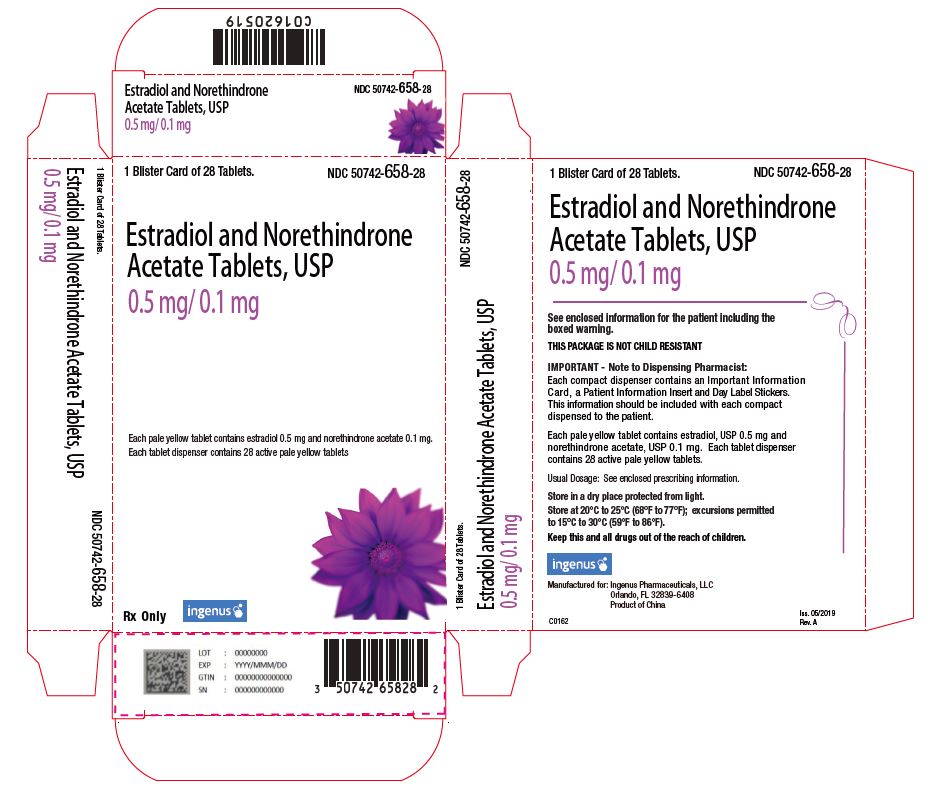
Estradiol and Norethindrone Acetate — Estrogen [EPC]. INDICATIONS AND USAGE Estradiol and norethindrone acetate tablets are an estrogen and progestin combination indicated in a woman with a uterus for…
Boxed warning
WARNING: CARDIOVASCULAR DISORDERS, PROBABLE DEMENTIA, BREAST CANCER, and ENDOMETRIAL CANCER WARNING: CARDIOVASCULAR DISORDERS, PROBABLE DEMENTIA, BREAST CANCER, and ENDOMETRIAL CANCER S ee full prescribing information for complete boxed warning Estrogen Plus Progestin Therapy ● The Women's Health Initiative (WHI) estrogen plus progestin substudy reported increased risks of deep vein thrombosis (DVT), pulmonary embolism (PE), stroke and myocardial infarction (MI) ( 5.1 ) ● The WHI estrogen plus progestin substudy reported increased risks of invasive breast cancer ( 5.2 ) ● The WHI Memory Study (WHIMS) estrogen plus progestin ancillary study of WHI reported an increased risk of probable dementia in postmenopausal women 65 years of age and older ( 5.3 ) ● Do not use estrogen plus progestogen therapy for the prevention of cardiovascular disease or dementia ( 5.1 , 5.3 ) Estrogen-Alone Therapy ● There is an increased risk of endometrial cancer in a woman with a uterus who use unopposed estrogens ( 5.2 ) ● The WHI estrogen-alone substudy reported increased risks of stroke and DVT ( 5.1 ) ● The WHIMS estrogen-alone ancillary study of WHI reported an increased risk of probable dementia in postmenopausal women 65 years of age and older ( 5.3 ) ● Do not use estrogen-alone therapy for the prevention of cardiovascular disease or dementia ( 5.2 , 5.3 ) Estrogen Plus Progestin Therapy Cardiovascular Disorders and Probable Dementia The Women's Health Initiative (WHI) estrogen plus progestin substudy reported increased risks of deep vein thrombosis (DVT), pulmonary embolism (PE), stroke and myocardial infarction (MI) in postmenopausal women (50 to 79 years of age) during 5.6 years of treatment with daily oral conjugated estrogen (CE) [0.625 mg] combined with medroxyprogesterone acetate (MPA) [2.5 mg], relative to placebo [see Warnings and Precautions ( 5.1 ), and Clinical Studies ( 14.5 )] . The WHI Memory Study (WHIMS) estrogen plus progestin ancillary study of the WHI reported an increased risk of developing probable dementia in postmenopausal women 65 years of age and older during 4 years of treatment with daily CE (0.625 mg) combined with MPA (2.5 mg), relative to placebo. It is unknown whether this finding applies to younger postmenopausal women [see Warnings and Precautions ( 5.3 ), Use in Specific Populations ( 8.5 ), and Clinical Studies ( 14.6 )]. Do not use estrogen plus progestogen therapy for the prevention of cardiovascular disease or dementia [ see Warnings and Precautions ( 5.1 , 5.3 ), and Clinical Studies ( 14.5 , 14.6 ) ]. Breast Cancer The WHI estrogen plus progestin substudy also demonstrated an increased risk of invasive breast cancer [see Warnings and Precautions ( 5.2 ), and Clinical Studies ( 14.5 )] . Only daily oral 0.625 mg CE and 2.5 mg MPA were studied in the estrogen plus progestin substudy of the WHI. Therefore, the relevance of the WHI findings regarding adverse cardiovascular events, dementia and breast cancer to lower CE plus other MPA doses, other routes of administration, or other estrogen plus progestogen products is not known. Without such data, it is not possible to definitively exclude these risks or determine the extent of these risks for other products. Discuss with your patient the benefits and risks of estrogen plus progestogen therapy, taking into account her individual risk profile. Prescribe estrogens with or without progestogens at the lowest effective doses and for the shortest duration consistent with treatment goals and risks for the individual woman. Estrogen-Alone Therapy Endometrial Cancer There is an increased risk of endometrial cancer in a woman with a uterus who uses unopposed estrogens. Adding a progest ogen to estrogen therapy has been shown to reduce the risk of endometrial hyperplasia, which may be a precursor to endometrial cancer. Adequate diagnostic measures, including directed or random endometrial sampling when indicated, should be undertaken to rule out malignancy in postmenopausal women with undiagnosed persistent or recurring abnormal genital bleeding [see Warnings and Precautions ( 5.2 )] . Cardiovascular Disorders and Probable Dementia The WHI estrogen-alone substudy reported increased risks of stroke and DVT in postmenopausal women (50 to 79 years of age) during 7.1 years of treatment with daily oral CE (0.625 mg)-alone, relative to placebo [see Warnings and Precautions ( 5.1 ), and Clinical Studies ( 14.5 )] . The WHIMS estrogen-alone ancillary study of the WHI reported an increased risk of developing probable dementia in postmenopausal women 65 years of age and older during 5.2 years of treatment with daily CE (0.625 mg)-alone, relative to placebo. It is unknown whether this finding applies to younger postmenopausal women [see Warnings and Precautions ( 5.3 ), Use in Specific Populations ( 8.5 ), and Clinical Studies ( 14.6 )] . Do not use estrogen-alone therapy for the prevention of cardiovascular disease or dementia [see Warnings and Precautions ( 5.1 , 5.3 ), and Clinical Studies ( 14.5 , 14.6 )] . Only daily oral 0.625 mg CE was studied in the estrogen-alone substudy of the WHI. Therefore, the relevance of the WHI findings regarding adverse cardiovascular events and dementia to lower CE doses, other routes of administration, or other estrogen-alone products is not known. Without such data, it is not possible to definitively exclude these risks or determine the extent of these risks for other products. Discuss with your patient the benefits and risks of estrogen-alone therapy, taking into account her individual risk profile. Prescribe estrogens with or without progestogens at the lowest effective doses and for the shortest duration consistent with treatment goals and risks for the individual woman.
Brand names
Estradiol / Norethindrone AcetateEstradiol and Norethindrone AcetateEtyqaMimvey
INDICATIONS AND USAGE Estradiol and norethindrone acetate tablets are an estrogen and progestin combination indicated in a woman with a uterus for: Treatment of Moderate to Severe Vasomotor Symptoms due to Menopause ( 1.1 ) Treatment of Moderate to Severe Symptoms of Vulvar and Vaginal Atrophy due to Menopause ( 1.2 ) Limitations of Use: When prescribing solely for the treatment of moderate to severe symptoms of vulvar and vaginal atrophy due to menopause, first consider the use of topical vaginal products. Prevention of Postmenopausal Osteoporosis ( 1.3 ) Limitations of Use: When prescribing solely for the prevention of postmenopausal osteoporosis, first consider the use of non-estrogen medications. Consider estrogen therapy only for women at significant risk of osteoporosis. Estradiol and norethindrone acetate tablets are indicated for: 1.1 Treatment of Moderate to Severe Vasomotor Symptoms due to Menopause 1.2 Treatment of Moderate to Severe Symptoms of Vulvar and Vaginal Atrophy due to Menopause Limitation of Use When prescribing solely for the treatment of moderate to severe symptoms of vulvar and vaginal atrophy due to menopause, first consider the use of topical vaginal products. 1.3 Prevention of Postmenopausal Osteoporosis Limitation of Use When prescribing solely for the prevention of postmenopausal osteoporosis, first consider the use of non-estrogen medications. Consider estrogen therapy only for women at significant risk of osteoporosis.
Dosage
DOSAGE AND ADMINISTRATION Take a single estradiol and norethindrone acetate 1 mg/0.5 mg or 0.5 mg/0.1 mg tablet orally once daily for the Treatment of Moderate to severe Vasomotor Symptoms due to Menopause and for the Prevention of Postmenopausal Osteoporosis ( 2.1 , 2.3 ) Estradiol and norethindrone acetate 1 mg/0.5 mg tablets are taken orally once daily for the Treatment of Moderate to Severe Symptoms of Vulvar and Vaginal Atrophy due to Menopause ( 2.2 ) Use estrogen-alone, or in combination with a progestogen, at the lowest effective dose and the shortest duration consistent with treatment goals and risks for the individual woman. Reevaluate postmenopausal women periodically as clinically appropriate to determine whether treatment is still necessary. 2.1 Treatment of Moderate to Severe Vasomotor Symptoms due to Menopause Take a single estradiol and norethindrone acetate tablet orally once daily for the treatment of moderate to severe vasomotor symptoms due to menopause. Estradiol and norethindrone acetate tablets 1 mg/0.5 mg Estradiol and norethindrone acetate tablets 0.5 mg/0.1 mg 2.2 Treatment of Moderate to Severe Symptoms of Vulvar and Vaginal Atrophy due to Menopause Take a single estradiol and norethindrone acetate tablet orally once daily for the treatment of moderate to severe symptoms of vulvar and vaginal atrophy due to menopause. Estradiol and norethindrone acetate tablets 1 mg/0.5 mg 2.3 Prevention of Postmenopausal Osteoporosis Take a single estradiol and norethindrone acetate tablet orally once daily for the prevention of postmenopausal osteoporosis. Estradiol and norethindrone acetate tablets 1 mg/0.5 mg Estradiol and norethindrone acetate tablets 0.5 mg/0.1 mg
Warnings
WARNINGS AND PRECAUTIONS Estrogens increase the risk of gall bladder disease ( 5.4 ) Discontinue estrogen if severe hypercalcemia, loss of vision, severe hypertriglyceridemia or cholestatic jaundice occurs ( 5.5 , 5.6 , 5.9 , 5.10 ) Monitor thyroid function in women on thyroid replacement therapy ( 5.11 , 5.18 ) 5.1 Cardiovascular Disorders Increased risks of PE, DVT, stroke and MI are reported with estrogen plus progestin therapy. Increased risks of stroke and DVT are reported with estrogen-alone therapy. Immediately discontinue estrogen with or without progestogen therapy if any of these occur or is suspected. Manage appropriately any risk factors for arterial vascular disease (for example, hypertension, diabetes mellitus, tobacco use, hypercholesterolemia, and obesity) and/or venous thromboembolism (VTE) (for example, personal history or family history of VTE, obesity, and systemic lupus erythematosus). Stroke The WHI estrogen plus progestin substudy reported a statistically significant increased risk of stroke in women 50 to 79 years of age receiving daily CE (0.625 mg) plus MPA (2.5 mg) compared to women in the same age group receiving placebo (33 versus 25 strokes per 10,000 women-years) [see Clinical Studies (14.5) ] . The increase in risk was demonstrated after the first year and persisted. 1 Immediately discontinue estrogen with or without progestogen therapy if a stroke occurs or is suspected. The WHI estrogen-alone substudy reported a statistically significant increased risk of stroke in women 50 to 79 years of age receiving daily CE (0.625 mg)-alone compared to women in the same age group receiving placebo (45 versus 33 strokes per 10,000 women-years, respectively). The increase in risk was demonstrated in year 1 and persisted [see Clinical Studies (14.5) ] . Immediately discontinue estrogen-alone therapy if a stroke occurs or is suspected. Subgroup analyses of women 50 to 59 years of age suggest no increased risk of stroke for those women receiving CE (0.625 mg)-alone versus those receiving placebo (18 versus 21 per 10,000 women-years). 1 Coronary Heart Disease The WHI estrogen plus progestin substudy reported an increased risk (not statistically significant) of coronary heart disease (CHD) events (defined as nonfatal MI, silent MI, or CHD death) in those women receiving daily CE (0.625 mg) plus MPA (2.5 mg) compared to women receiving placebo (41 versus 34 per 10,000 women-years). 1 An increase in relative risk was demonstrated in year 1, and a trend toward decreasing relative risk was reported in years 2 through 5 [see Clinical Studies (14.5) ] . The WHI estrogen-alone substudy reported no overall effect on CHD events in women receiving estrogen-alone compared to placebo 2 [see Clinical Studies (14.5) ]. Subgroup analyses of women 50 to 59 years of age, who were less than 10 years since menopause, suggest a reduction (not statistically significant) in CHD events in those women receiving daily CE (0.625 mg)-alone compared to placebo (8 versus 16 per 10,000 women-years). 1 In postmenopausal women with documented heart disease (n=2,763), average 66.7 years of age, in a controlled clinical trial of secondary prevention of cardiovascular disease (Heart and Estrogen/Progestin Replacement Study; HERS), treatment with daily CE (0.625 mg) plus MPA (2.5 mg) demonstrated no cardiovascular benefit. During an average follow-up of 4.1 years, treatment with CE plus MPA did not reduce the overall rate of CHD events in postmenopausal women with established CHD. There were more CHD events in the CE plus MPA-treated group than in the placebo group in year 1, but not during the subsequent years. Two thousand three hundred twenty-one (2,321) women from the original HERS trial agreed to participate in an open label extension of HERS, HERS II. Average follow-up in HERS II was an additional 2.7 years, for a total of 6.8 years overall. Rates of CHD events were comparable among women in the CE plus MPA group and the placebo group in HERS, HERS II, and overall. Venous Thromboembolism The WHI estrogen plus progestin substudy reported a statistically significant 2-fold greater rate of VTE (DVT and PE) in women receiving daily CE (0.625 mg) plus MPA (2.5 mg) compared to women receiving placebo (35 versus 17 per 10,000 women-years). Statistically significant increases in risk for both DVT (26 versus 13 per 10,000 women-years) and PE (18 versus 8 per 10,000 women-years) were also demonstrated. The increase in VTE risk was demonstrated during the first year and persisted 3 [see Clinical Studies (14.5) ]. Immediately discontinue estrogen plus progestogen therapy if a VTE occurs or is suspected. In the WHI estrogen-alone substudy, the risk of VTE was increased for women receiving daily CE (0.625 mg)-alone compared to placebo (30 versus 22 per 10,000 women-years), although only the increased risk of DVT reached statistical significance (23 versus 15 per 10,000 women-years). The increase in VTE risk was demonstrated during the first 2 years 4 [see Clinical Studies (14.5) ]. Immediately discontinue estrogen-alone therapy if a VTE occurs or is suspected. If feasible, discontinue estrogens at least 4 to 6 weeks before surgery of the type associated with an increased risk of thromboembolism, or during periods of prolonged immobilization. 5.2 Malignant Neoplasms Breast Cancer After a mean follow-up of 5.6 years, the WHI substudy of daily CE (0.625 mg) plus MPA (2.5 mg) reported an increased risk of invasive breast cancer in women who took daily CE plus MPA compared to placebo. In this substudy, prior use of estrogen-alone or estrogen plus progestin therapy was reported by 26 percent of the women. The relative risk of invasive breast cancer was 1.24, and the absolute risk was 41 versus 33 cases per 10,000 women-years, for CE plus MPA compared with placebo. Among women who reported prior use of hormone therapy, the relative risk of invasive breast cancer was 1.86, and the absolute risk was 46 versus 25 cases per 10,000 women-years, for CE plus MPA compared with placebo. Among women who reported no prior use of hormone therapy, the relative risk of invasive breast cancer was 1.09, and the absolute risk was 40 versus 36 cases per 10,000 women-years, for CE plus MPA compared with placebo. In the same substudy, invasive breast cancers were larger, were more likely to be node positive, and were diagnosed at a more advanced stage in the CE (0.625 mg) plus MPA (2.5 mg) group compared with the placebo group. Metastatic disease was rare, with no apparent difference between the two groups. Other prognostic factors, such as histologic subtype, grade and hormone receptor status did not differ between the groups 5 [see Clinical Studies (14.5) ] . The WHI substudy of daily CE (0.625 mg)-alone provided information about breast cancer in estrogen-alone users. In the WHI estrogen-alone substudy, after an average follow-up of 7.1 years, daily CE-alone was not associated with an increased risk of invasive breast cancer [relative risk (RR) 0.80] compared to placebo 6 [see Clinical Studies (14.5) ] . Consistent with the WHI clinical trials, observational studies have also reported an increased risk of breast cancer with estrogen plus progestin therapy, and a smaller increase in the risk for breast cancer with estrogen-alone therapy, after several years of use. The risk increased with duration of use, and appeared to return to baseline over about 5 years after stopping treatment (only the observational studies have substantial data on risk after stopping). Observational studies also suggest that the risk of breast cancer was greater, and became apparent earlier, with estrogen plus progestin therapy as compared to estrogen-alone therapy. These studies have not generally found significant variation in the risk of breast cancer among different estrogen plus progestin combinations, doses, or routes of administration. The use of estrogen-alone and estrogen plus progestin therapy has been reported to res
Contraindications
CONTRAINDICATIONS Undiagnosed abnormal genital bleeding ( 4 ) Breast cancer or a history of breast cancer ( 4 , 5.2 ) Estrogen-dependent neoplasia ( 4 , 5.2 ) Active DVT, PE, or history of these conditions ( 4 , 5.1 ) Active arterial thromboembolic disease (for example, stroke and MI), or a history of these conditions ( 4 , 5.1 ) Known anaphylactic reaction, angioedema, or hypersensitivity to estradiol and norethindrone acetate tablets ( 4 ) Hepatic impairment or disease ( 4 , 5.10 ) Protein C, protein S, or antithrombin deficiency, or other known thrombophilic disorders ( 4 ) Estradiol and norethindrone acetate tablets are contraindicated in women with any of the following conditions: • Undiagnosed abnormal genital bleeding [ see Warnings and Precautions ( 5.2 ) ] • Breast cancer or history of breast cancer [ see Warnings and Precautions ( 5.2 ) ] • Estrogen-dependent neoplasia [ see Warnings and Precautions ( 5.2 ) ] • Active DVT, PE, or history of these conditions [ see Warnings and Precautions ( 5.1 ) ] • Active arterial thromboembolic disease (for example, stroke and MI), or a history of these conditions [ see Warnings and Precautions ( 5.1 ) ] • Known anaphylactic reaction, angioedema, or hypersensitivity to estradiol and norethindrone acetate tablets • Hepatic impairment or disease • Protein C, protein S, or antithrombin deficiency, or other known thrombophilic disorders
Drug interactions
DRUG INTERACTIONS Co-administration of estradiol with norethindrone acetate did not elicit any apparent influence on the pharmacokinetics of norethindrone acetate. Similarly, no relevant interaction of norethindrone acetate on the pharmacokinetics of estradiol was found within the NETA dose range investigated in a single dose study. Inducers and/or inhibitors of CYP3A4 may affect estrogen drug metabolism and decrease or increase the estrogen plasma concentration. ( 7 ) Estradiol In-vitro and in-vivo studies have shown that estrogens are metabolized partially by cytochrome P450 3A4 (CYP3A4). Therefore, inducers or inhibitors of CYP3A4 may affect estrogen drug metabolism. Inducers of CYP3A4 such as St. John's wort ( Hypericum perforatum ) preparations, phenobarbital, carbamazepine, and rifampin may reduce plasma concentrations of estrogens, possibly resulting in a decrease in therapeutic effects and/or changes in the uterine bleeding profile. Inhibitors of CYP3A4 such as erythromycin, clarithromycin, ketoconazole, itraconazole, ritonavir and grapefruit juice may increase plasma concentrations of estrogens and result in adverse reactions. Norethindrone Acetate Drugs or herbal products that induce or inhibit cytochrome P-450 enzymes, including CYP3A4, may decrease or increase the serum concentrations of norethindrone.
Adverse reactions
ADVERSE REACTIONS The following serious adverse reactions are discussed elsewhere in the labeling: Cardiovascular Disorders [see Boxed Warning , Warnings and Precautions (5.1) ] Malignant Neoplasms [see Boxed Warning , Warnings and Precautions (5.2) ] The most common adverse reactions (incidence ≥ 5 percent) with Estradiol/Norethindrone Acetate Tablets are: back pain, headache, pain in the extremity, nausea, diarrhea, gastroenteritis, insomnia, emotional lability, upper respiratory tract infection, sinusitis, nasopharyngitis, weight increase, breast pain, post-menopausal bleeding, uterine fibroid vaginal hemorrhage, ovarian cyst, endometrial thickening, viral infection, moniliasis genital, and accidental injury. ( 6.1 ) To report SUSPECTED ADVERSE REACTIONS, contact Breckenridge Pharmaceutical, Inc. at 1-800-367-3395 or FDA at 1-800-FDA-1088 or www.fda.gov/medwatch. 6.1 Clinical Trials Experience Because clinical trials are conducted under widely varying conditions, adverse reaction rates observed in the clinical trials of a drug cannot be directly compared to rates in the clinical trials of another drug and may not reflect the rates observed in practice. Adverse reactions reported with Estradiol/Norethindrone Acetate Tablets 1 mg/0.5 mg by investigators during clinical trials regardless of causality assessment are shown in Table 1. TABLE 1 ALL TREATMENT-EMERGENT ADVERSE REACTIONS REGARDLESS OF RELATIONSHIP REPORTED AT A FREQUENCY OF ≥ 5 PERCENT WITH ESTRADIOL/NORETHINDRONE ACETATE TABLETS 1 MG/0.5 MG Endometrial Hyperplasia Study (12-Months) Vasomotor Symptoms Study (3-Months) Osteoporosis Study (2-Years) Estradiol/Norethindrone Acetate Tablets 1 mg/0.5 mg 1 mg E 2 Estradiol/Norethindrone Acetate Tablets 1 mg/0.5 mg Placebo Estradiol/Norethindrone Acetate Tablets 1 mg/0.5 mg Placebo (n=295) (n=296) (n=29) (n=34) (n=47) (n=48) Body as a Whole Back Pain 6% 5% 3% 3% 6% 4% Headache 16% 16% 17% 18% 11% 6% Digestive System Nausea 3% 5% 10% 0% 11% 0% Gastroenteritis 2% 2% 0% 0% 6% 4% Nervous System Insomnia 6% 4% 3% 3% 0% 8% Emotional Lability 1% 1% 0% 0% 6% 0% Respiratory System Upper Respiratory Tract Infection 18% 15% 10% 6% 15% 19% Sinusitis 7% 11% 7% 0% 15% 10% Metabolic and Nutritional Weight Increase 0% 0% 0% 0% 9% 6% Urogenital System Breast Pain 24% 10% 21% 0% 17% 8% Post-Menopausal Bleeding 5% 15% 10% 3% 11% 0% Uterine Fibroid 5% 4% 0% 0% 4% 8% Ovarian Cyst 3% 2% 7% 0% 0% 8% Resistance Mechanism Infection Viral 4% 6% 0% 3% 6% 6% Moniliasis Genital 4% 7% 0% 0% 6% 0% Secondary Terms Injury Accidental 4% 3% 3% 0% 17% including one upper extremity fracture in each group 4% Other Events 2% 3% 3% 0% 6% 4% Adverse reactions reported with Estradiol/Norethindrone Acetate Tablets 0.5 mg/0.1 mg by investigators during clinical trials regardless of causality assessment are shown in Table 2. TABLE 2 ALL TREATMENT-EMERGENT ADVERSE REACTIONS REGARDLESS OF RELATIONSHIP REPORTED AT A FREQUENCY OF ≥ 5 PERCENT WITH ESTRADIOL/NORETHINDRONE ACETATE TABLETS 0.5 MG/0.1 MG Estradiol/Norethindrone Acetate Tablets 0.5 mg/0.1 mg (n=194) Placebo (n=200) Body as a Whole Back Pain 10% 4% Headache 22% 19% Pain in extremity 5% 4% Digestive System Nausea 5% 4% Diarrhea 6% 6% Respiratory System Nasopharyngitis 21% 18% Urogenital System Endometrial thickening 10% 4% Vaginal hemorrhage 26% 12% 6.2 Postmarketing Experience The following adverse reactions have been identified during post-approval use of Estradiol/Norethindrone Acetate Tablets. Because these reactions are reported voluntarily from a population of uncertain size, it is not always possible to reliably estimate their frequency or establish a causal relationship to drug exposure. Genitourinary System Changes in vaginal bleeding pattern and abnormal withdrawal bleeding or flow; breakthrough bleeding; spotting; dysmenorrhea, increase in size of uterine leiomyomata; vaginitis, including vaginal candidiasis; change in amount of cervical secretion; changes in cervical ectropion; pre-menstrual-like syndrome; cystitis-like syndrome; ovarian cancer; endometrial hyperplasia; endometrial cancer. Breast Tenderness, enlargement, pain, nipple discharge, galactorrhea; fibrocystic breast changes; breast cancer. Cardiovascular Deep and superficial venous thrombosis; pulmonary embolism; thrombophlebitis; myocardial infarction, stroke; increase in blood pressure. Gastrointestinal Nausea, vomiting; changes in appetite; cholestatic jaundice; abdominal pain/cramps, flatulence, bloating; increased incidence of gallbladder disease and pancreatitis. Skin Chloasma or melasma that may persist when drug is discontinued; erythema multiforme; erythema nodosum; hemorrhagic eruption; loss of scalp hair; seborrhea; hirsutism; itching; skin rash; pruritus. Eyes Retinal vascular thrombosis, intolerance to contact lenses. Central Nervous System Headache; migraine; dizziness; mental depression; chorea; insomnia; nervousness; mood disturbances; irritability; exacerbation of epilepsy; dementia. Miscellaneous Increase or decrease in weight; edema; leg cramps; changes in libido; fatigue; exacerbation of asthma; increased triglycerides; hypersensitivity; anaphylactoid/anaphylactic reactions.
Mechanism of action
Mechanism of Action Endogenous estrogens are largely responsible for the development and maintenance of the female reproductive system and secondary sexual characteristics. Although circulating estrogens exist in a dynamic equilibrium of metabolic interconversions, estradiol is the principal intracellular human estrogen and is substantially more potent than its metabolites, estrone and estriol, at the receptor level. The primary source of estrogen in normally cycling adult women is the ovarian follicle, which secretes 70 to 500 mcg of estradiol daily, depending on the phase of the menstrual cycle. After menopause, most endogenous estrogen is produced by conversion of androstenedione, secreted by the adrenal cortex, to estrone in the peripheral tissues. Thus, estrone and the sulfate-conjugated form, estrone sulfate, are the most abundant circulating estrogens in postmenopausal women. Estrogens act through binding to nuclear receptors in estrogen-responsive tissues. To date, two estrogen receptors have been identified. These vary in proportion from tissue to tissue. Circulating estrogens modulate the pituitary secretion of the gonadotropins, luteinizing hormone (LH), and FSH through a negative feedback mechanism. Estrogens act to reduce the elevated levels of these hormones seen in postmenopausal women. Progestin compounds enhance cellular differentiation and generally oppose the actions of estrogens by decreasing estrogen receptor levels, increasing local metabolism of estrogens to less active metabolites, or inducing gene products that blunt cellular responses to estrogen. Progestins exert their effects in target cells by binding to specific progesterone receptors that interact with progesterone response elements in target genes. Progesterone receptors have been identified in the female reproductive tract, breast, pituitary, hypothalamus, and central nervous system.
A drug lookup is just the start. Eleplan keeps the whole care plan in one place.
Medications, diagnoses, documents, appointments, and the whole care team — organized and always in sync, with Ellie, your AI care assistant, on top of it. Free to start.