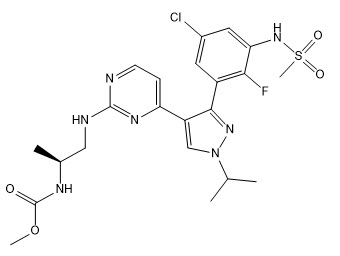
Encorafenib
Managing this medication for someone you care for? Eleplan keeps diagnoses, medications and appointments in one plan.
Start free with EleplanMedication reference
Encorafenib
ORAL
Encorafenib. INDICATIONS AND USAGE BRAFTOVI is a kinase inhibitor indicated: Melanoma • in combination with binimetinib, for the treatment of patients with…
Brand names
BRAFTOVI
Active ingredients
ENCORAFENIB
Indications
INDICATIONS AND USAGE BRAFTOVI is a kinase inhibitor indicated: Melanoma • in combination with binimetinib, for the treatment of patients with unresectable or metastatic melanoma with a BRAF V600E or V600K mutation, as detected by an FDA-authorized test. ( 1.1 , 2.1 ) Colorectal Cancer (CRC) • in combination with cetuximab and fluorouracil-based chemotherapy, for the treatment of adult patients with metastatic colorectal cancer (mCRC) with a BRAF V600E mutation, as detected by an FDA‑authorized test. ( 1.2 , 2.1 ) • in combination with cetuximab, for the treatment of adult patients with mCRC with a BRAF V600E mutation, as detected by an FDA-authorized test, after prior therapy. ( 1.2 , 2.1 ) Non-Small Cell Lung Cancer (NSCLC) • in combination with binimetinib, for the treatment of adult patients with metastatic non–small cell lung cancer (NSCLC) with a BRAF V600E mutation, as detected by an FDA-authorized test. ( 1.3 , 2.1 ) Limitations of Use BRAFTOVI is not indicated for treatment of patients with wild-type BRAF melanoma, wild-type BRAF CRC, or wild-type BRAF NSCLC. ( 1.4 , 5.2 ) 1.1 BRAF V600E or V600K Mutation–Positive Unresectable or Metastatic Melanoma BRAFTOVI is indicated, in combination with binimetinib, for the treatment of patients with unresectable or metastatic melanoma with a BRAF V600E or V600K mutation, as detected by an FDA-authorized test [see Dosage and Administration (2.1) ] . 1.2 BRAF V600E Mutation-Positive Metastatic Colorectal Cancer (mCRC) • BRAFTOVI is indicated, in combination with cetuximab and fluorouracil-based chemotherapy , for the treatment of adult patients with metastatic colorectal cancer (mCRC) with a BRAF V600E mutation, as detected by an FDA- authorized test [see Dosage and Administration (2.1) ]. • BRAFTOVI is indicated, in combination with cetuximab, for the treatment of adult patients with mCRC with a BRAF V600E mutation, as detected by an FDA- authorized test, after prior therapy [see Dosage and Administration (2.1) ]. 1.3 BRAF V600E Mutation-Positive Metastatic Non-Small Cell Lung Cancer (NSCLC) BRAFTOVI is indicated, in combination with binimetinib, for the treatment of adult patients with metastatic non-small cell lung cancer (NSCLC) with a BRAF V600E mutation, as detected by an FDA-authorized test [see Dosage and Administration (2.1) ] . 1.4 Limitations of Use BRAFTOVI is not indicated for treatment of patients with wild-type BRAF melanoma, wild-type BRAF CRC, or wild-type BRAF NSCLC [see Warnings and Precautions (5.2)] .
Dosage
DOSAGE AND ADMINISTRATION Melanoma • Confirm the presence of BRAF V600E or V600K mutation in tumor specimens prior to the initiation of BRAFTOVI. ( 2.1 ) • The recommended dose is 450 mg orally once daily in combination with binimetinib. ( 2.2 ) CRC • Confirm the presence of BRAF V600E mutation in plasma or tumor specimens prior to the initiation of BRAFTOVI. ( 2.1 ) • The recommended dose is 300 mg orally once daily in combination with o biweekly cetuximab and mFOLFOX6 (fluorouracil, leucovorin and oxaliplatin) or cetuximab and FOLFIRI (fluorouracil, leucovorin and irinotecan) ( 2.3 ) o weekly cetuximab ( 2.3 ) NSCLC • Confirm the presence of BRAF V600E mutation in tumor or plasma specimens prior to initiating BRAFTOVI. ( 2.1 ) • The recommended dose is 450 mg orally once daily in combination with binimetinib. ( 2.2 ) Take BRAFTOVI with or without food. ( 2.4 ) 2.1 Patient Selection BRAF V600E or V600K Mutation-Positive Unresectable or Metastatic Melanoma Confirm the presence of a BRAF V600E or V600K mutation in tumor specimens prior to initiating BRAFTOVI [see Warnings and Precautions (5.2) , Clinical Studies (14.1) ] . Information on FDA-authorized tests for the detection of BRAF V600E and V600K mutations in melanoma is available at: http://www.fda.gov/CompanionDiagnostics . BRAF V600E Mutation-Positive Metastatic Colorectal Cancer (CRC) Confirm the presence of a BRAF V600E mutation in plasma or tumor tissue prior to initiating BRAFTOVI [see Warnings and Precautions (5.2) , Clinical Studies (14.2 , 14.3) ]. If no mutation is detected in a plasma specimen, test tumor tissue. Information on FDA- authorized tests for the detection of BRAF V600E mutations in CRC is available at: http://www.fda.gov/CompanionDiagnostics . BRAF V600E Mutation-Positive Metastatic Non‑Small Cell Lung Cancer (NSCLC) Confirm the presence of a BRAF V600E mutation in tumor or plasma specimens prior to initiating BRAFTOVI [see Warnings and Precautions (5.2) , Clinical Studies (14.3) ] . If no mutation is detected in a plasma specimen, test tumor tissue. Information on FDA- authorized tests for the detection of BRAF V600E mutations in NSCLC is available at: http://www.fda.gov/CompanionDiagnostics . 2.2 Recommended Dosage for BRAF V600E or V600K Mutation-Positive Unresectable or Metastatic Melanoma and for BRAF V600E Mutation-Positive Metastatic Non-Small Cell Lung Cancer (NSCLC) The recommended dosage of BRAFTOVI is 450 mg (six 75 mg capsules) orally once daily in combination with binimetinib until disease progression or unacceptable toxicity. Refer to the binimetinib prescribing information for recommended binimetinib dosing information. 2.3 Recommended Dosage for BRAF V600E Mutation-Positive Metastatic Colorectal Cancer (CRC) The recommended dosage of BRAFTOVI is 300 mg (four 75 mg capsules) orally once daily until disease progression or unacceptable toxicity in combination with: • biweekly cetuximab and mFOLFOX6 (fluorouracil, leucovorin and oxaliplatin) or biweekly cetuximab and FOLFIRI (fluorouracil, leucovorin and irinotecan) [see Clinical Studies (14.2) ] • weekly cetuximab [see Clinical Studies (14.2) ]. 2.4 Administration BRAFTOVI may be taken with or without food [see Clinical Pharmacology (12.3) ] . Do not take a missed dose of BRAFTOVI within 12 hours of the next dose of BRAFTOVI. Do not take an additional dose if vomiting occurs after BRAFTOVI administration but continue with the next scheduled dose. 2.5 Dosage Modifications for Adverse Reactions BRAF V600E or V600K Mutation-Positive Unresectable or Metastatic Melanoma or BRAF V600E Mutation-Positive Metastatic NSCLC If binimetinib is withheld, reduce BRAFTOVI to a maximum dose of 300 mg (four 75 mg capsules) once daily until binimetinib is resumed [see Warnings and Precautions (5.9) ] . Dose reductions for adverse reactions associated with BRAFTOVI are presented in Table 1. Table 1: Recommended Dose Reductions for BRAFTOVI for Adverse Reactions – Melanoma or NSCLC Action Recommended Dose First dose reduction 300 mg (four 75 mg capsules) orally once daily Second dose reduction 225 mg (three 75 mg capsules) orally once daily Subsequent modification Permanently discontinue if unable to tolerate BRAFTOVI 225 mg (three 75 mg capsules) once daily BRAF V600E Mutation-Positive Metastatic Colorectal Cancer (CRC) When BRAFTOVI is administered in combination with cetuximab and mFOLFOX6 or FOLFIRI • Continue BRAFTOVI with mFOLFOX6 or FOLFIRI if cetuximab is permanently discontinued. • Permanently discontinue BRAFTOVI if cetuximab and mFOLFOX6 or FOLFIRI are permanently discontinued. When BRAFTOVI is administered in combination with cetuximab • Permanently discontinue BRAFTOVI when cetuximab is permanently discontinued. Dose reductions for adverse reactions associated with BRAFTOVI are presented in Table 2. Table 2: Recommended Dose Reductions for BRAFTOVI for Adverse Reactions – CRC Action Recommended Dose First dose reduction 225 mg (three 75 mg capsules) orally once daily Second dose reduction 150 mg (two 75 mg capsules) orally once daily Subsequent modification Permanently discontinue if unable to tolerate BRAFTOVI 150 mg (two 75 mg capsules) once daily BRAF V600E or V600K Mutation-Positive Unresectable or Metastatic Melanoma, BRAF V600E Mutation-Positive Metastatic Colorectal Cancer (CRC), or BRAF V600E Mutation-Positive NSCLC Dosage modifications for adverse reactions associated with BRAFTOVI are presented in Table 3. Table 3: Recommended Dosage Modifications for BRAFTOVI for Adverse Reactions Severity of Adverse Reaction National Cancer Institute Common Terminology Criteria for Adverse Events (NCI CTCAE) version 4.03. Dose Modification for BRAFTOVI New Primary Malignancies [see Warnings and Precautions (5.1) ] Noncutaneous RAS Mutation-positive Malignancies Permanently discontinue BRAFTOVI. Cardiomyopathy [see Warnings and Precautions (5.3) ] • Symptomatic congestive heart failure or absolute decrease in LVEF of greater than 20% from baseline that is also below LLN Reduce BRAFTOVI by one dose level [see Dosage and Administration (2.3) ] . • If LVEF improves to at least institutional LLN and absolute decrease to less than or equal to 10% compared to baseline, continue BRAFTOVI at the reduced dose [see Dosage and Administration (2.3) ] . • If no improvement, withhold BRAFTOVI until improves to at least institutional LLN and absolute decrease to less than or equal to 10% compared to baseline and then resume at the reduced dose or reduce dose an additional dose level. Hepatotoxicity [see Warnings and Precautions (5.4) ] • Grade 2 AST or ALT increased Maintain BRAFTOVI dose. • If no improvement within 4 weeks, withhold BRAFTOVI until improves to Grade 0-1 or to pretreatment/baseline levels and then resume at same dose. • Grade 3 or 4 AST or ALT increased See Other Adverse Reactions . Uveitis [see Warnings and Precautions (5.6) ] • Grade 1–3 If Grade 1 or 2 does not respond to specific ocular therapy, or for Grade 3 uveitis, withhold BRAFTOVI for up to 6 weeks. • If improved, resume at same or reduced dose. • If not improved, permanently discontinue BRAFTOVI. • Grade 4 Permanently discontinue BRAFTOVI. QTc Prolongation [see Warnings and Precautions (5.7) ] • QTcF greater than 500 ms and less than or equal to 60 ms increase from baseline Withhold BRAFTOVI until QTcF less than or equal to 500 ms. Resume at reduced dose. • If more than one recurrence, permanently discontinue BRAFTOVI. • QTcF greater than 500 ms and greater than 60 ms increase from baseline Permanently discontinue BRAFTOVI. Dermatologic [Other than Hand-foot Skin Reaction (HFSR)] [see Adverse Reactions (6.1) ] • Grade 2 If no improvement within 2 weeks, withhold BRAFTOVI until Grade 0–1. Resume at same dose. • Grade 3 Withhold BRAFTOVI until Grade 0–1. Resume at same dose if first occurrence or reduce dose if recurrent. • Grade 4 Permanently discontinue BRAFTOVI. Other Adverse Reactions (including Hemorrhage) [see Warnings and Precautions (5) ] and HFSR [see Adv
Warnings
WARNINGS AND PRECAUTIONS • New Primary Malignancies, cutaneous and noncutaneous : Can occur. Monitor for malignancies and perform dermatologic evaluations prior to, while on therapy, and following discontinuation of treatment. ( 5.1 ) • Tumor Promotion in BRAF Wild-Type Tumors : Increased cell proliferation can occur with BRAF inhibitors. ( 5.2 ) • Cardiomyopathy : Assess left ventricular ejection fraction (LVEF) before initiating treatment with BRAFTOVI and binimetinib, and after one month of treatment, then every 2 to 3 months thereafter. The safety of BRAFTOVI in combination with binimetinib has not been established in patients with LVEF below 50%. ( 5.3 ) • Hepatotoxicity : Monitor liver function tests before and during treatment with BRAFTOVI and binimetinib and as clinically indicated. ( 5.4 ) • Hemorrhage : Major hemorrhagic events can occur in patients receiving BRAFTOVI and binimetinib. ( 5.5 ) • Uveitis : Perform ophthalmologic evaluation at regular intervals and for any visual disturbances. ( 5.6 ) • QT Prolongation : Monitor electrolytes before and during treatment. Correct electrolyte abnormalities and control for cardiac risk factors for QT prolongation. Withhold BRAFTOVI for QTc of 500 ms or greater. ( 5.7 ) • Embryo-Fetal Toxicity : Can cause fetal harm. Advise females with reproductive potential of potential risk to the fetus and to use effective nonhormonal method of contraception. ( 5.8 , 8.1 , 8.3 ) • Risks Associated with BRAFTOVI as a Single Agent : If binimetinib is temporarily interrupted or permanently discontinued, reduce the dose of BRAFTOVI as recommended. ( 5.9 ) • Risks Associated with Combination Treatment : BRAFTOVI is indicated for use as part of a regimen in combination with binimetinib or cetuximab. ( 5.10 ) 5.1 New Primary Malignancies New primary malignancies, cutaneous and noncutaneous, have been observed in patients treated with BRAF inhibitors and can occur with BRAFTOVI. Cutaneous Malignancies In COLUMBUS, cutaneous squamous cell carcinoma (cuSCC), including keratoacanthoma (KA), occurred in 2.6%, and basal cell carcinoma occurred in 1.6% of patients who received BRAFTOVI in combination with binimetinib. Median time to first occurrence of cuSCC/KA was 5.8 months (range 1 to 9 months) [see Adverse Reactions (6.1) ] . For patients who received BRAFTOVI as a single agent, cuSCC/KA was reported in 8%, basal cell carcinoma in 1%, and a new primary melanoma in 5% of patients. In BEACON CRC, cuSCC/KA occurred in 1.4% of patients with CRC, and a new primary melanoma occurred in 1.4% of patients who received BRAFTOVI in combination with cetuximab. In PHAROS, cuSCC and skin papilloma, each occurred in 2% of patients who received BRAFTOVI in combination with binimetinib. In BREAKWATER, the following cutaneous malignancies occurred in patients receiving BRAFTOVI in combination with cetuximab and mFOLFOX6: melanocytic nevus in 5.6%, skin papilloma in 3% , basal cell carcinoma in 1.3%, squamous cell carcinoma of skin in 0.9%, keratoacanthoma in 0.4% and malignant melanoma in situ in 0.4%. In patients who received BRAFTOVI in combination with cetuximab and FOLFIRI, skin papilloma occurred in 2.8% and keratoacanthoma in 1.4% of patients. Perform dermatologic evaluations prior to initiating treatment, every 2 months during treatment, and for up to 6 months following discontinuation of treatment. Manage suspicious skin lesions with excision and dermatopathologic evaluation. Dose modification is not recommended for new primary cutaneous malignancies. Noncutaneous Malignancies Based on its mechanism of action, BRAFTOVI may promote malignancies associated with activation of RAS through mutation or other mechanisms [see Warnings and Precautions (5.2) ] . Monitor patients receiving BRAFTOVI for signs and symptoms of noncutaneous malignancies. Discontinue BRAFTOVI for RAS mutation-positive noncutaneous malignancies [see Dosage and Administration (2.5) ] . 5.2 Tumor Promotion in BRAF Wild-Type Tumors In vitro experiments have demonstrated paradoxical activation of MAP-kinase signaling and increased cell proliferation in BRAF wild-type cells, which are exposed to BRAF inhibitors. Confirm evidence of BRAF V600E or V600K mutation prior to initiating BRAFTOVI [see Indications and Usage (1) , Dosage and Administration (2.1) ] . 5.3 Cardiomyopathy Cardiomyopathy, manifesting as left ventricular dysfunction associated with symptomatic or asymptomatic decreases in ejection fraction, has been reported in patients treated with BRAFTOVI in combination with binimetinib. In COLUMBUS, evidence of cardiomyopathy (decreased in LVEF below the institutional LLN with an absolute decreased in LVEF ≥10% below baseline as detected by echocardiography or MUGA) occurred in 7% of patients receiving BRAFTOVI plus binimetinib. Grade 3 left ventricular dysfunction occurred in 1.6% of patients. The median time to first occurrence of left ventricular dysfunction (any grade) in patients receiving BRAFTOVI in combination with binimetinib was 3.6 months (range 0 to 21 months). Cardiomyopathy resolved in 87% of patients receiving BRAFTOVI plus binimetinib. In PHAROS, evidence of cardiomyopathy (decrease in LVEF below the institutional LLN with an absolute decrease in LVEF ≥10% below baseline as detected by echocardiography or MUGA) occurred in 11% of patients receiving BRAFTOVI in combination with binimetinib. Grade 3 left ventricular dysfunction occurred in 1% of patients. Cardiomyopathy resolved in 82% of patients receiving BRAFTOVI plus binimetinib. Assess ejection fraction by echocardiogram or MUGA scan prior to initiating treatment, one month after initiating treatment, and every 2 to 3 months during treatment. The safety of BRAFTOVI in combination with binimetinib has not been established in patients with baseline ejection fraction that is either below 50% or below the institutional lower limit of normal (LLN). Patients with cardiovascular risk factors should be monitored closely when treated with BRAFTOVI. Withhold, reduce dose, or permanently discontinue based on severity of adverse reaction [see Dosage and Administration (2.3) , Adverse Reactions (6.1) ] . 5.4 Hepatotoxicity Hepatotoxicity can occur when BRAFTOVI is administered in combination with binimetinib. In COLUMBUS, the incidence of Grade 3 or 4 increases in liver function laboratory tests in patients receiving BRAFTOVI in combination with binimetinib was 6% for alanine aminotransferase (ALT), 2.6% for aspartate aminotransferase (AST), and 0.5% for alkaline phosphatase. In PHAROS, the incidence of Grade 3 or 4 increases in liver function laboratory tests in patients receiving BRAFTOVI in combination with binimetinib was 10% for AST, 9% for ALT, and 3.2% for alkaline phosphatase. In BREAKWATER, the incidence of Grade 3 or 4 increases in liver function laboratory tests in patients receiving BRAFTOVI in combination with cetuximab and mFOLFOX6 was 2.6% for alkaline phosphatase, and 1.3% each for ALT and AST. In patients receiving BRAFTOVI in combination with cetuximab and FOLFIRI, the incidence of Grade 3 or 4 increases in liver function laboratory tests was 1.5% each for ALT and AST. Monitor liver laboratory tests before initiation of BRAFTOVI, monthly during treatment, and as clinically indicated. Withhold, reduce dose, or permanently discontinue based on severity of adverse reaction [see Dosage and Administration (2.3) , Adverse Reactions (6.1) ] . 5.5 Hemorrhage In COLUMBUS, hemorrhage occurred in 19% of patients receiving BRAFTOVI in combination with binimetinib; Grade 3 or greater hemorrhage occurred in 3.2% of patients. The most frequent hemorrhagic events were gastrointestinal, including rectal hemorrhage (4.2%), hematochezia (3.1%), and hemorrhoidal hemorrhage (1%). Fatal intracranial hemorrhage in the setting of new or progressive brain metastases occurred in 1.6% of patients. In BEACON CRC, hemorrhage occurred in 19% of patients receiving BRAFTOVI in combination with cetuximab; Grade 3 or hig
Contraindications
CONTRAINDICATIONS None. None. ( 4 )
Drug interactions
DRUG INTERACTIONS • Strong or moderate CYP3A4 inhibitors: Avoid coadministration. If unavoidable, reduce BRAFTOVI dosage. ( 2.6 , 7.1 ) • Strong CYP3A4 inducers: Avoid coadministration. ( 7.1 ) • Sensitive CYP3A4 substrates: Avoid coadministration with CYP3A4 substrates (including hormonal contraceptives) for which a decrease in plasma concentration may lead to reduced efficacy of the substrate. ( 7.2 ) • Transporters: Dose reductions of drugs that are substrates of OATP1B1, OATP1B3, or BCRP may be required when used concomitantly with BRAFTOVI. ( 7.2 , 12.3 ) 7.1 Effect of Other Drugs on BRAFTOVI Strong or Moderate CYP3A4 Inhibitors Coadministration of BRAFTOVI with a strong or moderate CYP3A4 inhibitor increases encorafenib plasma concentrations [see Clinical Pharmacology (12.3) ] and may increase encorafenib adverse reactions. Avoid coadministration of BRAFTOVI with strong or moderate CYP3A4 inhibitors, including grapefruit juice. If coadministration is unavoidable, reduce the BRAFTOVI dose [see Dosage and Administration (2.6) ] . Strong CYP3A4 Inducers Coadministration of BRAFTOVI with a strong CYP3A4 inducer may decrease encorafenib plasma concentrations [see Clinical Pharmacology (12.3) ] and may decrease encorafenib efficacy. Avoid coadministration of BRAFTOVI with strong CYP3A4 inducers. 7.2 Effect of BRAFTOVI on Other Drugs Sensitive CYP3A4 Substrates BRAFTOVI is a strong CYP3A4 inducer at steady-state. Concomitant use of BRAFTOVI may decrease the plasma concentrations of CYP3A4 substrates (including hormonal contraceptives), [see Clinical Pharmacology (12.3) ] , which may reduce the efficacy of these substrates. Avoid the coadministration of BRAFTOVI with CYP3A4 substrates for which a decrease in plasma concentration may lead to reduced efficacy of the substrate. If the coadministration cannot be avoided, see the CYP3A4 substrate product labeling for recommendations. OATP1B1, OATP1B3, or BCRP Substrates Coadministration of BRAFTOVI with OATP1B1, OATP1B3, or BCRP substrates can result in increased concentrations of the substrates, and may increase toxicity of these agents. When used in combination, monitor patients closely for signs and symptoms of increased exposure and consider adjusting the dose of these substrates [see Clinical Pharmacology (12.3) ]. 7.3 Drugs That Prolong the QT Interval BRAFTOVI is associated with dose-dependent QTc interval prolongation [see Warnings and Precautions (5.7) , Clinical Pharmacology (12.2) ] . Avoid coadministration of BRAFTOVI with drugs known to prolong the QT/QTc interval.
Adverse reactions
ADVERSE REACTIONS The following adverse reactions are described elsewhere in the labeling: • New Primary Malignancies [see Warnings and Precautions (5.1) ] • Tumor Promotion in BRAF Wild-Type Tumors [see Warnings and Precautions (5.2) ] • Cardiomyopathy [see Warnings and Precautions (5.3) ] • Hepatotoxicity [see Warnings and Precautions (5.4) ] • Hemorrhage [see Warnings and Precautions (5.5) ] • Uveitis [see Warnings and Precautions (5.6) ] • QT Prolongation [see Warnings and Precautions (5.7) ] • Embryo-Fetal Toxicity [see Warnings and Precautions (5.8) ] • Risks Associated with BRAFTOVI as a Single Agent [see Warnings and Precautions (5.9) ] • Risks Associated with Combination Treatment [see Warnings and Precautions (5.10) ] • Melanoma : Most common adverse reactions (≥25%) for BRAFTOVI, in combination with binimetinib, are fatigue, nausea, vomiting, abdominal pain, and arthralgia. ( 6.1 ) • CRC : Most common adverse reactions (≥25%) for BRAFTOVI, in combination with cetuximab and mFOLFOX6, are peripheral neuropathy, nausea, fatigue, diarrhea, decreased appetite, rash, vomiting, hemorrhage, abdominal pain, arthralgia, pyrexia, and constipation. ( 6.1 ) • Most common adverse reactions (≥25%) for BRAFTOVI, in combination with cetuximab and FOLFIRI are nausea, diarrhea, fatigue, vomiting, alopecia, constipation, abdominal pain, decreased appetite, and rash. ( 6.1 ) • Most common adverse reactions (≥25%) for BRAFTOVI, in combination with cetuximab, are fatigue, nausea, diarrhea, dermatitis acneiform, abdominal pain, decreased appetite, arthralgia, and rash. ( 6.1 ) • NSCLC : Most common adverse reactions (≥25%) for BRAFTOVI, in combination with binimetinib, are fatigue, nausea, diarrhea, musculoskeletal pain, vomiting, abdominal pain, visual impairment, constipation, dyspnea, rash, and cough. ( 6.1 ) To report SUSPECTED ADVERSE REACTIONS, contact Pfizer Inc. at 1-800-438-1985 or FDA at 1-800-FDA-1088 or www.fda.gov/medwatch . 6.1 Clinical Trials Experience Because clinical trials are conducted under widely varying conditions, adverse reaction rates observed in the clinical trials of a drug cannot be directly compared to rates in the clinical trials of another drug and may not reflect the rates observed in practice. BRAF V600E or V600K Mutation-Positive Unresectable or Metastatic Melanoma The safety of BRAFTOVI in combination with binimetinib is described in 192 patients with BRAF V600 mutation-positive unresectable or metastatic melanoma who received BRAFTOVI (450 mg once daily) in combination with binimetinib (45 mg twice daily) in a randomized open-label, active-controlled trial (COLUMBUS). The COLUMBUS trial [see Clinical Studies (14.1) ] excluded patients with a history of Gilbert's syndrome, abnormal left ventricular ejection fraction, prolonged QTc (>480 ms), uncontrolled hypertension, and history or current evidence of retinal vein occlusion. The median duration of exposure was 11.8 months for patients treated with BRAFTOVI in combination with binimetinib and 6.2 months for patients treated with vemurafenib. The most common (≥25%) adverse reactions in patients receiving BRAFTOVI in combination with binimetinib were fatigue, nausea, vomiting, abdominal pain, and arthralgia. Adverse reactions leading to dose interruptions of BRAFTOVI occurred in 30% of patients receiving BRAFTOVI in combination with binimetinib; the most common were nausea (7%), vomiting (7%), and pyrexia (4%). Adverse reactions leading to dose reductions of BRAFTOVI occurred in 14% of patients receiving BRAFTOVI in combination with binimetinib; the most common were arthralgia (2%), fatigue (2%), and nausea (2%). Five percent (5%) of patients receiving BRAFTOVI in combination with binimetinib experienced an adverse reaction that resulted in permanent discontinuation of BRAFTOVI; the most common were hemorrhage in 2% and headache in 1% of patients. Table 5 and Table 6 present adverse drug reactions and laboratory abnormalities, respectively, identified in COLUMBUS. The COLUMBUS trial was not designed to demonstrate a statistically significant difference in adverse reaction rates for BRAFTOVI in combination with binimetinib, as compared to vemurafenib, for any specific adverse reaction listed in Table 5. Table 5: Adverse Reactions Occurring in ≥10% of Patients Receiving BRAFTOVI in Combination with Binimetinib in COLUMBUS Grades per National Cancer Institute CTCAE v4.03. Adverse Reaction BRAFTOVI with binimetinib N=192 Vemurafenib N=186 All Grades (%) Grades 3 and 4 Grade 4 adverse reactions limited to fatigue (n=1), pruritus (n=1), and rash (n=1) in the BRAFTOVI with binimetinib arm. (%) All Grades (%) Grades 3 and 4 (%) General Disorders and Administration Site Conditions Fatigue Represents a composite of multiple, related preferred terms. 43 3 46 6 Pyrexia 18 4 30 0 Gastrointestinal Disorders Nausea 41 2 34 2 Vomiting 30 2 16 1 Abdominal pain 28 4 16 1 Constipation 22 0 6 1 Musculoskeletal and Connective Tissue Disorders Arthralgia 26 1 46 6 Myopathy 23 0 22 1 Pain in extremity 11 1 13 1 Skin and Subcutaneous Tissue Disorders Hyperkeratosis 23 1 49 1 Rash 22 1 53 13 Dry skin 16 0 26 0 Alopecia 14 0 38 0 Pruritus 13 1 21 1 Nervous System Disorders Headache 22 2 20 1 Dizziness 15 3 4 0 Peripheral neuropathy 12 1 13 2 Vascular Disorders Hemorrhage 19 3 9 2 BRAFTOVI when used as a single agent increases the risk of certain adverse reactions compared to BRAFTOVI in combination with binimetinib. In patients receiving BRAFTOVI 300 mg orally once daily as a single agent, the following adverse reactions were observed at a higher rate (≥5%) compared to patients receiving BRAFTOVI in combination with binimetinib: palmar-plantar erythrodysesthesia syndrome (51% vs. 7%), hyperkeratosis (57% vs. 23%), dry skin (38% vs. 16%), erythema (16% vs. 7%), rash (41% vs. 22%), alopecia (56% vs. 14%), pruritus (31% vs. 13%), arthralgia (44% vs. 26%), myopathy (33% vs. 23%), back pain (15% vs. 9%), dysgeusia (13% vs. 6%), and acneiform dermatitis (8% vs. 3%). Other clinically important adverse reactions occurring in <10% of patients who received BRAFTOVI in combination with binimetinib were: Nervous system disorders: Facial paresis Gastrointestinal disorders: Pancreatitis Skin and subcutaneous tissue disorders: Panniculitis, Photosensitivity Immune system disorders: Drug hypersensitivity Table 6: Laboratory Abnormalities Occurring in ≥10% (All Grades) of Patients Receiving BRAFTOVI in Combination with Binimetinib in COLUMBUS Laboratory Abnormality BRAFTOVI with binimetinib Grades per National Cancer Institute CTCAE v4.03. N=192 Vemurafenib N=186 All Grades (%) Grades 3 and 4 (%) All Grades (%) Grades 3 and 4 (%) Hematology Anemia 36 3.6 34 2.2 Leukopenia 13 0 10 0.5 Lymphopenia 13 2.1 30 7 Neutropenia 13 3.1 4.8 0.5 Chemistry Increased Creatinine 93 3.6 92 1.1 Increased Gamma Glutamyl Transferase 45 11 34 4.8 Increased ALT 29 6 27 2.2 Increased AST 27 2.6 24 1.6 Hyperglycemia 28 5 20 2.7 Increased Alkaline Phosphatase 21 0.5 35 2.2 Hyponatremia 18 3.6 15 0.5 Hypermagnesemia 10 1.0 26 0.5 BRAF V600E Mutation-Positive Metastatic Colorectal Cancer (mCRC) in Combination with Cetuximab and fluorouracil-based chemotherapy The safety of BRAFTOVI 300 mg once daily in combination with cetuximab (500 mg/m 2 every 2 weeks) and mFOLFOX6 was evaluated in 232 patients with BRAF V600E mutation-positive metastatic CRC in a randomized, open-label, active-controlled trial (BREAKWATER) [see Clinical Studies (14.2) ] . In a separate cohort of BREAKWATER (Cohort 3), 139 patients with BRAF V600E mutation-positive mCRC were evaluated; of which 71 patients received BRAFTOVI in combination with cetuximab (500 mg/m 2 every 2 weeks) and FOLFIRI. Patients with pancreatitis, leptomeningeal disease, chronic inflammatory bowel disease requiring medical intervention, as well as clinically significant cardiovascular diseases [e.g., myocardial infarction, acute coronary syndromes, NYHA Class ≥II congestive heart failure, prolonged QTcF
Mechanism of action
Mechanism of Action Encorafenib is a kinase inhibitor that targets BRAF V600E, as well as wild-type BRAF and CRAF in in vitro cell-free assays with IC 50 values of 0.35, 0.47, and 0.3 nM, respectively. Mutations in the BRAF gene, such as BRAF V600E, can result in constitutively activated BRAF kinases that may stimulate tumor cell growth. Encorafenib was also able to bind to other kinases in vitro including JNK1, JNK2, JNK3, LIMK1, LIMK2, MEK4, and STK36 and reduce ligand binding to these kinases at clinically achievable concentrations (≤0.9 µM). Encorafenib inhibited in vitro growth of tumor cell lines expressing BRAF V600 E, D, and K mutations. In mice implanted with tumor cells expressing BRAF V600E , encorafenib induced tumor regressions associated with RAF/MEK/ERK pathway suppression. Encorafenib and binimetinib target two different kinases in the RAS/RAF/MEK/ERK pathway. Compared with either drug alone, coadministration of encorafenib and binimetinib resulted in greater anti-proliferative activity in vitro in BRAF mutation-positive cell lines and greater anti-tumor activity with respect to tumor growth inhibition in BRAF V600E mutant human melanoma xenograft studies in mice. Additionally, the combination of encorafenib and binimetinib delayed the emergence of resistance in BRAF V600E mutant human melanoma xenografts in mice compared to either drug alone. In a BRAF V600E mutant NSCLC patient-derived xenograft model in mice, coadministration of encorafenib and binimetinib resulted in greater anti-tumor activity compared to binimetinib alone, with respect to tumor growth inhibition. Increased tumor growth delay after dosing cessation was also observed with the coadministration compared to either drug alone. In the setting of BRAF-mutant CRC, induction of EGFR-mediated MAPK pathway activation has been identified as a mechanism of resistance to BRAF inhibitors. Combinations of a BRAF inhibitor and agents targeting EGFR have been shown to overcome this resistance mechanism in nonclinical models. Coadministration of encorafenib and cetuximab had an anti-tumor effect greater than either drug alone, in a mouse model of colorectal cancer with mutated BRAF V600E.
Available forms (4)
NDC examples
70255-025
Treats these conditions
Source: openFDA + RxNorm · 2026
Look up another medication