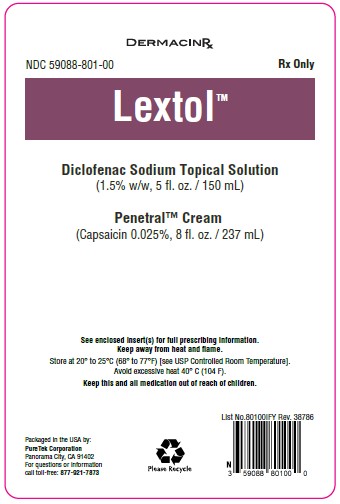
Diclofenac Sodium, Capsaicin. INDICATIONS AND USAGE Carefully consider the potential benefits and risks of diclofenac sodium delayed-release tablets and other treatment options…
Boxed warning
WARNING: RISK OF SERIOUS CARDIOVASCULAR AND GASTROINTESTINAL EVENTS WARNING: RISK OF SERIOUS CARDIOVASCULAR AND GASTROINTESTINAL EVENTS See full prescribing information for complete boxed warning. Diclofenac Sodium is contraindicated in the setting of coronary artery bypass graft (CABG) surgery. ( 4 , 5.1 ) Nonsteroidal anti-inflammatory drugs (NSAIDs) cause an increased risk of serious cardiovascular thrombotic events, including myocardial infarction and stroke, which can be fatal. This risk may occur early in treatment and may increase with duration of use. ( 5.1 ) NSAIDs, cause an increased risk of serious gastrointestinal (GI) adverse events including bleeding, ulceration, and perforation of the stomach or intestines, which can be fatal. These events can occur at any time during use and without warning symptoms. Elderly patients and patients with a prior history of peptic ulcer disease and or GI bleeding are at greater risk for serious GI events. ( 5.2 ) Cardiovascular Thrombotic Events Nonsteroidal anti-inflammatory drugs (NSAIDs) cause an increased risk of serious cardiovascular thrombotic events, including myocardial infarction and stroke, which can be fatal. This risk may occur early in treatment and may increase with duration of use [ see Warnings and Precautions (5.1) ]. Diclofenac Sodium is contraindicated in the setting of coronary artery bypass graft (CABG) surgery [ see Contraindications (4) and Warnings and Precautions (5.1) ]. Gastrointestinal Bleeding, Ulceration, and Perforation NSAIDs cause an increased risk of serious gastrointestinal (GI) adverse events including bleeding, ulceration, and perforation of the stomach or intestines, which can be fatal. These events can occur at any time during use and without warning symptoms. Elderly patients and patients with a prior history of peptic ulcer disease and or GI bleeding are at greater risk for serious GI events [ see Warnings and Precautions (5.2) ].
INDICATIONS AND USAGE Carefully consider the potential benefits and risks of diclofenac sodium delayed-release tablets and other treatment options before deciding to use diclofenac. Use the lowest effective dose for the shortest duration consistent with individual patient treatment goals [see WARNINGS ]. Diclofenac is indicated: For relief of the signs and symptoms of osteoarthritis For relief of the signs and symptoms of rheumatoid arthritis For acute or long-term use in the relief of signs and symptoms of ankylosing spondylitis. Uses For the temporary relief of minor aches and pains of muscles and joints associated with arthritis, strains, and sprains.
Dosage
DOSAGE AND ADMINISTRATION Use the lowest effective dosage for the shortest duration consistent with individual patient treatment goals. The recommended dose is 40 drops on each painful knee, 4 times a day. ( 2 ) Apply diclofenac sodium topical solution to clean, dry skin. ( 2.1 ) Dispense diclofenac sodium topical solution 10 drops at a time either directly onto the knee or first into the hand and then onto the knee. Spread diclofenac sodium topical solution evenly around front, back and sides of the knee. Repeat this procedure until 40 drops have been applied and the knee is completely covered with solution. ( 2.1 ) Wash hands completely after administering the product. Wait until the area is completely dry before covering with clothing or applying sunscreen, insect repellent, cosmetics, topical medications, or other substances. Until the treated knee(s) is completely dry, avoid skin-to-skin contact between other people and the treated knee(s). ( 2.2 ) Do not get diclofenac sodium topical solution in your eyes, nose or mouth. 2.1 General Dosing Instructions Use the lowest effective dosage for the shortest duration consistent with individual patient treatment goals [ see Warning and Precautions (5.2) ]. For the relief of the signs and symptoms of osteoarthritis of the knee(s), the recommended dose is 40 drops per knee, 4 times a day. Apply diclofenac sodium topical solution to clean, dry skin. To avoid spillage, dispense diclofenac sodium topical solution 10 drops at a time either directly onto the knee or first into the hand and then onto the knee. Spread diclofenac sodium topical solution evenly around front, back and sides of the knee. Repeat this procedure until 40 drops have been applied and the knee is completely covered with solution. To treat the other knee, if symptomatic, repeat the procedure. Application of diclofenac sodium topical solution in an amount exceeding or less than the recommended dose has not been studied and is therefore not recommended. 2.2 Special Precautions Avoid showering/bathing for at least 30 minutes after the application of diclofenac sodium topical solution to the treated knee. Wash and dry hands after use. Do not apply diclofenac sodium topical Solution USP, to open wounds. Avoid contact of diclofenac sodium topical solution with eyes and mucous membranes. Do not apply external heat and/or occlusive dressings to treated knees. Avoid wearing clothing over the diclofenac sodium topical solution treated knee(s) until the treated knee is dry. Protect the treated knee(s) from natural or artificial sunlight. Wait until the treated area is dry before applying sunscreen, insect repellant, lotion, moisturizer, cosmetics, or other topical medication to the same knee you have just treated with diclofenac sodium topical solution. Until the treated knee(s) is completely dry, avoid skin-to-skin contact between other people and the treated knee(s). Do not use combination therapy with diclofenac sodium and an oral NSAID unless the benefit outweighs the risk and conduct periodic laboratory evaluations. Directions Rotate pump’s spout counter-clockwise slightly to unlock; clockwise to lock. Before using on children under 18 years of age, consult a physician. Apply sparingly to affected area not more than 4 times daily. However, for first use, apply to small area to test for sensitivity or skin reaction. Gently massage into the skin until fully absorbed. Wash hands with soap and water thoroughly after each application to avoid spreading to the eyes or other sensitive mucous membranes
Warnings
WARNINGS Cardiovascular Effects Cardiovascular Thrombotic Events Clinical trials of several COX-2 selective and nonselective NSAIDs of up to three years duration have shown an increased risk of serious cardiovascular (CV) thrombotic events, including myocardial infarction (MI) and stroke, which can be fatal. Based on available data, it is unclear that the risk for CV thrombotic events is similar for all NSAIDs. The relative increase in serious CV thrombotic events over baseline conferred by NSAID use appears to be similar in those with and without known CV disease or risk factors for CV disease. However, patients with known CV disease or risk factors had a higher absolute incidence of excess serious CV thrombotic events, due to their increased baseline rate. Some observational studies found that this increased risk of serious CV thrombotic events began as early as the first weeks of treatment. The increase in CV thrombotic risk has been observed most consistently at higher doses. To minimize the potential risk for an adverse CV event in NSAID-treated patients, use the lowest effective dose for the shortest duration possible. Physicians and patients should remain alert for the development of such events, throughout the entire treatment course, even in the absence of previous CV symptoms. Patients should be informed about the symptoms of serious CV events and the steps to take if they occur. There is no consistent evidence that concurrent use of aspirin mitigates the increased risk of serious CV thrombotic events associated with NSAID use. The concurrent use of aspirin and an NSAID, such as Diclofenac Sodium, increases the risk of serious gastrointestinal (GI) events [see WARNINGS, GI EFFECTS]. Status Post Coronary Artery Bypass Graft (CABG) Surgery Two large, controlled clinical trials of a COX-2 selective NSAID for the treatment of pain in the first 10 -14 days following CABG surgery found an increased incidence of myocardial infarction and stroke. NSAIDs are contraindicated in the setting of CABG [see CONTRAINDICATIONS ]. Post-MI Patients Observational studies conducted in the Danish National Registry have demonstrated that patients treated with NSAIDs in the post-MI period were at increased risk of reinfarction, CV-related death, and all-cause mortality beginning in the first week of treatment. In this same cohort, the incidence of death in the first year post MI was 20 per 100 person years in NSAID-treated patients compared to 12 per 100 person years in non-NSAID exposed patients. Although the absolute rate of death declined somewhat after the first year post-MI, the increased relative risk of death in NSAID users persisted over at least the next four years of follow-up. Avoid the use of diclofenac sodium delayed-release tablets in patients with a recent MI unless the benefits are expected to outweigh the risk of recurrent CV thrombotic events. If diclofenac sodium delayed-release tablets are used in patients with a recent MI, monitor patients for signs of cardiac ischemia. Hypertension NSAIDs, can lead to onset of new hypertension or worsening of preexisting hypertension, either of which may contribute to the increased incidence of CV events. Patients taking thiazides or loop diuretics may have impaired response to these therapies when taking NSAIDs. NSAIDs, including diclofenac sodium delayed-release tablets, should be used with caution in patients with hypertension. Blood pressure (BP) should be monitored closely during the initiation of NSAID treatment and throughout the course of therapy. Heart Failure and Edema The Coxib and traditional NSAID Trialists' Collaboration meta-analysis of randomized controlled trials demonstrated an approximately two-fold increase in hospitalizations for heart failure in COX-2 selective-treated patients and nonselective NSAID-treated patients compared to placebo-treated patients. In a Danish National Registry study of patients with heart failure, NSAID use increased the risk of MI, hospitalization for heart failure, and death. Additionally, fluid retention and edema have been observed in some patients treated with NSAIDs. Use of Diclofenac may blunt the CV effects of several therapeutic agents used to treat these medical conditions [e.g, diuretics, ACE inhibitors, or angiotensin receptor blockers (ARBs)] [see DRUG INTERACTIONS]. Avoid the use of diclofenac sodium delayed-release tablets in patients with severe heart failure unless the benefits are expected to outweigh the risk of worsening heart failure. If diclofenac sodium delayed-release tablets are used in patients with severe heart failure, monitor patients for signs of worsening heart failure. Gastrointestinal (GI) Effects: Risk of GI Ulceration, Bleeding, and Perforation NSAIDs, including diclofenac, can cause serious gastrointestinal (GI) adverse events including inflammation, bleeding, ulceration, and perforation of the stomach, small intestine, or large intestine, which can be fatal. These serious adverse events can occur at any time, with or without warning symptoms, in patients treated with NSAIDs. Only one in five patients, who develop a serious upper GI adverse event on NSAID therapy, is symptomatic. Upper GI ulcers, gross bleeding, or perforation caused by NSAIDs occur in approximately 1% of patients treated for 3 to 6 months, and in about 2% to 4% of patients treated for one year. These trends continue with longer duration of use, increasing the likelihood of developing a serious GI event at some time during the course of therapy. However, even short-term therapy is not without risk. NSAIDs should be prescribed with extreme caution in those with a prior history of ulcer disease or gastrointestinal bleeding. Patients with a prior history of peptic ulcer disease and/or gastrointestinal bleeding who use NSAIDs have a greater than 10-fold increased risk for developing a GI bleed compared to patients with neither of these risk factors. Other factors that increase the risk for GI bleeding in patients treated with NSAIDs include concomitant use of oral corticosteroids or anticoagulants, longer duration NSAID therapy, smoking, use of alcohol, older age, and poor general health status. Most spontaneous reports of fatal GI events are in elderly or debilitated patients and therefore, special care should be taken in treating this population. To minimize the potential risk for an adverse GI event in patients treated with an NSAID, the lowest effective dose should be used for the shortest possible duration. Patients and physicians should remain alert for signs and symptoms of GI ulceration and bleeding during NSAID therapy and promptly initiate additional evaluation and treatment if a serious GI adverse event is suspected. This should include discontinuation of the NSAID until a serious GI adverse event is ruled out. For high risk patients, alternate therapies that do not involve NSAIDs should be considered. Renal Effects Caution should be used when initiating treatment with diclofenac in patients with considerable dehydration. Long-term administration of NSAIDs has resulted in renal papillary necrosis and other renal injury. Renal toxicity has also been seen in patients in whom renal prostaglandins have a compensatory role in the maintenance of renal perfusion. In these patients, administration of a nonsteroidal anti-inflammatory drug may cause a dose-dependent reduction in prostaglandin formation and, secondarily, in renal blood flow, which may precipitate overt renal decompensation. Patients at greatest risk of this reaction are those with impaired renal function, heart failure, liver dysfunction, those taking diuretics and ACE inhibitors, and the elderly. Discontinuation of NSAID therapy is usually followed by recovery to the pretreatment state. Advanced Renal Disease No information is available from controlled clinical studies regarding the use of diclofenac in patients with advanced renal disease. Therefore, treatment with diclofenac is not recommended
Contraindications
CONTRAINDICATIONS Diclofenac sodium topical solution, USP is contraindicated in the following patients: Known hypersensitivity (e.g., anaphylactic reactions and serious skin reactions) to diclofenac or any components of the drug product [see Warnings and Precautions (5.7 , 5.9) ]. History of asthma, urticaria, or other allergic-type reactions after taking aspirin or other NSAIDs. Severe, sometimes fatal, anaphylactic reactions to NSAIDs have been reported in such patients [ see Warnings and Precautions (5.7 , 5.8) ] . In the setting of coronary artery bypass graft (CABG) surgery [ see Warnings and Precautions (5.1) ]. Known hypersensitivity to diclofenac or any components of the drug product. ( 4 ) History of asthma, urticaria, or allergic-type reactions after taking aspirin or other NSAIDs. ( 4 ) In the setting of CABG surgery ( 4 )
Drug interactions
DRUG INTERACTIONS See Table 2 for clinically significant drug interactions with diclofenac. Table 2: Clinically Significant Drug Interactions with Diclofenac Drugs That Interfere with Hemostasis Clinical Impact: Diclofenac and anticoagulants such as warfarin have a synergistic effect on bleeding. The concomitant use of diclofenac and anticoagulants have increased the risk of serious bleeding compared to the use of either drug alone. Serotonin release by platelets plays an important role in hemostasis. Case-control and cohort epidemiological studies showed that concomitant use of drugs that interfere with serotonin reuptake and an NSAID may potentiate the risk of bleeding more than an NSAID alone. Intervention: Monitor patients with concomitant use of diclofenac sodium with anticoagulants (e.g., warfarin), antiplatelet agents (e.g., aspirin), selective serotonin reuptake inhibitors (SSRIs), and serotonin norepinephrine reuptake inhibitors (SNRIs) for signs of bleeding [see Warnings and Precautions (5.12) ] Aspirin Clinical Impact: Controlled clinical studies showed that the concomitant use of NSAIDs and analgesic doses of aspirin does not produce any greater therapeutic effect than the use of NSAIDs alone. In a clinical study, the concomitant use of an NSAID and aspirin was associated with a significantly increased incidence of GI adverse reactions as compared to use of the NSAID alone [see Warnings and Precautions (5.2) ] Intervention: Concomitant use of diclofenac sodium and analgesic doses of aspirin is not generally recommended because of the increased risk of bleeding [see Warnings and Precautions (5.12) ] . Diclofenac sodium is not a substitute for low dose aspirin for cardiovascular protection. ACE Inhibitors, Angiotensin Receptor Blockers, and Beta-Blockers Clinical Impact: NSAIDs may diminish the antihypertensive effect of angiotensin converting enzyme (ACE) inhibitors, angiotensin receptor blockers (ARBs), or beta-blockers (including propranolol). In patients who are elderly, volume-depleted (including those on diuretic therapy), or have renal impairment, co-administration of an NSAID with ACE inhibitors or ARBs may result in deterioration of renal function, including possible acute renal failure. These effects are usually reversible. Intervention: During concomitant use of diclofenac sodium and ACE-inhibitors, ARBs, or beta-blockers, monitor blood pressure to ensure that the desired blood pressure is obtained. During concomitant use of diclofenac sodium and ACE-inhibitors or ARBs in patients who are elderly, volume-depleted, or have impaired renal function, monitor for signs of worsening renal function [see Warnings and Precautions (5.6) ]. When these drugs are administered concomitantly, patients should be adequately hydrated. Assess renal function at the beginning of the concomitant treatment and periodically thereafter. Diuretics Clinical Impact: Clinical studies, as well as post-marketing observations, showed that NSAIDs reduced the natriuretic effect of loop diuretics (e.g., furosemide) and thiazide diuretics in some patients. This effect has been attributed to the NSAID inhibition of renal prostaglandin synthesis. Intervention: During concomitant use of diclofenac sodium with diuretics, observe patients for signs of worsening renal function, in addition to assuring diuretic efficacy including antihypertensive effects [see Warnings and Precautions (5.6) ] . Digoxin Clinical Impact: The concomitant use of diclofenac with digoxin has been reported to increase the serum concentration and prolong the half-life of digoxin. Intervention: During concomitant use of diclofenac sodium and digoxin, monitor serum digoxin levels. Lithium Clinical Impact: NSAIDs have produced elevations in plasma lithium levels and reductions in renal lithium clearance. The mean minimum lithium concentration increased 15%, and the renal clearance decreased by approximately 20%. This effect has been attributed to NSAID inhibition of renal prostaglandin synthesis. Intervention: During concomitant use of diclofenac sodium and lithium, monitor patients for signs of lithium toxicity. Methotrexate Clinical Impact: Concomitant use of NSAIDs and methotrexate may increase the risk for methotrexate toxicity (e.g., neutropenia, thrombocytopenia, renal dysfunction) Intervention: During concomitant use of diclofenac sodium and methotrexate, monitor patients for methotrexate toxicity. Cyclosporine Clinical Impact: Concomitant use of diclofenac sodium and cyclosporine may increase cyclosporine's nephrotoxicity. Intervention: During concomitant use of diclofenac sodium and cyclosporine, monitor patients for signs of worsening renal function. NSAIDs and Salicylates Clinical Impact: Concomitant use of diclofenac with other NSAIDs or salicylates (e.g., diflunisal, salsalate) increases the risk of GI toxicity, with little or no increase in efficacy [see Warnings and Precautions (5.2) ] . Concomitant use of oral NSAIDs with diclofenac sodium has been evaluated in one Phase 3 controlled trial and in combination with oral diclofenac, compared to oral diclofenac alone, resulted in a higher rate of rectal hemorrhage (3% vs. less than 1%), and more frequent abnormal creatinine (12% vs. 7%), urea (20% vs. 12%) and hemoglobin (13% vs. 9%). Intervention: The concomitant use of diclofenac with other NSAIDs or salicylates is not recommended. Do not use combination therapy with diclofenac sodium and an oral NSAID unless the benefit outweighs the risk and conduct periodic laboratory evaluations. Pemetrexed Clinical Impact: Concomitant use of diclofenac sodium and pemetrexed may increase the risk of pemetrexed-associated myelosuppression, renal, and GI toxicity (see the pemetrexed prescribing information). Intervention: During concomitant use of diclofenac sodium and pemetrexed, in patients with renal impairment whose creatinine clearance ranges from 45 to 79 mL/min, monitor for myelosuppression, renal and GI toxicity. NSAIDs with short elimination half-lives (e.g., diclofenac, indomethacin) should be avoided for a period of two days before, the day of, and two days following administration of pemetrexed. In the absence of data regarding potential interaction between pemetrexed and NSAIDs with longer half-lives (e.g., meloxicam, nabumetone), patients taking these NSAIDs should interrupt dosing for at least five days before, the day of, and two days following pemetrexed administration. Drugs that Interfere with Hemostasis (e.g., warfarin, aspirin, SSRIs/SNRIs): Monitor patients for bleeding who are concomitantly using diclofenac sodium with drugs that interfere with hemostasis. Concomitant use of diclofenac sodium and analgesic doses of aspirin is not generally recommended ( 7 ) ACE Inhibitors, Angiotensin Receptor Blockers (ARB), or Beta-Blockers: Concomitant use with diclofenac sodium may diminish the antihypertensive effect of these drugs. Monitor blood pressure ( 7 ) ACE Inhibitors and ARBs: Concomitant use with diclofenac sodium in elderly, volume depleted, or those with renal impairment may result in deterioration of renal function. In such high risk patients, monitor for signs of worsening renal function ( 7 ) Diuretics: NSAIDs can reduce natriuretic effect of furosemide and thiazide diuretics. Monitor patients to assure diuretic efficacy including antihypertensive effects ( 7 ) Digoxin : Concomitant use with diclofenac sodium can increase serum concentration and prolong half-life of digoxin. Monitor serum digoxin levels ( 7 )
Adverse reactions
ADVERSE REACTIONS The following adverse reactions are discussed in greater detail in other sections of the labeling: Cardiovascular Thrombotic Events [ see Warnings and Precautions (5.1) ] GI Bleeding, Ulceration and Perforation [ see Warnings and Precautions (5.2) ] Hepatotoxicity [ see Warnings and Precautions (5.3) ] Hypertension [ see Warnings and Precautions (5.4) ] Heart Failure and Edema [ see Warnings and Precautions (5.5) ] Renal Toxicity and Hyperkalemia [ see Warnings and Precautions (5.6) ] Anaphylactic Reactions [ see Warnings and Precautions (5.7) ] Serious Skin Reactions [ see Warnings and Precautions (5.9) ] Hematologic Toxicity [ see Warnings and Precautions (5.12) ] The most common adverse reactions with diclofenac sodium topical solution are application site reactions. ( 6.1 ) To report SUSPECTED ADVERSE REACTIONS, contact Taro Pharmaceuticals U.S.A., Inc. at 1-866-923-4914 or the FDA at 1-800-FDA-1088 or www.fda.gov/medwatch . 6.1 Clinical Trials Experience Because clinical trials are conducted under widely varying conditions, adverse reaction rates observed in the clinical trials of a drug cannot be directly compared to rates in the clinical trials of another drug and may not reflect the rates observed in practice. The data described below reflect exposure to diclofenac sodium topical solution of 911 patients treated between 4 and 12 weeks (mean duration of 49 days) in seven Phase 3 controlled trials, as well as exposure of 793 patients treated in an open-label study, including 463 patients treated for at least 6 months, and 144 patients treated for at least 12 months. The population mean age was approximately 60 years, 89% of patients were Caucasians, 64% were females, and all patients had primary osteoarthritis. The most common adverse events with diclofenac sodium topical solution were application site skin reactions. These events were the most common reason for withdrawing from the studies. Application Site Reactions In controlled trials, the most common treatment-related adverse events in patients receiving diclofenac sodium topical solution were application site skin reactions. Application site reactions were characterized by one or more of the following: dryness, erythema, induration, vesicles, paresthesia, pruritus, vasodilation, acne, and urticaria. The most frequent of these reactions were dry skin (32%), contact dermatitis characterized by skin erythema and induration (9%), contact dermatitis with vesicles (2%) and pruritus (4%). In one controlled trial, a higher rate of contact dermatitis with vesicles (4%) was observed after treatment of 152 subjects with the combination of diclofenac sodium topical solution and oral diclofenac. In the open label uncontrolled long-term safety study, contact dermatitis occurred in 13% and contact dermatitis with vesicles in 10% of patients, generally within the first 6 months of exposure, leading to a withdrawal rate for an application site event of 14%. Adverse Events Common to the NSAID Class In controlled trials, subjects treated with diclofenac sodium topical solution experienced some adverse events associated with the NSAID class more frequently than subjects using placebo (constipation, diarrhea, dyspepsia, nausea, flatulence, abdominal pain, edema; see Table 1 ). The combination of diclofenac sodium topical solution and oral diclofenac, compared to oral diclofenac alone, resulted in a higher rate of rectal hemorrhage (3% vs. less than 1%), and more frequent abnormal creatinine (12% vs. 7%), urea (20% vs. 12%), and hemoglobin (13% vs. 9%), but no difference in elevation of liver transaminases. Table 1 lists all adverse reactions occurring in ≥1% of patients receiving diclofenac sodium topical solution, where the rate in the diclofenac sodium topical solution group exceeded placebo, from seven controlled studies conducted in patients with osteoarthritis. Since these trials were of different durations, these percentages do not capture cumulative rates of occurrence. Table 1: Adverse Reactions Occurring in ≥1% of Patients Treated with Diclofenac Sodium Topical Solution in Placebo and Oral diclofenac-controlled trials. Treatment Group: Diclofenac Sodium Topical Solution N=911 Topical Placebo N=332 Adverse Reaction Preferred Term according to COSTART N (%) N (%) Dry Skin (Application Site) 292 (32) 17 (5) Contact Dermatitis (Application Site) 83 (9) 6 (2) Dyspepsia 72 (8) 13 (4) Abdominal Pain 54 (6) 10 (3) Flatulence 35 (4) 1 (<1) Pruritus (Application Site) 34 (4) 7 (2) Diarrhea 33 (4) 7 (2) Nausea 33 (4) 3 (1) Pharyngitis 40 (4) 13 (4) Constipation 29 (3) 1 (<1) Edema 26 (3) 0 Rash (Non-Application Site) 25 (3) 5 (2) Infection 25 (3) 8 (2) Ecchymosis 19 (2) 1 (<1) Dry Skin (Non-Application Site) 19 (2) 1 (<1) Contact Dermatitis, vesicles (Application Site) 18 (2) 0 Paresthesia (Non-Application Site) 14 (2) 3 (<1) Accidental Injury 22 (2) 7 (2) Pruritis (Non-Application Site) 15 (2) 2 (<1) Sinusitis 10 (1) 2 (<1) Halitosis 11 (1) 1 (<1) Application Site Reaction (not otherwise specified) 11 (1) 3 (<1) 6.2 Postmarketing Experience In non-U.S. postmarketing surveillance, the following adverse reactions have been reported during post-approval use of diclofenac sodium topical solution. Because these reactions are reported voluntarily from a population of uncertain size, it is not always possible to reliably estimate their frequency or establish a causal relationship to drug exposure. Body as a Whole: abdominal pain, accidental injury, allergic reaction, asthenia, back pain, body odor, chest pain, edema, face edema, halitosis, headache, lack of drug effect, neck rigidity, pain Cardiovascular: palpitation, cardiovascular disorder Digestive: diarrhea, dry mouth, dyspepsia, gastroenteritis, decreased appetite, mouth ulceration, nausea, rectal hemorrhage, ulcerative stomatitis Metabolic and Nutritional: creatinine increased Musculoskeletal: leg cramps, myalgia Nervous: depression, dizziness, drowsiness, lethargy, paresthesia, paresthesia at application site Respiratory: asthma, dyspnea, laryngismus, laryngitis, pharyngitis Skin and Appendages: At the Application Site: contact dermatitis, contact dermatitis with vesicles, dry skin, pruritus, rash; Other Skin and Appendages Adverse Reactions: eczema, rash, pruritus, skin discoloration, urticaria Special Senses: abnormal vision, blurred vision, cataract, ear pain, eye disorder, eye pain, taste perversion
Mechanism of action
CLINICAL PHARMACOLOGY Pharmacodynamics Diclofenac sodium delayed-release tablets is a nonsteroidal anti-inflammatory drug (NSAID) that exhibits anti-inflammatory, analgesic, and antipyretic activities in animal models. The mechanism of action of diclofenac, like that of other NSAIDs, is not completely understood but may be related to prostaglandin synthetase inhibition. Pharmacokinetics Absorption Diclofenac is 100% absorbed after oral administration compared to IV administration as measured by urine recovery. However, due to firstpass metabolism, only about 50% of the absorbed dose is systemically available (see Table 1 ). Food has no significant effect on the extent of diclofenac absorption. However, there is usually a delay in the onset of absorption of 1 to 4.5 hours and a reduction in peak plasma levels of <20%. Table 1. Pharmacokinetic Parameters for Diclofenac PK Parameter Normal Healthy Adults (20-48 yrs.) Mean Coefficient of mean Variation (%) Absolute Bioavailability (%) [N =7] 55 40 T max (hr) [N = 56] 2.3 69 Oral Clearance (CL/F; mL/min) [N = 56] 582 23 Renal Clearance (% unchanged drug in urine) [N = 7] <1 — Apparent Volume of Distribution (V/F; L/kg) [N = 56] 1.4 58 Terminal Half-life (hr) [N = 56] 2.3 48 Distribution The apparent volume of distribution (V/F) of diclofenac sodium is 1.4 L/kg. Diclofenac is more than 99% bound to human serum proteins, primarily to albumin. Serum protein binding is constant over the concentration range (0.15 to 105 μg/mL) achieved with recommended doses. Diclofenac diffuses into and out of the synovial fluid. Diffusion into the joint occurs when plasma levels are higher than those in the synovial fluid, after which the process reverses and synovial fluid levels are higher than plasma levels. It is not known whether diffusion into the joint plays a role in the effectiveness of diclofenac. Metabolism Five diclofenac metabolites have been identified in human plasma and urine. The metabolites include 4'-hydroxy-, 5-hydroxy-, 3'-hydroxy-, 4',5-dihydroxy- and 3'-hydroxy-4'-methoxy-diclofenac. The major diclofenac metabolite, 4'-hydroxy-diclofenac, has very weak pharmacologic activity. The formation of 4'-hydroxy- diclofenac is primarily mediated by CPY2C9. Both diclofenac and its oxidative metabolites undergo glucuronidation or sulfation followed by biliary excretion. Acylglucuronidation mediated by UGT2B7 and oxidation mediated by CPY2C8 may also play a role in diclofenac metabolism. CYP3A4 is responsible for the formation of minor metabolites, 5-hydroxyand 3'-hydroxy-diclofenac. In patients with renal dysfunction, peak concentrations of metabolites 4'-hydroxy- and 5-hydroxy-diclofenac were approximately 50% and 4% of the parent compound after single oral dosing compared to 27% and 1% in normal healthy subjects. Excretion Diclofenac is eliminated through metabolism and subsequent urinary and biliary excretion of the glucuronide and the sulfate conjugates of the metabolites. Little or no free unchanged diclofenac is excreted in the urine. Approximately 65% of the dose is excreted in the urine and approximately 35% in the bile as conjugates of unchanged diclofenac plus metabolites. Because renal elimination is not a significant pathway of elimination for unchanged diclofenac, dosing adjustment in patients with mild to moderate renal dysfunction is not necessary. The terminal half-life of unchanged diclofenac is approximately 2 hours. Drug Interactions When co-administered with voriconazole (inhibitor of CYP2C9, 2C19 and 3A4 enzyme), the Cmax and AUC of diclofenac increased by 114% and 78%, respectively [see PRECAUTIONS , DRUG INTERACTIONS]. Special Populations Pediatric: The pharmacokinetics of diclofenac has not been investigated in pediatric patients. Race: Pharmacokinetics differences due to race have not been identified. Hepatic Insufficiency: Hepatic metabolism accounts for almost 100% of diclofenac elimination, so patients with hepatic disease may require reduced doses of diclofenac compared to patients with normal hepatic function. Renal Insufficiency: Diclofenac pharmacokinetics has been investigated in subjects with renal insufficiency. No differences in the pharmacokinetics of diclofenac have been detected in studies of patients with renal impairment. In patients with renal impairment (insulin clearance 60 to 90, 30 to 60, and <30 mL/min; N=6 in each group), AUC values and elimination rate were comparable to those in healthy subjects.