Central Nervous System Stimulant [EPC] — TRANSDERMAL · ORAL
Dextroamphetamine — Central Nervous System Stimulant [EPC]. INDICATIONS AND USAGE Dextroamphetamine sulfate extended-release capsules are indicated in: Narcolepsy Attention Deficit Disorder with Hyperactivity…
Boxed warning
WARNING: ABUSE MISUSE AND ADDICTION Dextroamphetamine sulfate has a high potential for abuse and misuse, which can lead to the development of a substance use disorder, including addiction. Misuse and abuse of CNS stimulants, including dextroamphetamine sulfate, can result in overdose and death (see OVERDOSAGE ), and this risk is increased with higher doses or unapproved methods of administration, such as snorting or injection. Before prescribing dextroamphetamine sulfate, assess each patient's risk for abuse, misuse, and addiction. Educate patients and their families about these risks, proper storage of the drug, and proper disposal of any unused drug. Throughout dextroamphetamine sulfate treatment, reassess each patient's risk of abuse, misuse, and addiction and frequently monitor for signs and symptoms of abuse, misuse, and addiction (see WARNINGS and DRUG ABUSE and DEPENDENCE ) What is the most important information I should know about dextroamphetamine sulfate tablets? Dextroamphetamine sulfate tablets may cause serious side effects, including: Abuse misuse, and addiction . Dextroamphetamine sulfate tablets has a high chance for abuse and misuse and may lead to substance use problems, including addiction. Misuse and abuse of dextroamphetamine sulfate tablets, other amphetamine containing medicines, and methylphenidate containing medicines, can lead to overdose and death. The risk of overdose and death is increased with higher doses of dextroamphetamine sulfate tablets or when it is used in ways that are not approved, such as snorting or injection. Your healthcare provider should check you or your child's risk for abuse, misuse, and addiction before starting treatment with dextroamphetamine sulfate tablets and will monitor you or your child during treatment. Dextroamphetamine sulfate tablets may lead to physical dependence after prolonged use, even if taken as directed by your healthcare provider. Do not give dextroamphetamine sulfate tablets to anyone else. See " What is dextroamphetamine sulfate tablets ?" for more information. Keep dextroamphetamine sulfate tablets in a safe place and properly dispose of any unused medicine. See " How should I store dextroamphetamine sulfate tablets ?" for more information. Tell your healthcare provider if you or your child have ever abused or been dependent on alcohol, prescription medicines, or street drugs. Risks for people with serious heart disease : Sudden death has happened in people who have heart defects or other serious heart disease. Your healthcare provider should check you or your child carefully for heart problems before starting treatment with dextroamphetamine sulfate tablets. Tell your healthcare provider if you or your child have any heart problems, heart disease, or heart defects. Call your healthcare provider right away or go to the nearest hospital emergency room right away if you or your child have any signs of heart problems such as chest pain, shortness of breath, or fainting during treatment with dextroamphetamine sulfate tablets. Increased blood pressure and heart rate. Your healthcare provider should check you or your child's blood pressure and heart rate regularly during treatment with dextroamphetamine sulfate tablets. Mental (psychiatric) problems, including: new or worse behavior or thought problems new or worse bipolar illness new psychotic symptoms (such as hearing voices, or seeing or believing things that are not real or new manic symptoms Tell your healthcare provider about any mental problems you or your child have, or about a family history of suicide, bipolar illness, or depression. Call your healthcare provider right away if you or your child have any new or worsening mental symptoms or problems during treatment with dextroamphetamine sulfate tablets, especially hearing voices, seeing or believing things that are not real, or new manic symptoms. It is not known if dextroamphetamine sulfate tablets is safe and effective in children under 6 years of age. Dextroamphetamine sulfate tablets is a federally controlled substance (CII) because it contains dextroamphetamine that can be a target for people who abuse prescription medicines or street drugs. Keep dextroamphetamine sulfate tablets in a safe place to protect it from theft. Never give you dextroamphetamine sulfate tablets to anyone else because it may cause death or harm them. Selling or giving away dextroamphetamine sulfate tablets may harm others, and is against the law.
INDICATIONS AND USAGE Dextroamphetamine sulfate extended-release capsules are indicated in: Narcolepsy Attention Deficit Disorder with Hyperactivity As an integral part of a total treatment program that typically includes other measures (psychological, educational, social) for patients (ages 6 years to 16 years) with this syndrome. A diagnosis of Attention Deficit Hyperactivity Disorder (ADHD; DSM-IV) implies the presence of the hyperactive-impulsive or inattentive symptoms that caused impairment and were present before age 7 years. The symptoms must cause clinically significant impairment, e.g., in social, academic, or occupational functioning, and be present in 2 or more settings, e.g., school (or work) and at home. The symptoms must not be better accounted for by another mental disorder. For the Inattentive Type, at least 6 of the following symptoms must have persisted for at least 6 months: lack of attention to details/careless mistakes; lack of sustained attention; poor listener; failure to follow through on tasks; poor organization; avoids tasks requiring sustained mental effort; loses things; easily distracted; forgetful. For the Hyperactive-Impulsive Type, at least 6 of the following symptoms must have persisted for at least 6 months: fidgeting/squirming; leaving seat; inappropriate running/climbing; difficulty with quiet activities; “on the go”; excessive talking; blurting answers; can’t wait turn; intrusive. The Combined Type requires both inattentive and hyperactive-impulsive criteria to be met. Special Diagnostic Considerations Specific etiology of this syndrome is unknown, and there is no single diagnostic test. Adequate diagnosis requires the use of medical and special psychological, educational, and social resources. Learning may or may not be impaired. The diagnosis must be based upon a complete history and evaluation of the patient and not solely on the presences of the required number of DSM-IV characteristics. Need for Comprehensive Treatment Program Dextroamphetamine sulfate extended-release capsules are indicated as an integral part of a total treatment program for ADHD that may include other measures (psychological, educational, social) for patients with this syndrome. Drug treatment may not be indicated for all patients with this syndrome. Stimulants are not intended for use in patients who exhibit symptoms secondary to environmental factors and/or other primary psychiatric disorders, including psychosis. Appropriate educational placement is essential and psychosocial intervention is often helpful. When remedial measures alone are insufficient, the decision to prescribe stimulant medication will depend upon the physician’s assessment of the chronicity and severity of the patient’s symptoms. Limitations of Use The use of dextroamphetamine sulfate extended-release capsules is not recommended in pediatric patients younger than 6 years of age because they had higher plasma exposure and a higher incidence of adverse reactions (e.g., weight loss) than patients 6 years and older at the same dosage ( see PRECAUTIONS, Pediatric Use ).
Dosage
DOSAGE AND ADMINISTRATION Pediatric patients (6 to 17 years): Recommended starting dose is 4.5 mg/9 hours. Titrate dosage in weekly increments of 4.5 mg up to a maximum recommended dose of 18 mg/9 hours ( 2.2 ) Adults: Recommended starting dose is 9 mg/9 hours. Maximum recommended dose is 18 mg/9 hours ( 2.2 ) Apply one XELSTRYM transdermal system 2 hours before an effect is needed and remove within 9 hours ( 2.3 ) Apply XELSTRYM to one of the following sites: hip, upper arm, chest, upper back or flank. Change the site of application when applying a new transdermal system ( 2.3 ) Do not substitute for other amphetamine products on a milligram-per-milligram basis because of different amphetamine base compositions and differing pharmacokinetic profiles ( 2.5 ) Severe renal impairment: Maximum recommended dose is 13.5 mg/9 hours ( 2.6 ) End stage renal disease (ESRD): Maximum recommended dose is 9 mg/9 hours ( 2.6 ) 2.1 Pretreatment Screening Prior to treating patients with XELSTRYM, assess: for the presence of cardiac disease (i.e., perform a careful history, family history of sudden death or ventricular arrhythmia, and physical exam) [see WARNINGS AND PRECAUTIONS (5.2) ] . the family history and clinically evaluate patients for motor or verbal tics or Tourette’s syndrome before initiating XELSTRYM [see WARNINGS AND PRECAUTIONS (5.11) ] . 2.2 Recommended Dosage Pediatric Patients 6 to 17 years Recommended starting dose of XELSTRYM in pediatric patients 6 to 17 years is 4.5 mg/9 hours. Dosage may be adjusted in weekly increments of 4.5 mg up to a maximum recommended dose of 18 mg/9 hours. Adults Recommended starting dose of XELSTRYM in adults is 9 mg/9 hours. Dosage may be adjusted up to a maximum recommended dose of 18 mg/9 hours. Apply XELSTRYM to the application site 2 hours before an effect is needed and remove within 9 hours after application. Dose titration and final dosage should be individualized depending on clinical response and tolerability. 2.3 Important Administration Instructions Apply one XELSTRYM transdermal system at a time for not more than 9 hours. Use only one XELSTRYM per 24 hours. Apply XELSTRYM to clean (void of lotions, oils, or gels), dry (not wet), and intact skin at the selected application site. Application sites include: hip, upper arm, chest, upper back, or flank. Select a different application site each time a new XELSTRYM transdermal system is applied [see WARNINGS AND PRECAUTIONS (5.9) ] . Avoid touching the adhesive side of XELSTRYM in order to avoid absorption of amphetamine. If the adhesive side is touched, immediately wash hands with soap and water. If the XELSTRYM transdermal system lifts at the edges, reattach XELSTRYM by pressing firmly and smoothing down the edges of the system. If XELSTRYM comes off completely, apply a new XELSTRYM transdermal system. XELSTRYM should not be applied or re-applied with dressings, tape or other common adhesives. Avoid exposing the application site to direct external heat sources, such as hair dryers, heating pads, electric blankets, heated water beds, etc., while wearing XELSTRYM [see WARNINGS AND PRECAUTIONS (5.10) ] . When heat is applied to XELSTRYM after application, both the rate and the extent of absorption are increased [see CLINICAL PHARMACOLOGY (12.3) ] . 2.4 Switching from Other Amphetamine Products For patients switching from another medication or any other amphetamine product, discontinue that treatment, and titrate with XELSTRYM using the titration schedule [see DOSAGE AND ADMINISTRATION (2.2) ] . Do not substitute for other amphetamine products on a milligram-per-milligram basis because of different amphetamine base compositions and differing pharmacokinetic profiles [see CLINICAL PHARMACOLOGY (12.3) ] . 2.5 Dosage in Patients with Renal Impairment In patients with severe renal impairment (GFR 15 to < 30 mL/min/1.73 m 2 ), the maximum dose should not exceed 13.5 mg/9 hours. The maximum recommended dose in end stage renal disease (GFR < 15 mL/min/1.73 m 2 ) patients is 9 mg/9 hours [see USE IN SPECIFIC POPULATIONS (8.6) ]. 2.6 Dosage Modification due to Drug Interactions Agents that alter urinary pH can impact excretion and alter blood levels of amphetamines. Acidifying agents (e.g., ascorbic acid) decrease blood levels; adjust XELSTRYM dosage based on clinical response [see DRUG INTERACTIONS (7.1) ].
Warnings
WARNINGS AND PRECAUTIONS Risks to Patients with Serious Cardiac Disease: Avoid use in patients with known structural cardiac abnormalities, cardiomyopathy, serious cardiac arrhythmias, coronary artery disease, or other serious cardiac disease ( 5.2 ) Increased Blood Pressure and Heart Rate: Monitor blood pressure and pulse ( 5.3 ) Psychiatric Adverse Reactions: Prior to initiating XELSTRYM, screen patients for risk factors for developing a manic episode. If new psychotic or manic symptoms occur, consider discontinuing XELSTRYM ( 5.4 ) Long-Term Suppression of Growth in Pediatric Patients: Closely monitor growth (height and weight) in pediatric patients. Pediatric patients not growing or gaining height or weight as expected may need to have their treatment interrupted ( 5.5 ) Peripheral Vasculopathy, including Raynaud’s phenomenon: Careful observation for digital changes is necessary during XELSTRYM treatment. Further clinical evaluation (e.g., rheumatology referral) may be appropriate for patients who develop signs or symptoms of peripheral vasculopathy ( 5.6 ) Serotonin Syndrome: Increased risk when co-administered with serotonergic agents (e.g., SSRIs, SNRIs, triptans), but also during overdosage situations. If it occurs, discontinue XELSTRYM and initiate supportive treatment ( 5.7 , 10 ) Contact Sensitization: Use of XELSTRYM may lead to contact sensitization. Discontinue XELSTRYM if contact sensitization is suspected ( 5.8 ) Application Site Reactions: During wear time or immediately after removal of XELSTRYM, local skin reactions may occur. Select a different application site each day to limit the occurrence of skin reactions ( 5.9 ) External Heat: Avoid exposing XELSTRYM to external heat sources during wear because both the rate and extent of absorption are increased ( 5.10 ) Motor and Verbal Tics, and Worsening of Tourette's Syndrome: Before initiating XELSTRYM, assess the family history and clinically evaluate patients for tics or Tourette’s syndrome. Regularly monitor patients for the emergence or worsening of tics or Tourette’s syndrome. Discontinue treatment if clinically appropriate ( 5.11 ) 5.1 Abuse, Misuse, and Addiction XELSTRYM has a high potential for abuse and misuse. The use of XELSTRYM exposes individuals to the risks of abuse and misuse, which can lead to the development of a substance use disorder, including addiction. XELSTRYM can be diverted for non-medical use into illicit channels or distribution [see Drug Abuse and Dependence (9.2) ] . Misuse and abuse of CNS stimulants, including XELSTRYM, can result in overdose and death [see Overdosage (10) ] , and this risk is increased with higher doses or unapproved methods of administration, such as snorting or injection. Before prescribing XELSTRYM, assess each patient’s risk for abuse, misuse, and addiction. Educate patients and their families about these risks and proper disposal of any unused drug. Advise patients to store XELSTRYM in a safe place, preferably locked, and instruct patients to not give XELSTRYM to anyone else. Throughout XELSTRYM treatment, reassess each patient’s risk of abuse, misuse, and addiction and frequently monitor for signs and symptoms of abuse, misuse, and addiction. 5.2 Risks to Patients with Serious Cardiac Disease Sudden death has been reported in patients with structural cardiac abnormalities or other serious cardiac disease who were treated with CNS stimulants at the recommended ADHD dosage. Avoid XELSTRYM use in patients with known structural cardiac abnormalities, cardiomyopathy, serious cardiac arrhythmia, coronary artery disease, or other serious cardiac disease. 5.3 Increased Blood Pressure and Heart Rate CNS stimulants cause an increase in blood pressure (mean increase about 2 to 4 mm Hg) and heart rate (mean increase about 3 to 6 bpm). Monitor all XELSTRYM-treated patients for potential tachycardia and hypertension. 5.4 Psychiatric Adverse Reactions Exacerbation of Pre-existing Psychosis CNS stimulants may exacerbate symptoms of behavior disturbance and thought disorder in patients with a pre-existing psychotic disorder. Induction of a Manic Episode in Patients with Bipolar Disorder CNS stimulants may induce a manic or mixed episode in patients. Prior to initiating XELSTRYM treatment, screen patients for risk factors for developing a manic episode (e.g., comorbid or history of depressive symptoms or a family history of suicide, bipolar disorder, and depression). New Psychotic or Manic Symptoms CNS stimulants, at the recommended dosage, may cause psychotic or manic symptoms (e.g., hallucinations, delusional thinking, or mania) in patients without a prior history of psychotic illness or mania. In a pooled analysis of multiple short-term, placebo-controlled studies of CNS stimulants, psychotic or manic symptoms occurred in approximately 0.1% of CNS stimulant-treated patients compared to 0% of placebo-treated patients. If such symptoms occur, consider discontinuing XELSTRYM. 5.5 Long-Term Suppression of Growth in Pediatric Patients XELSTRYM is not approved for use and is not recommended in pediatric patients below 6 years of age [see Use in Specific Populations (8.4) ]. CNS stimulants have been associated with weight loss and slowing of growth rate in pediatric patients. Closely monitor growth (weight and height) in XELSTRYM-treated pediatric patients treated with CNS stimulants, including XELSTRYM. In a 7-week trial with a dose-optimization phase and a placebo-controlled phase of XELSTRYM in pediatric patients 6 to 17 years old with ADHD, there was a mean decrease in weight while taking XELSTRYM. Additionally, in studies of another CNS stimulant, there was slowing of the increase in height [see ADVERSE REACTIONS (6.1) ] . Pediatric patients not growing or gaining height or weight as expected may need to have their treatment interrupted. XELSTRYM is not approved for use in pediatric patients below 6 years of age [see USE IN SPECIFIC POPULATIONS (8.4) ] . 5.6 Peripheral Vasculopathy, including Raynaud’s Phenomenon CNS stimulants, including XELSTRYM, used to treat ADHD are associated with peripheral vasculopathy, including Raynaud's phenomenon. Signs and symptoms are usually intermittent and mild; however, sequelae have included digital ulceration and/or soft tissue breakdown. Effects of peripheral vasculopathy, including Raynaud's phenomenon, were observed in post-marketing reports and at the therapeutic dosage of CNS stimulants in all age groups throughout the course of treatment. Signs and symptoms generally improved after dosage reduction or discontinuation of the CNS stimulant. Careful observation for digital changes is necessary during XELSTRYM treatment. Further clinical evaluation (e.g., rheumatology referral) may be appropriate for XELSTRYM-treated patients who develop signs or symptoms of peripheral vasculopathy. 5.7 Serotonin Syndrome Serotonin syndrome, a potentially life-threatening reaction, may occur when amphetamines are used in combination with other drugs that affect the serotonergic neurotransmitter systems such as monoamine oxidase inhibitors (MAOIs), selective serotonin reuptake inhibitors (SSRIs), serotonin norepinephrine reuptake inhibitors (SNRIs), triptans, tricyclic antidepressants, fentanyl, lithium, tramadol, tryptophan, buspirone, and St. John's Wort [see DRUG INTERACTIONS (7.1) ] . The co-administration with cytochrome P450 2D6 (CYP2D6) inhibitors may also increase the risk with increased exposure to XELSTRYM. In these situations, consider an alternative non-serotonergic drug or an alternative drug that does not inhibit CYP2D6 [see DRUG INTERACTIONS (7.1) ] . Serotonin syndrome symptoms may include mental status changes (e.g., agitation, hallucinations, delirium, and coma), autonomic instability (e.g., tachycardia, labile blood pressure, dizziness, diaphoresis, flushing, hyperthermia), neuromuscular symptoms (e.g., tremor, rigidity, myoclonus, hyperreflexia, incoordination), seizures, and/or gastrointestinal symptom
Contraindications
CONTRAINDICATIONS Advanced arteriosclerosis, symptomatic cardiovascular disease, moderate to severe hypertension, hyperthyroidism, known hypersensitivity or idiosyncrasy to the sympathomimetic amines, glaucoma. Agitated states. Patients with a history of drug abuse. Known hypersensitivity or idiosyncrasy to amphetamine. In patients known to be hypersensitive to amphetamine, or other components of dextroamphetamine sulfate. Hypersensitivity reactions such as angioedema and anaphylactic reactions have been reported in patients treated with other amphetamine products [see Adverse Reactions ]. Patients taking monoamine oxidase inhibitors (MAOIs), or within 14 days of stopping MAOIs (including MAOIs such as linezolid or intravenous methylene blue), because of an increased risk of hypertensive crisis [see Warnings and Drug Interactions ].
Drug interactions
Drug Interactions MAO Inhibitors - MAOI antidepressants, as well as a metabolite of furazolidone, slow amphetamine metabolism. This slowing potentiates amphetamines, increasing their effect on the release of norepinephrine and other monoamines from adrenergic nerve endings; this can cause headaches and other signs of hypertensive crisis. A variety of neurological toxic effects and malignant hyperpyrexia can occur, sometimes with fatal results. Serotonergic Drugs - The concomitant use of dextroamphetamine sulfate oral solution and serotonergic drugs increases the risk of serotonin syndrome. Initiate with lower doses and monitor patients for signs and symptoms of serotonin syndrome, particularly during dextroamphetamine sulfate oral solution initiation or dosage increase. If serotonin syndrome occurs, discontinue dextroamphetamine sulfate oral solution and the concomitant serotonergic drug(s) (see WARNINGS , PRECAUTIONS ) . Examples of serotonergic drugs include selective serotonin reuptake inhibitors (SSRI), serotonin norepinephrine reuptake inhibitors (SNRI), triptans, tricyclic antidepressants, fentanyl, lithium, tramadol, tryptophan, buspirone, St. John’s Wort. CYP2D6 Inhibitors - The concomitant use of dextroamphetamine sulfate oral solution and CYP2D6 inhibitors may increase the exposure of dextroamphetamine sulfate oral solution compared to the use of the drug alone and increase the risk of serotonin syndrome. Initiate with lower doses and monitor patients for signs and symptoms of serotonin syndrome particularly during dextroamphetamine sulfate oral solution initiation and after a dosage increase. If serotonin syndrome occurs, discontinue dextroamphetamine sulfate oral solution and the CYP2D6 inhibitor (see WARNINGS , OVERDOSAGE ) . Examples of CYP2D6 Inhibitors include paroxetine and fluoxetine (also serotonergic drugs), quinidine, ritonavir. Acidifying Agents – Gastrointestinal acidifying agents (guanethidine, reserpine, glutamic acid HCl, ascorbic acid, fruit juices, etc.) lower absorption of amphetamines. Urinary acidifying agents (ammonium chloride, sodium acid phosphate, etc.) increase the concentration of the ionized species of the amphetamine molecule, thereby increasing urinary excretion. Both groups of agents lower blood levels and efficacy of amphetamines. Adrenergic Blockers – Adrenergic blockers are inhibited by amphetamines. Alkalinizing Agents – Gastrointestinal alkalinizing agents (sodium bicarbonate, etc.) increase absorption of amphetamines. Urinary alkalinizing agents (acetazolamide, some thiazides) increase the concentration of the non-ionized species of the amphetamine molecule, thereby decreasing urinary excretion. Both groups of agents increase blood levels and therefore potentiate the actions of amphetamines. Antidepressants, Tricyclic – Amphetamines may enhance the activity of tricyclic or sympathomimetic agents; d-amphetamine with desipramine or protriptyline and possibly other tricyclics cause striking and sustained increases in the concentration of d-amphetamine in the brain; cardiovascular effects can be potentiated. Antihistamines – Amphetamines may counteract the sedative effect of antihistamines. Antihypertensives – Amphetamines may antagonize the hypotensive effects of antihypertensives. Chlorpromazine – Chlorpromazine blocks dopamine and norepinephrine reuptake, thus inhibiting the central stimulant effects of amphetamines, and can be used to treat amphetamine poisoning. Ethosuximide – Amphetamines may delay intestinal absorption of ethosuximide. Haloperidol – Haloperidol blocks dopamine and norepinephrine reuptake, thus inhibiting the central stimulant effects of amphetamines. Lithium Carbonate – The stimulatory effects of amphetamines may be inhibited by lithium carbonate. Meperidine – Amphetamines potentiate the analgesic effect of meperidine. Methenamine Therapy – Urinary excretion of amphetamines is increased, and efficacy is reduced, by acidifying agents used in methenamine therapy. Norepinephrine – Amphetamines enhance the adrenergic effect of norepinephrine. Phenobarbital – Amphetamines may delay intestinal absorption of phenobarbital; co-administration of phenobarbital may produce a synergistic anticonvulsant action. Phenytoin – Amphetamines may delay intestinal absorption of phenytoin; co-administration of phenytoin may produce a synergistic anticonvulsant action. Propoxyphene – In cases of propoxyphene overdosage, amphetamine CNS stimulation is potentiated and fatal convulsions can occur. Veratrum Alkaloids – Amphetamines inhibit the hypotensive effect of veratrum alkaloids. Drug/Laboratory Test Interactions Amphetamines can cause a significant elevation in plasma corticosteroid levels. This increase is greatest in the evening. Amphetamines may interfere with urinary steroid determinations. Carcinogenesis/Mutagenesis Mutagenicity studies and long-term studies in animals to determine the carcinogenic potential of dextroamphetamine sulfate have not been performed. Pregnancy Teratogenic Effects Pregnancy Category C Dextroamphetamine sulfate has been shown to have embryotoxic and teratogenic effects when administered to A/Jax mice and C57BL mice in doses approximately 41 times the maximum human dose. Embryotoxic effects were not seen in New Zealand white rabbits given the drug in doses 7 times the human dose nor in rats given 12.5 times the maximum human dose. While there are no adequate and well-controlled studies in pregnant women, there has been one report of severe congenital bony deformity, tracheoesophageal fistula, and anal atresia (VATER association) in a baby born to a woman who took dextroamphetamine sulfate with lovastatin during the first trimester of pregnancy. Dextroamphetamine sulfate should be used during pregnancy only if the potential benefit justifies the potential risk to the fetus. Nonteratogenic Effects Infants born to mothers dependent on amphetamines have an increased risk of premature delivery and low birth weight. Also, these infants may experience symptoms of withdrawal as demonstrated by dysphoria, including agitation, and significant lassitude. Nursing Mothers Amphetamines are excreted in human milk. Mothers taking amphetamines should be advised to refrain from nursing. Pediatric Use Long-term effects of amphetamines in pediatric patients have not been well established. Amphetamines are not recommended for use in pediatric patients under 3 years of age with Attention Deficit Disorder with Hyperactivity described under INDICATIONS AND USAGE . Clinical experience suggests that in psychotic children, administration of amphetamines may exacerbate symptoms of behavior disturbance and thought disorder. Amphetamines have been reported to exacerbate motor and phonic tics and Tourette’s syndrome. Therefore, clinical evaluation for tics and Tourette’s syndrome in children and their families should precede use of stimulant medications. Data are inadequate to determine whether chronic administration of amphetamines may be associated with growth inhibition; therefore, growth should be monitored during treatment. Drug treatment is not indicated in all cases of Attention Deficit Disorder with Hyperactivity and should be considered only in light of the complete history and evaluation of the child. The decision to prescribe amphetamines should depend on the physician’s assessment of the chronicity and severity of the child’s symptoms and their appropriateness for his or her age. Prescription should not depend solely on the presence of one or more of the behavioral characteristics. When these symptoms are associated with acute stress reactions, treatment with amphetamines is usually not indicated.
Adverse reactions
ADVERSE REACTIONS The following adverse reactions are discussed in greater detail in other sections of the labeling Known hypersensitivity to amphetamine products or other ingredients of XELSTRYM [see CONTRAINDICATIONS (4) ] Hypertensive Crisis When Used Concomitantly with Monoamine Oxidase Inhibitors [see CONTRAINDICATIONS (4) and DRUG INTERACTIONS (7.1) ] Abuse, Misuse, and Addiction [see BOXED WARNING, WARNINGS AND PRECAUTIONS (5.1) and DRUG ABUSE AND DEPENDENCE (9.2, 9.3) ] Risks to Patients with Serious Cardiac Disease [see WARNINGS AND PRECAUTIONS (5.2) ] Increased Blood Pressure and Heart Rate [see WARNINGS AND PRECAUTIONS (5.3) ] Psychiatric Adverse Reactions [see WARNINGS AND PRECAUTIONS (5.4) ] Long-Term Suppression of Growth in Pediatric Patients [see WARNINGS AND PRECAUTIONS (5.5) ] Peripheral Vasculopathy, including Raynaud's phenomenon [see WARNINGS AND PRECAUTIONS (5.6) ] Serotonin Syndrome [see WARNINGS AND PRECAUTIONS (5.7) ] Contact Sensitization [see WARNINGS AND PRECAUTIONS (5.8) ] Application Site Reactions [see WARNINGS AND PRECAUTIONS (5.9) ] Use of External Heat [see WARNINGS AND PRECAUTIONS (5.10) ] Motor and Verbal Tics, and Worsening of Tourette’s Syndrome [see WARNINGS AND PRECAUTIONS (5.11) ] Most common adverse reactions (incidence ≥2% and greater than the rate for placebo) in pediatric patients 6 to 17 years treated with XELSTRYM were decreased appetite, headache, insomnia, tic, abdominal pain, vomiting, nausea, irritability, blood pressure increased, and heart rate increased ( 6.1 ) Most common adverse reactions (incidence ≥5% and at a rate at least twice placebo) in adults treated with lisdexamfetamine were decreased appetite, insomnia, dry mouth, diarrhea, nausea, and anxiety ( 6.1 ) To report SUSPECTED ADVERSE REACTIONS, contact Noven Therapeutics, LLC at 1-877-567-7857 or FDA at 1-800-FDA-1088 or www.fda.gov/medwatch. 6.1 Clinical Trial Experience Because clinical trials are conducted under widely varying conditions, adverse reaction rates observed in the clinical trials of a drug cannot be directly compared to rates in the clinical trials of another drug and may not reflect the rates observed in clinical practice. The safety of XELSTRYM for the treatment of ADHD in adults and pediatric patients 6 to 17 years is based on a study with XELSTRYM in pediatric patients (presented below) and adequate and well-controlled studies of lisdexamfetamine in adult and pediatric patients with ADHD. XELSTRYM was studied in pediatric patients 6 to 17 years with ADHD. The safety data are from a 7-week study including a 5-week open-label dose optimization phase (n=110) followed by a 2-week randomized, parallel-group, crossover, placebo-controlled double-blind treatment phase (n=105) [see CLINICAL TRIALS (14) ] . Adverse Reactions Leading to Discontinuation of Treatment In the dose-optimization phase (no placebo comparator in this phase), 2.7% (3/110) of patients treated with XELSTRYM discontinued due to adverse reactions. These adverse reactions reported in one patient each were abdominal pain (0.9%), irritability (0.9%) and decreased appetite (0.9%). There were no discontinuations due to adverse reactions during the double-blind phase. Adverse Reactions Occurring at an Incidence of 5% or More in XELSTRYM Treated Pediatric Patients Ages 6 to 17 Years During Dose-optimized Treatment Adverse reactions (incidence of ≥ 5%) that occurred during the dose-optimization phase of the clinical study include: decreased appetite (54%), insomnia 1 (32%), headache (21%), irritability (16%), abdominal pain 2 (16%) affect lability 3 (16%), application site pain 4 (13%), nausea (9%), application site pruritus (7%), and fatigue (5%). 1 insomnia includes insomnia, delayed sleep phase, initial insomnia, middle insomnia, and terminal insomnia 2 abdominal pain includes abdominal pain and abdominal pain upper 3 affect lability includes affect lability, emotional disorder, mood swings, and mood altered 4 application site pain includes application site pain and application site burn Adverse Reactions Occurring at an Incidence of 2% or More of XELSTRYM-Treated Pediatric Patients Ages 6 to 17 Years During Double-blind Treatment Adverse reactions (incidence of ≥ 2% and incidence greater than placebo) that occurred during the double-blind, placebo-controlled phase of the clinical study are shown in Table 1 . Table 1: Adverse Reactions Reported by ≥ 2% of Pediatric Patients 6 to 17 Years with ADHD Receiving XELSTRYM and Greater Incidence Than Placebo in the Double-Blind Phase * The following terms were combined: Insomnia includes insomnia, delayed sleep phase, initial insomnia, middle insomnia, and terminal insomnia Abdominal pain includes abdominal pain and abdominal pain upper Blood pressure increased includes blood pressure increased and blood pressure systolic increased Heart rate increased includes heart rate increased and tachycardia System Organ Class Preferred Term XELSTRYM All Doses (n = 105) % Placebo (n = 105) % Metabolism and nutrition disorders Decreased appetite 12 2 Nervous system disorders Headache 6 4 Psychiatric disorders Insomnia* 8 6 Affect lability 3 0 Tic 2 0 Gastrointestinal Disorders Vomiting 4 0 Abdominal pain * 4 2 Nausea 3 1 General disorders and administration site conditions Irritability 2 1 Investigations/Cardiac Disorders Blood pressure increased * 2 1 Heart rate increased * 2 0 Application Site Reactions Based on daily patient diaries and dermal reaction scales at clinic assessments, local skin reactions were reported with XELSTRYM. During the wear time or immediately after removal of XELSTRYM, patients experienced pain, pruritus, burning sensation, erythema, discomfort, edema, and swelling. Patients who experienced discomfort and pain at the application site during the wear time reported resolution within 2 to 4 hours after XELSTRYM application. Most dermal irritation was limited to the site of application. All patients who reported application site reactions in the 7-week pediatric classroom study continued to use XELSTRYM, and there were no discontinuations from the study due to application site reactions. During the dose-optimization phase of the clinical study, 45% of patients reported application site discomfort associated with the use of XELSTRYM in daily patient diaries; 72% of patients reported discomfort at clinic visit assessments; and 13% of patients reported severe discomfort at clinic visit assessments. XELSTRYM 4.5 mg was the starting dose for all patients undergoing titration during the dose optimization phase and the majority of application site discomfort was reported at this starting dose. During the dose-optimization phase, 73% of patients reported application site irritation. Application site reactions that occurred during the double-blind phase of the clinical study are presented in Table 2 . Table 2: Summary Application Site Reactions During the Double-Blind Phase XELSTRYM n/N Placebo n/N Discomfort Reported in patient diaries 8/96 (8%) 8/98 (8%) Clinic assessments Any discomfort 72/104 (69%) 9/101 (9%) Severe discomfort 10/104 (10%) 4/101 (4%) Irritation Reported in patient diaries 64/103 (62%) 41/105 (39%) Reported at Clinic assessments 97/103 (94%) 55/101 (54%) Weight Loss and Slowing Growth Rate In a 7-week trial of XELSTRYM with a 5-week dose optimization phase and a 2-week crossover placebo-controlled phase in pediatric patients ages 6 to 17 years, patients had a mean weight loss from baseline of -3.1 pounds after 5 weeks of XELSTRYM. Leukopenia and Neutropenia In the 2-week crossover phase of the 7-week trial of XELSTRYM in pediatric patients ages 6 to 17 years, shifts in WBCs from normal to low occurred in 10% of patients treated with XELSTRYM and 2% of patients treated with placebo. Shifts in neutrophils from normal to low occurred in 14% of patients treated with XELSTRYM and 6% of patients treated with placebo. Weight Loss and Slowing Growth Rate in Pediatric Patients with ADHD with Lisdexamfetamin
Mechanism of action
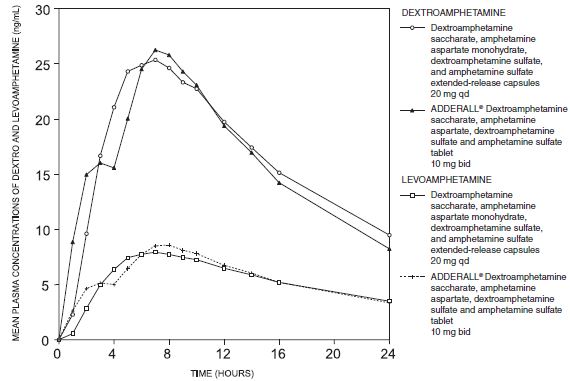
CLINICAL PHARMACOLOGY Amphetamines are noncatecholamine, sympathomimetic amines with CNS stimulant activity. Peripheral actions include elevations of systolic and diastolic blood pressures and weak bronchodilator and respiratory stimulant action. There is neither specific evidence that clearly establishes the mechanism whereby amphetamines produce mental and behavioral effects in children, nor conclusive evidence regarding how these effects relate to the condition of the central nervous system. Dextroamphetamine sulfate extended-release capsules are formulated to release the active drug substance in vivo in a more gradual fashion than the standard formulation, as demonstrated by blood levels. The formulation has not been shown superior in effectiveness over the same dosage of the standard, noncontrolled-release formulations given in divided doses. Pharmacokinetics The pharmacokinetics of the tablet and sustained-release capsule were compared in 12 healthy subjects. The extent of bioavailability of the sustained-release capsule was similar compared to the immediate-release tablet. Following administration of three 5 mg tablets, average maximal dextroamphetamine plasma concentrations (C max ) of 36.6 ng/mL were achieved at approximately 3 hours. Following administration of one 15 mg sustained-release capsule, maximal dextroamphetamine plasma concentrations were obtained approximately 8 hours after dosing. The average C max was 23.5 ng/mL. The average plasma T 1/2 was similar for both the tablet and sustained-release capsule and was approximately 12 hours. In 12 healthy subjects, the rate and extent of dextroamphetamine absorption were similar following administration of the sustained-release capsule formulation in the fed (58 g to 75 g fat) and fasted state.