Crisaborole
Managing this medication for someone you care for? Eleplan keeps diagnoses, medications and appointments in one plan.
Start free with EleplanMedication reference
Crisaborole
Phosphodiesterase 4 Inhibitor [EPC] — TOPICAL
Crisaborole — Phosphodiesterase 4 Inhibitor [EPC]. INDICATIONS AND USAGE EUCRISA is indicated for topical treatment of mild to moderate atopic dermatitis in adult and pediatric patients 3 months of…
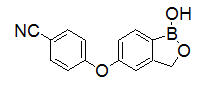
Brand names
Eucrisa
Active ingredients
CRISABOROLE
Indications
INDICATIONS AND USAGE EUCRISA is indicated for topical treatment of mild to moderate atopic dermatitis in adult and pediatric patients 3 months of age and older. EUCRISA is a phosphodiesterase 4 inhibitor indicated for topical treatment of mild to moderate atopic dermatitis in adult and pediatric patients 3 months of age and older. ( 1 )
Dosage
DOSAGE AND ADMINISTRATION Apply a thin layer of EUCRISA twice daily to affected areas. Once clinical effect is achieved, consider reducing application to once daily [see Clinical Studies (14) ] . EUCRISA is for topical use only and not for ophthalmic, oral, or intravaginal use. • Apply a thin layer twice daily to affected areas. ( 2 ) • Once clinical effect is achieved, consider reducing application to once daily. ( 2 ) • For topical use only. ( 2 ) • Not for ophthalmic, oral, or intravaginal use. ( 2 )
Warnings
WARNINGS AND PRECAUTIONS Hypersensitivity reactions : If signs and symptoms of hypersensitivity occur, discontinue EUCRISA immediately and initiate appropriate therapy. ( 5.1 ) 5.1 Hypersensitivity Reactions Hypersensitivity reactions, including contact urticaria, have occurred in patients treated with EUCRISA. Hypersensitivity should be suspected in the event of severe pruritus, swelling and erythema at the application site or at a distant site. If signs and symptoms of hypersensitivity occur, discontinue EUCRISA immediately and initiate appropriate therapy.
Contraindications
CONTRAINDICATIONS EUCRISA is contraindicated in patients with known hypersensitivity to crisaborole or any component of the formulation. [see Warnings and Precautions (5.1) ] Known hypersensitivity to crisaborole or any component of the formulation. ( 4 )
Adverse reactions
ADVERSE REACTIONS The most common adverse reaction occurring in ≥1% in subjects is application site pain. ( 6.1 ) To report SUSPECTED ADVERSE REACTIONS, contact Pfizer Inc. at 1-800-438-1985 or FDA at 1-800-FDA-1088 or www.fda.gov/medwatch. 6.1 Clinical Trials Experience Because clinical trials are conducted under widely varying conditions, adverse reaction rates observed in the clinical trials of a drug cannot be directly compared to rates in the clinical trials of another drug and may not reflect the rates observed in practice. In two double-blind, vehicle-controlled clinical trials (Trial 1 and Trial 2), 1012 subjects 2 to 79 years of age with mild to moderate atopic dermatitis were treated with EUCRISA twice daily for 4 weeks. The adverse reaction reported by ≥1% of EUCRISA-treated subjects is listed in Table 1. Table 1: Adverse Reaction Occurring in ≥1% of Subjects in Atopic Dermatitis Trials through Week 4 Adverse Reaction EUCRISA Twice Daily N=1012 n (%) Vehicle Twice Daily N=499 n (%) Application site pain Refers to skin sensations such as burning or stinging. 45 (4) 6 (1) Less common (<1%) adverse reactions in subjects treated with EUCRISA included contact urticaria [see Warnings and Precautions (5.1) ]. In one double-blind, vehicle-controlled trial including an initial open-label period (Trial 3), 497 subjects 3 months of age and older with mild to moderate atopic dermatitis received EUCRISA twice daily for up to 8 weeks. This was followed by a double-blind period, during which 135 subjects out of 270 randomized subjects received EUCRISA and 135 subjects received vehicle once daily for 52 weeks or until they developed a flare. The adverse reactions observed in the open-label period were similar to the known safety profile of twice daily treatment with EUCRISA. The adverse reactions observed with once daily treatment were similar to vehicle [see Clinical Studies (14) ] . 6.2 Postmarketing Experience The following adverse reactions have been identified during postapproval use of EUCRISA. Because these reactions are reported voluntarily from a population of uncertain size, it is not always possible to reliably estimate their frequency or establish a causal relationship to drug exposure: Skin and Subcutaneous: allergic contact dermatitis
Mechanism of action
Mechanism of Action Crisaborole is a phosphodiesterase 4 (PDE-4) inhibitor. PDE-4 inhibition results in increased intracellular cyclic adenosine monophosphate (cAMP) levels. The specific mechanism(s) by which crisaborole exerts its therapeutic action for the treatment of atopic dermatitis is not well defined.
Available forms (2)
NDC examples
55724-211
Indicated ICD-10 codes
Treats these conditions
Source: openFDA + RxNorm · 2026
Look up another medication