Clindamycin Phosphate and Tretinoin
Managing this medication for someone you care for? Eleplan keeps diagnoses, medications and appointments in one plan.
Start free with EleplanMedication reference
Clindamycin Phosphate and Tretinoin
Retinoid [EPC] — TOPICAL
Clindamycin Phosphate and Tretinoin — Retinoid [EPC]. INDICATIONS AND USAGE Clindamycin phosphate and tretinoin gel 1.2% / 0.025% is indicated for the topical treatment of acne vulgaris in patients 12…
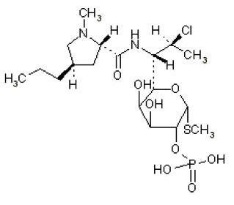
Brand names
Clindamycin Phosphate 1.2% and Tretinoin 0.025%ZIANAClindamycin Phosphate and Tretinoin
Active ingredients
CLINDAMYCIN PHOSPHATETRETINOIN
Indications
INDICATIONS AND USAGE Clindamycin phosphate and tretinoin gel 1.2% / 0.025% is indicated for the topical treatment of acne vulgaris in patients 12 years or older. Clindamycin phosphate and tretinoin gel 1.2% / 0.025% is a lincosamide antibiotic and retinoid combination product indicated for the topical treatment of acne vulgaris in patients 12 years or older. ( 1 )
Dosage
DOSAGE AND ADMINISTRATION At bedtime, squeeze a pea-sized amount of medication onto one fingertip, dot onto the chin, cheeks, nose, and forehead, then gently rub over the entire face. Clindamycin Phosphate 1.2% and Tretinoin 0.025% Gel should be kept away from the eyes, the mouth, angles of the nose, and mucous membranes. Clindamycin Phosphate 1.2% and Tretinoin 0.025% Gel is not for oral, ophthalmic, or intravaginal use. • Apply a pea-sized amount to the entire face once daily at bedtime. Do not apply to eyes, mouth, angles of the nose, or mucous membranes. ( 2 ) • Clindamycin Phosphate 1.2% and Tretinoin 0.025% Gel is not for oral, ophthalmic, or intravaginal use. ( 2 )
Warnings
WARNINGS AND PRECAUTIONS • Colitis: Clindamycin can cause severe colitis, which may result in death. Diarrhea, bloody diarrhea, and colitis (including pseudomembranous colitis) have been reported with the use of clindamycin. Clindamycin Phosphate 1.2% and Tretinoin 0.025% Gel should be discontinued if significant diarrhea occurs. ( 5.1 ) • Ultraviolet Light and Environmental Exposures: Avoid exposure to sunlight and sunlamps. Wear sunscreen daily. ( 5.2 ) 5.1 Colitis Systemic absorption of clindamycin has been demonstrated following topical use of this product. Diarrhea, bloody diarrhea, and colitis (including pseudomembranous colitis) have been reported with the use of topical clindamycin. When significant diarrhea occurs, Clindamycin Phosphate 1.2% and Tretinoin 0.025% Gel should be discontinued. Severe colitis has occurred following oral or parenteral administration of clindamycin with an onset of up to several weeks following cessation of therapy. Antiperistaltic agents such as opiates and diphenoxylate with atropine may prolong and/or worsen severe colitis. Severe colitis may result in death. Studies indicate a toxin(s) produced by clostridia is one primary cause of antibiotic-associated colitis. The colitis is usually characterized by severe persistent diarrhea and severe abdominal cramps and may be associated with the passage of blood and mucus. Stool cultures for Clostridium difficile and stool assay for C. difficile toxin may be helpful diagnostically. 5.2 Ultraviolet Light and Environmental Exposure Exposure to sunlight, including sunlamps, should be avoided during the use of Clindamycin Phosphate 1.2% and Tretinoin 0.025% Gel, and patients with sunburn should be advised not to use the product until fully recovered because of heightened susceptibility to sunlight as a result of the use of tretinoin. Patients who may be required to have considerable sun exposure due to occupation and those with inherent sensitivity to the sun should exercise particular caution. Daily use of sunscreen products and protective apparel (e.g., a hat) are recommended. Weather extremes, such as wind or cold, also may be irritating to patients under treatment with Clindamycin Phosphate 1.2% and Tretinoin 0.025% Gel.
Contraindications
CONTRAINDICATIONS Clindamycin Phosphate 1.2% and Tretinoin 0.025% Gel is contraindicated in patients with regional enteritis, ulcerative colitis, or history of antibiotic-associated colitis. Clindamycin Phosphate 1.2% and Tretinoin 0.025% Gel is contraindicated in patients with regional enteritis, ulcerative colitis, or history of antibiotic-associated colitis. ( 4 )
Drug interactions
DRUG INTERACTIONS • Concomitant use of topical medications with a strong drying effect can increase skin irritation. Use with caution. ( 7.1 ) • Clindamycin Phosphate 1.2% and Tretinoin 0.025% Gel should not be used in combination with erythromycin-containing products because of its clindamycin component. ( 7.2 ) 7.1 Concomitant Topical Medication Concomitant topical medication, medicated or abrasive soaps and cleansers, soaps and cosmetics that have a strong drying effect, and products with high concentrations of alcohol, astringents, spices or lime should be used with caution. When used with Clindamycin Phosphate 1.2% and Tretinoin 0.025% Gel, there may be increased skin irritation. 7.2 Erythromycin Clindamycin Phosphate 1.2% and Tretinoin 0.025% Gel should not be used in combination with erythromycin-containing products due to its clindamycin component. In vitro studies have shown antagonism between these two antimicrobials. The clinical significance of this in vitro antagonism is not known. 7.3 Neuromuscular Blocking Agents Clindamycin has been shown to have neuromuscular blocking properties that may enhance the action of other neuromuscular blocking agents. Therefore, Clindamycin Phosphate 1.2% and Tretinoin 0.025% Gel should be used with caution in patients receiving such agents.
Adverse reactions
ADVERSE REACTIONS Observed local adverse reactions in patients treated with Clindamycin Phosphate 1.2% and Tretinoin 0.025% Gel were skin erythema, scaling, itching, burning, and stinging. Other most commonly reported adverse events (≥1% in patients treated with Clindamycin Phosphate 1.2% and Tretinoin 0.025% Gel) were nasopharyngitis, pharyngolaryngeal pain, dry skin, cough, and sinusitis. ( 6.1 ) To report SUSPECTED ADVERSE REACTIONS, contact Oceanside Pharmaceuticals at 1-800-321-4576 or FDA at 1-800-FDA-1088 or www.fda.gov/medwatch. 6.1 Clinical Studies Experience Because clinical trials are conducted under prescribed conditions, adverse reaction rates observed in the clinical trial may not reflect the rates observed in practice. The adverse reaction information from clinical trials does, however, provide a basis for identifying the adverse reactions that appear to be related to drug use for approximating rates. The safety data presented in Table 1 (below) reflects exposure to Clindamycin Phosphate 1.2% and Tretinoin 0.025% Gel in 1853 patients with acne vulgaris. Patients were 12 years and older and were treated once daily for 12 weeks. Adverse reactions that were reported in ≥1% of patients treated with Clindamycin Phosphate 1.2% and Tretinoin 0.025% Gel were compared to adverse reactions in patients treated with clindamycin phosphate 1.2% in vehicle gel, tretinoin 0.025% in vehicle gel, and the vehicle gel alone: Table 1: Adverse Reactions Reported in at Least 1% of Patients Treated with Clindamycin Phosphate 1.2% and Tretinoin 0.025% Gel: 12-Week Studies Clindamycin Phosphate 1.2% and Tretinoin 0.025%Gel N=1853 N (%) Clindamycin N=1428 N (%) Tretinoin N=846 N (%) Vehicle N=423 N (%) PATIENTS WITH AT LEAST ONE AR 497 (27) 342 (24) 225 (27) 91 (22) Nasopharyngitis 65 (4) 64 (5) 16 (2) 5 (1) Pharyngolaryngeal pain 29 (2) 18 (1) 5 (1) 7 (2) Dry skin 23 (1) 7 (1) 3 (<1) 0 (0) Cough 19 (1) 21 (2) 9 (1) 2 (1) Sinusitis 19 (1) 19 (1) 15 (2) 4 (1) NOTE: Formulations used in all treatment arms were in the Clindamycin Phosphate 1.2% and Tretinoin 0.025% vehicle gel. Cutaneous safety and tolerance evaluations were conducted at each study visit in all of the clinical trials by assessment of erythema, scaling, itching, burning, and stinging: Table 2: Clindamycin Phosphate 1.2% and Tretinoin 0.025% Gel-Treated Patients with Local Skin Reactions Local Reaction Baseline N=1835 N (%) End of Treatment N=1614 N (%) Erythema 636 (35) 416 (26) Scaling 237 (13) 280 (17) Itching 189 (10) 70 (4) Burning 38 (2) 56 (4) Stinging 33 (2) 27 (2) At each study visit, application site reactions on a scale of 0 (none), 1 (mild), 2 (moderate), and 3 (severe), and the mean scores were calculated for each of the local skin reactions. In Studies 1 and 2, 1277 subjects enrolled with moderate to severe acne, 854 subjects treated with Clindamycin Phosphate 1.2% and Tretinoin 0.025% Gel and 423 treated with vehicle. Analysis over the 12-week period demonstrated that cutaneous irritation scores for erythema, scaling, itching, burning, and stinging peaked at 2 weeks of therapy, and were slightly higher for the Clindamycin Phosphate 1.2% and Tretinoin 0.025%-treated group, decreasing thereafter. One open-label 12-month safety study for Clindamycin Phosphate 1.2% and Tretinoin 0.025% Gel showed a similar adverse reaction profile as seen in the 12-week studies. Eighteen out of 442 subjects (4%) reported gastrointestinal symptoms.
Mechanism of action
CLINICAL PHARMACOLOGY 12.1 Mechanisms of Action Clindamycin [see Microbiology (12.4) ]. Tretinoin Although the exact mode of action of tretinoin is unknown, current evidence suggests that topical tretinoin decreases cohesiveness of follicular epithelial cells with decreased microcomedo formation. Additionally, tretinoin stimulates mitotic activity and increased turnover of follicular epithelial cells causing extrusion of the comedones. 12.3 Pharmacokinetics In an open-label, multiple-dose study treating 12 subjects with moderate to severe acne, the percutaneous absorption of tretinoin following 14 consecutive daily applications of approximately 4 g of clindamycin phosphate and tretinoin gel was minimal. Quantifiable tretinoin plasma concentrations ranged from 1.0 to 1.6 ng/mL, with unquantifiable plasma concentrations in 50% to 92% of subjects at any given timepoint following administration. The plasma concentrations of the key tretinoin metabolites, 13- cis -retinoic acid and 4-oxo-13-cis-retinoic acid, ranged from 1.0 to 1.4 ng/mL and from 1.6 to 6.5 ng/mL, respectively. Plasma concentrations for clindamycin generally did not exceed 3.5 ng/mL, with the exception of one subject whose plasma concentration reached 13.1 ng/mL. 12.4 Microbiology Clindamycin binds to the 50S ribosomal subunits of susceptible bacteria and prevents elongation of peptide chains by interfering with peptidyl transfer, thereby suppressing bacterial protein synthesis. Clindamycin has been shown to have in vitro activity against Propionibacterium acnes , an organism which has been associated with acne vulgaris; however, the clinical significance of this activity against P. acnes was not examined in clinical trials with clindamycin phosphate and tretinoin gel. P acnes resistance to clindamycin has been documented. Resistance to clindamycin is often associated with resistance to erythromycin.
NDC examples
68682-30099207-3000472-1790
Indicated ICD-10 codes
Treats these conditions
Source: openFDA + RxNorm · 2026
Look up another medication