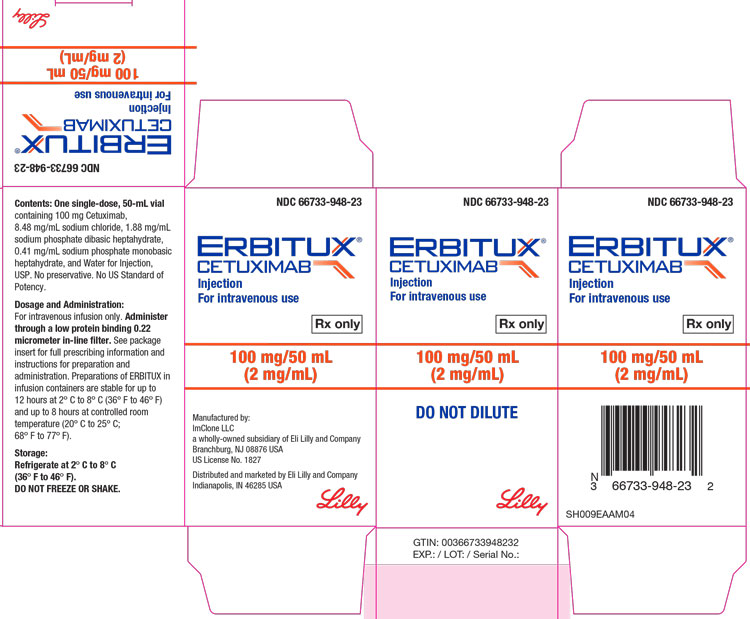
Cetuximab — Epidermal Growth Factor Receptor Antagonist [EPC]. INDICATIONS AND USAGE ERBITUX ® is an epidermal growth factor receptor (EGFR) antagonist indicated for treatment of: Head and Neck Cancer Locally or…
Boxed warning
WARNING: INFUSION REACTIONS and CARDIOPULMONARY ARREST Infusion Reactions: ERBITUX can cause serious and fatal infusion reactions [see Warnings and Precautions ( 5.1 ), Adverse Reactions ( 6 )] . Immediately interrupt and permanently discontinue ERBITUX for serious infusion reactions [see Dosage and Administration ( 2.5 )] . Cardiopulmonary Arrest: Cardiopulmonary arrest or sudden death occurred in patients with squamous cell carcinoma of the head and neck receiving ERBITUX with radiation therapy or a cetuximab product with platinum-based therapy and fluorouracil. Monitor serum electrolytes, including serum magnesium, potassium, and calcium, during and after ERBITUX administration [see Warnings and Precautions ( 5.2 , 5.6 )] . WARNING: INFUSION REACTIONS and CARDIOPULMONARY ARREST See full prescribing information for complete boxed warning. ERBITUX can cause serious and fatal infusion reactions. ( 5.1 , 6 ) Immediately interrupt and permanently discontinue ERBITUX for serious infusion reactions. ( 2.5 ) Cardiopulmonary arrest or sudden death occurred in patients with squamous cell carcinoma of the head and neck receiving ERBITUX with radiation therapy or with a cetuximab product with platinum-based therapy and fluorouracil. Monitor serum electrolytes, including serum magnesium, potassium, and calcium, during and after ERBITUX administration. ( 5.2 , 5.6 )
INDICATIONS AND USAGE ERBITUX ® is an epidermal growth factor receptor (EGFR) antagonist indicated for treatment of: Head and Neck Cancer Locally or regionally advanced squamous cell carcinoma of the head and neck in combination with radiation therapy. ( 1.1 , 14.1 ) Recurrent locoregional disease or metastatic squamous cell carcinoma of the head and neck in combination with platinum-based therapy with fluorouracil. ( 1.1 , 14.1 ) Recurrent or metastatic squamous cell carcinoma of the head and neck progressing after platinum-based therapy. ( 1.1 , 14.1 ) Colorectal Cancer K-Ras wild-type, EGFR-expressing, metastatic colorectal cancer as determined by an FDA-approved test in combination with FOLFIRI for first-line treatment, in combination with irinotecan in patients who are refractory to irinotecan-based chemotherapy, as a single-agent in patients who have failed oxaliplatin- and irinotecan-based chemotherapy or who are intolerant to irinotecan. ( 1.2 , 5.7 , 12.1 , 14.2 ) Limitations of Use: ERBITUX is not indicated for treatment of Ras-mutant colorectal cancer or when the results of the Ras mutation tests are unknown. ( 5.7 ) BRAF V600E Mutation-Positive Metastatic Colorectal Cancer (CRC) in combination with encorafenib, for the treatment of adult patients with metastatic colorectal cancer (CRC) with a BRAF V600E mutation, as detected by an FDA-approved test, after prior therapy. ( 1.3 ) 1.1 Squamous Cell Carcinoma of the Head and Neck (SCCHN) ERBITUX ® is indicated: in combination with radiation therapy for the initial treatment of locally or regionally advanced squamous cell carcinoma of the head and neck (SCCHN). in combination with platinum-based therapy with fluorouracil for the first-line treatment of patients with recurrent locoregional disease or metastatic SCCHN. as a single-agent for the treatment of patients with recurrent or metastatic SCCHN for whom prior platinum-based therapy has failed. 1.2 K-Ras Wild-type, EGFR-expressing Colorectal Cancer (CRC) ERBITUX is indicated for the treatment of K-Ras wild-type, epidermal growth factor receptor (EGFR)-expressing, metastatic colorectal cancer (mCRC) as determined by an FDA-approved test [see Dosage and Administration ( 2.2 )] : in combination with FOLFIRI (irinotecan, fluorouracil, leucovorin) for first-line treatment, in combination with irinotecan in patients who are refractory to irinotecan-based chemotherapy, as a single-agent in patients who have failed oxaliplatin- and irinotecan-based chemotherapy or who are intolerant to irinotecan. Limitations of Use: ERBITUX is not indicated for treatment of Ras-mutant colorectal cancer or when the results of the Ras mutation tests are unknown [see Warnings and Precautions ( 5.7 )] . 1.3 BRAF V600E Mutation-Positive Metastatic Colorectal Cancer (CRC) ERBITUX is indicated, in combination with encorafenib, for the treatment of adult patients with metastatic colorectal cancer (CRC) with a BRAF V600E mutation, as detected by an FDA-approved test, after prior therapy [see Dosage and Administration ( 2.3 )] .
Dosage
DOSAGE AND ADMINISTRATION Premedicate with an H 1 receptor antagonist. ( 2.4 ) In Combination With Radiation Therapy: Initial dose: 400 mg/m 2 administered as a 120-minute intravenous infusion one week prior to initiating a course of radiation therapy. ( 2.2 ) Subsequent doses: 250 mg/m 2 administered as a 60-minute infusion every week for the duration of radiation therapy (6–7 weeks). ( 2.2 ) Complete ERBITUX administration 1 hour prior to radiation therapy. ( 2.2 ) As Single-Agent or in Combination With Chemotherapy: Weekly: Administer initial dose of 400 mg/m 2 as a 120-minute intravenous infusion, and subsequent doses of 250 mg/m 2 infused over 60 minutes once weekly. ( 2.2 , 2.3 ) Biweekly: Administer 500 mg/m 2 as a 120-minute intravenous infusion every two weeks. ( 2.2 , 2.3 ) Complete ERBITUX administration 1 hour prior to chemotherapy. Continue treatment until disease progression or unacceptable toxicity. ( 2.2 , 2.3 ) See full prescribing information for dosage adjustments for adverse reactions. ( 2.5 ) 2.1 Patient Selection Select patients with metastatic colorectal cancer (CRC) for treatment with ERBITUX based on the presence of: Ras wild-type, EGFR-expressing CRC [see Clinical Studies ( 14.2 )], or BRAF V600E mutation-positive metastatic CRC [see Clinical Studies ( 14.3 )] Information on FDA-approved tests for the detection of K-Ras or BRAF V600E mutations in CRC in patients with metastatic CRC is available at: http://www.fda.gov/CompanionDiagnostics. 2.2 Recommended Dosage for Squamous Cell Carcinoma of the Head and Neck (SCCHN) In combination with radiation therapy Initial dose: 400 mg/m 2 administered as a 120-minute intravenous infusion one week prior to initiating a course of radiation therapy. Subsequent doses: 250 mg/m 2 administered as a 60-minute infusion every week for the duration of radiation therapy (6–7 weeks). Complete ERBITUX administration 1 hour prior to radiation therapy. As a single-agent or in combination with platinum-based therapy and fluorouracil Administer Erbitux as a single-agent or in combination with platinum-based therapy and fluorouracil on a weekly or biweekly schedule. Weekly Dosage Initial dose: 400 mg/m 2 administered as a 120-minute intravenous infusion Subsequent doses: 250 mg/m 2 administered as a 60-minute infusion every week Biweekly Dosage Initial and subsequent doses: 500 mg/m 2 administered as a 120-minute intravenous infusion every 2 weeks Complete ERBITUX administration 1 hour prior to platinum-based therapy with fluorouracil. Continue treatment until disease progression or unacceptable toxicity. 2.3 Recommended Dosage for Colorectal Cancer (CRC) As a single-agent or in combination with irinotecan or FOLFIRI (irinotecan, fluorouracil, leucovorin) Administer Erbitux as a single-agent or in combination with irinotecan or FOLFIRI (irinotecan, fluorouracil, leucovorin) on a weekly or biweekly schedule. Weekly Dosage Initial dose: 400 mg/m 2 administered as a 120-minute intravenous infusion Subsequent doses: 250 mg/m 2 administered as a 60-minute infusion every week Biweekly Dosage Initial and subsequent doses: 500 mg/m 2 administered as a 120-minute intravenous infusion every 2 weeks Complete ERBITUX administration 1 hour prior to irinotecan or FOLFIRI. Continue treatment until disease progression or unacceptable toxicity. In combination with encorafenib The recommended initial dose is 400 mg/m 2 administered as a 120-minute intravenous infusion in combination with encorafenib. The recommended subsequent dosage is 250 mg/m 2 weekly as a 60-minute infusion in combination with encorafenib until disease progression or unacceptable toxicity. Refer to the encorafenib prescribing information for recommended encorafenib dosage information. 2.4 Premedication Premedicate with a histamine-1 (H 1 ) receptor antagonist intravenously 30–60 minutes prior to the first dose or subsequent doses as deemed necessary [see Warnings and Precautions ( 5.1 )] . 2.5 Dosage Modifications for Adverse Reactions Reduce, delay, or discontinue ERBITUX to manage adverse reactions as described in Table 1 . Table 1: Recommended Dosage Modifications for Adverse Reactions Adverse Reaction Severity a Dosage Modification a National Cancer Institute (NCI) Common Toxicity Criteria (CTC), version 2.0. Infusion reactions [see Warnings and Precautions ( 5.1 )] Grade 1 or 2 Reduce the infusion rate by 50%. Grade 3 or 4 Immediately and permanently, discontinue ERBITUX. Dermatologic toxicities and infectious sequelae (e.g., acneiform rash, mucocutaneous disease) [see Warnings and Precautions ( 5.4 )] 1 st occurrence; Grade 3 or 4 Delay infusion 1 to 2 weeks; if condition improves, continue at 250 mg/m 2 . If no improvement, discontinue ERBITUX. 2 nd occurrence; Grade 3 or 4 Delay infusion 1 to 2 weeks; if condition improves, continue at 200 mg/m 2 . If no improvement, discontinue ERBITUX. 3 rd occurrence; Grade 3 or 4 Delay infusion 1 to 2 weeks; if condition improves, continue at 150 mg/m 2 . If no improvement, discontinue ERBITUX. 4 th occurrence; Grade 3 or 4 Discontinue ERBITUX. Pulmonary toxicity [see Warnings and Precautions ( 5.3 )] Acute onset or worsening pulmonary symptoms Delay infusion 1 to 2 weeks; if condition improves, continue at the dose that was being administered at the time of occurrence. If no improvement in 2 weeks or interstitial lung disease (ILD) is confirmed, discontinue ERBITUX. 2.6 Preparation for Administration The solution should be clear and colorless and may contain a small amount of easily visible, white, amorphous, cetuximab particulates. Do not shake or dilute. Visually inspect for foreign particulate matter and discoloration prior to administration, whenever solution and container permit. Do not use if solution is discolored, cloudy, or contains foreign particulate matter. Do not administer ERBITUX as an intravenous push or bolus. Administer via infusion pump or syringe pump. Do not exceed an infusion rate of 10 mg/min. Administer through a low protein binding 0.22-micrometer in-line filter.
Warnings
WARNINGS AND PRECAUTIONS Infusion Reactions: Monitor patients following infusion. Immediately stop and permanently discontinue ERBITUX for serious infusion reactions. ( 2.5 , 5.1 ) Cardiopulmonary Arrest: Monitor serum electrolytes during and after ERBITUX. ( 5.2 , 5.6 ) Pulmonary Toxicity: Interrupt or permanently discontinue for acute onset or worsening of pulmonary symptoms. ( 2.5 , 5.3 ) Dermatologic Toxicity: Monitor for dermatologic toxicities or infectious sequelae. Limit sun exposure. ( 2.5 , 5.4 ) Hypomagnesemia and Accompanying Electrolyte Abnormalities: Monitor during treatment and for at least 8 weeks following the completion. Replete electrolytes as necessary. ( 5.6 ) Increased tumor progression, increased mortality, or lack of benefit observed in patients with Ras-mutant mCRC. ( 5.7 ) Embryo-Fetal Toxicity: Can cause fetal harm. Advise females of potential risk to the fetus and to use effective contraception. ( 5.8 , 8.1 , 8.3 ) 5.1 Infusion Reactions ERBITUX can cause serious and fatal infusion reactions. Infusion reactions of any grade occurred in 8.4% of 1373 patients who received ERBITUX across clinical trials. Severe (Grades 3 and 4) infusion reactions occurred in 2.2% of patients [see Adverse Reactions ( 6.1 )] . Signs and symptoms included rapid onset of airway obstruction (bronchospasm, stridor, hoarseness), hypotension, shock, loss of consciousness, myocardial infarction, and/or cardiac arrest. The risk of anaphylactic reactions may be increased in patients with a history of tick bites, red meat allergy, or in the presence of IgE antibodies directed against galactose-α-1,3-galactose (alpha-gal). Consider testing patients for alpha-gal IgE antibodies using FDA-cleared methods prior to initiating ERBITUX. Negative results for alpha-gal antibodies do not rule out the risk of severe infusion reactions. Approximately 90% of severe infusion reactions occurred with the first infusion despite premedication with antihistamines. Infusion reactions may occur during or several hours following completion of the infusion. Premedicate with a histamine-1(H 1 ) receptor antagonist as recommended [see Dosage and Administration ( 2.4 )] . Monitor patients for at least 1 hour following each ERBITUX infusion, in a setting with resuscitation equipment and other agents necessary to treat anaphylaxis. In patients requiring treatment for infusion reactions, monitor for more than 1 hour to confirm resolution of the reaction. Interrupt the infusion and upon recovery, resume the infusion at a slower rate or permanently discontinue ERBITUX based on severity [see Dosage and Administration ( 2.5 )] . 5.2 Cardiopulmonary Arrest ERBITUX can cause cardiopulmonary arrest. Cardiopulmonary arrest or sudden death occurred in 2% of 208 patients treated with radiation therapy and ERBITUX in BONNER. Three patients with prior history of coronary artery disease died at home, with myocardial infarction as the presumed cause of death. One of these patients had arrhythmia and one had congestive heart failure. Death occurred 27, 32, and 43 days after the last dose of ERBITUX. One patient with no prior history of coronary artery disease died one day after the last dose of ERBITUX. In EXTREME, fatal cardiac disorders and/or sudden death occurred in 3% of 219 patients treated with a cetuximab product in combination with platinum-based therapy and fluorouracil. Carefully consider use of ERBITUX with radiation therapy or platinum-based therapy with fluorouracil in patients with SCCHN with a history of coronary artery disease, congestive heart failure, or arrhythmias. Monitor serum electrolytes, including serum magnesium, potassium, and calcium, during and after ERBITUX [see Warnings and Precautions ( 5.6 )] . 5.3 Pulmonary Toxicity ERBITUX can cause interstitial lung disease (ILD). ILD, including 1 fatality, occurred in <0.5% of 1570 patients receiving ERBITUX in clinical trials. Monitor patients for signs and symptoms of pulmonary toxicity. Interrupt or permanently discontinue ERBITUX for acute onset or worsening of pulmonary symptoms. Permanently discontinue ERBITUX for confirmed ILD [see Dosage and Administration ( 2.5 )] . 5.4 Dermatologic Toxicity ERBITUX can cause dermatologic toxicities, including acneiform rash, skin drying and fissuring, paronychial inflammation, infectious sequelae (for example, S. aureus sepsis, abscess formation, cellulitis, blepharitis, conjunctivitis, keratitis/ulcerative keratitis with decreased visual acuity, cheilitis), and hypertrichosis. Acneiform rash occurred in 82% of the 1373 patients who received ERBITUX across clinical trials. Severe (Grades 3 or 4) acneiform rash occurred in 10% of patients [see Adverse Reactions ( 6.1 )]. Acneiform rash usually developed within the first two weeks of therapy; the rash lasted more than 28 days after stopping ERBITUX in most patients. Life-threatening and fatal bullous mucocutaneous disease with blisters, erosions, and skin sloughing, has been observed in patients who received ERBITUX. It could not be determined whether these mucocutaneous adverse reactions were directly related to EGFR inhibition or to idiosyncratic immune-related effects (e.g., Stevens-Johnson syndrome or toxic epidermal necrolysis). Monitor patients receiving ERBITUX for dermatologic toxicities and infectious sequelae. Instruct patients to limit sun exposure during ERBITUX therapy. Withhold, reduce dose or permanently discontinue ERBITUX based on severity of acneiform rash or mucocutaneous disease [see Dosage and Administration ( 2.5 )] . 5.5 Risks Associated with Use in Combination with Radiation and Cisplatin In a controlled study, 940 patients with locally advanced SCCHN were randomized 1:1 to receive either ERBITUX in combination with radiation therapy and cisplatin or radiation therapy and cisplatin alone. The addition of ERBITUX resulted in an increase in the incidence of Grade 3 and 4 mucositis, radiation recall syndrome, acneiform rash, cardiac events, and electrolyte disturbances compared to radiation and cisplatin alone. Adverse reactions with fatal outcome were reported in 4% of patients in the ERBITUX combination arm and 3% in the control arm. In the ERBITUX arm, 2% experienced myocardial ischemia compared to 0.9% in the control arm. The main efficacy outcome of the study was progression-free survival (PFS). The addition of ERBITUX to radiation and cisplatin did not improve PFS. ERBITUX is not indicated for the treatment of SCCHN in combination with radiation and cisplatin. 5.6 Hypomagnesemia and Accompanying Electrolyte Abnormalities ERBITUX can cause hypomagnesemia. Hypomagnesemia occurred in 55% of 365 patients receiving ERBITUX in Study CA225-025 and two other clinical trials in patients with colorectal cancer (CRC) or head and neck cancer, including Grades 3 and 4 in 6% to 17%. In EXTREME, where a cetuximab product was administered in combination with platinum-based therapy, the addition of cetuximab to cisplatin and fluorouracil resulted in an increased incidence of hypomagnesemia of any grade (14%) and of Grade 3 or 4 hypomagnesemia (7%). Hypomagnesemia of any grade occurred in 4% of patients who received cetuximab, carboplatin, and fluorouracil. No patient experienced Grade 3 or 4 hypomagnesemia [see Adverse Reactions ( 6.1 )]. Hypomagnesemia and accompanying electrolyte abnormalities can occur days to months after initiating ERBITUX. Monitor patients weekly during treatment for hypomagnesemia, hypocalcemia, and hypokalemia, and for at least 8 weeks following the completion of ERBITUX. Replete electrolytes as necessary. 5.7 Increased Tumor Progression, Increased Mortality, or Lack of Benefit in Patients with Ras-Mutant mCRC ERBITUX is not indicated for the treatment of patients with CRC that harbor somatic mutations in exon 2 (codons 12 and 13), exon 3 (codons 59 and 61), and exon 4 (codons 117 and 146) of either K-Ras or N-Ras and hereafter is referred to as “Ras” or when the Ras status is unknown. Retrospective
Contraindications
CONTRAINDICATIONS None. None. ( 4 )
Adverse reactions
ADVERSE REACTIONS The following adverse reactions are discussed in greater detail in other sections of the label: Infusion reactions [see Warnings and Precautions ( 5.1 )] . Cardiopulmonary arrest [see Warnings and Precautions ( 5.2 )] . Pulmonary toxicity [see Warnings and Precautions ( 5.3 )] . Dermatologic toxicity [see Warnings and Precautions ( 5.4 )] . Hypomagnesemia and Electrolyte Abnormalities [see Warnings and Precautions ( 5.6 )] . The most common adverse reactions (incidence ≥25%) with Erbitux as a single-agent or in combination with radiotherapy or chemotherapy (FOLFIRI, Irinotecan and 5-Fluorouracil/Platinum) are: cutaneous adverse reactions (including rash, pruritus, and nail changes), headache, diarrhea, and infection. ( 6 ) The most common adverse reactions (>25%) for ERBITUX, in combination with encorafenib, are fatigue, nausea, diarrhea, dermatitis acneiform, abdominal pain, decreased appetite, arthralgia, and rash. ( 6 ). To report SUSPECTED ADVERSE REACTIONS, contact Eli Lilly and Company at 1-800-LillyRx (1-800-545-5979) or FDA at 1-800-FDA-1088 or www.fda.gov/medwatch. 6.1 Clinical Trials Experience Because clinical trials are conducted under widely varying conditions, adverse reaction rates observed in the clinical trials of a drug cannot be directly compared to rates in the clinical trials of another drug and may not reflect the rates observed in practice. The data described in Warnings and Precautions reflect exposure to ERBITUX in 1373 patients with SCCHN or CRC enrolled in clinical trials and treated at the recommended dosage for a median of 7 to 14 weeks [see Clinical Studies ( 14.1 , 14.2 )] . The most common adverse reactions in clinical trials with ERBITUX as a single-agent or in combination with radiotherapy or chemotherapy [FOLFIRI, irinotecan and 5-fluorouracil/platinum] (incidence ≥25%) include cutaneous adverse reactions (including rash, pruritus, and nail changes), headache, diarrhea, and infection. Squamous Cell Carcinoma of the Head and Neck (SCCHN) In Combination with Radiation Therapy The safety of ERBITUX in combination with radiation therapy compared to radiation therapy alone was evaluated in BONNER. The data described below reflect exposure to ERBITUX in 420 patients with locally or regionally advanced SCCHN. ERBITUX was administered at the recommended dosage (400 mg/m 2 initial dose, followed by 250 mg/m 2 weekly). Patients received a median of 8 infusions (range 1 to 11) [see Clinical Studies ( 14.1 )] . Table 2 provides the frequency and severity of adverse reactions in BONNER. Table 2: Selected Adverse Reactions in ≥10% of Patients with Locoregionally Advanced SCCHN (BONNER) a Adverse Reaction ERBITUX with Radiation (n=208) Radiation Therapy Alone (n=212) Grades 1–4 b Grades 3 and 4 Grades 1–4 Grades 3 and 4 a Adverse reactions occurring in ≥10% of patients in the ERBITUX combination arm and at a higher incidence (≥5%) compared to the radiation alone arm. b Adverse reactions were graded using the NCI CTC, version 2.0. c Includes cases also reported as infusion reaction. d Infusion reaction defined as any event described at any time during the clinical study as “allergic reaction” or “anaphylactoid reaction”, or any event occurring on the first day of dosing described as “allergic reaction”, “anaphylactoid reaction”, “fever”, “chills”, “chills and fever”, or “dyspnea”. e Based on laboratory measurements, not on reported adverse reactions, the number of subjects with tested samples varied from 205–206 for ERBITUX with Radiation arm; 209–210 for Radiation alone. f Acneiform rash defined as any event described as “acne”, “rash”, “maculopapular rash”, “pustular rash”, “dry skin”, or “exfoliative dermatitis”. General Asthenia 56 4 49 5 Fever c 29 1 13 1 Headache 19 <1 8 <1 Chills c 16 0 5 0 Infusion Reaction d 15 3 2 0 Infection 13 1 9 1 Gastrointestinal Nausea 49 2 37 2 Emesis 29 2 23 4 Diarrhea 19 2 13 1 Dyspepsia 14 0 9 1 Metabolism and Nutrition Weight Loss 84 11 72 7 Dehydration 25 6 19 8 Increased Alanine Transaminase e 43 2 21 1 Increased Aspartate Transaminase e 38 1 24 1 Increased Alkaline Phosphatase e 33 <1 24 0 Respiratory Pharyngitis 26 3 19 4 Dermatologic Acneiform Rash f 87 17 10 1 Radiation Dermatitis 86 23 90 18 Application Site Reaction 18 0 12 1 Pruritus 16 0 4 0 The overall incidence of late radiation toxicities (any grade) was higher for patients receiving ERBITUX in combination with radiation therapy compared with radiation therapy alone. The following sites were affected: salivary glands (65% versus 56%), larynx (52% versus 36%), subcutaneous tissue (49% versus 45%), mucous membrane (48% versus 39%), esophagus (44% versus 35%), skin (42% versus 33%). The incidence of Grade 3 or 4 late radiation toxicities was similar between the radiation therapy alone and the ERBITUX with radiation treatment groups. In Combination with Platinum-based Therapy and Fluorouracil The safety of a cetuximab product in combination with platinum-based therapy and fluorouracil or platinum-based therapy and fluorouracil alone was evaluated in EXTREME. The data described below reflect exposure to a cetuximab product in 434 patients with recurrent locoregional disease or metastatic SCCHN. Because ERBITUX provides approximately 22% higher exposure relative to the cetuximab product, the data provided below may underestimate the incidence and severity of adverse reactions anticipated with ERBITUX for this indication; however, the tolerability of the recommended dose is supported by safety data from additional studies of ERBITUX [see Clinical Pharmacology ( 12.3 )] . Cetuximab was administered intravenously at a dosage of 400 mg/m 2 for the initial dose, followed by 250 mg/m 2 weekly. Patients received a median of 17 infusions (range 1 to 89) [see Clinical Studies ( 14.1 )] . Table 3 provides the frequency and severity of adverse reactions in EXTREME. Table 3: Selected Adverse Reactions in ≥10% of Patients with Recurrent Locoregional Disease or Metastatic SCCHN (EXTREME) a Adverse Reaction Cetuximab with Platinum-based Therapy and fluorouracil (n=219) Platinum-based Therapy and fluorouracil Alone (n=215) Grades 1–4 b Grades 3 and 4 Grades 1–4 Grades 3 and 4 a Adverse reactions occurring in ≥10% of patients in the cetuximab combination arm and at a higher incidence (≥5%) compared to the platinum-based therapy and fluorouracil alone arm. b Adverse reactions were graded using the NCI CTC, version 2.0. c Infusion reaction defined as “anaphylactic reaction”, “hypersensitivity”, “fever and/or chills”, “dyspnea”, or “pyrexia” on the first day of dosing. d Infection excludes sepsis-related events which are presented separately. e Acneiform rash defined as “acne”, “dermatitis acneiform”, “dry skin”, “exfoliative rash”, “rash”, “rash erythematous”, “rash macular”, “rash papular”, or “rash pustular”. Chemotherapy = cisplatin and fluorouracil or carboplatin and fluorouracil Eye Conjunctivitis 10 0 0 0 Gastrointestinal Nausea 54 4 47 4 Diarrhea 26 5 16 1 General and Administration Site Pyrexia 22 0 13 1 Infusion Reaction c 10 2 <1 0 Infections Infection d 44 11 27 8 Metabolism and Nutrition Anorexia 25 5 14 1 Hypocalcemia 12 4 5 1 Hypokalemia 12 7 7 5 Hypomagnesemia 11 5 5 1 Dermatologic Acneiform Rash e 70 9 2 0 Rash 28 5 2 0 Acne 22 2 0 0 Dermatitis Acneiform 15 2 0 0 Dry Skin 14 0 <1 0 Alopecia 12 0 7 0 For cardiac disorders, approximately 9% of patients in both treatment arms in EXTREME experienced a cardiac event. The majority of these events occurred in patients who received cisplatin and fluorouracil with or without cetuximab. Cardiac disorders were observed in 11% and 12% of patients who received cisplatin and fluorouracil with or without cetuximab, respectively, and 6% and 4% in patients who received carboplatin and fluorouracil with or without cetuximab, respectively. In both arms, the incidence of cardiovascular events was higher in the cisplatin and fluorouracil containing subgroup. Death attributed to cardiovascula
Mechanism of action
Mechanism of Action The epidermal growth factor receptor (EGFR, HER1, c-ErbB-1) is a transmembrane glycoprotein that is a member of a subfamily of type I receptor tyrosine kinases including EGFR, HER2, HER3, and HER4. The EGFR is constitutively expressed in many normal epithelial tissues, including the skin and hair follicle. Expression of EGFR is also detected in many human cancers including those of the head and neck, colon, and rectum. Cetuximab binds specifically to the EGFR on both normal and tumor cells, and competitively inhibits the binding of epidermal growth factor (EGF) and other ligands, such as transforming growth factor-alpha. In vitro assays and in vivo animal studies have shown that binding of cetuximab to the EGFR blocks phosphorylation and activation of receptor-associated kinases, resulting in inhibition of cell growth, induction of apoptosis, and decreased matrix metalloproteinase and vascular endothelial growth factor production. Signal transduction through the EGFR results in activation of wild-type Ras proteins, but in cells with activating Ras somatic mutations, the resulting mutant Ras proteins are continuously active regardless of EGFR regulation. In vitro , cetuximab can mediate antibody-dependent cellular cytotoxicity (ADCC) against certain human tumor types. In vitro assays and in vivo animal studies have shown that cetuximab inhibits the growth and survival of tumor cells that express the EGFR. No anti-tumor effects of cetuximab were observed in human tumor xenografts lacking EGFR expression. The addition of cetuximab to radiation therapy or irinotecan in human tumor xenograft models in mice resulted in an increase in anti-tumor effects compared to radiation therapy or chemotherapy alone. In the setting of BRAF-mutant CRC, induction of EGFR-mediated MAPK pathway activation has been identified as a mechanism of resistance to BRAF inhibitors. Combinations of a BRAF inhibitor and agents targeting EGFR have been shown to overcome this resistance mechanism in nonclinical models. Coadministration of cetuximab and encorafenib had an anti-tumor effect greater than either drug alone, in a mouse model of colorectal cancer with mutated BRAF V600E.
A drug lookup is just the start. Eleplan keeps the whole care plan in one place.
Medications, diagnoses, documents, appointments, and the whole care team — organized and always in sync, with Ellie, your AI care assistant, on top of it. Free to start.