Cedazuridine and Decitabine
Managing this medication for someone you care for? Eleplan keeps diagnoses, medications and appointments in one plan.
Start free with EleplanMedication reference
Cedazuridine and Decitabine
Nucleoside Metabolic Inhibitor [EPC] — ORAL
Cedazuridine and Decitabine — Nucleoside Metabolic Inhibitor [EPC]. INDICATIONS AND USAGE INQOVI is a combination of decitabine, a nucleoside metabolic inhibitor, and cedazuridine, a cytidine deaminase inhibitor…
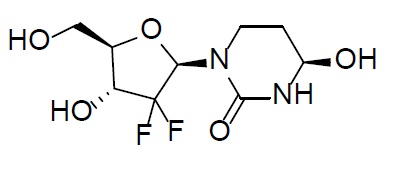
Brand names
INQOVI
Active ingredients
CEDAZURIDINEDECITABINE
Indications
INDICATIONS AND USAGE INQOVI is a combination of decitabine, a nucleoside metabolic inhibitor, and cedazuridine, a cytidine deaminase inhibitor, indicated: For treatment of adult patients with myelodysplastic syndromes (MDS), including previously treated and untreated, de novo and secondary MDS with the following French-American-British subtypes (refractory anemia, refractory anemia with ringed sideroblasts, refractory anemia with excess blasts, and chronic myelomonocytic leukemia [CMML]) and intermediate-1, intermediate-2, and high-risk International Prognostic Scoring System groups. ( 1.1 ) In combination with venetoclax for the treatment of newly diagnosed acute myeloid leukemia (AML) in adults 75 years or older, or who have comorbidities that preclude use of intensive induction chemotherapy. ( 1.2 ) 1.1 Myelodysplastic Syndromes or Chronic Myelomonocytic Leukemia INQOVI is indicated for treatment of adult patients with myelodysplastic syndromes (MDS), including previously treated and untreated, de novo and secondary MDS with the following French-American-British subtypes (refractory anemia, refractory anemia with ringed sideroblasts, refractory anemia with excess blasts, and chronic myelomonocytic leukemia [CMML]) and intermediate-1, intermediate-2, and high-risk International Prognostic Scoring System groups. 1.2 Acute Myeloid Leukemia INQOVI is indicated in combination with venetoclax for the treatment of newly diagnosed acute myeloid leukemia (AML) in adults 75 years or older, or who have comorbidities that preclude use of intensive induction chemotherapy.
Dosage
DOSAGE AND ADMINISTRATION The recommended dosage of INQOVI is 1 tablet (35 mg decitabine and 100 mg cedazuridine) taken orally once daily on Days 1 through 5 of each 28-day cycle. ( 2.2 ) Take INQOVI on an empty stomach. ( 2.2 ) 2.1 Important Administration Information Do NOT substitute INQOVI for an intravenous decitabine product within a cycle. Consider administering antiemetics prior to each dose to minimize nausea and vomiting [see Adverse Reactions (6.1) ]. Take INQOVI on an empty stomach at least 2 hours before or 2 hours after eating. When INQOVI is given in combination with venetoclax, advise patients to take INQOVI 2 hours before or 2 hours after venetoclax. Refer to the venetoclax Prescribing Information for recommended dosage and administration. 2.2 Recommended Dosage INQOVI Monotherapy for MDS or CMML The recommended dosage of INQOVI is 1 tablet (containing 35 mg decitabine and 100 mg cedazuridine) orally once daily on Days 1 through 5 of each 28-day cycle for a minimum of 4 cycles until disease progression or unacceptable toxicity. A complete or partial response may take longer than 4 cycles. INQOVI in Combination with Venetoclax for AML The recommended dosage of INQOVI in combination with venetoclax is 1 tablet (containing 35 mg decitabine and 100 mg cedazuridine) orally once daily on Days 1 through 5 of each 28-day cycle until disease progression or unacceptable toxicity. Match Day 1 of INQOVI dosing with Day 1 of venetoclax dosing for each 28-day cycle. 2.3 Administration Instruct patients of the following: Take INQOVI at approximately the same time each day. Swallow tablets whole. Do not cut, crush, or chew tablets. Take one tablet a day for 5 days in each cycle. If the patient misses a dose within 12 hours of the time it is usually taken, instruct patients to take the missed dose as soon as possible and then to resume the normal daily dosing schedule. Extend the dosing period by one day for every missed dose to complete 5 daily doses for each cycle. Do not take an additional dose if vomiting occurs after INQOVI administration but continue with the next schedule dose. INQOVI is a hazardous drug. Follow applicable special handling and disposal procedures. 1 2.4 Monitoring and Dosage Modifications for Adverse Reactions INQOVI Monotherapy for MDS or CMML Hematologic Adverse Reactions Obtain complete blood cell counts prior to initiating INQOVI and before each cycle. Delay the next cycle if absolute neutrophil count (ANC) is less than 1,000/µL and platelets are less than 50,000/µL in the absence of active disease. Monitor complete blood cell counts until ANC is 1,000/µL or greater and platelets are 50,000/µL or greater [see Warnings and Precautions (5.1) ] . If hematologic recovery occurs (ANC at least 1,000/µL and platelets at least 50,000/µL) within 2 weeks of achieving remission, continue INQOVI at the same dose. If hematologic recovery does not occur (ANC at least 1,000/µL and platelets at least 50,000/µL) within 2 weeks of achieving remission, Delay INQOVI for up to 2 additional weeks AND Resume at a reduced dose by administering INQOVI on Days 1 through 4. Consider further dose reductions in the order listed in Table 1 if myelosuppression persists after a dose reduction. Maintain or increase dose in subsequent cycles as clinically indicated. Table 1: Recommended INQOVI Dose Reductions for Myelosuppression (Monotherapy for MDS or CMML) Dose Reduction Dosage First 1 tablet orally once daily on Days 1 through 4 Second 1 tablet orally once daily on Days 1 through 3 Third 1 tablet orally once daily on Days 1, 3 and 5 Manage persistent severe neutropenia and febrile neutropenia with supportive treatment [see Warnings and Precautions (5.1) ]. Non-Hematologic Adverse Reactions Delay the next cycle for the following non-hematologic adverse reactions and resume at the same or reduced dose upon resolution: Serum creatinine 2 mg/dL or greater Serum bilirubin 2 times upper limit of normal (ULN) or greater Aspartate aminotransferase (AST) or alanine aminotransferase (ALT) 2 times ULN or greater Active or uncontrolled infection INQOVI in Combination with Venetoclax for AML Monitor blood cell counts frequently through resolution of cytopenias. Dose modification and interruptions for cytopenias are dependent on remission status. For Cycle 1, bone marrow assessment for response may be performed as early as Day 22. In the absence of bone marrow remission (bone marrow blasts < 5%), do not delay INQOVI in combination with venetoclax. Hematologic Adverse Reactions Obtain complete blood cell counts prior to initiating INQOVI and before each cycle. Monitor complete blood cell counts until neutrophils and platelet counts have recovered to Grade 1 or 2 [see Warnings and Precautions (5.1) ] . If hematologic recovery occurs (ANC at least 1,000/µL and platelets at least 50,000/µL) within 2 weeks of achieving remission, continue INQOVI at the same dose. If hematologic recovery does not occur (ANC at least 1,000/µL and platelets at least 50,000/µL) within 2 weeks of achieving remission, delay INQOVI for up to 2 additional weeks and consider reducing the number of days of INQOVI per cycle according to Table 2 . Table 2: Recommended INQOVI Dose Reductions for Adverse Reactions (Combination with Venetoclax for AML) Dose Reduction Dosage First 1 tablet orally once daily on Days 1, 2 and 3 Second 1 tablet orally once daily on Days 1, 3 and 5 Third 1 tablet orally once daily on Days 1 and 2 Manage persistent severe neutropenia and febrile neutropenia with supportive treatment [see Warnings and Precautions (5.1) ]. Refer to the venetoclax prescribing information for dosage modifications for hematologic adverse reactions associated with venetoclax. Non-Hematologic Adverse Reactions Dose reductions of INQOVI for non-hematologic adverse reactions are provided in Table 2 . Refer to the venetoclax prescribing information for dosage modifications for non-hematologic adverse reactions associated with venetoclax.
Warnings
WARNINGS AND PRECAUTIONS Myelosuppression : Severe myelosuppression, including fatal adverse reactions and infectious complications can occur. Obtain complete blood cell counts prior to initiation of INQOVI, prior to each cycle, and as clinically indicated to monitor for response and toxicity. Delay the next cycle and resume at the same or reduced dose as recommended. ( 2.3 , 5.1 ) Embryo-Fetal Toxicity : Can cause fetal harm. Advise patients of reproductive potential of the potential risk to a fetus and to use effective contraception. ( 5.2 , 8.1 , 8.3 ) 5.1 Myelosuppression INQOVI Monotherapy for MDS or CMML In patients with MDS or CMML, INQOVI can cause severe myelosuppression, including fatal adverse reactions. Based on laboratory values, new or worsening thrombocytopenia occurred in 82% of patients, with Grade 3 or 4 occurring in 76%. Neutropenia occurred in 73% of patients, with Grade 3 or 4 occurring in 71%. Anemia occurred in 71% of patients, with Grade 3 or 4 occurring in 55%. Febrile neutropenia occurred in 33% of patients, with Grade 3 or 4 occurring in 32%. Thrombocytopenia, neutropenia, anemia, and febrile neutropenia are the most frequent cause of INQOVI dose reduction or interruption, occurring in 36% of patients. Permanent discontinuation due to myelosuppression (febrile neutropenia) occurred in 1% of patients. Myelosuppression and worsening neutropenia may occur more frequently in the first or second treatment cycles and may not necessarily indicate progression of underlying MDS. Fatal and serious infectious complications can occur with INQOVI. Pneumonia occurred in 21% of patients, with Grade 3 or 4 occurring in 15%. Sepsis occurred in 14% of patients, with Grade 3 or 4 occurring in 11%. Fatal pneumonia occurred in 1% of patients, fatal sepsis in 1%, and fatal septic shock in 1% [see Adverse Reactions (6.1) ] . Obtain complete blood cell counts prior to initiation of INQOVI, prior to each cycle, and as clinically indicated to monitor response and toxicity. Administer growth factors and anti-infective therapies for treatment or prophylaxis as appropriate. Delay the next cycle and resume at the same or reduced dose as recommended [see Dosage and Administration (2.4) ] . INQOVI in Combination with Venetoclax for AML In patients with AML, INQOVI can cause severe myelosuppression, including fatal adverse reactions, when given in combination with venetoclax. Based on laboratory values in Study ASTX727-07 Phase 2 new or worsening thrombocytopenia occurred in 70% of patients, with Grade 3 or 4 occurring in 69%. Neutropenia occurred in 48% of patients, with Grade 3 or 4 occurring in 48%. Anemia occurred in 54% of patients, with Grade 3 or 4 occurring in 50%. Febrile neutropenia occurred in 52% of patients, with Grade 3 or 4 occurring in 52%. Thrombocytopenia, neutropenia, anemia, and febrile neutropenia were a frequent cause of INQOVI and/or venetoclax dose reduction or interruption. Dose reductions of INQOVI due to neutropenia and thrombocytopenia occurred in 4% and 1% of patients, respectively. Dose interruptions of INQOVI due to neutropenia, febrile neutropenia, thrombocytopenia, and anemia occurred in 40%, 11%, 8%, and 2% of patients, respectively. Fatal and serious infectious complications can occur during treatment with INQOVI and venetoclax. Pneumonia occurred in 25% of patients, with Grade 3 or 4 occurring in 20%. Sepsis occurred in 28% of patients with Grade 3 or 4 occurring in 18%. Fatal pneumonia occurred in 2% of patients and fatal sepsis in 8% [see Adverse Reactions (6.1) ] . Obtain complete blood cell counts prior to initiation of INQOVI with venetoclax, prior to each cycle, and as clinically indicated to monitor response and toxicity. Administer growth factors and anti-infective therapies for treatment or prophylaxis as appropriate. Delay the next cycle and resume at the same or reduced dose as recommended [see Dosage and Administration (2.4) ] . 5.2 Embryo-Fetal Toxicity Based on findings from human data, animal studies, and its mechanism of action, INQOVI can cause fetal harm when administered to a pregnant woman. In nonclinical studies with decitabine in mice and rats, decitabine was teratogenic, fetotoxic, and embryotoxic at doses less than the recommended human dose. Advise patients of the potential risk to a fetus. Advise females of reproductive potential to use effective contraception during treatment with INQOVI and for 6 months after the last dose. Advise males with female partners of reproductive potential to use effective contraception during treatment with INQOVI and for 3 months after the last dose [see Use in Specific Populations (8.1 , 8.3) ].
Contraindications
CONTRAINDICATIONS None. None. ( 4 )
Drug interactions
DRUG INTERACTIONS Drugs Metabolized by Cytidine Deaminase : Avoid coadministration with INQOVI. ( 7 ) 7.1 Effects of INQOVI on Other Drugs Drugs Metabolized by Cytidine Deaminase Cedazuridine is an inhibitor of the cytidine deaminase (CDA) enzyme. Coadministration of INQOVI with drugs that are metabolized by CDA may result in increased systemic exposure with potential for increased toxicity of these drugs [see Clinical Pharmacology (12.3) ] . Avoid coadministration of INQOVI with drugs that are metabolized by CDA.
Adverse reactions
ADVERSE REACTIONS The following clinically significant adverse reactions are described elsewhere in the labeling: Myelosuppression [see Warnings and Precautions (5.1) ] In MDS or CMML, the most common adverse reactions (incidence ≥ 20%) are fatigue, constipation, hemorrhage, myalgia, mucositis, arthralgia, nausea, dyspnea, diarrhea, rash, dizziness, febrile neutropenia, edema, headache, cough, decreased appetite, upper respiratory tract infection, pneumonia, and transaminase increased. The most common Grade 3 or 4 laboratory abnormalities (≥ 50%) were leukocytes decreased, platelet count decreased, neutrophil count decreased, and hemoglobin decreased. ( 6.1 ) In AML in combination with venetoclax, the most common adverse reactions (incidence ≥ 20%) are neutropenia, febrile neutropenia, thrombocytopenia, hemorrhage, anemia, infection (bacterial/viral), diarrhea, fatigue, mucositis, constipation, arthralgia, dyspnea, decreased appetite, edema, nausea, white blood cell count decreased, sepsis, pneumonia, rash, transaminitis, myalgia, arrhythmia, and abdominal pain. The most common Grade 3 or 4 laboratory abnormalities (≥ 50%) were leukocytes decreased, lymphocytes decreased, platelets decreased, and hemoglobin decreased. ( 6.1 ) To report SUSPECTED ADVERSE REACTIONS, contact Taiho Oncology, Inc. at 1-844-878-2446 or FDA at 1-800-FDA-1088 or www.fda.gov/medwatch . 6.1 Clinical Trials Experience Because clinical trials are conducted under widely variable conditions, adverse event rates observed in clinical trials of a drug cannot be directly compared with rates of clinical trials of another drug and may not reflect the rates observed in practice. INQOVI Monotherapy for MDS or CMML The safety of INQOVI was evaluated in a pooled safety population that includes patients enrolled in Study ASTX727-01-B and Study ASTX727-02 [see Clinical Studies (14.1) ]. Patients were randomized to receive INQOVI (35 mg decitabine and 100 mg cedazuridine) orally once daily on Days 1 through 5 in Cycle 1 and decitabine 20 mg/m 2 intravenously on Days 1 through 5 in Cycle 2, or the reverse sequence, and then INQOVI (35 mg decitabine and 100 mg cedazuridine) orally once daily on Days 1 through 5 of each 28-day cycle in Cycles 3 and beyond. Patients were allowed to have one prior cycle of decitabine or azacitidine and there was no limit for body weight or surface area. Among the patients who received INQOVI, 61% of patients were exposed for 6 months or longer and 24% were exposed to INQOVI for greater than 1 year. Serious adverse reactions occurred in 68% of patients who received INQOVI. Serious adverse reactions in > 5% of patients included febrile neutropenia (30%), pneumonia (14%), and sepsis (13%). Fatal adverse reactions occurred in 6% of patients. These included sepsis (1%), septic shock (1%), pneumonia (1%), respiratory failure (1%), and one case each of cerebral hemorrhage and sudden death. Permanent discontinuation due to an adverse reaction occurred in 5% of patients who received INQOVI. The most frequent adverse reactions resulting in permanent discontinuation were febrile neutropenia (1%) and pneumonia (1%). Dose interruptions due to an adverse reaction occurred in 41% of patients who received INQOVI. Adverse reactions requiring dosage interruptions in > 5% of patients who received INQOVI included neutropenia (18%), febrile neutropenia (8%), thrombocytopenia (6%), and anemia (5%). Dose reductions due to an adverse reaction occurred in 19% of patients who received INQOVI. Adverse reactions requiring dosage reductions in >2% of patients who received INQOVI included neutropenia (12%), anemia (3%), and thrombocytopenia (3%). The most common adverse reactions (≥20%) were fatigue, constipation, hemorrhage, myalgia, mucositis, arthralgia, nausea, dyspnea, diarrhea, rash, dizziness, febrile neutropenia, edema, headache, cough, decreased appetite, upper respiratory tract infection, pneumonia, and transaminase increased. The most common Grade 3 or 4 laboratory abnormalities (≥ 50%) were leukocytes decreased, platelet count decreased, neutrophil count decreased, and hemoglobin decreased. Table 3 summarizes the adverse reactions in the pooled safety population. Table 3: Adverse Reactions (≥10%) in Patients Who Received INQOVI in Pooled Safety Population Adverse Reactions INQOVI Cycle 1 N=107 Intravenous Decitabine Cycle 1 N=106 INQOVI Includes adverse reactions that occurred during all cycles, including during treatment with 1 cycle of intravenous decitabine. All Cycles N=208 All Grades (%) Grades 3 or 4 (%) All Grades (%) Grades 3 or 4 (%) All Grades (%) Grades 3 or 4 (%) General disorders and administration site conditions Fatigue Includes fatigue, asthenia, and lethargy 29 2 25 0 55 5 Hemorrhage Includes contusion, epistaxis, petechiae, hematuria, conjunctival hemorrhage, mouth hemorrhage, purpura, angina bullosa hemorrhagica, gingival bleeding, hematoma, hemoptysis, eye contusion, hemorrhagic diathesis, increased tendency to bruise, vaginal hemorrhage, abdominal wall hematoma, blood blister, bone contusion, catheter site bruise, ecchymosis, genital hemorrhage, intra-abdominal hematoma, oral mucosa hematoma, periorbital hemorrhage, procedural hemorrhage, pulmonary alveolar hemorrhage, retinal hemorrhage, scleral hemorrhage, thrombotic thrombocytopenic purpura, tongue hemorrhage, and vessel puncture site hemorrhage 24 2 17 0 43 3 Edema Includes edema peripheral, peripheral swelling, swelling face, fluid overload, localized edema, face edema, edema, eye swelling, eyelid edema, fluid retention, periorbital swelling, scrotal edema, scrotal swelling, and swelling 10 0 11 0 30 0.5 Pyrexia 7 0 7 0 19 1 Gastrointestinal disorders Constipation Includes constipation and feces hard 20 0 23 0 44 0 Mucositis Includes oropharyngeal pain, stomatitis, mouth ulceration, proctalgia, oral pain, gingivitis, oral disorder, gingival pain, colitis, glossodynia, mouth swelling, pharyngitis, proctitis, duodenitis, enteritis, gingival discomfort, gingival swelling, lip disorder, lip ulceration, mucosal ulceration, nasal ulcer, noninfective gingivitis, oral mucosal blistering, oral mucosal erythema, pharyngeal erythema, pharyngeal ulceration, tongue ulceration, and vulvitis 18 1 24 2 41 4 Nausea 25 0 16 0 40 0.5 Diarrhea Includes diarrhea and feces soft 16 0 11 0 37 1 Transaminase increased Includes alanine aminotransferase increased, aspartate aminotransferase increased, blood alkaline phosphatase increased, gamma-glutamyltransferase increased, liver function test increased, and transaminases increased 12 1 3 0 21 3 Abdominal pain Includes abdominal pain, abdominal pain upper, abdominal pain lower, epigastric discomfort, and abdominal discomfort 9 0 7 0 19 1 Vomiting 5 0 5 0 15 0 Musculoskeletal and connective tissue disorders Myalgia Includes myalgia, pain in extremity, muscle spasms, pain, musculoskeletal pain, non-cardiac chest pain, muscular weakness, musculoskeletal chest pain, flank pain, musculoskeletal stiffness, muscle strain, and musculoskeletal discomfort 9 2 16 1 42 3 Arthralgia Includes arthralgia, back pain, neck pain, joint stiffness, pain in jaw, joint swelling, bursitis, joint range of motion decreased, and joint injury 9 1 13 1 40 3 Respiratory, thoracic, and mediastinal disorders Dyspnea Includes dyspnea, dyspnea exertional, hypoxia, wheezing, chronic obstructive pulmonary disease, and tachypnoea 17 3 9 3 38 6 Cough Includes cough and productive cough 7 0 8 0 28 0 Blood & lymphatic system disorders Febrile neutropenia 10 10 13 13 33 32 Skin and subcutaneous tissue disorders Rash Includes maculo-papular rash, rash, erythema, skin lesion, folliculitis, dermatitis, dermatitis acneiform, eczema, erythema multiforme, rash erythematous, seborrheic keratosis, skin ulcer, dermatitis allergic, dermatitis contact, eczema nummular, genital erythema, rash papular, rash pruritic, rash pustular, seborrheic dermatitis, skin exfoliation, skin irritation, stasis dermatitis, and ulcerative keratitis
Mechanism of action
Mechanism of Action Decitabine is a nucleoside metabolic inhibitor that is believed to exert its effects after phosphorylation and direct incorporation into DNA and inhibition of DNA methyltransferase, causing hypomethylation of DNA and cellular differentiation and/or apoptosis. Decitabine inhibits DNA methylation in vitro, which is achieved at concentrations that do not cause major suppression of DNA synthesis. Decitabine-induced hypomethylation in cancer cells may restore normal function to genes that are critical for the control of cellular differentiation and proliferation. In rapidly dividing cells, the cytotoxicity of decitabine may also be attributed to the formation of covalent adducts between DNA methyltransferase and decitabine incorporated into DNA. Non-proliferating cells are relatively insensitive to decitabine. Cytidine deaminase (CDA) is an enzyme that catalyzes the degradation of cytidine, including the cytidine analog decitabine. High levels of CDA in the gastrointestinal tract and liver degrade decitabine and limit its oral bioavailability. Cedazuridine is a CDA inhibitor. Administration of cedazuridine with decitabine increases systemic exposure of decitabine.
NDC examples
64842-0727
Treats these conditions
Source: openFDA + RxNorm · 2026
Look up another medication