Cabozantinib
Managing this medication for someone you care for? Eleplan keeps diagnoses, medications and appointments in one plan.
Start free with EleplanMedication reference
Cabozantinib
ORAL
Cabozantinib. INDICATIONS AND USAGE CABOMETYX is a kinase inhibitor indicated for the treatment of patients with advanced renal cell carcinoma (RCC). ( 1.1 )…
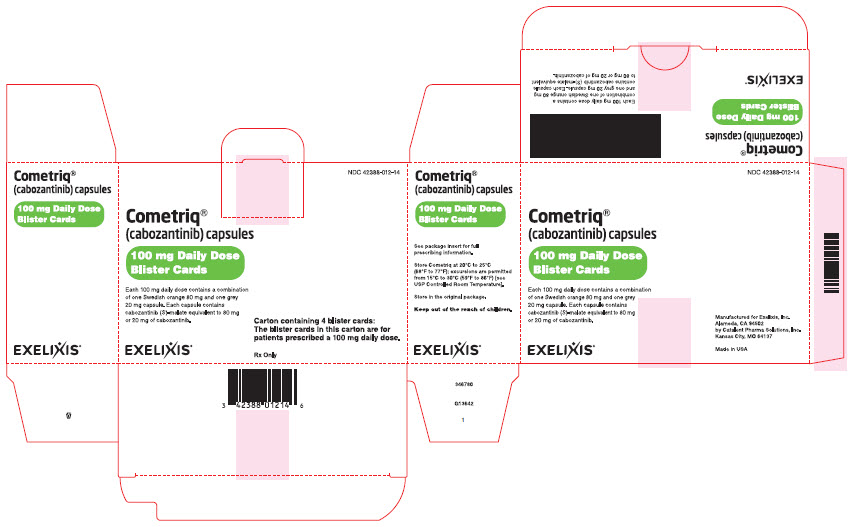
Brand names
COMETRIQCABOMETYX
Active ingredients
CABOZANTINIB S-MALATE
Indications
INDICATIONS AND USAGE CABOMETYX is a kinase inhibitor indicated for the treatment of patients with advanced renal cell carcinoma (RCC). ( 1.1 ) patients with advanced renal cell carcinoma, as a first-line treatment in combination with nivolumab ( 1.1 ) patients with hepatocellular carcinoma (HCC) who have been previously treated with sorafenib ( 1.2 ) adult and pediatric patients 12 years of age and older with locally advanced or metastatic differentiated thyroid cancer (DTC) that has progressed following prior VEGFR-targeted therapy and who are radioactive iodine-refractory or ineligible ( 1.3 ) adult and pediatric patients 12 years of age and older with previously treated, unresectable, locally advanced or metastatic, well-differentiated pancreatic neuroendocrine tumors (pNET). ( 1.4 ) adult and pediatric patients 12 years of age and older with previously treated, unresectable, locally advanced or metastatic, well-differentiated extra-pancreatic neuroendocrine tumors (epNET). ( 1.4 ) 1.1 Renal Cell Carcinoma CABOMETYX is indicated for the treatment of patients with advanced renal cell carcinoma (RCC). CABOMETYX, in combination with nivolumab, is indicated for the first-line treatment of patients with advanced RCC. 1.2 Hepatocellular Carcinoma CABOMETYX is indicated for the treatment of patients with hepatocellular carcinoma (HCC) who have been previously treated with sorafenib. 1.3 Differentiated Thyroid Cancer CABOMETYX is indicated for the treatment of adult and pediatric patients 12 years of age and older with locally advanced or metastatic differentiated thyroid cancer (DTC) that has progressed following prior VEGFR-targeted therapy and who are radioactive iodine-refractory or ineligible. 1.4 Neuroendocrine Tumors CABOMETYX is indicated for the treatment of adult and pediatric patients 12 years of age and older with previously treated, unresectable, locally advanced or metastatic, well-differentiated pancreatic neuroendocrine tumors (pNET). CABOMETYX is indicated for the treatment of adult and pediatric patients 12 years of age and older with previously treated, unresectable, locally advanced or metastatic, well-differentiated extra-pancreatic neuroendocrine tumors (epNET).
Dosage
DOSAGE AND ADMINISTRATION Do NOT substitute CABOMETYX tablets with cabozantinib capsules. ( 2.1 ) Administer on an empty stomach at least 1 hour before or at least 2 hours after eating. ( 2.2 ) Stop treatment with CABOMETYX at least 3 weeks prior to scheduled surgery, including dental surgery. ( 2.1 ) Recommended Dose: RCC (Single Agent): 60 mg orally, once daily. ( 2.2 ) RCC (Combination Therapy): 40 mg orally, once daily with: 240 mg nivolumab every 2 weeks by intravenous infusion; -OR- 480 mg nivolumab every 4 weeks by intravenous infusion; -OR- 600 mg nivolumab and 10,000 units hyaluronidase every 2 weeks administered subcutaneously; -OR- 1,200 mg nivolumab and 20,000 units hyaluronidase every 4 weeks administered subcutaneously. ( 2.2 ) HCC: 60 mg orally, once daily. ( 2.2 ) DTC, pNET, epNET Adult patients and pediatric patients 12 years of age and older with bodyweight greater than or equal to 40 kg: 60 mg orally once daily. ( 2.2 ) Pediatric patients 12 years of age and older with bodyweight less than 40 kg: 40 mg orally once daily. (2.2) 2.1 Important Dosage Information and Recommended Evaluation and Testing Before Initiating CABOMETYX Do not substitute CABOMETYX tablets with cabozantinib capsules. Stop treatment with CABOMETYX 3 weeks prior to scheduled surgery, including dental surgery to reduce the risk of hemorrhage. Do not administer CABOMETYX for at least 2 weeks after major surgery and until adequate wound healing [see Warnings and Precautions (5.1 , 5.11 , 5.12) ] . 2.2 Recommended Dosage Administer CABOMETYX on an empty stomach. Administer at least 1 hour before or at least 2 hours after eating [see Clinical Pharmacology (12.3) ] . Swallow CABOMETYX tablets whole. Do not crush, chew, or split CABOMETYX tablets. Do not take a missed dose within 12 hours of the next dose. Modify the CABOMETYX dose for patients taking drugs known to moderately or strongly induce CYP3A4 or strongly inhibit CYP3A4 and for patients with moderate hepatic impairment [see Dosage and Administration (2.4 , 2.5 , 2.6) ] . The recommended dosages of CABOMETYX are presented in Table 1. Table 1. Recommended Dosage for CABOMETYX Indication Recommended Dosage Duration Renal Cell Carcinoma Single Agent 60 mg orally once daily Until disease progression or unacceptable toxicity Combination Therapy 40 mg orally once daily in combination with: 240 mg nivolumab every 2 weeks (30- minute intravenous infusion); -OR- 480 mg nivolumab every 4 weeks (30- minute intravenous infusion); -OR- 600 mg nivolumab and 10,000 units hyaluronidase administered subcutaneously over approximately 3-5 minutes every 2 weeks; -OR- 1,200 mg nivolumab and 20,000 units hyaluronidase administered subcutaneously over approximately 3-5 minutes every 4 weeks CABOMETYX Until disease progression or unacceptable toxicity Nivolumab -OR- nivolumab and hyaluronidase Until disease progression or unacceptable toxicity for up to 2 years Hepatocellular Carcinoma 60 mg orally once daily Until disease progression or unacceptable toxicity Differentiated Thyroid Cancer and Neuroendocrine Tumors Adult Patients and Pediatric Patients 12 years of age and older with bodyweight greater than or equal to 40 kg: 60 mg orally once daily Pediatric patients 12 years of age and older with bodyweight less than 40 kg: 40 mg orally once daily Until disease progression or unacceptable toxicity 2.3 Dosage Modifications for Adverse Reactions Withhold CABOMETYX for: Intolerable Grade 2 adverse reactions Grade 3 or 4 adverse reactions Osteonecrosis of the jaw Upon resolution/improvement (i.e., return to baseline or resolution to Grade 1) of an adverse reaction, reduce the dose as follows: Table 2. Recommended Dosage Reductions for CABOMETYX for Adverse Reactions Recommended Dosage First Dosage Reduction To Second Dosage Reduction To CABOMETYX 60 mg daily in adult and pediatric patients 12 years of age and older with bodyweight greater than or equal to 40 kg 40 mg daily 20 mg daily If previously receiving lowest dose, resume at same dose. If lowest dose not tolerated, discontinue CABOMETYX. CABOMETYX 40 mg daily in pediatric patients 12 years of age and older with bodyweight less than 40 kg 20 mg daily 20 mg every other day CABOMETYX 40 mg daily in combination with nivolumab 20 mg daily 20 mg every other day Table 3. Recommended Dosage Modifications for CABOMETYX Adverse Reactions Adverse Reaction Severity Graded according to National Cancer Institute Common Terminology Criteria for Adverse Events (NCI CTCAE version 5.0) CABOMETYX Dosage Modification Hemorrhage [see Warnings and Precautions (5.1) ] Grade 3 or 4 Permanently discontinue CABOMETYX Perforations and Fistulas [see Warnings and Precautions (5.2) ] Any grade gastrointestinal perforation or Grade 4 fistula Permanently discontinue CABOMETYX Thromboembolic Events [see Warnings and Precautions (5.3) ] Any grade acute myocardial infarction or Grade 2 or higher cerebral infarction or Grade 3 or 4 arterial thromboembolic events or Grade 4 venous thromboembolic events Permanently discontinue CABOMETYX Hypertension and Hypertensive Crisis [see Warnings and Precautions (5.4) ] Grade 3 Withhold CABOMETYX until hypertension is adequately controlled to ≤Grade 2 Resume at reduced dose Permanently discontinue CABOMETYX for hypertension that cannot be controlled Grade 4 Permanently discontinue CABOMETYX Diarrhea [see Warnings and Precautions (5.6) ] Grade 2, Grade 3, or Grade 4 Withhold CABOMETYX until ≤Grade 1 Resume at reduced dose Palmar-Plantar Erythrodysesthesia [see Warnings and Precautions (5.7) ] Intolerable Grade 2 or Grade 3 Withhold CABOMETYX until ≤Grade 1 Resume at reduced dose Proteinuria [see Warnings and Precautions (5.10) ] Grade 2 or 3 Withhold CABOMETYX until improvement to ≤ Grade 1 proteinuria Resume at a reduced dose Permanently discontinue CABOMETYX for nephrotic syndrome Osteonecrosis of the jaw (ONJ) [see Warnings and Precautions (5.11) ] Any grade Withhold CABOMETYX for development of ONJ until complete resolution Resume at reduced dose Reversible Posterior Leukoencephalopathy Syndrome [see Warnings and Precautions (5.13) ] Any grade Permanently discontinue CABOMETYX Other Adverse Reactions [see Adverse Reactions (6.1) ] Intolerable Grade 2, or Grade 3, or Grade 4 Withhold CABOMETYX until improvement to baseline or ≤Grade 1 Resume at reduced dose or permanently discontinue depending on severity The following table represents dosage modifications for the drug administered in combination that are different from those described above for CABOMETYX or in the Full Prescribing Information: Table 4. Recommended Specific Dosage Modifications for Hepatic Adverse Reactions for Combination CABOMETYX in combination with nivolumab ALT or AST >3 times ULN but ≤10 times ULN with concurrent total bilirubin <2 times ULN Withhold Consider corticosteroid therapy for hepatic adverse reactions if CABOMETYX is withheld or discontinued when administered in combination with nivolumab both CABOMETYX and nivolumab until adverse reactions recover After recovery, rechallenge with one or both of CABOMETYX and nivolumab may be considered. If rechallenging with nivolumab with or without CABOMETYX, refer to nivolumab Prescribing Information. to Grades 0 or 1 ALT or AST >10 times ULN or >3 times ULN with concurrent total bilirubin ≥2 times ULN Permanently discontinue both CABOMETYX and nivolumab When administering CABOMETYX in combination with nivolumab for the treatment of advanced RCC, refer to the nivolumab prescribing information. 2.4 Dosage Modifications for Coadministration with Strong CYP3A4 Inhibitors Reduce the daily CABOMETYX dose by 20 mg (for example, from 60 mg to 40 mg daily or from 40 mg to 20 mg daily or from 20 mg daily to 20 mg every other day in pediatric patients 12 years of age and older with bodyweight less than 40 kg). Resume the dose that was used prior to initiating the strong CYP3A4 inhibitor 2 to 3 days after discontinuation of the strong inhibitor [see Drug Interactions
Warnings
WARNINGS AND PRECAUTIONS Perforations and Fistulas: Monitor for symptoms. Discontinue COMETRIQ for Grade 4 fistula or perforation. ( 5.1 ) Hemorrhage: Do not administer COMETRIQ if recent history of hemorrhage. ( 5.2 ) Thrombotic Events: Discontinue COMETRIQ for myocardial infarction or serious arterial or venous thromboembolic events. ( 5.3 ) Impaired Wound Healing: Withhold COMETRIQ for at least 3 weeks before elective surgery. Do not administer for at least 2 weeks following major surgery and until adequate wound healing. The safety of resumption of COMETRIQ after resolution of wound healing complications has not been established. ( 5.4 ) Hypertension and hypertensive crisis: Monitor blood pressure regularly. Interrupt for hypertension that is not adequately controlled with anti- hypertensive therapy. Discontinue COMETRIQ for hypertensive crisis or severe hypertension that cannot be controlled with anti-hypertensive therapy. ( 5.5 ) Cardiac Failure: Monitor patients for signs and symptoms of cardiac failure throughout treatment. ( 5.6 ) Osteonecrosis of the Jaw (ONJ): Withhold COMETRIQ for at least 3 weeks prior to invasive dental procedure and for development of ONJ. ( 5.7 ) Diarrhea: May be severe. Interrupt COMETRIQ immediately until diarrhea resolves or decreases to Grade 1. Recommend standard antidiarrheal treatments. ( 5.8 ) Palmar-Plantar Erythrodysesthesia (PPE): Interrupt COMETRIQ until PPE resolves or decreases to Grade 1. ( 5.9 ) Proteinuria: Monitor urine protein. Discontinue for nephrotic syndrome. ( 5.10 ) Reversible Posterior Leukoencephalopathy Syndrome (RPLS): Discontinue COMETRIQ. ( 5.11 ) Embryo-Fetal Toxicity: Can cause fetal harm. Advise females of reproductive potential of the potential risk to a fetus and to use effective contraception. ( 5.12 , 8.1 , 8.3 ) Hypocalcemia: Monitor blood calcium levels and replace calcium as necessary during treatment. Withhold COMETRIQ and resume at reduced dose upon recovery or permanently discontinue COMETRIQ depending on severity. ( 5.13 ) 5.1 Perforations and Fistulas Gastrointestinal (GI) perforations and fistulas, including fatal cases, were reported in 3% and 1% of COMETRIQ-treated patients (N=214), respectively. Non-GI fistulas including tracheal/esophageal, including fatal cases, were reported in 4% of COMETRIQ-treated patients. Monitor patients for symptoms of perforations and fistulas, including abscess and sepsis. Discontinue COMETRIQ in patients who experience a Grade 4 fistula or a GI perforation [see Dosage and Administration (2.2) ] . 5.2 Hemorrhage Severe and fatal hemorrhage occurred with COMETRIQ. The incidence of Grade ≥ 3 hemorrhagic events was higher in COMETRIQ-treated patients compared with placebo (3% vs. 1%). Discontinue COMETRIQ for Grade 3 or 4 hemorrhage [see Dosage and Administration (2.2) ] . Do not administer COMETRIQ to patients with a recent history of hemorrhage, including hemoptysis, hematemesis, or melena. 5.3 Thromboembolic Events COMETRIQ increased the incidence of thrombotic events (venous thromboembolism: 6% vs. 3% and arterial thromboembolism: 2% vs. 0% in COMETRIQ-treated and placebo-treated patients, respectively). Discontinue COMETRIQ in patients who develop an acute myocardial infarction or arterial or venous thromboembolic events that require medical intervention [see Dosage and Administration (2.2) ] . 5.4 Impaired Wound Healing Wound complications have been reported with COMETRIQ. Withhold COMETRIQ for at least 3 weeks prior to elective surgery. Do not administer COMETRIQ for at least 2 weeks after major surgery and until adequate wound healing. The safety of resumption of COMETRIQ after resolution of wound healing complications has not been established. 5.5 Hypertension and Hypertensive Crisis COMETRIQ can cause hypertension, including hypertensive crisis. Joint National Committee on Prevention, Detection, Evaluation, and Treatment of High Blood Pressure (modified JNC criteria) stage 1 or 2 hypertension was identified in 61% in COMETRIQ-treated patients compared with 30% of placebo-treated patients in the randomized trial [see Adverse Reactions (6.1) ] . Do not initiate COMETRIQ in patients with uncontrolled hypertension. Monitor blood pressure regularly during COMETRIQ treatment. Withhold COMETRIQ for hypertension that is not adequately controlled with medical management; when controlled, resume COMETRIQ at a reduced dose. Discontinue COMETRIQ for severe hypertension that cannot be controlled with anti-hypertensive therapy and for hypertensive crisis [see Dosage and Administration (2.2) ] . 5.6 Cardiac Failure COMETRIQ can cause severe and fatal cardiac failure [see Adverse Reactions (6.1) ] . Cardiac failure occurred in 0.9% of patients treated with COMETRIQ as a single agent. Median time to onset of cardiac failure was 76 days (range: 60 days to 92 days). Consider baseline and periodic evaluations of left ventricular ejection fraction. Monitor for signs and symptoms of cardiovascular events. Withhold and resume at a reduced dose upon recovery or permanently discontinue COMETRIQ depending on the severity [see Dosage and Administration (2.2) ] . 5.7 Osteonecrosis of the Jaw Osteonecrosis of the jaw (ONJ) occurred in 1% of COMETRIQ-treated patients. ONJ can manifest as jaw pain, osteomyelitis, osteitis, bone erosion, tooth or periodontal infection, toothache, gingival ulceration or erosion, persistent jaw pain or slow healing of the mouth or jaw after dental surgery. Perform an oral examination prior to initiation of COMETRIQ and periodically during COMETRIQ therapy. Advise patients regarding good oral hygiene practices. Withhold COMETRIQ treatment for at least 3 weeks prior to scheduled dental surgery, or invasive dental procedures, if possible. Withhold COMETRIQ for development of ONJ until complete resolution [see Dosage and Administration (2.2) ] . 5.8 Diarrhea Diarrhea occurred in 63% of patients treated with COMETRIQ. Grade 3-4 diarrhea occurred in 16% of patients treated with COMETRIQ [see Adverse Reactions (6.1) ] . Withhold COMETRIQ until improvement to Grade 1 and resume COMETRIQ at a reduced dose for intolerable Grade 2 diarrhea, Grade 3 diarrhea that cannot be managed with standard antidiarrheal treatments, or Grade 4 diarrhea. 5.9 Palmar-Plantar Erythrodysesthesia Palmar-plantar erythrodysesthesia (PPE) occurred in 50% of patients treated with COMETRIQ, including 13% Grade 3 [see Adverse Reactions (6.1) ] . Withhold COMETRIQ until improvement to Grade 1 and resume COMETRIQ at a reduced dose for intolerable Grade 2 PPE or Grade 3 PPE. 5.10 Proteinuria Proteinuria was observed in 2% of patients receiving COMETRIQ, including one with nephrotic syndrome. Monitor urine protein regularly during COMETRIQ treatment. Discontinue COMETRIQ in patients who develop nephrotic syndrome. 5.11 Reversible Posterior Leukoencephalopathy Syndrome Reversible Posterior Leukoencephalopathy Syndrome (RPLS), a syndrome of subcortical vasogenic edema diagnosed by characteristic finding on MRI, occurred in one (<1%) patient. Perform an evaluation for RPLS in any patient presenting with seizures, headache, visual disturbances, confusion or altered mental function. Discontinue COMETRIQ in patients who develop RPLS [see Dosage and Administration (2.2) ] . 5.12 Embryo-Fetal Toxicity Based on data from animal studies and its mechanism of action, COMETRIQ can cause fetal harm when administered to a pregnant woman. Cabozantinib administration to pregnant animals during organogenesis resulted in embryolethality at exposures below those occurring clinically at the recommended dose, and in increased incidences of skeletal variations in rats and visceral variations and malformations in rabbits. Advise pregnant women of the potential risk to a fetus. Advise females of reproductive potential to use effective contraception during treatment with COMETRIQ and for 4 months after the last dose [see Use in Specific Populations ( 8.1 ), ( 8.3 ), and Clinical Pharmacology ( 12.
Contraindications
CONTRAINDICATIONS None None. ( 4 )
Drug interactions
DRUG INTERACTIONS Strong CYP3A4 Inhibitors: Reduce the COMETRIQ dosage. ( 2.2 , 7.1 ) Strong CYP3A4 Inducers: Increase the COMETRIQ dosage. ( 2.2 , 7.2 ) 7.1 Effect of CYP3A4 Inhibitors Administration of a strong CYP3A4 inhibitor, ketoconazole to healthy subjects increased single-dose plasma cabozantinib exposure by 38%. Avoid taking a strong CYP3A4 inhibitor (e.g., ketoconazole, itraconazole, clarithromycin, atazanavir, indinavir, nefazodone, nelfinavir, ritonavir, saquinavir, telithromycin, voriconazole) while taking COMETRIQ or reduce the dosage of COMETRIQ if concomitant use with strong CYP3A4 inhibitors cannot be avoided [see Dosage and Administration ( 2.2 ), Clinical Pharmacology ( 12.3 )] . Avoid ingestion of foods (e.g., grapefruit, grapefruit juice) or nutritional supplements that are known to inhibit cytochrome P450 while taking COMETRIQ. 7.2 Effect of CYP3A4 Inducers Administration of a strong CYP3A4 inducer, rifampin to healthy subjects decreased single-dose plasma cabozantinib exposure by 77%. Avoid chronic co-administration of strong CYP3A4 inducers (e.g., phenytoin, carbamazepine, rifampin, rifabutin, rifapentine, phenobarbital, St. John’s Wort) with COMETRIQ or increase the dosage of COMETRIQ if concomitant use with strong CYP3A4 inducers cannot be avoided [see Dosage and Administration ( 2.2 ), Clinical Pharmacology ( 12.3 )]. 7.3 Effect of MRP2 Inhibitors Concomitant administration of MRP2 inhibitors may increase the exposure to cabozantinib. Monitor patients for increased toxicity when MRP2 inhibitors (e.g., abacavir, adefovir, cidofovir, furosemide, lamivudine, nevirapine, ritonavir, probenecid, saquinavir, and tenofovir) are co-administered with COMETRIQ [see Clinical Pharmacology ( 12.3 )] .
Adverse reactions
ADVERSE REACTIONS The following clinically significant adverse reactions are discussed elsewhere in the labeling: Perforations and Fistula [see Warnings and Precautions (5.1) ] Hemorrhage [see Warnings and Precautions (5.2) ] Thromboembolic Events [see Warnings and Precautions (5.3) ] Impaired Wound Healing [see Warnings and Precautions (5.4) ] Hypertension and Hypertensive Crisis [see Warnings and Precautions (5.5) ] Cardiac Failure [see Warnings and Precautions (5.6) ] Osteonecrosis of the Jaw [see Warnings and Precautions (5.7) ] Diarrhea [see Warnings and Precautions (5.8) ] Palmar-Plantar Erythrodysesthesia [see Warnings and Precautions (5.9) ] Proteinuria [see Warnings and Precautions (5.10) ] Reversible Posterior Leukoencephalopathy Syndrome [see Warnings and Precautions (5.11) ] Hypocalcemia [see Warnings and Precautions (5.13) ] The most common adverse reactions (≥ 25%) are diarrhea, stomatitis, palmar-plantar erythrodysesthesia (PPE), decreased weight, decreased appetite, nausea, fatigue, oral pain, hair color changes, dysgeusia, hypertension, abdominal pain, and constipation. The most common laboratory abnormalities (≥ 25%) are increased AST, increased ALT, lymphopenia, increased alkaline phosphatase, hypocalcemia, neutropenia, thrombocytopenia, hypophosphatemia, and hyperbilirubinemia. ( 6.1 ) To report SUSPECTED ADVERSE REACTIONS, contact Exelixis, Inc. at 1-855-500-3935 or FDA at 1-800-FDA-1088 or www.fda.gov/medwatch. 6.1 Clinical Trial Experience Because clinical trials are conducted under widely varying conditions, adverse reaction rates observed in the clinical trials of a drug cannot be directly compared to rates in the clinical trials of another drug and may not reflect the rates observed in practice. The safety of COMETRIQ was evaluated in 330 patients with progressive metastatic medullary thyroid cancer randomized to receive 140 mg COMETRIQ (n = 214) or placebo (n = 109) administered daily until disease progression or intolerable toxicity in a randomized, doubleblind, controlled trial (Study 1) [see Clinical Studies ( 14 )] . The data described below reflect a median exposure to COMETRIQ for 204 days. The population exposed to COMETRIQ was 70% male, 90% white, and had a median age of 55 years. Fatal adverse reactions occurred in 6% of patients receiving COMETRIQ and resulted from hemorrhage, pneumonia, septicemia, fistulas, cardiac arrest, respiratory failure, and unspecified death. Fatal adverse reactions occurred in 5% of patients receiving placebo and resulted from septicemia, pneumonia, and general deterioration. The COMETRIQ dose was reduced in 79% of patients receiving COMETRIQ and in 9% of patients receiving placebo. The median number of dosing delays was one in patients receiving COMETRIQ and in no patients receiving placebo. Adverse reactions led to study treatment discontinuation in 16% of patients receiving COMETRIQ. The most frequent adverse reactions leading to permanent discontinuation of COMETRIQ were: hypocalcemia, increased lipase, PPE, diarrhea, fatigue, hypertension, nausea, pancreatitis, tracheal fistula formation and vomiting. Increased levels of thyroid stimulating hormone (TSH) were observed in 57% of patients receiving COMETRIQ after the first dose compared to 19% of patients receiving placebo (regardless of baseline value). Ninety-two percent (92%) of patients on the COMETRIQ arm had a prior thyroidectomy, and 89% were taking thyroid hormone replacement prior to the first dose. Adverse reactions which occurred in ≥ 25% of COMETRIQ-treated patients occurring more frequently in the COMETRIQ arm with a between-arm difference of ≥ 5% included, in order of decreasing frequency: diarrhea, stomatitis, palmar-plantar erythrodysesthesia (PPE), decreased weight, decreased appetite, nausea, fatigue, oral pain, hair color changes, dysgeusia, hypertension, abdominal pain, and constipation. The most common laboratory abnormalities (≥25%) were increased AST, increased ALT, lymphopenia, increased ALP, hypocalcemia, neutropenia, thrombocytopenia, hypophosphatemia, and hyperbilirubinemia. Grade 3-4 adverse reactions and laboratory abnormalities which occurred in ≥ 5% of COMETRIQ-treated patients occurring more frequently in the COMETRIQ arm with a between-arm difference of ≥ 2% included, in order of decreasing frequency; diarrhea, PPES, lymphopenia, hypocalcemia, fatigue, hypertension, asthenia, increased ALT, decreased weight, stomatitis, and decreased appetite ( Table 1 and Table 2 summarize the adverse reactions and laboratory abnormalities reported in Study 1). Table 1. Selected Adverse Reactions Occurring at a Higher Incidence in COMETRIQ-Treated Patients (Study 1) [Between Arm Difference of ≥ 5% (All Grades) National Cancer Institute Common Terminology Criteria for Adverse Events Version 3.0 or ≥ 2% (Grades 3-4)] System Organ Class/Preferred Terms COMETRIQ (n=214) Placebo (n=109) All Grades (%) Grades 3-4 (%) All Grades (%) Grades 3-4 (%) GASTROINTESTINAL DISORDERS Diarrhea 63 16 33 2 Stomatitis Includes the following terms: stomatitis, aphthous stomatitis, mouth ulceration, mucosal inflammation 51 5 6 0 Nausea 43 1 21 0 Oral pain Includes the following terms: oral pain, oropharyngeal pain, glossitis, burning mouth syndrome, glossodynia 36 2 6 0 Constipation 27 0 6 0 Abdominal pain Includes the following terms: abdominal pain, abdominal pain lower, abdominal pain upper, abdominal rigidity, abdominal tenderness, esophageal pain 27 3 13 1 Vomiting 24 2 2 1 Dysphagia 13 4 6 1 Dyspepsia 11 0 0 0 Hemorrhoids 9 0 3 0 SKIN AND SUBCUTANEOUS TISSUE DISORDERS PPE Palmar-plantar erythrodysesthesia 50 13 2 0 Hair color changes/ depigmentation, graying 34 0 1 0 Rash 19 1 10 0 Dry skin 19 0 3 0 Alopecia 16 0 2 0 Erythema 11 1 2 0 Hyperkeratosis 7 0 0 0 INVESTIGATIONS Decreased weight 48 5 10 0 METABOLISM AND NUTRITION DISORDERS Decreased appetite 46 5 16 1 Dehydration 7 2 2 1 GENERAL DISORDERS AND ADMINISTRATION SITE CONDITIONS Fatigue 41 9 28 3 Asthenia 21 6 15 1 NERVOUS SYSTEM DISORDERS Dysgeusia 34 0 6 0 Headache 18 0 8 0 Dizziness 14 0 7 0 Paresthesia 7 0 2 0 Peripheral sensory neuropathy 7 0 0 0 Peripheral neuropathy 5 0 0 0 VASCULAR DISORDERS Hypertension 33 8 4 0 Hypotension 7 1 0 0 RESPIRATORY, THORACIC AND MEDIASTINAL DISORDERS Dysphonia 20 0 9 0 MUSCULOSKELETAL AND CONNECTIVE TISSUE DISORDERS Arthralgia 14 1 7 0 Muscle spasms 12 0 5 0 Musculoskeletal chest pain 9 1 4 0 PSYCHIATRIC DISORDERS Anxiety 9 0 2 0 Table 2 Laboratory Abnormalities Occurring at a Higher Incidence in COMETRIQ-Treated Patients (Study 1) [Between Arm Difference of ≥ 5% (All Grades) or ≥ 2% (Grades 3-4)] Test COMETRIQ (n=214) Placebo (N=109) All Grades (%) Grade 3-4 (%) All Grades (%) Grade 3-4 (%) Chemistries Increased AST 86 3 35 2 Increased ALT 86 6 41 2 Increased ALP 52 3 35 3 Hypocalcemia 52 12 27 3 Hypoalbuminemia 43 2 16 0 Hypophosphatemia 28 3 10 1 Hyperbilirubinemia 25 2 14 5 Hypomagnesemia 19 1 4 0 Hypokalemia 18 4 9 3 Hyponatremia 10 2 5 0 Hematologic Lymphopenia 53 16 51 11 Neutropenia 35 3 15 2 Thrombocytopenia 35 0 4 3 ALT, alanine aminotransferase; ALP, alkaline phosphatase; AST, aspartate aminotransferase Nearly all COMETRIQ-treated patients (96% vs. 84% placebo) experienced elevated blood pressure and there was a doubling in the incidence of overt hypertension in COMETRIQ-treated patients over placebo-treated patients (61% vs. 30%) according to modified Joint National Committee on Prevention, Detection, Evaluation, and Treatment of High Blood Pressure (JNC) staging criteria. No patients developed malignant hypertension. Table 3 Per-Patient Incidence of Hypertension (Study 1) Hypertension, JNC Joint National Committee on Prevention, Detection, Evaluation, and Treatment of High Blood Pressure, JAMA 2003: 289:2560. Criteria applied were modified, as multiple readings were not available per timepoint, and therefore not averaged. Stage Patients classified by highest category based on all recorded blood pressure readings beginning after
Mechanism of action
Mechanism of Action In vitro biochemical and/or cellular assays have shown that cabozantinib inhibits the tyrosine kinase activity of RET, MET, VEGFR-1, -2 and -3, KIT, TRKB, FLT-3, AXL, ROS1, TYRO3, MER, and TIE-2. These receptor tyrosine kinases are involved in both normal cellular function and pathologic processes such as oncogenesis, metastasis, tumor angiogenesis, drug resistance, and maintenance of the tumor microenvironment.
Available forms (10)
cabozantinib 20 MG Oral Capsulecabozantinib 20 MG Oral Tabletcabozantinib 40 MG Oral Tabletcabozantinib 60 MG Oral Tabletcabozantinib 80 MG Oral Capsulecabozantinib 20 MG Oral Capsule [Cometriq]brandcabozantinib 20 MG Oral Tablet [Cabometyx]brandcabozantinib 40 MG Oral Tablet [Cabometyx]brandcabozantinib 60 MG Oral Tablet [Cabometyx]brandcabozantinib 80 MG Oral Capsule [Cometriq]brand
NDC examples
42388-01142388-01242388-01342388-02342388-02542388-024
Treats these conditions
Source: openFDA + RxNorm · 2026
Look up another medication