Brinzolamide
Managing this medication for someone you care for? Eleplan keeps diagnoses, medications and appointments in one plan.
Start free with EleplanMedication reference
Brinzolamide
Carbonic Anhydrase Inhibitor [EPC] — OPHTHALMIC
Brinzolamide — Carbonic Anhydrase Inhibitor [EPC]. INDICATIONS AND USAGE Brinzolamide ophthalmic suspension is a carbonic anhydrase inhibitor indicated in the treatment of elevated intraocular…
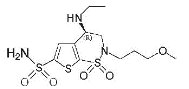
Brand names
AzoptBRINZOLAMIDE
Active ingredients
BRINZOLAMIDE
Indications
INDICATIONS AND USAGE Brinzolamide ophthalmic suspension is a carbonic anhydrase inhibitor indicated in the treatment of elevated intraocular pressure (IOP) in patients with ocular hypertension or open-angle glaucoma. Brinzolamide ophthalmic suspension is a carbonic anhydrase inhibitor indicated for the treatment of elevated intraocular pressure (IOP) in patients with ocular hypertension or open-angle glaucoma. ( 1 )
Dosage
DOSAGE AND ADMINISTRATION The recommended dose is one drop of brinzolamide ophthalmic suspension in the affected eye(s) 3 times daily. Shake well before use. Brinzolamide ophthalmic suspension may be used concomitantly with other topical ophthalmic drug products to lower IOP. If more than one topical ophthalmic drug is being used, the drugs should be administered at least 10 minutes apart. • Instill one drop in the affected eye(s) 3 times daily. ( 2 ) • If more than one topical ophthalmic drug is being used, the drugs should be administered at least 10 minutes apart. ( 2 )
Warnings
WARNINGS AND PRECAUTIONS • Sulfonamide hypersensitivity reactions. ( 5.1 ) • Corneal edema may occur in patients with low endothelial cell counts. ( 5.2 ) 5.1 Sulfonamide Hypersensitivity Reactions Brinzolamide ophthalmic suspension is a sulfonamide and although administered topically, it is absorbed systemically. Therefore, the same types of adverse reactions that are attributable to sulfonamides may occur with topical administration of brinzolamide ophthalmic suspension. Fatalities have occurred, although rarely, due to severe reactions to sulfonamides, including Stevens-Johnson syndrome, toxic epidermal necrolysis, fulminant hepatic necrosis, agranulocytosis, aplastic anemia, and other blood dyscrasias. Sensitization may recur when a sulfonamide is readministered irrespective of the route of administration. If signs of serious reactions or hypersensitivity occur, discontinue the use of this preparation immediately. 5.2 Corneal Endothelium Carbonic anhydrase activity has been observed in both the cytoplasm and around the plasma membranes of the corneal endothelium. There is an increased potential for developing corneal edema in patients with low endothelial cell counts. Caution should be used when prescribing brinzolamide ophthalmic suspension to this group of patients. 5.3 Severe Renal Impairment Brinzolamide ophthalmic suspension has not been studied in patients with severe renal impairment [creatinine clearance (CrCl) less than 30 mL/min]. Because brinzolamide ophthalmic suspension and its metabolite are excreted predominantly by the kidney, Brinzolamide ophthalmic suspension is not recommended in such patients. 5.4 Acute Angle-Closure Glaucoma The management of patients with acute angle-closure glaucoma requires therapeutic interventions in addition to ocular hypotensive agents. Brinzolamide ophthalmic suspension has not been studied in patients with acute angle-closure glaucoma. 5.5 Risk of Contamination Avoid allowing the tip of the dispensing container to contact the eye or surrounding structures or other surfaces, since the product can become contaminated by common bacteria known to cause ocular infections. Serious damage to the eye and subsequent loss of vision may result from using contaminated solutions. 5.6 Contact Lens Wear The preservative in brinzolamide ophthalmic suspension, benzalkonium chloride, may be absorbed by soft contact lenses. Contact lenses should be removed during instillation of brinzolamide ophthalmic suspension, but may be reinserted 15 minutes after instillation.
Contraindications
CONTRAINDICATIONS Brinzolamide ophthalmic suspension is contraindicated in patients who are hypersensitive to any component of this product. Hypersensitivity to any component of this product. ( 4 )
Drug interactions
DRUG INTERACTIONS • There is a potential additive effect of the known systemic effects of carbonic anhydrase inhibition in patients receiving both oral and topical carbonic anhydrase inhibitors. ( 7.1 ) • Rare instances of acid-base alterations have occurred with high-dose salicylate therapy. ( 7.2 ) 7.1 Oral Carbonic Anhydrase Inhibitors There is a potential for an additive effect on the known systemic effects of carbonic anhydrase inhibition in patients receiving an oral carbonic anhydrase inhibitor and brinzolamide ophthalmic suspension. The concomitant administration of brinzolamide ophthalmic suspension and oral carbonic anhydrase inhibitors is not recommended. 7.2 High-Dose Salicylate Therapy Carbonic anhydrase inhibitors may produce acid-base and electrolyte alterations. These alterations were not reported in the clinical trials with brinzolamide. However, in patients treated with oral carbonic anhydrase inhibitors, rare instances of acid-base alterations have occurred with high-dose salicylate therapy. Therefore, the potential for such drug interactions should be considered in patients receiving brinzolamide ophthalmic suspension.
Adverse reactions
ADVERSE REACTIONS Most common adverse reactions (incidence 5% to 10%) are blurred vision and bitter, sour, or unusual taste. ( 6.1 ) To report SUSPECTED ADVERSE REACTIONS, contact Bausch & Lomb Incorporated at 1-800-553-5340 or FDA at 1-800-FDA-1088 or www.fda.gov/medwatch. 6.1 Clinical Trials Experience Because clinical trials are conducted under widely varying conditions, adverse reaction rates observed in the clinical trials of a drug cannot be directly compared to the rates in the clinical trials of another drug and may not reflect the rates observed in practice. In clinical studies of brinzolamide ophthalmic suspension, the most frequently reported adverse reactions reported in 5% to 10% of patients were blurred vision and bitter, sour, or unusual taste. Adverse reactions occurring in 1% to 5% of patients were blepharitis, dermatitis, dry eye, foreign body sensation, headache, hyperemia, ocular discharge, ocular discomfort, ocular keratitis, ocular pain, ocular pruritus, and rhinitis. The following adverse reactions were reported at an incidence below 1%: allergic reactions, alopecia, chest pain, conjunctivitis, diarrhea, diplopia, dizziness, dry mouth, dyspnea, dyspepsia, eye fatigue, hypertonia, keratoconjunctivitis, keratopathy, kidney pain, lid margin crusting or sticky sensation, nausea, pharyngitis, tearing, and urticaria. 6.2 Postmarketing Experience The following adverse reactions have been identified during postapproval use of brinzolamide containing products. Because these reactions are reported voluntarily from a population of uncertain size, it is not always possible to reliably estimate their frequency or establish a causal relationship to drug exposure. Serious skin and subcutaneous tissue reactions such as Stevens-Johnson syndrome (SJS) and Toxic epidermal necrolysis (TEN) may occur with the use of brinzolamide due to its sulfonamide component [see Warnings and Precautions (5.1) ] .
Mechanism of action
Mechanism of Action Carbonic anhydrase is an enzyme found in many tissues of the body, including the eye. It catalyzes the reversible reaction involving the hydration of carbon dioxide and the dehydration of carbonic acid. In humans, carbonic anhydrase exists as a number of isoenzymes, the most active being carbonic anhydrase II, found primarily in red blood cells (RBCs), but also in other tissues. Inhibition of carbonic anhydrase in the ciliary processes of the eye decreases aqueous humor secretion, presumably by slowing the formation of bicarbonate ions with subsequent reduction in sodium and fluid transport. The result is a reduction in IOP. Brinzolamide ophthalmic suspension contains brinzolamide, an inhibitor of carbonic anhydrase II. Following topical ocular administration, brinzolamide inhibits aqueous humor formation and reduces elevated IOP. Elevated IOP is a major risk factor in the pathogenesis of optic nerve damage and glaucomatous visual field loss.
Available forms (2)
NDC examples
66758-08524208-46472162-2201
Indicated ICD-10 codes
Treats these conditions
Source: openFDA + RxNorm · 2026
Look up another medication