Bosutinib
Managing this medication for someone you care for? Eleplan keeps diagnoses, medications and appointments in one plan.
Start free with EleplanMedication reference
Bosutinib
Kinase Inhibitor [EPC] — ORAL
Bosutinib — Kinase Inhibitor [EPC]. INDICATIONS AND USAGE Bosutinib tablets are indicated for the treatment of: • Adult patients with chronic phase (CP) Philadelphia…
Brand names
BosutinibBOSULIF
Active ingredients
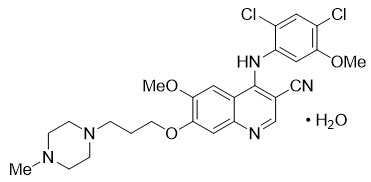
BOSUTINIBBOSUTINIB MONOHYDRATE
Indications
INDICATIONS AND USAGE Bosutinib tablets are indicated for the treatment of: • Adult patients with chronic phase (CP) Philadelphia chromosome-positive chronic myelogenous leukemia (Ph+ CML), resistant or intolerant to prior therapy [see Clinical Studies (14.2)]. • Adult patients with accelerated phase (AP), or blast phase (BP) Ph+ CML with resistance or intolerance to prior therapy [see Clinical Studies (14.2)] . Pediatric use information is approved for PF PRISM CV’s BOSULIF® (bosutinib) tablets. However, due to PF PRISM CV’s marketing exclusivity rights, this drug product is not labeled with that information. Bosutinib is a kinase inhibitor indicated for the treatment of: • adult patients with chronic phase Ph+ chronic myelogenous leukemia (CML), resistant or intolerant to prior therapy. ( 1 ) • adult patients with accelerated, or blast phase Ph+ CML with resistance or intolerance to prior therapy. ( 1 )
Dosage
DOSAGE AND ADMINISTRATION • Adult patients with newly-diagnosed chronic phase Ph+ CML: 400 mg orally once daily with food. ( 2.1 ) • Adult patients with chronic, accelerated, or blast phase Ph+ CML with resistance or intolerance to prior therapy: 500 mg orally once daily with food. ( 2.1 ) • Pediatric patients with newly-diagnosed chronic phase Ph+ CML: 300 mg/m 2 orally once daily with food. ( 2.1 ) • Pediatric patients with chronic phase Ph+ CML with resistance or intolerance to prior therapy: 400 mg/m 2 orally once daily with food. ( 2.1 ) • Consider dose escalation by increments of 100 mg once daily to a maximum of 600 mg daily in adult patients who do not reach complete hematologic, cytogenetic, or molecular response and do not have Grade 3 or greater adverse reactions. ( 2.2 ) • Consider dose escalation by increments of 50 mg for those with a BSA <1.1 m 2 and 100 mg for those with a BSA ≥1.1 m 2 to a maximum of 600 mg daily in pediatric patients who do not reach sufficient response after 3 months. ( 2.2 ) • Adjust dosage for toxicity and organ impairment ( 2 ) 2.1 Recommended Dosage The recommended dosage is taken orally once daily with food. Swallow tablets whole. Do not cut, crush, break or chew tablets. Continue treatment with BOSULIF until disease progression or intolerance to therapy. Capsules may be swallowed whole. For patients who are unable to swallow a whole capsule(s), each capsule can be opened and the contents mixed with applesauce or yogurt. Mixing the capsule contents with applesauce or yogurt cannot be considered a substitute of a proper meal. If a dose is missed beyond 12 hours, the patient should skip the dose and take the usual prescribed dose on the following day. Dosage in Adult Patients with Newly-Diagnosed CP Ph+ CML The recommended dosage of BOSULIF is 400 mg orally once daily with food. Dosage in Adult Patients with CP, AP, or BP Ph+ CML with Resistance or Intolerance to Prior Therapy The recommended dosage of BOSULIF is 500 mg orally once daily with food. Dosage in Pediatric Patients with Newly-Diagnosed CP Ph+ CML or with CP Ph+ CML with Resistance or Intolerance to Prior Therapy The recommended dose of BOSULIF for pediatric patients with newly-diagnosed CP Ph+ CML is 300 mg/m 2 orally once daily with food and the recommended dosage for pediatric patients with CP Ph+ CML that is resistant or intolerant to prior therapy is 400 mg/m 2 orally once daily with food and dose recommendations are provided in Table 1. As appropriate, the desired dose can be attained by combining different strengths of BOSULIF tablets or capsules. Table 1: Dosing of BOSULIF for Pediatric Patients with Newly-Diagnosed CP Ph+ CML or with CP Ph+ CML with Resistance or Intolerance to Prior Therapy BSA BSA=Body Surface Area Newly-Diagnosed Recommended Dose (Once Daily) Resistant or Intolerant Recommended Dose (Once Daily) < 0.55 m 2 150 mg 200 mg 0.55 to < 0.63 m 2 200 mg 250 mg 0.63 to < 0.75 m 2 200 mg 300 mg 0.75 to < 0.9 m 2 250 mg 350 mg 0.9 to < 1.1 m 2 300 mg 400 mg ≥ 1.1 m 2 400 mg maximum starting dose (corresponding to maximum starting dose in adult indication) 500 mg Preparation Instructions for BOSULIF Capsules Mixed with Applesauce or Yogurt For patients who are unable to swallow capsules, the contents of the capsules can be mixed with applesauce or yogurt. Remove the required number of capsules from the container to prepare the dose as instructed and the amount of either room temperature applesauce or yogurt in a clean container. Carefully open each capsule, add the entire capsule content of each capsule into the applesauce or yogurt, then mix the entire dose into the applesauce or yogurt. Patients should immediately consume the full mixture in its entirety, without chewing. Do not store the mixture for later use. If the entire preparation is not swallowed do not take an additional dose. Wait until the next day to resume dosing. Table 2: BOSULIF Dose Using Capsules and Soft Food Volumes Dose Volume of Applesauce or Yogurt 100 mg 10 mL (2 teaspoons) 150 mg 15 mL (3 teaspoons) 200 mg 20 mL (4 teaspoons) 250 mg 25 mL (5 teaspoons) 300 mg 30 mL (6 teaspoons) 350 mg 30 mL (6 teaspoons) 400 mg 35 mL (7 teaspoons) 450 mg 40 mL (8 teaspoons) 500 mg 45 mL (9 teaspoons) 550 mg 45 mL (9 teaspoons) 600 mg 50 mL (10 teaspoons) 2.2 Dose Escalation In clinical studies of adult patients with Ph+ CML, dose escalation by increments of 100 mg once daily to a maximum of 600 mg once daily was allowed in patients who did not achieve or maintain a hematologic, cytogenetic, or molecular response and who did not have Grade 3 or higher adverse reactions at the recommended starting dosage. In pediatric patients with BSA <1.1 m 2 and an insufficient response after 3 months consider increasing dose by 50 mg increments up to maximum of 100 mg above starting dose. Dose increases for insufficient response in pediatric patients with BSA ≥1.1 m 2 can be conducted similarly to adult recommendations in 100 mg increments. The maximum dose in pediatric and adult patients is 600 mg once daily. 2.3 Dosage Adjustments for Non-Hematologic Adverse Reactions Elevated liver transaminases: If elevations in liver transaminases greater than 5×institutional upper limit of normal (ULN) occur, withhold BOSULIF until recovery to less than or equal to 2.5×ULN and resume at 400 mg once daily thereafter. If recovery takes longer than 4 weeks, discontinue BOSULIF. If transaminase elevations greater than or equal to 3×ULN occur concurrently with bilirubin elevations greater than 2×ULN and alkaline phosphatase less than 2×ULN (Hy's law case definition), discontinue BOSULIF [see Warnings and Precautions (5.3) ] . Diarrhea: For National Cancer Institute Common Terminology Criteria for Adverse Events (NCI CTCAE) Grade 3–4 diarrhea (increase of greater than or equal to 7 stools/day over baseline/pretreatment), withhold BOSULIF until recovery to Grade less than or equal to 1. BOSULIF may be resumed at 400 mg once daily [see Warnings and Precautions (5.1) ] . For other clinically significant, moderate or severe non-hematological toxicity, withhold BOSULIF until the toxicity has resolved, then consider resuming BOSULIF at a dose reduced by 100 mg taken once daily. If clinically appropriate, consider re-escalating the dose of BOSULIF to the starting dose taken once daily. In pediatric patients, dose adjustments for non-hematologic toxicities can be conducted similarly to adults, however the dose reduction increments may differ. For pediatric patients with BSA <1.1 m 2 , reduce dose by 50 mg initially followed by additional 50 mg increment if the adverse reaction (AR) persists. For pediatric patients with BSA ≥1.1 m 2 or greater, reduce dose similarly to adults. 2.4 Dosage Adjustments for Myelosuppression Dose reductions for severe or persistent neutropenia and thrombocytopenia are described below (Table 3). Table 3: Dose Adjustments for Neutropenia and Thrombocytopenia in Adult and Pediatric Patients ANC Absolute Neutrophil Count less than 1000×10 6 /L or Platelets less than 50,000×10 6 /L Withhold BOSULIF until ANC greater than or equal to1000×10 6 /L and platelets greater than or equal to 50,000×10 6 /L. Resume treatment with BOSULIF at the same dose if recovery occurs within 2 weeks. If blood counts remain low for greater than 2 weeks, upon recovery, reduce dose by 100 mg and resume treatment, or by 50 mg in pediatric patients with BSA <1.1 m 2 and resume treatment. If cytopenia recurs, reduce dose by an additional 100 mg upon recovery and resume treatment, or by an additional 50 mg in pediatric patients with BSA <1.1 m 2 and resume treatment. 2.5 Dosage Adjustments for Renal Impairment or Hepatic Impairment The recommended starting doses for patients with renal and hepatic impairment are described in Table 4 below. Table 4: Dose Adjustments for Renal and Hepatic Impairment in Adult Patients Recommended Starting Dosage [see Use in Specific Populations (8.6 , 8.7) and Clinical Pharmacology (12.3)
Warnings
WARNINGS AND PRECAUTIONS • Gastrointestinal Toxicity: Monitor and manage as necessary. Withhold, dose reduce, or discontinue bosutinib tablets. ( 2.3 , 5.1 ) • Myelosuppression: Monitor blood counts and manage as necessary. Withhold, dose reduce or discontinue bosutinib tablets ( 2.4 , 5.2 ) • Hepatic Toxicity: Monitor liver enzymes at least monthly for the first 3 months and as needed. Withhold, dose reduce, or discontinue bosutinib tablets. ( 2.3 , 5.3 ) • Cardiovascular Toxicity: Monitor and manage as necessary. Interrupt, dose reduce, or discontinue bosutinib tablets. ( 5.4 ) • Fluid Retention: Monitor patients and manage using standard of care treatment. Interrupt, dose reduce, or discontinue bosutinib tablets. ( 2.3 , 5.5 ) • Renal Toxicity: Monitor patients for renal function at baseline and during therapy with bosutinib tablets. ( 5.6 ) • Embryo-Fetal Toxicity: Bosutinib tablets can cause fetal harm. Advise female patients of reproductive potential of potential risk to a fetus and to use effective contraception. ( 5.7 ) 5.1 Gastrointestinal Toxicity Diarrhea, nausea, vomiting, and abdominal pain occur with bosutinib tablets treatment. Monitor and manage patients using standards of care, including antidiarrheals, antiemetics, and fluid replacement. Among 546 adult patients in a single-arm study in patients with CML who were resistant or intolerant to prior therapy, the median time to onset for diarrhea (all grades) was 2 days and the median duration per event was 2 days. Among the patients who experienced diarrhea, the median number of episodes of diarrhea per patient during treatment with bosutinib tablets was 3 (range 1 to 268). To manage gastrointestinal toxicity, withhold, dose reduce, or discontinue bosutinib tablets as necessary [see Dosage and Administration (2.3) and Adverse Reactions (6)] . Pediatric use information is approved for PF PRISM CV’s BOSULIF® (bosutinib) tablets. However, due to PF PRISM CV’s marketing exclusivity rights, this drug product is not labeled with that information. 5.2 Myelosuppression Thrombocytopenia, anemia and neutropenia occur with bosutinib tablets treatment. Perform complete blood counts weekly for the first month of therapy and then monthly thereafter, or as clinically indicated. To manage myelosuppression, withhold, dose reduce, or discontinue bosutinib tablets as necessary [see Dosage and Administration (2.4) and Adverse Reactions (6)] . 5.3 Hepatic Toxicity Bosutinib may cause elevations in serum transaminases (alanine aminotransferase [ALT], aspartate aminotransferase [AST]). Two cases consistent with drug induced liver injury (defined as concurrent elevations in ALT or AST greater than or equal to 3×ULN with total bilirubin greater than 2×ULN and alkaline phosphatase less than 2×ULN) have occurred without alternative causes. This represented 2 out of 1711 patients in bosutinib tablets clinical trials. Among the 546 adult patients in a single-arm study in patients with CML who were resistant or intolerant to prior therapy, the incidence of increased ALT was 53.3% and AST elevation was 46.7%. Sixty percent of the patients experienced an increase in either ALT or AST. Most cases of transaminase elevations in this study occurred early in treatment; of patients who experienced increased transaminase of any grade, more than 81% experienced their first increase within the first 3 months. The median time to onset of increased ALT and AST was 22 and 29 days, respectively, and the median duration for each was 21 days. Perform hepatic enzyme tests monthly for the first 3 months of bosutinib tablets treatment and as clinically indicated. In patients with transaminase elevations, monitor liver enzymes more frequently. Withhold, dose reduce, or discontinue bosutinib tablets as necessary [see Dosage and Administration (2.3) and Adverse Reactions (6)] . Pediatric use information is approved for PF PRISM CV’s BOSULIF® (bosutinib) tablets. However, due to PF PRISM CV’s marketing exclusivity rights, this drug product is not labeled with that information. 5.4 Cardiovascular Toxicity Bosutinib can cause cardiovascular toxicity including cardiac failure, left ventricular dysfunction, and cardiac ischemic events. Cardiac failure events occurred more frequently in previously treated patients and were more frequent in patients with advanced age or risk factors, including previous medical history of cardiac failure. Cardiac ischemic events occurred in previously treated patients and were more common in patients with coronary artery disease risk factors, including history of diabetes, body mass index greater than 30, hypertension, and vascular disorders. In a single-arm study in adult patients with CML who were resistant or intolerant to prior therapy, cardiac failure was observed in 5.3% of patients and cardiac ischemic events were observed in 5.1% of patients treated with bosutinib. Monitor patients for signs and symptoms consistent with cardiac failure and cardiac ischemia and treat as clinically indicated. Interrupt, dose reduce, or discontinue bosutinib as necessary [see Dosage and Administration (2.3) and Adverse Reactions (6)]. Pediatric use information is approved for PF PRISM CV’s BOSULIF® (bosutinib) tablets. However, due to PF PRISM CV’s marketing exclusivity rights, this drug product is not labeled with that information. 5.5 Fluid Retention Fluid retention occurs with bosutinib tablets and may manifest as pericardial effusion, pleural effusion, pulmonary edema, and/or peripheral edema. Among 546 adult patients in a single-arm study in patients with Ph+ CML who were resistant or intolerant to prior therapy, Grade 3 or 4 fluid retention was reported in 30 patients (6%). Some patients experienced more than one fluid retention event. Specifically, 24 patients experienced Grade 3 or 4 pleural effusions, 9 patients experienced Grade 3 or Grade 4 pericardial effusions, and 6 patients experienced Grade 3 edema. Monitor and manage patients using standards of care. Interrupt, dose reduce or discontinue bosutinib tablets as necessary [see Dosage and Administration (2.3) and Adverse Reactions (6)] . Pediatric use information is approved for PF PRISM CV’s BOSULIF® (bosutinib) tablets. However, due to PF PRISM CV’s marketing exclusivity rights, this drug product is not labeled with that information. 5.6 Renal Toxicity An on-treatment decline in estimated glomerular filtration rate (eGFR) has occurred in patients treated with bosutinib tablets. Table 6 identifies the shift from baseline to lowest observed eGFR during bosutinib tablets therapy for patients in the pooled leukemia studies regardless of line of therapy. The median duration of therapy with bosutinib tablets was approximately 24 months (range, 0.03 to 155) for patients in these studies. Table 6: Shift From Baseline to Lowest Observed eGFR Group During Treatment Safety Population in Clinical Studies (N=1372)* Baseline Follow-Up Renal Function Status N Normal n (%) Mild n (%) Mild to Moderate n (%) Moderate to Severe n (%) Severe n (%) Kidney Failure n (%) Normal 527 115 (21.8) 330 (62.6) 50 (9.5) 23 (4.4) 3 (0.6) 5 (0.9) Mild 672 10 (1.5) 259 (38.5) 271 (40.3) 96 (14.3) 26 (3.9) 6 (0.9) Mild to Moderate 137 0 6 (4.4) 40 (29.2) 66 (48.2) 24 (17.5) 1 (0.7) Moderate to Severe 33 0 1 (3) 1 (3) 8 (24.2) 19 (57.6) 4 (12.1) Severe 1 0 0 0 0 0 1 (100) Total 1370 125 (9.1) 596 (43.5) 362 (26.4) 193 (14.1) 72 (5.2) 17 (1.2) Abbreviations: eGFR=estimated glomerular filtration rate; N/n=number of patients. Notes: eGFR was calculated using Modification in Diet in Renal Disease method (MDRD). Notes: Grading is based on Kidney Disease Improving Global Outcomes (KDIGO) Classification by eGFR: Normal: greater than or equal to 90, Mild: 60 to less than 90, Mild to Moderate: 45 to less than 60, Moderate to Severe: 30 to less than 45, Severe: 15 to less than 30, Kidney Failure: less than 15 ml/min/1.73 m 2 . *Among the 1372 patients, eGFR was missing in 7 patients at baseline or on-the
Contraindications
CONTRAINDICATIONS Bosutinib tablet is contraindicated in patients with a history of hypersensitivity to bosutinib. Reactions have included anaphylaxis [see Adverse Reactions (6.1)] . Hypersensitivity to bosutinib tablets. ( 4 )
Drug interactions
DRUG INTERACTIONS • Strong and Moderate CYP3A Inhibitors: Avoid concomitant use with bosutinib tablets. ( 7.1 ) • Strong CYP3A Inducers: Avoid concomitant use with bosutinib tablets. ( 7.1 ) • Proton Pump Inhibitors: Use short-acting antacids or H2 blockers as an alternative to proton pump inhibitors. ( 7.1 ) 7.1 Effect of Other Drugs on Bosutinib Tablets Strong or Moderate CYP3A Inhibitors Avoid the concomitant use of strong or moderate CYP3A inhibitors with bosutinib tablets. Bosutinib is a CYP3A substrate. Concomitant use with a strong or moderate CYP3A inhibitor increases bosutinib C max and AUC [see Clinical Pharmacology (12.3)] which may increase the risk of toxicities. Strong CYP3A Inducers Avoid the concomitant use of strong CYP3A inducers with bosutinib tablets. Bosutinib is a CYP3A substrate. Concomitant use with a strong CYP3A inducer decreases bosutinib C max and AUC [see Clinical Pharmacology (12.3)] which may reduce bosutinib tablets efficacy. Proton Pump Inhibitors (PPI) As an alternative to PPIs, use short-acting antacids or H2 blockers and separate dosing by more than 2 hours from bosutinib tablets dosing. Bosutinib displays pH dependent aqueous solubility, Concomitant use with a PPI decreases bosutinib C max and AUC [see Clinical Pharmacology (12.3)] which may reduce bosutinib tablets efficacy.
Adverse reactions
ADVERSE REACTIONS The following clinically significant adverse reactions are discussed in greater detail in other sections of the labeling: Gastrointestinal toxicity [see Warnings and Precautions (5.1)] . Myelosuppression [see Warnings and Precautions (5.2)] . Hepatic toxicity [see Warnings and Precautions (5.3)] . Cardiovascular toxicity [see Warnings and Precautions (5.4)]. Fluid retention [see Warnings and Precautions (5.5)] . Renal toxicity [see Warnings and Precautions ( 5.6)] . • Most common adverse reactions (≥20%), in adult patients with CML are diarrhea, abdominal pain, vomiting, nausea, rash, fatigue, hepatic dysfunction, headache, pyrexia, and respiratory tract infection. The most common laboratory abnormalities (≥20%) in adult patients are creatinine increased, hemoglobin decreased, lymphocyte count decreased, platelets decreased, ALT increased, calcium decreased, white blood cell count decreased, AST increased, absolute neutrophil count decreased, glucose increased, phosphorus decreased, urate increased, alkaline phosphatase increased, lipase increased, creatine kinase increased, and amylase increased. ( 6.1 ) To report SUSPECTED ADVERSE REACTIONS, contact Alembic Pharmaceuticals Limited at 1-866-210-9797 or FDA at 1-800-FDA-1088 or www.fda.gov/medwatch. 6.1 Clinical Trials Experience Because clinical trials are conducted under widely varying conditions, adverse reaction rates observed in the clinical trials of a drug cannot be directly compared to rates in the clinical trials of another drug and may not reflect the rates observed in practice. The most common adverse reactions, in ≥20% of adults with resistance or intolerance to prior therapy (N=814) were diarrhea (80%), rash (44%), nausea (44%), abdominal pain (43%), vomiting (33%), fatigue (33%), hepatic dysfunction (33%), respiratory tract infection (25%), pyrexia (24%), and headache (21%). The most common laboratory abnormalities that worsened from baseline in ≥20% of adults were creatinine increased (93%), hemoglobin decreased (90%), lymphocyte count decreased (72%), platelets decreased (69%), ALT increased (58%), calcium decreased (53%), white blood cell count decreased (52%), absolute neutrophils count decreased (50%), AST increased (50%), glucose increased (46%), phosphorus decreased (44%), urate increased (41%), alkaline phosphatase increased (40%), lipase increased (36%), creatine kinase increased (29%), and amylase increased (24%). Adverse Reactions in Adult Patients With Imatinib-Resistant or-Intolerant Ph+ CP, AP, and BP CML The single-arm clinical trial enrolled patients with Ph+ CP, AP and BP CML and with resistance or intolerance to prior therapy [see Clinical Studies (14.2)]. The safety population (received at least 1 dose of bosutinib tablets) included 546 CML patients: • two hundred eighty-four (284) patients with CP CML previously treated with imatinib only who had a median duration of bosutinib tablets treatment of 26 months (range: 0.2 to 155 months), and a median dose intensity of 437 mg/day. • one hundred and nineteen (119) patients with CP CML previously treated with both imatinib and at least 1 additional tyrosine kinase inhibitor (TKI) who had a median duration of bosutinib tablets treatment of 9 months (range: 0.2 to 148 months), and a median dose intensity of 427 mg/day. • one hundred forty three (143) patients with advanced phase (AdvP) CML including 79 patients with AP CML and 64 patients with BP CML. In the patients with AP CML and BP CML, the median duration of bosutinib tablets treatment was 10 months (range: 0.1 to 140 months) and 3 months (range: 0.03 to 71 months), respectively. The median dose intensity was 406 mg/day, and 456 mg/day, in the AP CML and BP CML cohorts, respectively. Serious adverse reactions occurred in 30% of patients in the safety population of the single-arm trial in patients with CML (N=546) who were resistant or intolerant to prior therapy. Serious adverse reactions reported in >2% of patients included pneumonia (7%), pleural effusion (6%), pyrexia (3.7%), coronary artery disease (3.5%), dyspnea (2.6%), rash (2.2%), thrombocytopenia (2%), abdominal pain (2%), and diarrhea (2%). Fatal adverse reactions occurred in 12 patients (2.2%) due to coronary artery disease (0.9%), pneumonia (0.4%), respiratory failure (0.4%), gastrointestinal hemorrhage (0.2%), acute kidney injury (0.2%), and acute pulmonary edema (0.2%). Permanent discontinuation of bosutinib due to an adverse reaction occurred in 22% of patients with CML who were resistant or intolerant to prior therapy. Adverse reactions which resulted in permanent discontinuation in >2% of patients included thrombocytopenia (6%), hepatic dysfunction (3.3%), and neutropenia (2%). Dose modifications (dose interruption or reductions) of bosutinib due to an adverse reaction occurred in 66% of patients with CML who were resistant or intolerant to prior therapy. Adverse reactions which required dose interruptions or reductions in >5% of patients included thrombocytopenia (24%), diarrhea (14%), rash (13%), hepatic dysfunction (10%), neutropenia (9%), pleural effusion (8%), vomiting (7%), anemia (6%), and abdominal pain (6%). The most common adverse reactions, in ≥20% of patients in the safety population of the single-arm trial in patients with CML (N=546) who were resistant or intolerant to prior therapy were diarrhea (83%), nausea (47%), rash (46%), abdominal pain (45%), vomiting (39%), fatigue (33%), pyrexia (28%), hepatic dysfunction (27%), respiratory tract infection (24%), cough (23%), and headache (21%). The most common laboratory abnormalities that worsened from baseline in ≥20% were creatinine increased (93%), hemoglobin decreased (91%), lymphocyte decreased (80%), platelets decreased (69%), absolute neutrophil count (54%), ALT increased (53%), calcium decreased (53%), white blood cell count decreased (52%), urate increased (48%), AST increased (47%), phosphorus decreased (39%), alkaline phosphatase increased (39%), lipase increased (28%), magnesium increased (25%), potassium decreased (24%), potassium increased (23%). See Table 10 for Grade 3/4 laboratory abnormalities. Table 9 identifies adverse reactions greater than or equal to 10% for All Grades and Grades 3 or 4 for the Phase 1/2 CML safety population based on long-term follow-up. Table 9: Adverse Reactions (10% or Greater) in Patients With CML Who Were Resistant or Intolerant to Prior Therapy in Single-Arm Trial* System Organ Class Preferred Term CP CML N=403 AdvP CML N=143 All Grades (%) Grade 3/4 (%) All Grades (%) Grade 3/4 (%) Gastrointestinal disorders Diarrhea 85 10 76 4 Abdominal pain a 49 2 36 7 Nausea 47 1 48 2 Vomiting 38 3 43 3 Constipation 15 <1 17 1 Skin and subcutaneous tissue disorders Rash e 48 9 42 5 Pruritus 12 1 7 0 General disorders and administration-site conditions Fatigue 35 3 27 6 Pyrexia 25 1 37 3 Edema c 19 <1 17 1 Chest pain g 8 1 12 1 Hepatobiliary disorders Hepatic dysfunction h 29 11 21 10 Infections and infestations Respiratory tract infection f 27 <1 17 0 Influenza i 11 1 3 0 Pneumonia d 10 4 18 12 Respiratory, thoracic, and mediastinal disorders Cough 24 0 22 0 Pleural effusion 14 4 9 4 Dyspnea 12 2 20 6 Nervous system disorders Headache 21 1 18 4 Dizziness 11 0 14 1 Musculoskeletal and connective tissue disorders Arthralgia 19 1 15 0 Back pain 14 1 8 1 Metabolism and nutrition disorders Decreased appetite 14 1 14 0 Vascular disorders Hypertension b 11 3 8 3 ADR Definition * Based on Minimum of 105 Months of Follow-up. Adverse drug reactions are based on all-causality treatment-emergent adverse events. The commonality stratification is based on 'All Grades' under Total column. ‘Grade 3’, ‘Grade 4’ columns indicate maximum toxicity a Abdominal pain includes the following preferred terms: Abdominal discomfort, Abdominal pain, Abdominal pain lower, Abdominal pain upper, Abdominal tenderness, Dyspepsia, Epigastric discomfort, Gastrointestinal pain, Hepatic pain. g Chest pain includes the following
Mechanism of action
Mechanism of Action Bosutinib is a TKI. Bosutinib inhibits the BCR-ABL kinase that promotes CML; it is also an inhibitor of Src-family kinases including Src, Lyn, and Hck. Bosutinib inhibited 16 of 18 imatinib-resistant forms of BCR-ABL kinase expressed in murine myeloid cell lines. Bosutinib did not inhibit the T315I and V299L mutant cells.
Available forms (10)
bosutinib 100 MG Oral Capsulebosutinib 100 MG Oral Tabletbosutinib 400 MG Oral Tabletbosutinib 500 MG Oral Tabletbosutinib 50 MG Oral Capsulebosutinib 100 MG Oral Capsule [Bosulif]brandbosutinib 100 MG Oral Tablet [Bosulif]brandbosutinib 400 MG Oral Tablet [Bosulif]brandbosutinib 500 MG Oral Tablet [Bosulif]brandbosutinib 50 MG Oral Capsule [Bosulif]brand
NDC examples
62332-31162332-31246708-31146708-3120069-01350069-01360069-0193
Indicated ICD-10 codes
Treats these conditions
Source: openFDA + RxNorm · 2026
Look up another medication