Blinatumomab. INDICATIONS AND USAGE BLINCYTO is a bispecific CD19-directed CD3 T-cell engager indicated for the treatment of adult and pediatric patients one…
Boxed warning
WARNING: CYTOKINE RELEASE SYNDROME and NEUROLOGICAL TOXICITIES including IMMUNE EFFECTOR CELL-ASSOCIATED NEUROTOXICITY SYNDROME Cytokine Release Syndrome (CRS), which may be life-threatening or fatal, occurred in patients receiving BLINCYTO. Interrupt or discontinue BLINCYTO and treat with corticosteroids as recommended [see Dosage and Administration (2.4) , Warnings and Precautions (5.1) ] . Neurological toxicities, including immune effector cell-associated neurotoxicity syndrome (ICANS) which may be severe, life-threatening, or fatal, occurred in patients receiving BLINCYTO. Interrupt or discontinue BLINCYTO as recommended [see Dosage and Administration (2.4) , Warnings and Precautions (5.2) ] . WARNING: CYTOKINE RELEASE SYNDROME and NEUROLOGICAL TOXICITIES including IMMUNE EFFECTOR CELL-ASSOCIATED NEUROTOXICITY SYNDROME See full prescribing information for complete boxed warning. Cytokine Release Syndrome (CRS), which may be life-threatening or fatal, occurred in patients receiving BLINCYTO. Interrupt or discontinue BLINCYTO and treat with corticosteroids as recommended. ( 2.4 , 5.1 ) Neurological toxicities, including immune effector cell - associated neurotoxicity syndrome (ICANS), which may be severe, life-threatening, or fatal, occurred in patients receiving BLINCYTO. Interrupt or discontinue BLINCYTO as recommended. ( 2.4 , 5.2 )
INDICATIONS AND USAGE BLINCYTO is a bispecific CD19-directed CD3 T-cell engager indicated for the treatment of adult and pediatric patients one month and older with: CD19-positive B-cell precursor acute lymphoblastic leukemia (ALL) in first or second complete remission with minimal residual disease (MRD) greater than or equal to 0.1%. ( 1.1 ) Relapsed or refractory CD19-positive B-cell precursor acute lymphoblastic leukemia (ALL). ( 1.2 ) CD19-positive Philadelphia chromosome-negative B-cell precursor acute lymphoblastic leukemia (ALL) in the consolidation phase of multiphase chemotherapy. ( 1.3 ) 1.1 MRD-positive B-cell Precursor ALL BLINCYTO is indicated for the treatment of CD19-positive B-cell precursor acute lymphoblastic leukemia (ALL) in first or second complete remission with minimal residual disease (MRD) greater than or equal to 0.1% in adult and pediatric patients one month and older. 1.2 Relapsed or Refractory B-cell Precursor ALL BLINCYTO is indicated for the treatment of relapsed or refractory CD19-positive B-cell precursor acute lymphoblastic leukemia (ALL) in adult and pediatric patients one month and older. 1.3 B-cell Precursor ALL in the Consolidation Phase BLINCYTO is indicated for the treatment of CD19-positive Philadelphia chromosome-negative B-cell precursor acute lymphoblastic leukemia (ALL) in the consolidation phase of multiphase chemotherapy in adult and pediatric patients one month and older.
Dosage
DOSAGE AND ADMINISTRATION For the treatment of MRD-positive B-cell Precursor ALL - See Full Prescribing Information for recommended dose by patient weight and schedule. ( 2.1 ) - Hospitalization is recommended for the first 3 days of the first cycle and the first 2 days of the second cycle. ( 2.1 ) - Premedicate with prednisone or equivalent dexamethasone. ( 2.1 ) For the treatment of Relapsed or Refractory B-cell Precursor ALL - See Full Prescribing Information for recommended dose by patient weight and schedule. ( 2.2 ) - Hospitalization is recommended for the first 9 days of the first cycle and the first 2 days of the second cycle. ( 2.2 ) - Premedicate with dexamethasone. ( 2.2 ) For the treatment of B-cell Precursor ALL in the Consolidation Phase - See Full Prescribing Information for recommended dose by patient weight and schedule. ( 2.3 ) - Hospitalization is recommended for the first 3 days of the first cycle and the first 2 days of the second cycle. ( 2.3 ) - Premedicate with dexamethasone. ( 2.3 ) Refer to Full Prescribing Information for important preparation and administration information. ( 2.5 ) Administer as a continuous intravenous infusion at a constant flow rate using an infusion pump. - See Instructions for Use for infusion over 24 hours or 48 hours. - See Instructions for Use for infusion over 72 hours, 96 hours, or 7 days using Bacteriostatic 0.9% Sodium Chloride Injection (containing 0.9% benzyl alcohol). This option is not recommended for patients weighing less than 5.4 kg. 2.1 Treatment of MRD-positive B-cell Precursor ALL A treatment course consists of 1 cycle of BLINCYTO for induction followed by up to 3 additional cycles for consolidation. A single cycle of treatment of BLINCYTO induction or consolidation consists of 28 days of continuous intravenous infusion followed by a 14-day treatment-free interval (total 42 days). See Table 1 for the recommended dose by patient weight and schedule. Patients weighing 45 kg or more receive a fixed-dose. For patients weighing less than 45 kg, the dose is calculated using the patient's body surface area (BSA). Table 1. Recommended BLINCYTO Dose and Schedule for the Treatment of MRD-positive B-cell Precursor ALL Cycle Patients Weighing 45 kg or More (Fixed-dose) Patients Weighing Less Than 45 kg (BSA-based dose) Induction Cycle 1 Days 1-28 28 mcg/day 15 mcg/m 2 /day (not to exceed 28 mcg/day) Days 29-42 14-day treatment-free interval 14-day treatment-free interval Consolidation Cycles 2-4 Days 1-28 28 mcg/day 15 mcg/m 2 /day (not to exceed 28 mcg/day) Days 29-42 14-day treatment-free interval 14-day treatment-free interval Hospitalization is recommended for the first 3 days of the first cycle and the first 2 days of the second cycle. For all subsequent cycle starts and re-initiations (e.g., if treatment is interrupted for 4 or more hours), supervision by a healthcare professional or hospitalization is recommended. Intrathecal chemotherapy prophylaxis is recommended before and during BLINCYTO therapy to prevent central nervous system ALL relapse. Premedicate with prednisone or equivalent for MRD-positive B-cell Precursor ALL: For adult patients, premedicate with prednisone 100 mg intravenously or equivalent (e.g., dexamethasone 16 mg) 1 hour prior to the first dose of BLINCYTO in each cycle. For pediatric patients, premedicate with 5 mg/m 2 of dexamethasone intravenously or orally, to a maximum dose of 20 mg, prior to the first dose of BLINCYTO in the first cycle and when restarting an infusion after an interruption of 4 or more hours in the first cycle. For administration of BLINCYTO: See Instructions for Use for infusion over 24 hours or 48 hours. See Instructions for Use for infusion over 72 hours, 96 hours, or 7 days using Bacteriostatic 0.9% Sodium Chloride Injection (containing 0.9% benzyl alcohol). The administration of BLINCYTO as a 72-hour, 96-hour, and 7-day infusion is not recommended for patients weighing less than 5.4 kg. 2.2 Treatment of Relapsed or Refractory B-cell Precursor ALL A treatment course consists of up to 2 cycles of BLINCYTO for induction followed by 3 additional cycles for consolidation and up to 4 additional cycles of continued therapy. A single cycle of treatment of BLINCYTO induction or consolidation consists of 28 days of continuous intravenous infusion followed by a 14-day treatment-free interval (total 42 days). A single cycle of treatment of BLINCYTO continued therapy consists of 28 days of continuous intravenous infusion followed by a 56-day treatment-free interval (total 84 days). See Table 2 for the recommended dose by patient weight and schedule. Patients weighing 45 kg or more receive a fixed-dose and for patients weighing less than 45 kg, the dose is calculated using the patient's BSA. Table 2. Recommended BLINCYTO Dose and Schedule for the Treatment of Relapsed or Refractory B-cell Precursor ALL Cycle Patients Weighing 45 kg or More (Fixed-dose) Patients Weighing Less Than 45 kg (BSA-based dose) Induction Cycle 1 Days 1-7 9 mcg/day 5 mcg/m 2 /day (not to exceed 9 mcg/day) Days 8-28 28 mcg/day 15 mcg/m 2 /day (not to exceed 28 mcg/day) Days 29-42 14-day treatment-free interval 14-day treatment-free interval Induction Cycle 2 Days 1-28 28 mcg/day 15 mcg/m 2 /day (not to exceed 28 mcg/day) Days 29-42 14-day treatment-free interval 14-day treatment-free interval Consolidation Cycles 3-5 Days 1-28 28 mcg/day 15 mcg/m 2 /day (not to exceed 28 mcg/day) Days 29-42 14-day treatment-free interval 14-day treatment-free interval Continued Therapy Cycles 6-9 Days 1-28 28 mcg/day 15 mcg/m 2 /day (not to exceed 28 mcg/day) Days 29-84 56-day treatment-free interval 56-day treatment-free interval Hospitalization is recommended for the first 9 days of the first cycle and the first 2 days of the second cycle. For all subsequent cycle starts and re-initiations (e.g., if treatment is interrupted for 4 or more hours), supervision by a healthcare professional or hospitalization is recommended. Intrathecal chemotherapy prophylaxis is recommended before and during BLINCYTO therapy to prevent central nervous system ALL relapse. Premedicate with dexamethasone: For adult patients, premedicate with 20 mg of dexamethasone intravenously or orally 1 hour prior to the first dose of BLINCYTO of each cycle, prior to a step dose (such as Cycle 1 Day 8), and when restarting an infusion after an interruption of 4 or more hours. For pediatric patients, premedicate with 5 mg/m 2 of dexamethasone intravenously or orally, to a maximum dose of 20 mg, prior to the first dose of BLINCYTO in the first cycle, prior to a step dose (such as Cycle 1 Day 8), and when restarting an infusion after an interruption of 4 or more hours in the first cycle. For administration of BLINCYTO: See Instructions for Use for infusion over 24 hours or 48 hours. See Instructions for Use for infusion over 72 hours, 96 hours, or 7 days using Bacteriostatic 0.9% Sodium Chloride Injection (containing 0.9% benzyl alcohol). The administration of BLINCYTO as a 72-hour, 96-hour, and 7-day infusion is not recommended for patients weighing less than 5.4 kg. 2.3 Treatment of B-cell Precursor ALL in the Consolidation Phase A single cycle of BLINCYTO monotherapy in consolidation is 28 days of continuous infusion followed by a 14-day treatment-free interval (total 42 days) [see Table 3 and Clinical Studies (14.3) ] . Patients weighing 45 kg or more receive a fixed-dose, and for patients weighing less than 45 kg, the dose is calculated using the patient's BSA (see Table 3 ). Table 3. Recommended BLINCYTO Dose and Schedule in the Consolidation Phase of Treatment of B-cell Precursor ALL BLINCYTO Consolidation Cycle Patients Weighing 45 kg or More (Fixed-dose) Patients Weighing Less Than 45 kg (BSA-based dose) Days 1-28 28 mcg/day 15 mcg/m 2 /day (not to exceed 28 mcg/day) Days 29-42 14-day treatment-free interval 14-day treatment-free interval Hospitalization is recommended for the first 3 days of the first cycle and the first 2 da
Warnings
WARNINGS AND PRECAUTIONS Infections: Monitor patients for signs or symptoms; treat appropriately. ( 5.3 ) Effects on Ability to Drive and Use Machines: Advise patients to refrain from driving and engaging in hazardous occupations or activities such as operating heavy or potentially dangerous machinery while BLINCYTO is being administered. ( 5.6 ) Pancreatitis: Evaluate patients who develop signs and symptoms of pancreatitis. Management of pancreatitis may require either temporary interruption or discontinuation of BLINCYTO. ( 5.8 ) Preparation and Administration Errors: Strictly follow instructions for preparation (including admixing) and administration. ( 5.10 ) Benzyl Alcohol Toxicity in Neonates: Use BLINCYTO prepared with preservative-free saline for neonates. BLINCYTO solution containing benzyl alcohol is not recommended for patients weighing less than 5.4 kg. ( 5.12 , 8.4 ) Embryo-Fetal Toxicity: May cause fetal harm. Advise females of reproductive potential of the potential risk to the fetus and to use effective contraception. ( 5.13 , 8.1 , 8.3 ) 5.1 Cytokine Release Syndrome Cytokine Release Syndrome (CRS), which may be life-threatening or fatal, occurred in patients receiving BLINCYTO. The median time to onset of CRS was 2 days after the start of infusion and the median time to resolution of CRS was 5 days among cases that resolved. Manifestations of CRS include fever, headache, nausea, asthenia, hypotension, increased alanine aminotransferase (ALT), increased aspartate aminotransferase (AST), increased total bilirubin, and disseminated intravascular coagulation (DIC). The manifestations of CRS after treatment with BLINCYTO overlap with those of infusion reactions, capillary leak syndrome (CLS), and hemophagocytic lymphohistiocytosis (HLH)/macrophage activation syndrome (MAS). Evaluation for HLH/MAS should be considered when CRS is atypical or prolonged, or when features of macrophage activation are present. Using all of these terms to define CRS in clinical trials of BLINCYTO, CRS was reported in 15% of patients with relapsed or refractory ALL, in 7% of patients with MRD-positive ALL, and in 16% of patients receiving BLINCYTO cycles in the consolidation phase of therapy [see Adverse Reactions (6.1) ] . Monitor patients for signs or symptoms of these events. Advise outpatients on BLINCYTO to contact their healthcare professional for signs and symptoms associated with CRS. If severe CRS occurs, interrupt BLINCYTO until CRS resolves. Discontinue BLINCYTO permanently if life-threatening CRS occurs. Administer corticosteroids for severe or life-threatening CRS [see Dosage and Administration (2.4) ] . 5.2 Neurological Toxicities, including Immune Effector Cell-Associated Neurotoxicity Syndrome BLINCYTO can cause serious or life-threatening neurologic toxicity, including ICANS [see Adverse Reactions 6.1 ] . The incidence of neurologic toxicities in clinical trials was approximately 65% [see Adverse Reactions (6.1) ] . Among patients that experienced a neurologic toxicity, the median time to the first event was within the first 2 weeks of BLINCYTO treatment. The most common (≥ 10%) manifestations of neurological toxicity were headache, and tremor; the neurological toxicity profile varied by age group [see Use in Specific Populations (8.4 , 8.5) ] . Grade 3 or higher neurological toxicities following initiation of BLINCYTO administration occurred in approximately 13% of patients and included encephalopathy, convulsions, speech disorders, disturbances in consciousness, confusion and disorientation, and coordination and balance disorders. Manifestations of neurological toxicity included cranial nerve disorders. The majority of neurologic toxicities resolved following interruption of BLINCYTO, but some resulted in treatment discontinuation. The incidence of signs and symptoms consistent with ICANS in clinical trials was 7.5%. The onset of ICANS can be concurrent with CRS, following resolution of CRS, or in the absence of CRS. There is limited experience with BLINCYTO in patients with active ALL in the central nervous system (CNS) or a history of neurologic events. Patients with a history or presence of clinically relevant CNS pathology were excluded from clinical studies. Patients with Down Syndrome may have a higher risk of seizures with BLINCYTO therapy; consider seizure prophylaxis prior to initiation of BLINCYTO for these patients. Monitor patients receiving BLINCYTO for signs and symptoms of neurological toxicities, including ICANS. Advise outpatients on BLINCYTO to contact their healthcare professional if they develop signs or symptoms of neurological toxicities. Management of neurologic toxicity may require interruption or discontinuation of BLINCYTO as recommended and/or treatment with corticosteroids [see Dosage and Administration (2.4) ] . 5.3 Infections In patients with ALL receiving BLINCYTO in clinical studies, serious infections such as sepsis, pneumonia, bacteremia, opportunistic infections, and catheter-site infections were observed in approximately 25% of patients, some of which were life-threatening or fatal [see Adverse Reactions (6.1) ] . As appropriate, administer prophylactic antibiotics and employ surveillance testing during treatment with BLINCYTO. Monitor patients for signs and symptoms of infection and treat appropriately. 5.4 Tumor Lysis Syndrome Tumor lysis syndrome (TLS), which may be life-threatening or fatal, has been observed in patients receiving BLINCYTO [see Adverse Reactions (6.1) ] . Appropriate prophylactic measures, including pretreatment nontoxic cytoreduction and on-treatment hydration, should be used for the prevention of TLS during BLINCYTO treatment. Monitor for signs or symptoms of TLS. Management of these events may require either temporary interruption or discontinuation of BLINCYTO [see Dosage and Administration (2.4) ] . 5.5 Neutropenia and Febrile Neutropenia Neutropenia and febrile neutropenia, including life-threatening cases, have been observed in patients receiving BLINCYTO [see Adverse Reactions (6.1) ] . Monitor laboratory parameters (including, but not limited to, white blood cell count and absolute neutrophil count) during BLINCYTO infusion. Interrupt BLINCYTO if prolonged neutropenia occurs. 5.6 Effects on Ability to Drive and Use Machines Due to the potential for neurologic events, including seizures and ICANS, patients receiving BLINCYTO are at risk for loss of consciousness [see Warnings and Precautions (5.2) ] . Advise patients to refrain from driving and engaging in hazardous occupations or activities such as operating heavy or potentially dangerous machinery while BLINCYTO is being administered. 5.7 Elevated Liver Enzymes Treatment with BLINCYTO was associated with transient elevations in liver enzymes [see Adverse Reactions (6.1) ] . In patients with ALL receiving BLINCYTO in clinical studies, the median time to onset of elevated liver enzymes was 3 days. The majority of these transient elevations in liver enzymes were observed in the setting of CRS. For the events that were observed outside the setting of CRS, the median time to onset was 19 days. Grade 3 or greater elevations in liver enzymes occurred in approximately 7% of patients outside the setting of CRS and resulted in treatment discontinuation in less than 1% of patients. Monitor alanine aminotransferase (ALT), aspartate aminotransferase (AST), gamma-glutamyl transferase (GGT), and total blood bilirubin prior to the start of and during BLINCYTO treatment. Interrupt BLINCYTO if the transaminases rise to greater than 5 times the upper limit of normal or if total bilirubin rises to more than 3 times the upper limit of normal . 5.8 Pancreatitis Fatal pancreatitis has been reported in patients receiving BLINCYTO in combination with dexamethasone in clinical studies and the postmarketing setting [see Adverse Reactions (6.2) ] . Evaluate patients who develop signs and symptoms of pancreatitis. Management of pancreatitis may require
Contraindications
CONTRAINDICATIONS BLINCYTO is contraindicated in patients with known hypersensitivity to blinatumomab or to any component of the product formulation. Known hypersensitivity to blinatumomab or to any component of the product formulation. ( 4 )
Drug interactions
DRUG INTERACTIONS No formal drug interaction studies have been conducted with BLINCYTO. Initiation of BLINCYTO treatment causes transient release of cytokines that may suppress CYP450 enzymes. The highest drug-drug interaction risk is during the first 9 days of the first cycle and the first 2 days of the second cycle in patients who are receiving concomitant CYP450 substrates, particularly those with a narrow therapeutic index. In these patients, monitor for toxicity (e.g., warfarin) or drug concentrations (e.g., cyclosporine). Adjust the dose of the concomitant drug as needed [see Clinical Pharmacology (12.2 , 12.3) ] .
Adverse reactions
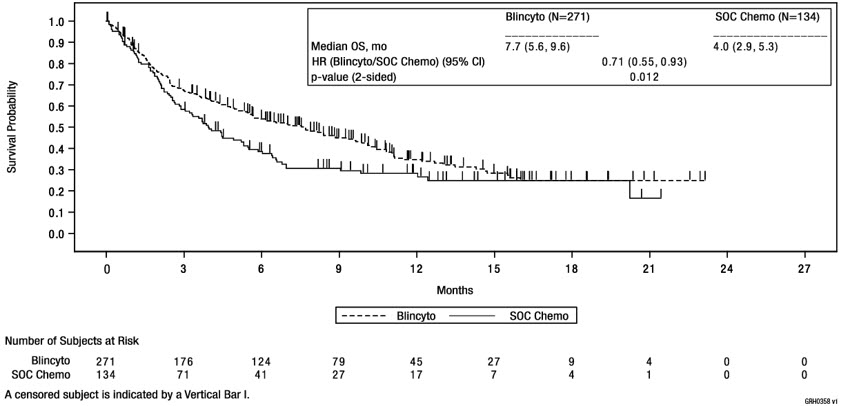
ADVERSE REACTIONS The following clinically significant adverse reactions are described elsewhere in the labeling: Cytokine Release Syndrome [see Warnings and Precautions (5.1) ] Neurological Toxicities, including Immune Effector Cell-Associated Neurotoxicity Syndrome [see Warnings and Precautions (5.2) ] Infections [see Warnings and Precautions (5.3) ] Tumor Lysis Syndrome [see Warnings and Precautions (5.4) ] Neutropenia and Febrile Neutropenia [see Warnings and Precautions (5.5) ] Effects on Ability to Drive and Use Machines [see Warnings and Precautions (5.6) ] Elevated Liver Enzymes [see Warnings and Precautions (5.7) ] Pancreatitis [see Warnings and Precautions (5.8) ] Leukoencephalopathy [see Warnings and Precautions (5.9) ] The most common adverse reactions (≥ 20%) are pyrexia, infusion-related reactions, headache, infection, musculoskeletal pain, neutropenia, nausea, anemia, thrombocytopenia, and diarrhea. ( 6.1 ) To report SUSPECTED ADVERSE REACTIONS, contact Amgen Inc. at 1-800-77-AMGEN (1-800-772-6436) or FDA at 1-800-FDA-1088 or www.fda.gov/medwatch. 6.1 Clinical Trials Experience Because clinical trials are conducted under widely varying conditions, adverse reaction rates observed in the clinical trials of a drug cannot be directly compared to rates in the clinical trials of another drug and may not reflect the rates observed in practice. The safety of BLINCYTO in adult and pediatric patients one month and older with MRD-positive B-cell precursor ALL (n = 137), relapsed or refractory B-cell precursor ALL (n = 267), and Philadelphia chromosome-negative B-cell precursor ALL in consolidation (n = 165) was evaluated in clinical studies. The most common adverse reactions (≥ 20%) to BLINCYTO in this pooled population were pyrexia, infusion-related reactions, headache, infection, musculoskeletal pain, neutropenia, nausea, anemia, thrombocytopenia, and diarrhea. MRD-positive B-cell Precursor ALL The safety of BLINCYTO in patients with MRD-positive B-cell precursor ALL was evaluated in two single-arm clinical studies in which 137 adult patients were treated with BLINCYTO. The median age of the study population was 45 years (range: 18 to 77 years). The most common adverse reactions (≥ 20%) were pyrexia, infusion-related reactions, headache, infections (pathogen unspecified), tremor, and chills. Serious adverse reactions were reported in 61% of patients. The most common serious adverse reactions (≥ 2%) included pyrexia, tremor, encephalopathy, aphasia, lymphopenia, neutropenia, overdose, device related infection, seizure, and staphylococcal infection. Adverse reactions of Grade 3 or higher were reported in 64% of patients. Discontinuation of therapy due to adverse reactions occurred in 17% of patients; neurologic events were the most frequently reported reasons for discontinuation. There were 2 fatal adverse reactions that occurred within 30 days of the end of BLINCYTO treatment (atypical pneumonia and subdural hemorrhage). Table 6 summarizes the adverse reactions occurring at a ≥ 10% incidence for any grade or ≥ 5% incidence for Grade 3 or higher. Table 6. Adverse Reactions Occurring at ≥ 10% Incidence for Any Grade or ≥ 5% Incidence for Grade 3 or Higher in BLINCYTO-treated Adult Patients with MRD-Positive B-cell Precursor ALL Adverse Reaction BLINCYTO (N = 137) Any Grade Grading based on NCI Common Terminology Criteria for Adverse Events (CTCAE) version 4.0. n (%) Grade ≥ 3 n (%) Blood and lymphatic system disorders Neutropenia Neutropenia includes febrile neutropenia, neutropenia, and neutrophil count decreased. 21 (15) 21 (15) Leukopenia Leukopenia includes leukopenia and white blood cell count decreased. 19 (14) 13 (9) Thrombocytopenia Thrombocytopenia includes platelet count decreased and thrombocytopenia. 14 (10) 8 (6) Cardiac disorders Arrhythmia Arrhythmia includes bradycardia, sinus arrhythmia, sinus bradycardia, sinus tachycardia, tachycardia and ventricular extrasystoles. 17 (12) 3 (2) General disorders and administration site conditions Pyrexia Pyrexia includes body temperature increased and pyrexia. 125 (91) 9 (7) Chills 39 (28) 0 (0) Infections and infestations Infections - pathogen unspecified 53 (39) 11 (8) Injury, poisoning and procedural complications Infusion-related reaction Infusion-related reaction is a composite term that includes the term infusion-related reaction and the following events occurring with the first 48 hours of infusion and the event lasted ≤ 2 days: cytokine release syndrome, eye swelling, hypertension, hypotension, myalgia, periorbital edema, pruritus generalized, pyrexia, and rash. 105 (77) 7 (5) Investigations Decreased immunoglobulins Decreased immunoglobulins includes blood immunoglobulin A decreased, blood immunoglobulin G decreased, blood immunoglobulin M decreased, hypogammaglobulinemia, hypoglobulinemia, and immunoglobulins decreased. 25 (18) 7 (5) Weight increased 14 (10) 1 (< 1) Hypertransaminasemia Hypertransaminasemia includes alanine aminotransferase increased, aspartate aminotransferase increased, and hepatic enzyme increased. 13 (9) 9 (7) Musculoskeletal and connective tissue disorders Back pain 16 (12) 1 (< 1) Nervous system disorders Headache May represent ICANS. 54 (39) 5 (4) Tremor , Tremor includes essential tremor, intention tremor, and tremor. 43 (31) 6 (4) Aphasia 16 (12) 1 (< 1) Dizziness 14 (10) 1 (< 1) Encephalopathy , Encephalopathy includes cognitive disorder, depressed level of consciousness, disturbance in attention, encephalopathy, lethargy, leukoencephalopathy, memory impairment, somnolence, and toxic encephalopathy. 14 (10) 6 (4) Psychiatric disorders Insomnia , Insomnia includes initial insomnia, insomnia, and terminal insomnia. 24 (18) 1 (< 1) Respiratory, thoracic and mediastinal disorders Cough 18 (13) 0 (0) Skin and subcutaneous tissue disorders Rash Rash includes dermatitis contact, eczema, erythema, rash, and rash maculopapular. 22 (16) 1 (< 1) Vascular disorders Hypotension 19 (14) 1 (< 1) Additional adverse reactions in adult patients with MRD-positive ALL that did not meet the threshold criteria for inclusion in Table 6 were: Blood and lymphatic system disorders: anemia General disorders and administration site conditions: edema peripheral, pain, and chest pain (includes chest pain and musculoskeletal chest pain) Hepatobiliary disorders: blood bilirubin increased Immune system disorders: hypersensitivity and cytokine release syndrome Infections and infestations: viral infectious disorders, bacterial infectious disorders, and fungal infectious disorders Injury, poisoning and procedural complications: medication error and overdose (includes overdose and accidental overdose) Investigations: blood alkaline phosphatase increased Musculoskeletal and connective tissue disorders: pain in extremity and bone pain Nervous system disorders: seizure (includes seizure and generalized tonic-clonic seizure), speech disorder, and hypoesthesia Psychiatric disorders: confusional state, disorientation, and depression Respiratory, thoracic and mediastinal disorders: dyspnea and productive cough Vascular disorders: hypertension (includes blood pressure increased and hypertension) flushing (includes flushing and hot flush), and capillary leak syndrome Relapsed or Refractory B-cell Precursor ALL The safety of BLINCYTO was evaluated in a randomized, open-label, active-controlled clinical study (TOWER Study) in which 376 adult patients with Philadelphia chromosome-negative relapsed or refractory B-cell precursor ALL were treated with BLINCYTO (n = 267) or standard of care (SOC) chemotherapy (n = 109). The median age of BLINCYTO-treated patients was 37 years (range: 18 to 80 years), 60% were male, 84% were White, 7% Asian, 2% were Black or African American, 2% were American Indian or Alaska Native, and 5% were Multiple/Other. The most common adverse reactions (≥ 20%) in the BLINCYTO arm were infections (bacterial and pathogen unspecified), pyrexia, headache, infusion-related reactions, ane
Mechanism of action
Mechanism of Action Blinatumomab is a bispecific CD19-directed CD3 T-cell engager that binds to CD19 expressed on the surface of cells of B-lineage origin and CD3 expressed on the surface of T-cells. It activates endogenous T-cells by connecting CD3 in the T-cell receptor (TCR) complex with CD19 on benign and malignant B-cells. Blinatumomab mediates the formation of a synapse between the T-cell and the tumor cell, upregulation of cell adhesion molecules, production of cytolytic proteins, release of inflammatory cytokines, and proliferation of T-cells, which result in redirected lysis of CD19+ cells.
A drug lookup is just the start. Eleplan keeps the whole care plan in one place.
Medications, diagnoses, documents, appointments, and the whole care team — organized and always in sync, with Ellie, your AI care assistant, on top of it. Free to start.