Axitinib
Managing this medication for someone you care for? Eleplan keeps diagnoses, medications and appointments in one plan.
Start free with EleplanMedication reference
Axitinib
Kinase Inhibitor [EPC] — ORAL
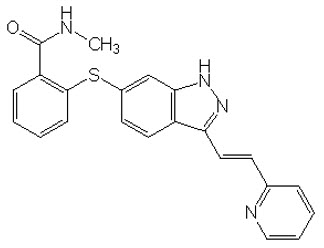
Axitinib — Kinase Inhibitor [EPC]. INDICATIONS AND USAGE INLYTA is a kinase inhibitor indicated: • in combination with avelumab, for the first-line treatment of patients with advanced…
Brand names
INLYTA
Active ingredients
AXITINIB
Indications
INDICATIONS AND USAGE INLYTA is a kinase inhibitor indicated: • in combination with avelumab, for the first-line treatment of patients with advanced renal cell carcinoma (RCC). ( 1.1 ) • in combination with pembrolizumab, for the first-line treatment of patients with advanced RCC. ( 1.1 ) • as a single agent, for the treatment of advanced renal cell carcinoma (RCC) after failure of one prior systemic therapy. ( 1.2 ) 1.1 First-Line Advanced Renal Cell Carcinoma INLYTA in combination with avelumab is indicated for the first-line treatment of patients with advanced renal cell carcinoma (RCC). INLYTA in combination with pembrolizumab is indicated for the first-line treatment of patients with advanced RCC. 1.2 Second-Line Advanced Renal Cell Carcinoma INLYTA as a single agent is indicated for the treatment of advanced RCC after failure of one prior systemic therapy.
Dosage
DOSAGE AND ADMINISTRATION • INLYTA 5 mg orally twice daily with avelumab 800 mg every 2 weeks. ( 2.1 ) • INLYTA 5 mg orally twice daily with pembrolizumab 200 mg every 3 weeks or 400 mg every 6 weeks. ( 2.1 ) • INLYTA as a single agent the starting dose is 5 mg orally twice daily. ( 2.1 ) • Dose adjustments can be made based on individual safety and tolerability. ( 2.2 ) • Administer INLYTA dose approximately 12 hours apart with or without food. ( 2.1 ) • INLYTA should be swallowed whole with a glass of water. ( 2.1 ) • See Full Prescribing Information for dosage modifications for adverse reactions. ( 2.2 ) • If a strong CYP3A4/5 inhibitor is required, decrease the INLYTA dose by approximately half. ( 2.2 ) • For patients with moderate hepatic impairment, decrease the starting dose by approximately half. ( 2.2 ) 2.1 Recommended Dosing First-Line Advanced RCC INLYTA in Combination with Avelumab The recommended starting dosage of INLYTA is 5 mg orally taken twice daily (12 hours apart) with or without food in combination with avelumab 800 mg administered as an intravenous infusion over 60 minutes every 2 weeks until disease progression or unacceptable toxicity. When INLYTA is used in combination with avelumab, dose escalation of INLYTA above the initial 5 mg dose may be considered at intervals of two weeks or longer. Review the Full Prescribing Information for recommended avelumab dosing information. INLYTA in Combination with Pembrolizumab The recommended starting dosage of INLYTA is 5 mg orally twice daily (12 hours apart) with or without food in combination with pembrolizumab 200 mg every 3 weeks or 400 mg every 6 weeks administered as an intravenous infusion over 30 minutes until disease progression or unacceptable toxicity. When INLYTA is used in combination with pembrolizumab, dose escalation of INLYTA above the initial 5 mg dose may be considered at intervals of six weeks or longer. Review the Full Prescribing Information for recommended pembrolizumab dosing information. Second-Line Advanced RCC When INLYTA is used as a single agent, the recommended starting oral dose is 5 mg twice daily. Administer INLYTA doses approximately 12 hours apart with or without food. Important Administration Instructions Advise patients to swallow INLYTA whole with a full glass of water. If the patient vomits or misses a dose, an additional dose should not be taken. Advise the patient to take the next prescribed dose at the usual time. 2.2 Dose Modification Guidelines Dose increase or reduction is recommended based on individual safety and tolerability. Recommended INLYTA dosage increases and reductions are provided in Table 1. Over the course of treatment, patients who tolerate INLYTA for at least two consecutive weeks with no adverse reactions Grade >2 (according to the Common Toxicity Criteria for Adverse Events [CTCAE]), are normotensive, and are not receiving anti-hypertension medication, may have their dose increased. Table 1: Recommended Dosage Increases and Reductions for INLYTA Dose Modification Dose Regimen Recommended starting dosage 5 mg twice daily Dosage increase First dose increase 7 mg twice daily Second dose increase 10 mg twice daily Dosage reduction for management of adverse drug reactions First dose reduction from 5 mg twice daily 3 mg twice daily Second dose reduction 2 mg twice daily Recommended dosage modifications for adverse reactions for INLYTA are provided in Table 2. Table 2: Recommended Dosage Modification for INLYTA for Adverse Reactions Adverse Reaction Severity Dosage Modifications for INLYTA Hypertension [see Warnings and Precautions (5.1) ] SBP >150 mmHg or DBP >100 mmHg despite antihypertensive treatment • Reduce dose by one level. SBP >160 mmHg or DBP >105 mmHg • Withhold until BP <150/100 mmHg. • Resume at a reduced dose. Grade 4 or hypertensive crisis • Permanently discontinue. Hemorrhage [see Warnings and Precautions (5.4) ] Grade 3 or 4 • Withhold until resolution to Grade 0 or 1 or baseline. • Either resume at a reduced dose or discontinue depending on the severity and persistence of adverse reaction. Cardiac failure [see Warnings and Precautions (5.5) ] Asymptomatic cardiomyopathy (left ventricular ejection fraction greater than 20% but less than 50% below baseline or below the lower limit of normal if baseline was not obtained) • Withhold until resolution to Grade 0 or 1 or baseline. • Resume at a reduced dose. Clinically manifested congestive heart failure • Permanently discontinue. Impaired wound healing [see Warnings and Precautions (5.8) ] Any Grade • The safety of resumption of INLYTA after resolution of wound healing has not been established. • Either resume at a reduced dose or discontinue depending on the severity and persistence of the adverse reaction. Reversible Posterior Leukoencephalopathy Syndrome [see Warnings and Precautions (5.9) ] Any Grade • Permanently discontinue. Proteinuria [ see Warnings and Precautions (5.10) ] 2 or more grams proteinuria per 24 hours • Withhold until resolution to less than 2 grams per 24 hours. • Resume at a reduced dose. Other Adverse Reactions Grade 3 • Reduce dosage by one level. Grade 4 • Withhold until resolution to Grade 2. • Resume at a reduced dose. Table 3 represents additional recommended dosage modifications for adverse reactions when INLYTA is administered in combination with avelumab or pembrolizumab. See the Full Prescribing Information for additional dosage information for avelumab or pembrolizumab including dose modifications for immune-mediated adverse reactions. Table 3: Recommended Dosage Modification for Adverse Reactions for INLYTA in Combination with Avelumab or Pembrolizumab Treatment Adverse Reaction Severity Based on Common Terminology Criteria for Adverse Events (CTCAE), version 4.0. Dosage Modifications for INLYTA ALT = alanine aminotransferase, AST = aspartate aminotransferase, ULN = upper limit normal INLYTA in combination with avelumab OR pembrolizumab Liver enzyme elevations Consider corticosteroid therapy ALT or AST at least 3 times ULN but less than 10 times ULN without concurrent total bilirubin at least 2 times ULN • Withhold both INLYTA and avelumab or pembrolizumab until resolution to Grades 0–1 • Consider rechallenge with INLYTA and/or avelumab or pembrolizumab If rechallenging with INLYTA, consider dosage reduction per Table 1. Consider rechallenge with a single drug or sequential rechallenge with both drugs after recovery. ALT or AST increases to more than 3 times ULN with concurrent total bilirubin at least 2 times ULN or ALT or AST at least 10 times ULN • Permanently discontinue both INLYTA and avelumab or pembrolizumab Diarrhea Grade 1–2 • Initiate symptomatic medications. Grade 3 • Interrupt INLYTA and initiate symptomatic medications. If diarrhea is controlled, INLYTA may be resumed at either the same dose or reduced by 1 dose level. Grade 4 • Withhold INLYTA until resolution to Grade <2, then restart INLYTA dose reduced by 1 dose level INLYTA in combination with avelumab Major Adverse Cardiovascular Events (MACE) Grade 3 or 4 • Permanently discontinue 2.3 Dosage Modification for Drug Interactions Strong CYP3A4/5 Inhibitors The concomitant use of strong CYP3A4/5 inhibitors should be avoided (e.g., ketoconazole, itraconazole, clarithromycin, atazanavir, indinavir, nefazodone, nelfinavir, ritonavir, saquinavir, telithromycin, and voriconazole). Selection of an alternate concomitant medication with no or minimal CYP3A4/5 inhibition potential is recommended. Although INLYTA dose adjustment has not been studied in patients receiving strong CYP3A4/5 inhibitors, if a strong CYP3A4/5 inhibitor must be co-administered, a dose decrease of INLYTA by approximately half is recommended, as this dose reduction is predicted to adjust the axitinib area under the plasma concentration vs time curve (AUC) to the range observed without inhibitors. The subsequent doses can be increased or decreased based on individual safety and tolerability. If co-administ
Warnings
WARNINGS AND PRECAUTIONS • Hypertension: Hypertension including hypertensive crisis has been observed. Blood pressure should be well-controlled prior to initiating INLYTA. Monitor for hypertension and treat as needed. Withhold and then dose reduce INLYTA or permanently discontinue based on severity of hypertension. ( 5.1 ) • Arterial and Venous Thromboembolic Events: Arterial and venous thrombotic events have been observed and can be fatal. Use with caution in patients who are at increased risk for these events. Permanently discontinue INLYTA if an arterial thromboembolic event occurs during treatment. Withhold INLYTA and then resume at same dose or permanently discontinue based on severity of VTE. ( 5.2 , 5.3 ) • Hemorrhage: Hemorrhagic events, including fatal events, have been reported. INLYTA has not been studied in patients with evidence of untreated brain metastasis or recent active gastrointestinal bleeding and should not be used in those patients. Withhold and then dose reduce INLYTA or discontinue based on severity and persistence of hemorrhage. ( 5.4 ) • Cardiac Failure: Cardiac failure has been observed and can be fatal. Monitor for signs or symptoms of cardiac failure throughout treatment with INLYTA. Management of cardiac failure may require dose reduction, dose interruption or permanent discontinuation of INLYTA. ( 5.5 ) • Gastrointestinal Perforation and Fistula Formation: Gastrointestinal perforation and fistula, including death, have occurred. Use with caution in patients at risk for gastrointestinal perforation or fistula. ( 5.6 ) • Hypothyroidism: Hypothyroidism requiring thyroid hormone replacement has been reported. Monitor thyroid function before initiation of, and periodically throughout, treatment with INLYTA. ( 5.7 ) • Impaired Wound Healing: Withhold INLYTA for at least 2 days prior to elective surgery. Do not administer for at least 2 weeks following major surgery and until adequate wound healing. Resume INLYTA at a reduced dose or discontinue based on severity and persistence of the impaired wound healing. The safety of resumption of INLYTA after resolution of wound healing complications has not been established. ( 5.8 ) • Reversible Posterior Leukoencephalopathy Syndrome (RPLS): RPLS has been observed. Permanently discontinue INLYTA if signs or symptoms of RPLS occur. ( 5.9 ) • Proteinuria: Monitor for proteinuria before initiation of, and periodically throughout, treatment with INLYTA. For moderate to severe proteinuria, withhold and then dose reduce INLYTA. ( 5.10 ) • Hepatotoxicity: Liver enzyme elevation has occurred during treatment with INLYTA as a single agent. Monitor ALT, AST and bilirubin before initiation of, and periodically throughout, treatment with INLYTA. When used in combination with avelumab or pembrolizumab, higher frequencies of Grade 3 and 4 ALT and AST elevation may occur. Consider more frequent monitoring of liver enzymes. Withhold INLYTA and avelumab or pembrolizumab, initiate corticosteroid therapy as needed, and/or permanently discontinue the combination for severe or life-threatening hepatotoxicity. ( 5.11 ) • Use in Patients with Hepatic Impairment: Decrease the starting dose of INLYTA if used in patients with moderate hepatic impairment. INLYTA has not been studied in patients with severe hepatic impairment. ( 2.2 , 5.12 ) • Major adverse cardiovascular events (INLYTA in combination with avelumab): Optimize management of cardiovascular risk factors. Permanently discontinue INLYTA in combination with avelumab for Grade 3–4 events. ( 5.13 ) • Embryo-Fetal Toxicity: INLYTA can cause fetal harm. Advise patients of the potential risk to the fetus and to use effective contraception. ( 5.14 , 8.1 , 8.3 ) 5.1 Hypertension In a controlled clinical study with INLYTA for the treatment of patients with RCC, hypertension was reported in 145/359 patients (40%) receiving INLYTA and 103/355 patients (29%) receiving sorafenib. Grade 3/4 hypertension was observed in 56/359 patients (16%) receiving INLYTA and 39/355 patients (11%) receiving sorafenib. Hypertensive crisis was reported in 2/359 patients (<1%) receiving INLYTA and none of the patients receiving sorafenib. The median onset time for hypertension (systolic blood pressure >150 mmHg or diastolic blood pressure >100 mmHg) was within the first month of the start of INLYTA treatment and blood pressure increases have been observed as early as 4 days after starting INLYTA. Hypertension was managed with standard anti-hypertensive therapy. Discontinuation of INLYTA treatment due to hypertension occurred in 1/359 patients (<1%) receiving INLYTA and none of the patients receiving sorafenib [see Adverse Reactions (6.1) ] . Ensure that blood pressure is well-controlled prior to initiating INLYTA. Monitor patients for hypertension and treat as needed with standard anti-hypertensive therapy. Withhold and then dose reduce INLYTA or permanently discontinue based on severity of hypertension [see Dosage and Administration (2.2) ] . 5.2 Arterial Thromboembolic Events In clinical trials, arterial thromboembolic events have been reported, including deaths. In a controlled clinical study with INLYTA for the treatment of patients with RCC, Grade 3/4 arterial thromboembolic events were reported in 4/359 patients (1%) receiving INLYTA and 4/355 patients (1%) receiving sorafenib. Fatal cerebrovascular accident was reported in 1/359 patients (<1%) receiving INLYTA and none of the patients receiving sorafenib [see Adverse Reactions (6.1) ] . INLYTA has not been studied in patients who had an arterial thromboembolic event within the previous 12 months. In clinical trials with INLYTA, arterial thromboembolic events (including transient ischemic attack, cerebrovascular accident, myocardial infarction, and retinal artery occlusion) were reported in 17/715 patients (2%), with two deaths secondary to cerebrovascular accident. Permanently discontinue INLYTA if an arterial thromboembolic event occurs during treatment. 5.3 Venous Thromboembolic Events In clinical trials, venous thromboembolic events have been reported, including deaths. In a controlled clinical study with INLYTA for the treatment of patients with RCC, venous thromboembolic events were reported in 11/359 patients (3%) receiving INLYTA and 2/355 patients (1%) receiving sorafenib. Grade 3/4 venous thromboembolic events were reported in 9/359 patients (3%) receiving INLYTA (including pulmonary embolism, deep vein thrombosis, retinal vein occlusion and retinal vein thrombosis) and 2/355 patients (1%) receiving sorafenib. Fatal pulmonary embolism was reported in 1/359 patients (<1%) receiving INLYTA and none of the patients receiving sorafenib. INLYTA has not been studied in patients who had a venous thromboembolic event within the previous 6 months. In clinical trials with INLYTA, venous thromboembolic events were reported in 22/715 patients (3%), with two deaths secondary to pulmonary embolism. Monitor for signs and symptoms of VTE and PE. Withhold INLYTA and then resume at same dose or permanently discontinue based on severity of VTE. 5.4 Hemorrhage In a controlled clinical study with INLYTA for the treatment of patients with RCC, hemorrhagic events were reported in 58/359 patients (16%) receiving INLYTA and 64/355 patients (18%) receiving sorafenib. Grade 3/4 hemorrhagic events were reported in 5/359 (1%) patients receiving INLYTA (including cerebral hemorrhage, hematuria, hemoptysis, lower gastrointestinal hemorrhage, and melena) and 11/355 (3%) patients receiving sorafenib. Fatal hemorrhage was reported in 1/359 patients (<1%) receiving INLYTA (gastric hemorrhage) and 3/355 patients (1%) receiving sorafenib. INLYTA has not been studied in patients who have evidence of untreated brain metastasis or recent active gastrointestinal bleeding and should not be used in those patients. Withhold and then dose reduce INLYTA or discontinue based on severity and persistence of hemorrhage. 5.5 Cardiac Failure In a controlled clinical
Contraindications
CONTRAINDICATIONS None. None. ( 4 )
Drug interactions
DRUG INTERACTIONS • Avoid strong CYP3A4/5 inhibitors. If unavoidable, reduce the INLYTA dose. ( 2.2 , 7.1 ) • Avoid strong CYP3A4/5 inducers. ( 7.2 ) 7.1 CYP3A4/5 Inhibitors Co-administration of ketoconazole, a strong inhibitor of CYP3A4/5, increased the plasma exposure of axitinib in healthy volunteers. Co-administration of INLYTA with strong CYP3A4/5 inhibitors should be avoided. Grapefruit or grapefruit juice may also increase axitinib plasma concentrations and should be avoided. Selection of concomitant medication with no or minimal CYP3A4/5 inhibition potential is recommended. If a strong CYP3A4/5 inhibitor must be co-administered, the INLYTA dose should be reduced [see Dosage and Administration (2.2) and Clinical Pharmacology (12.3) ] . 7.2 CYP3A4/5 Inducers Co-administration of rifampin, a strong inducer of CYP3A4/5, reduced the plasma exposure of axitinib in healthy volunteers. Co-administration of INLYTA with strong CYP3A4/5 inducers (e.g., rifampin, dexamethasone, phenytoin, carbamazepine, rifabutin, rifapentine, phenobarbital, and St. John's wort) should be avoided. Selection of concomitant medication with no or minimal CYP3A4/5 induction potential is recommended [see Dosage and Administration (2.2) , Clinical Pharmacology (12.3) ] . Moderate CYP3A4/5 inducers (e.g., bosentan, efavirenz, etravirine, modafinil, and nafcillin) may also reduce the plasma exposure of axitinib and should be avoided if possible.
Adverse reactions
ADVERSE REACTIONS The following clinically significant adverse reactions are discussed elsewhere in the labeling [see Warnings and Precautions (5) ] : • Hypertension [see Warnings and Precautions (5.1) ] • Arterial thromboembolic events [see Warnings and Precautions (5.2) ] • Venous thromboembolic events [see Warnings and Precautions (5.3) ] • Hemorrhage [see Warnings and Precautions (5.4) ] • Cardiac failure [see Warnings and Precautions (5.5) ] • Gastrointestinal perforation and fistula formation [see Warnings and Precautions (5.6) ] • Thyroid dysfunction [see Warnings and Precautions (5.7) ] • Reversible posterior leukoencephalopathy syndrome [see Warnings and Precautions (5.9) ] • Proteinuria [see Warnings and Precautions (5.10) ] • Hepatotoxicity [see Warnings and Precautions (5.11) ] • Hepatic impairment [see Warnings and Precautions (5.12) ] Most common adverse reactions (≥20%) are: INLYTA in combination with avelumab: diarrhea, fatigue, hypertension, musculoskeletal pain, nausea, mucositis, palmar-plantar erythrodysesthesia, dysphonia, decreased appetite, hypothyroidism, rash, hepatotoxicity, cough, dyspnea, abdominal pain, and headache. ( 6.1 ) INLYTA in combination with pembrolizumab: diarrhea, fatigue/asthenia, hypertension, hepatotoxicity, hypothyroidism, decreased appetite, palmar-plantar erythrodysesthesia, nausea, stomatitis/mucosal inflammation, dysphonia, rash, cough, and constipation. ( 6.1 ) INLYTA as a single agent: diarrhea, hypertension, fatigue, decreased appetite, nausea, dysphonia, palmar-plantar erythrodysesthesia (hand-foot) syndrome, weight decreased, vomiting, asthenia, and constipation. ( 6.1 ) To report SUSPECTED ADVERSE REACTIONS, contact Pfizer Inc. at 1-800-438-1985 or FDA at 1-800-FDA-1088 or www.fda.gov/medwatch . 6.1 Clinical Trials Experience Because clinical trials are conducted under widely varying conditions, adverse reaction rates observed in the clinical trials of a drug cannot be directly compared to rates in the clinical trials of another drug and may not reflect the rates observed in clinical practice. The safety of INLYTA has been evaluated in combination with avelumab in JAVELIN Renal 101 and pembrolizumab in KEYNOTE-426 for the first-line treatment of patients with advanced RCC [see Clinical Studies (14.1) ] . The data described [see Adverse Reactions (6.1) ] reflect exposure to INLYTA in combination with avelumab in 434 patients and pembrolizumab in 429 patients [see Clinical Studies (14.1) ] . The safety of INLYTA has been evaluated in 715 patients in second-line monotherapy studies, which included 537 patients with advanced RCC. The data described [see Adverse Reactions (6.1) ] reflect exposure to INLYTA in 359 patients with advanced RCC who participated in a randomized clinical study versus sorafenib [see Clinical Studies (14.2) ] . First-Line Advanced RCC INLYTA in Combination with Avelumab The safety of INLYTA in combination with avelumab was evaluated in JAVELIN Renal 101. Patients with autoimmune disease other than type I diabetes mellitus, vitiligo, psoriasis, or thyroid disorders not requiring immunosuppressive treatment were excluded. Patients received INLYTA 5 mg twice daily (N=434) in combination with avelumab 10 mg/kg every 2 weeks administered or sunitinib 50 mg once daily for 4 weeks followed by 2 weeks off (N=439). In the INLYTA plus avelumab arm, 70% were exposed to avelumab for ≥6 months and 29% were exposed for ≥1 year in JAVELIN Renal 101 [see Clinical Studies (14.1) ] . The median age of patients treated with INLYTA in combination with avelumab was 62 years (range: 29 to 83), 38% of patients were 65 years or older, 71% were male, 75% were White, and the Eastern Cooperative Oncology Group (ECOG) performance score was 0 (64%) or 1 (36%). Fatal adverse reactions occurred in 1.8% of patients receiving INLYTA in combination with avelumab. These included sudden cardiac death (1.2%), stroke (0.2%), myocarditis (0.2%), and necrotizing pancreatitis (0.2%). Serious adverse reactions occurred in 35% of patients receiving INLYTA in combination with avelumab. Serious adverse reactions in ≥1% of patients included diarrhea (2.5%), dyspnea (1.8%), hepatotoxicity (1.8%), venous thromboembolic disease (1.6%), acute kidney injury (1.4%), and pneumonia (1.2%). Permanent discontinuation due to an adverse reaction of either INLYTA or avelumab occurred in 22% of patients: 19% avelumab only, 13% INLYTA only, and 8% both drugs. The most common adverse reactions (>1%) resulting in permanent discontinuation of avelumab or the combination were hepatotoxicity (6%) and infusion-related reaction (1.8%). Dose interruptions or reductions due to an adverse reaction, excluding temporary interruptions of avelumab infusions due to infusion-related reactions, occurred in 76% of patients receiving INLYTA in combination with avelumab. This includes interruption of avelumab in 50% of patients. INLYTA was interrupted in 66% and dose reduced in 19% of patients. The most common adverse reaction (>10%) resulting in interruption of avelumab was diarrhea (10%). The most common adverse reactions resulting in either interruption or dose reduction of INLYTA were diarrhea (19%), hypertension (18%), palmar-plantar erythrodysesthesia (18%), and hepatotoxicity (10%). The most common adverse reactions (≥20%) in patients receiving INLYTA in combination with avelumab were diarrhea, fatigue, hypertension, musculoskeletal pain, nausea, mucositis, palmar-plantar erythrodysesthesia, dysphonia, decreased appetite, hypothyroidism, rash, hepatotoxicity, cough, dyspnea, abdominal pain, and headache. Forty-eight (11%) of patients treated with INLYTA in combination with avelumab received an oral prednisone dose equivalent to ≥40 mg daily for an immune-mediated adverse reaction [see Warnings and Precautions (5.12) ] . Table 4 summarizes adverse reactions that occurred in ≥20% of INLYTA in combination with avelumab-treated patients. Table 4: Adverse Reactions (≥20%) of Patients Receiving INLYTA in Combination with Avelumab (JAVELIN Renal 101 Trial) The trial was not designed to demonstrate a statistically significant difference in the incidence of adverse reactions between avelumab in combination with INLYTA and sunitinib. Adverse Reactions INLYTA plus Avelumab (N=434) Sunitinib (N=439) All Grades % Grade 3–4 % All Grades % Grade 3–4 % Toxicity was graded per National Cancer Institute Common Terminology Criteria for Adverse Events. Version 4.03 (NCI CTCAE v4). Gastrointestinal Disorders Diarrhea Diarrhea is a composite term that includes diarrhea, autoimmune colitis, and colitis 62 8 48 2.7 Nausea 34 1.4 39 1.6 Mucositis Mucositis is a composite term that includes mucosal inflammation and stomatitis 34 2.8 35 2.1 Hepatotoxicity Hepatotoxicity is a composite term that includes ALT increased, AST increased, autoimmune hepatitis, bilirubin conjugated, bilirubin conjugated increased, blood bilirubin increased, drug-induced liver injury, hepatic enzyme increased, hepatic function abnormal, hepatitis, hepatitis fulminant, hepatocellular injury, hepatotoxicity, hyperbilirubinemia, immune-mediated hepatitis, liver function test increased, liver disorder, liver injury, and transaminases increased 24 9 18 3.6 Abdominal pain Abdominal pain is a composite term that includes abdominal pain, flank pain, abdominal pain upper, and abdominal pain lower 22 1.4 19 2.1 General Disorders and Administration Site Conditions Fatigue Fatigue is a composite term that includes fatigue and asthenia 53 6 54 6 Vascular Disorders Hypertension Hypertension is a composite term that includes hypertension and hypertensive crisis 50 26 36 17 Musculoskeletal and Connective Tissue Disorders Musculoskeletal pain Musculoskeletal pain is a composite term that includes musculoskeletal pain, musculoskeletal chest pain, myalgia, back pain, bone pain, musculoskeletal discomfort, neck pain, spinal pain, and pain in extremity 40 3.2 33 2.7 Skin and Subcutaneous Tissue Disorders Palmar-plantar
Mechanism of action
Mechanism of Action Axitinib has been shown to inhibit receptor tyrosine kinases including vascular endothelial growth factor receptors (VEGFR)-1, VEGFR-2, and VEGFR-3 at therapeutic plasma concentrations. These receptors are implicated in pathologic angiogenesis, tumor growth, and cancer progression. VEGF-mediated endothelial cell proliferation and survival were inhibited by axitinib in vitro and in mouse models. Axitinib was shown to inhibit tumor growth and phosphorylation of VEGFR-2 in tumor xenograft mouse models.
Available forms (4)
NDC examples
0069-01450069-015163539-02663539-044
Indicated ICD-10 codes
Treats these conditions
Source: openFDA + RxNorm · 2026
Look up another medication