50% Magnesium Sulfate
Managing this medication for someone you care for? Eleplan keeps diagnoses, medications and appointments in one plan.
Start free with EleplanMedication reference
50% Magnesium Sulfate
INTRAMUSCULAR · INTRAVENOUS
50% Magnesium Sulfate. Indications and Usage Magnesium Sulfate Injection, USP is suitable for replacement therapy in magnesium deficiency, especially in acute…
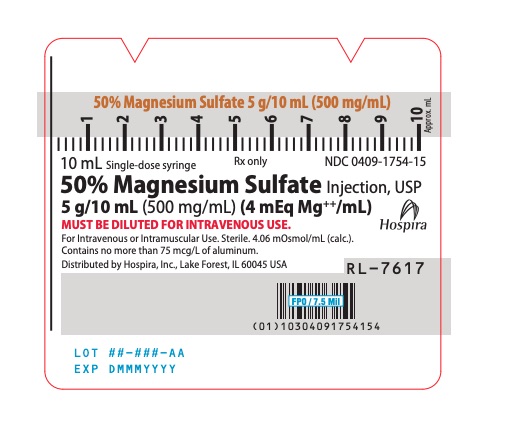
Brand names
50% MAGNESIUM SULFATE
Active ingredients
MAGNESIUM SULFATE HEPTAHYDRATE
Indications
Indications and Usage Magnesium Sulfate Injection, USP is suitable for replacement therapy in magnesium deficiency, especially in acute hypomagnesemia accompanied by signs of tetany similar to those observed in hypocalcemia. In such cases, the serum magnesium (Mg++) level is usually below the lower limit of normal (1.5 to 2.5 mEq/liter) and the serum calcium (Ca++) level is normal (4.3 to 5.3 mEq/liter) or elevated. In total parenteral nutrition (TPN), magnesium sulfate may be added to the nutrient admixture to correct or prevent hypomagnesemia which can arise during the course of therapy. Magnesium Sulfate Injection, USP is also indicated for the prevention and control of seizures (convulsions) in pre-eclampsia and eclampsia, respectively.
Dosage
Dosage and Administration Dosage of magnesium sulfate must be carefully adjusted according to individual requirements and response, and administration of the drug should be discontinued as soon as the desired effect is obtained. Both intravenous and intramuscular administration are appropriate. Intramuscular administration of the undiluted 50% solution results in therapeutic plasma levels in 60 minutes, whereas intravenous doses will provide a therapeutic level almost immediately. The rate of intravenous injection should generally not exceed 150 mg/minute (1.5 mL of a 10% concentration or its equivalent), except in severe eclampsia with seizures (see below). Continuous maternal administration of magnesium sulfate in pregnancy beyond 5 to 7 days can cause fetal abnormalities. Solutions for intravenous infusion must be diluted to a concentration of 20% or less prior to administration. The diluents commonly used are 5% Dextrose Injection, USP and 0.9% Sodium Chloride Injection, USP. Deep intramuscular injection of the undiluted (50%) solution is appropriate for adults, but the solution should be diluted to a 20% or less concentration prior to such injection in children. In Magnesium Deficiency In the treatment of mild magnesium deficiency, the usual adult dose is 1 gram, equivalent to 8.12 mEq of magnesium (2 mL of the 50% solution) injected intramuscularly every six hours for four doses (equivalent to a total of 32.5 mEq of magnesium per 24 hours). For severe hypomagnesemia, as much as 250 mg (approximately 2 mEq) per kg of body weight (0.5 mL of the 50% solution) may be given intramuscularly within a period of four hours if necessary. Alternatively, 5 grams, (approximately 40 mEq) can be added to one liter of 5% Dextrose Injection, USP or 0.9% Sodium Chloride Injection, USP for slow intravenous infusion over a three-hour period. In the treatment of deficiency states, caution must be observed to prevent exceeding the renal excretory capacity. In Hyperalimentation In TPN, maintenance requirements for magnesium are not precisely known. The maintenance dose used in adults ranges from 8 to 24 mEq (1 gram to 3 grams) daily; for infants, the range is 2 to 10 mEq (0.25 gram to 1.25 grams) daily. In Pre-eclampsia or Eclampsia In severe pre-eclampsia or eclampsia, the total initial dose is 10 grams to 14 grams of magnesium sulfate. Intravenously, a dose of 4 grams to 5 grams in 250 mL of 5% Dextrose Injection, USP or 0.9% Sodium Chloride Injection, USP may be infused. Simultaneously, intramuscular doses of up to 10 grams (5 grams or 10 mL of the undiluted 50% solution in each buttock) are given. Alternatively, the initial intravenous dose of 4 grams may be given by diluting the 50% solution to a 10 or 20% concentration; the diluted fluid (40 mL of a 10% solution or 20 mL of a 20% solution) may then be injected intravenously over a period of three to four minutes. Subsequently, 4 grams to 5 grams (8 to 10 mL of the 50% solution) are injected intramuscularly into alternate buttocks every four hours as needed, depending on the continuing presence of the patellar reflex and adequate respiratory function. Alternatively, after the initial intravenous dose, some clinicians administer 1 gram to 2 grams/hour by constant intravenous infusion. Therapy should continue until paroxysms cease. A serum magnesium level of 6 mg/100 mL is considered optimal for control of seizures. A total daily (24 hr) dose of 30 grams to 40 grams should not be exceeded. In the presence of severe renal insufficiency, the maximum dosage of magnesium sulfate is 20 grams/48 hours and frequent serum magnesium concentrations must be obtained. Continuous use of magnesium sulfate in pregnancy beyond 5 to 7 days can cause fetal abnormalities. Other Uses In counteracting the muscle-stimulating effects of barium poisoning, the usual dose of magnesium sulfate is 1 gram to 2 grams given intravenously. For controlling seizures associated with epilepsy, glomerulonephritis or hypothyroidism, the usual adult dose is 1 gram administered intramuscularly or intravenously. In paroxysmal atrial tachycardia, magnesium should be used only if simpler measures have failed and there is no evidence of myocardial damage. The usual dose is 3 grams to 4 grams (30 to 40 mL of a 10% solution) administered intravenously over 30 seconds with extreme caution. For reduction of cerebral edema, 2.5 grams (25 mL of a 10% solution) is given intravenously. Incompatibilities Magnesium sulfate in solution may result in a precipitate formation when mixed with solutions containing: Alcohol (in high Heavy Metals concentrations) Hydrocortisone sodium Alkali carbonates and succinate bicarbonates Phosphates Alkali hydroxides Polymixin B sulfate Arsenates Procaine hydrochloride Barium Salicylates Calcium Strontium Clindamycin phosphate Tartrates The potential incompatibility will often be influenced by the changes in the concentration of reactants and the pH of the solutions. It has been reported that magnesium may reduce the antibiotic activity of streptomycin, tetracycline and tobramycin when given together. Parenteral drug products should be inspected visually for particulate matter and discoloration prior to administration, whenever solution and container permit.
Warnings
Warnings FETAL HARM: Continuous administration of magnesium sulfate beyond 5 to 7 days to pregnant women can lead to hypocalcemia and bone abnormalities in the developing fetus. These bone abnormalities include skeletal demineralization and osteopenia. In addition, cases of neonatal fracture have been reported. The shortest duration of treatment that can lead to fetal harm is not known. Magnesium sulfate should be used during pregnancy only if clearly needed. If magnesium sulfate is given for treatment of preterm labor, the woman should be informed that the efficacy and safety of such use have not been established and that use of magnesium sulfate beyond 5 to 7 days may cause fetal abnormalities. ALUMINUM TOXICITY: This product contains aluminum that may be toxic. Aluminum may reach toxic levels with prolonged parenteral administration if kidney function is impaired. Premature neonates are particularly at risk because their kidneys are immature, and they require large amounts of calcium and phosphate solutions, which contain aluminum. Research indicates that patients with impaired kidney function, including premature neonates, who receive parenteral levels of aluminum at greater than 4 to 5 mcg/kg/day accumulate aluminum at levels associated with central nervous system and bone toxicity. Tissue loading may occur at even lower rates of administration. Parenteral use in the presence of renal insufficiency may lead to magnesium intoxication. Intravenous use in the eclampsia should be reserved for immediate control of life-threatening convulsions.
Contraindications
Contraindications Parenteral administration of the drug is contraindicated in patients with heart block or myocardial damage.
Adverse reactions
Adverse Reactions The adverse effects of parenterally administered magnesium usually are the result of magnesium intoxication. These include flushing, sweating, hypotension, depressed reflexes, flaccid paralysis, hypothermia, circulatory collapse, cardiac and central nervous system depression proceeding to respiratory paralysis. Hypocalcemia with signs of tetany secondary to magnesium sulfate therapy for eclampsia has been reported.
Mechanism of action
Clinical Pharmacology Magnesium (Mg++) is an important cofactor for enzymatic reactions and plays an important role in neurochemical transmission and muscular excitability. As a nutritional adjunct in hyperalimentation, the precise mechanism of action for magnesium is uncertain. Early symptoms of hypomagnesemia (less than 1.5 mEq/liter) may develop as early as three to four days or within weeks. Predominant deficiency effects are neurological, e.g., muscle irritability, clonic twitching and tremors. Hypocalcemia and hypokalemia often follow low serum levels of magnesium. While there are large stores of magnesium present intracellularly and in the bones of adults, these stores often are not mobilized sufficiently to maintain plasma levels. Parenteral magnesium therapy repairs the plasma deficit and causes deficiency symptoms and signs to cease. Magnesium prevents or controls convulsions by blocking neuromuscular transmission and decreasing the amount of acetylcholine liberated at the end plate by the motor nerve impulse. Magnesium is said to have a depressant effect on the central nervous system (CNS), but it does not adversely affect the woman, fetus or neonate when used as directed in eclampsia or pre-eclampsia. Normal plasma magnesium levels range from 1.5 to 2.5 mEq/liter. As plasma magnesium rises above 4 mEq/liter, the deep tendon reflexes are first decreased and then disappear as the plasma level approaches 10 mEq/liter. At this level respiratory paralysis may occur. Heart block also may occur at this or lower plasma levels of magnesium. Serum magnesium concentrations in excess of 12 mEq/L may be fatal. Magnesium acts peripherally to produce vasodilation. With low doses only flushing and sweating occur, but larger doses cause lowering of blood pressure. The central and peripheral effects of magnesium poisoning are antagonized to some extent by intravenous administration of calcium. Pharmacokinetics With intravenous administration the onset of anticonvulsant action is immediate and lasts about 30 minutes. Following intramuscular administration the onset of action occurs in about one hour and persists for three to four hours. Effective anticonvulsant serum levels range from 2.5 to 7.5 mEq/liter. Magnesium is excreted solely by the kidneys at a rate proportional to the plasma concentration and glomerular filtration.
NDC examples
51662-1235
Treats these conditions
Source: openFDA + RxNorm · 2026
Look up another medication